Curriculum
Self-Improvement
How Can Traditional Piano Learning Methods Contribute to Focal Dystonia, and What Can We Do About It?
February 13, 2026

There are perhaps few things scarier to a musician than focal dystonia. I recently had lunch with a friend who is a professional clarinetist for the San Francisco Ballet, and she mentioned she personally knows about one hundred classically trained musicians who have developed this neurological disorder!
In the sports world this is commonly referred to as the yips, and this disorder affects around 1% of professional musicians across all genres. However, 95% of those cases come from classically trained musicians. Let’s discuss why this happens, and what mitigation efforts you can be put in place so that focal dystonia never presents itself in your performance.

Focal dystonia causes a loss of voluntary motor control in extensively trained movements. The brain develops overlapping neural maps, and musicians can experience cramping, tightness, fatigue, and involuntary muscle contractions. This can make it hard to perform complex instrument movements that musicians have been practicing for years.
Focal dystonia is idiopathic, meaning that “experts can’t point to one factor that causes it.” But some risk factors have been determined. According to Medical Problems of Performing Artists:
Because there’s a strong association between anxiety and perfectionist tendencies and focal dystonia, we should look at the ways piano teaching and training can either contribute to or alleviate those risk factors.
.jpg)
Many traditional teaching systems can encourage students to repeat certain bars and passages over and over again in order to perfect their technical skills and repertoire. But that can actually be detrimental to your fine motor skills.
Extreme, precise repetition can lead your brain to reorganize its neural connections in a process called cortical remapping. This is understood to be a major risk factor for focal dystonia. Variation is important for keeping your neural maps from overlapping.
The perfectionism that many musicians are taught can directly lead to major risk factors.

To avoid these potential risk factors, we need musical education that reduces the repetitive, overly controlled, anxiety-inducing perfectionism that is far too prevalent in classical training. We can do this by:
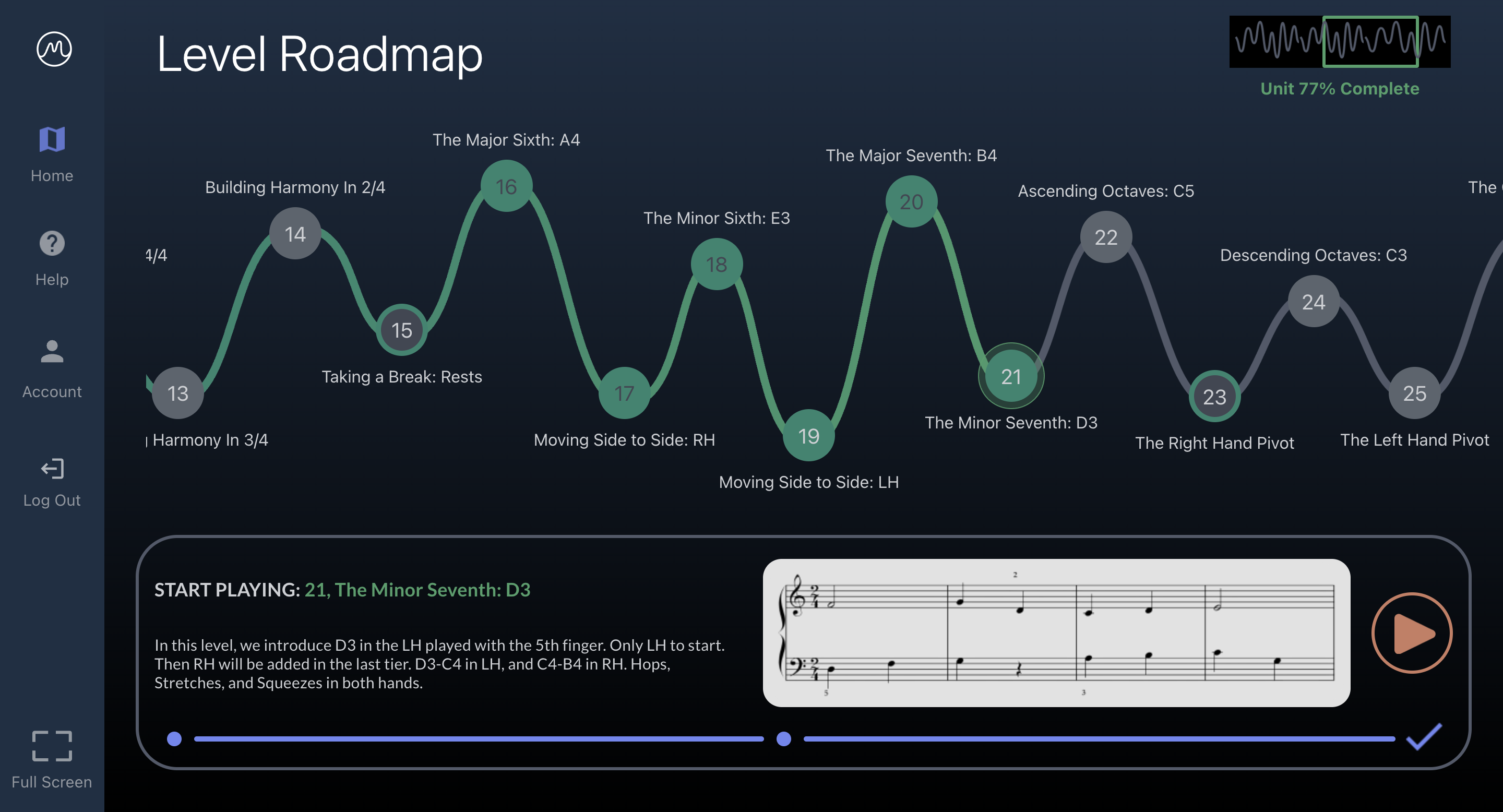
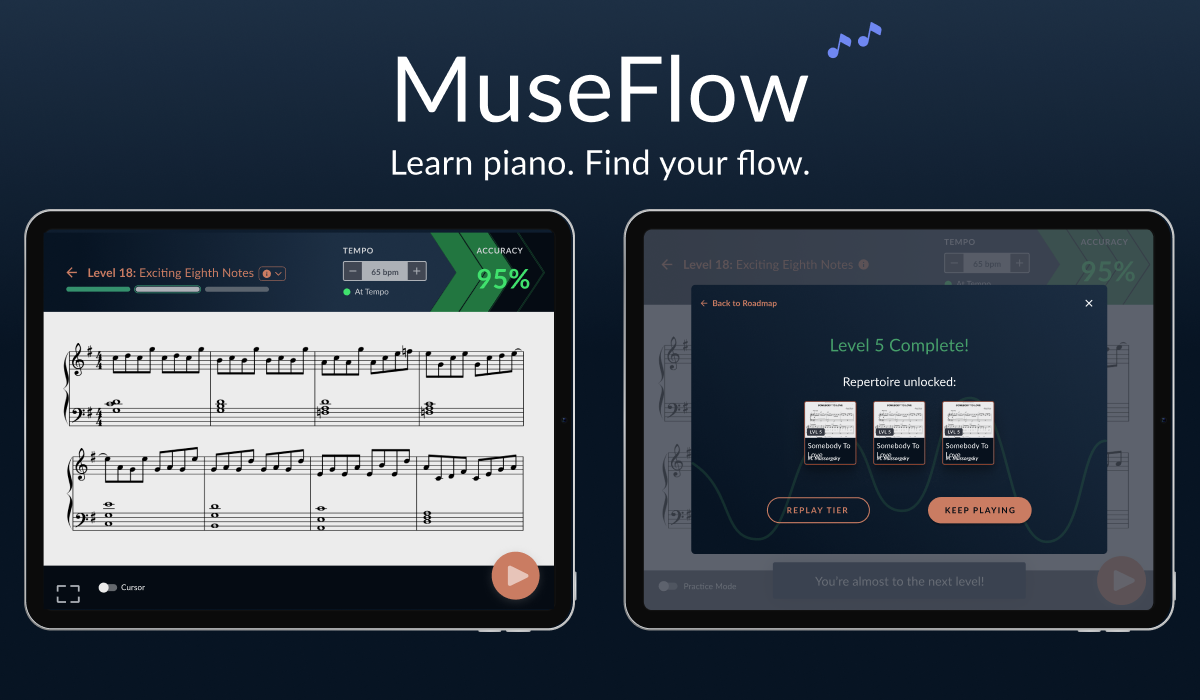
MuseFlow is a piano education program that encourages Flow State and sight reading through constant music variation. The system offers an alternative to the high-pressure classical training that can be healthier for your nervous system and reduce the risk factors associated with focal dystonia.
If left unchecked, focal dystonia can threaten to derail musicians’ careers. So it’s worth considering how we can reduce the possible risk factors in our music education.
It’s important to note that specific training methods can’t treat focal dystonia or guarantee you won’t develop it. Some people have genetic predispositions and prior injuries that make them more vulnerable to developing the disorder than others. But by focusing your music education around variation, flow, and positive reinforcement, you can support healthier motor learning principles.
And here’s the cool thing about ditching repetitive perfectionism…it can also make learning the piano a lot more fun.

Sometimes, the beginning of the year can bring stress, anxiety, or other emotional hurdles that we don't expect.
Prolonged stress and anxiety can result in respiratory problems, chronic pain, as well as a number of other issues - on top of just being plain unpleasant to deal with.
Studies show that learning to read and play music may improve mood and reduce depression symptoms.
Researchers discovered that subjects experienced relaxation, happiness, and increased tolerance of uncertainty. Novices to experts were given instruments to play and experienced these benefits over relatively short periods.
If you think about it, it makes sense that tolerance of uncertainty is a benefit of playing music. For one, jazz is highly unpredictable and requires a large amount of improvisation. You never know what’s going to come next. There’s a framework, but what’s being played within that framework is completely up to the other musicians you are playing with. Jazz is inherently uncertain.

There were also cognitive benefits in addition to improved mental health, including in aging adults and people with mild brain injuries. Increased dexterity and coordination resulted in an increased quality of life for a diverse group of people.
Music is one of those elements, like smell, that triggers memories in a very visceral way, especially when that memory isn’t able to be tapped into any other way. Unity Hospice summarized it well:
"when a dementia patient hears music connected to a memory, they can 're-awaken' and regain the ability to connect with people around them. Sometimes, people who haven't spoken for years find words and actually sing lyrics."

There are actually a few mechanisms through which playing music improves your wellness.
The multi-sensory workout of playing an instrument improves your executive function because the practice builds the corpus callosum, the area of the brain responsible for emotional regulation and problem solving. It’s a thick bundle of nerves that connect the right and left hemispheres and in musicians, it tends to be more developed. Over time, you can see improvement in executive function and even depression.
This is in addition to the feel-good neurochemical cocktail we get from music: dopamine (pleasure and motivation), oxytocin (the bonding hormone), and a significant drop in cortisol (the stress hormone). This naturally combats stress and anxiety.
Music training requires complex fine motor skills, as well as increased attention and concentration. While studies reveal an increase in processing speed and improved executive function in both healthy and unhealthy individuals, the exact mechanism is still being studied.
Picking up the piano has been shown to improve cognitive function in mild brain injuries as well as mental illness. There is even a dedicated branch of therapy, known as music therapy, combining clinical research with music to address diagnoses.
Music therapy is a structured approach to accomplish a patient’s goals by a credentialed professional. It has been proven to help treat and improve a number of conditions from Parkinson’s to childbirth. It is an extremely beneficial approach that many can benefit from, but it is distinct from an ongoing practice for personal wellbeing and fulfillment.
The same mechanisms that make music therapy effective for treating a wide array of conditions are available to you, too.
Learning piano is a skill that you can have for life, can help you become more attentive and less stressed, and you can have fun while doing it! You can take advantage of the physical, emotional, and cognitive benefits and build a personal wellness practice for yourself.
.png)
Music learning and wellness go hand in hand. If you’re ready to craft a unique, research-backed wellness practice for yourself, try MuseFlow! Our platform is designed not only for you to learn music in the most effective way possible, but to be engaged and motivated while doing it. MuseFlow is tailored to each pianist, allowing you to enter a Flow State; allowing you to increase skill acquisition, and decrease anxiety and boredom.
Optimize your wellness - try MuseFlow for free today.
For a long time, traditional piano grading systems have been the standard for tracking a pianist’s musical progress. But what exactly do those systems track? And are there perhaps some musical elements that slip through the cracks of these longstanding institutions?
Many pianists around the world judge their progress through traditional grading systems like ABRSM, TCL, and RCM. We’ve talked about these systems at length in a previous blog post.
The exams are great at giving structure to your piano learning. You can use their concrete goals and milestones for motivation and track your progress through their standardized tests. The grades can even open doors in your music career, as these systems are recognized on an international scale.
When you take a traditional exam, you will likely be asked to play polished and memorized pieces, demonstrate technical skills like scales, arpeggios, studies/études, and test your aural abilities.
With their focus in these areas, exams can be a great way to learn how to:
The traditional system rewards memorization and repetition as you polish your repertoire. But it can be found lacking in teaching musicianship.
Musicianship is literally defined as the “knowledge, skill, and artistic sensitivity in performing music.” More specifically, it’s the art of being a musician. It’s the creative decisions you make when playing a piece. It’s the emotion you infuse into the notes. It’s the holistic music comprehension required to be a musician.
Musicianship involves the following:
Exploring and improving your musicianship is the journey of finding and honing your identity as a musician.

One academic publication explains that for musical institutions, “teachers spent much of their time teaching technique and repertoire, which many authors suggest is only one aspect of professional musicianship… The focus ideally should be on ‘producing rounded musicians showing a high level of instrumental competence, a depth of musical understanding and a core of personal confidence that will allow them to express themselves with total commitment in any performing area.’”
As we mentioned in our blog about sight reading learning, sight reading only makes up about 10-15% of traditional exams. But sight reading is crucial to musicianship.
The focus on improving just for the sake of grades can also create some learning gaps. The grades reward big milestone performances rather than steady, consistent learning. And the ability to choose music pieces that play to your strengths can lead to avoidance of developing certain skills.
While these exams do test a lot of elements that are important for musicians, it just doesn’t consider everything that’s needed for well-rounded musicianship.
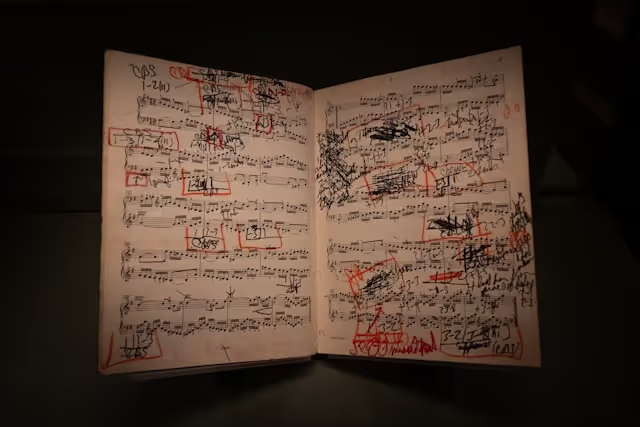
We here at MuseFlow believe in giving you the tools you need to build your musicianship.
That focus on sight reading, incremental learning, and Flow State can help you build your musicianship and fill the gaps from traditional exam structures.
The ways we judge a musician’s skill can dictate the priorities of those musicians as they’re working to improve their craft. So while traditional exams can be really helpful tools, it’s also important that we think about the priorities in how we judge musical success and make sure that it includes a comprehensive view of musicianship.
As you go on your musical learning journey, never forget that you’re an artist!

Sight reading is the ability to play a piece on first sight. It’s a unique skill that requires reading, comprehending, and then translating sheet music in an instant. It involves deciphering rhythm, pitch, time pressure, and coordination…all at the same time.
The benefits of learning this skill are endless. As we talked about in our previous blog, sight reading:
A study in the International Journal of Music Education found that while sight reading is important, training is “often neglected,” even among advanced pianists.
But why is that? It may be in part because traditional piano learning systems are largely insufficient at helping you develop, track, and practice the skill.
We’ve talked in a prior blog post about the different piano grading systems. Music exam boards like ABRSM and RCM offer these systems to help pianists track their progress, set goals, and offer standardized certifications that musicians can use for college and job applications. While these can be very useful, we’ve found that they just don’t prioritize sight reading.
A major component of these grading systems is preparing, polishing, and performing a number of songs. Learning these songs:
In most cases, sight reading is only a small component of the exam. For ABRSM, often seen as the standard for piano grading systems, sight reading makes up about 14% of a typical exam. In fact, across the board, sight reading tends to only occupy about 10-15% of piano grading exams.
But you don’t learn sight reading by polishing your repertoire…you learn it by playing music you’ve never seen before.

Within these grading systems, the sight reading component is usually graded on a pass-fail basis. You either succeed at the given level or you don’t. But sight reading is a lot more nuanced than that.
Your sight reading ability exists on a spectrum. You could have advanced skills of reading fluently at tempo but struggle with rhythms. You could move quickly at the keys you know well but freeze at the ones you don’t. It’s a nuanced skill, and your assessments should be similarly nuanced.
Just like every other aspect of playing the piano, learning sight reading requires practice. There are books that offer guidance and sheet music specifically for this. That could give you a good start, but you’ll always run into the same problem: running out of sheet music.
Sight reading involves playing a piece of music on your first exposure to it, so you can only really practice and get better if you have a steady stream of new-to-you songs. Sight reading books are finite resources that you’ll eventually read through and no longer have use for.
So if the traditional infrastructure for sight reading:
Then how are you supposed to actually learn it?

This is where MuseFlow comes in. While most other piano learning systems treat sight reading as a secondary skill, MuseFlow treats it as a trainable system that’s foundational for your musical progress.
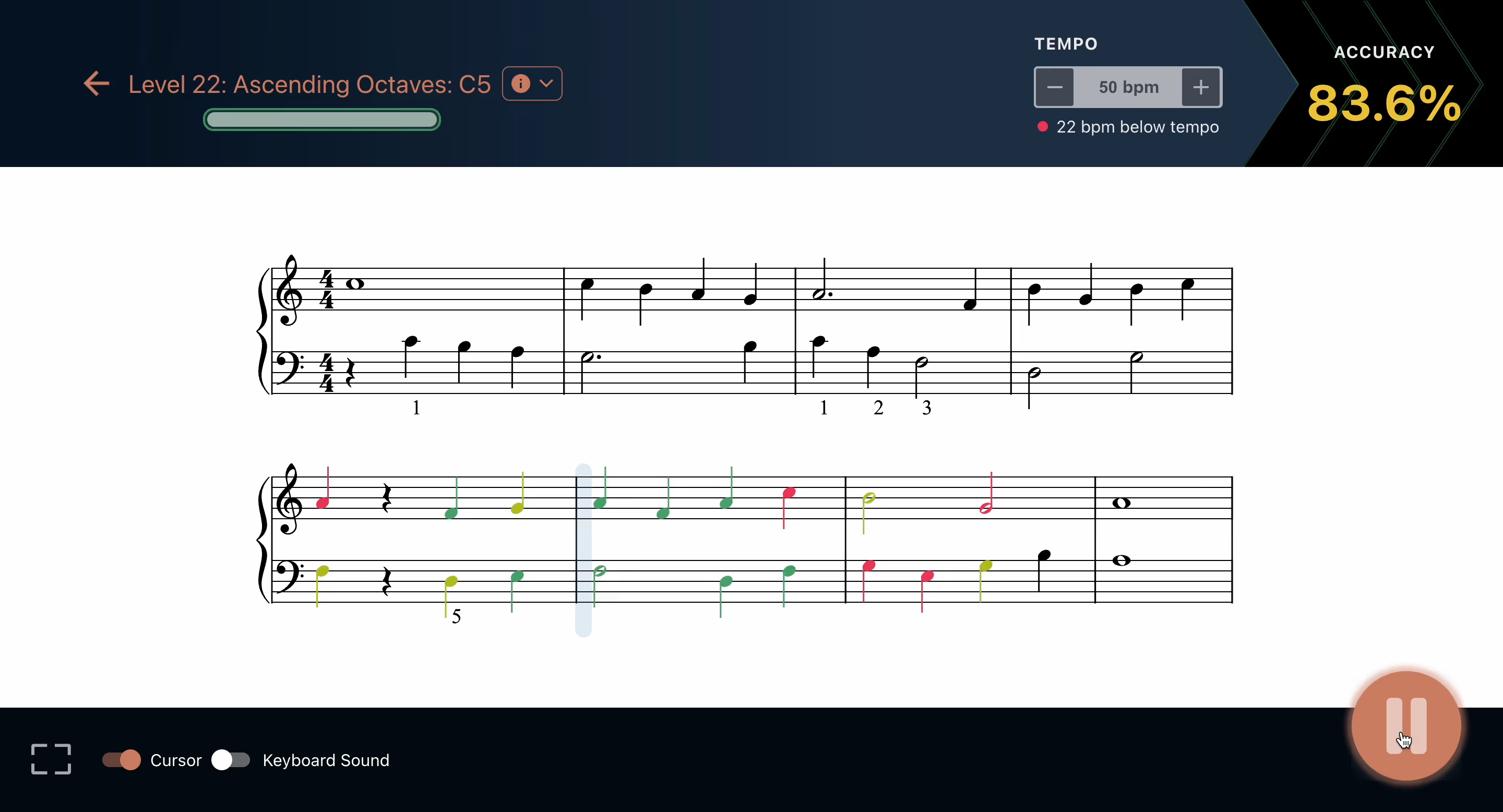
Compared to the pass-fail aspect of traditional piano exams, MuseFlow offers an adaptive, incremental approach to learning sight reading and tracking your skill level. When you play MuseFlow’s gamified system, the app gives you real-time feedback on the notes you play. So you’re able to see exactly where and how you can improve at any given level.
MuseFlow also introduces one new idea at a time, and you can change the tempo whenever you want less or more of a challenge. The hyper-specific nature of the program ensures that it’s always meeting you at your skill level and helping you along as you get better.
And perhaps most importantly, MuseFlow’s algorithm-based generative sheet music gives you an indefinite amount of songs. That means there’s no need to worry about running out of new-to-you music to practice your sight reading.
Sight reading is an essential building block to your musicianship as a pianist. But if learning this skill has ever felt hard for you, that’s totally normal! Traditional learning methods just haven’t been sufficient.
As opposed to traditional systems, MuseFlow:
No matter your age and skill level, you can learn to sight read. All you need are the right tools!
Millions of people play the piano around the world. That’s millions of people at different skill levels, learning and improving at totally different stages of their piano journeys. That’s why we at MuseFlow are fascinated by trying to create a system for all levels and experiences.
But how do pianists judge their skill level? And do different countries use different methods?
This is where piano grading systems come in. These are exams that test things like song performance, scales, and knowledge of music theory. When you pass one of these exams, you can move on to the next grade and your piano-learning journey continues!
Let’s break down the most popular grading systems around the world and dig into which one might be perfect for you.
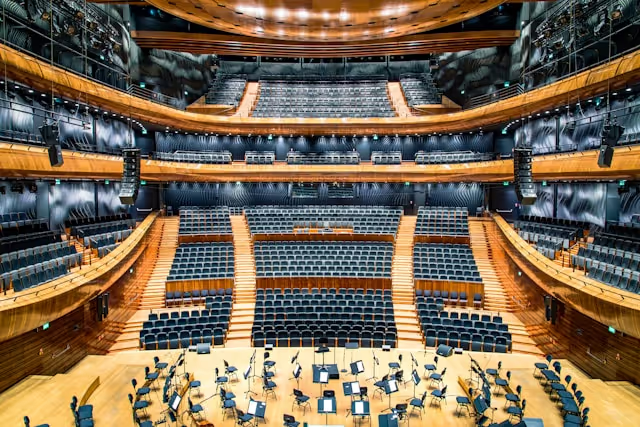
The ABRSM is a British music examination board that has been around since 1889. It offers in-person and digital exams and is one of the most commonly used and recognized grading systems worldwide. It is commonly considered a global standard for music education.
The grades start at Initial Grade for beginners, followed by Grades 1-8 of ascending difficulty. There’s no entry requirement for exams for Initial Grade through Grade 5, but exams for Grades 6-8 come with a prerequisite of passing Grade 5 or above in either Music Theory, Practical Musicianship, or Jazz Practical Grade. Beyond Grade 8, ABRSM offers three levels of advanced diplomas: ARSM, LRSM, and FRSM.
The exams focus on comprehensive musical knowledge, skills, and performance. You will be tested on:
Because their exams have a strong classical and traditional focus, ABRSM is perfect for students interested in classical piano training. And because ABRSM is the most well-known examination board, the grades you earn from them will be recognized around the world.
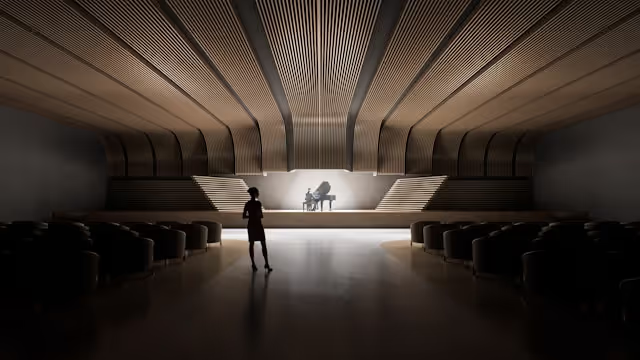
Trinity College London (was established in 1872 with more than 600,000 candidates per year in over 60 countries worldwide. While not quite as popular globally as ABRSM, Trinity College is still widely recognized and respected.
One of the big differences with ABRSM is that Trinity offers a separate pop and rock exam structure as well as their more classical-focused exam. Their exams also offer more flexibility and assessment options to choose from.
TCL has similar grades to ABRSM, with Initial Grade, Grades 1-8, and advanced diplomas ATCL, LTCL, and FTCL. Their exams are performance-focused and have face-to-face and digital options.
Here, you will tested on:
Because of their pop/rock grade track, Trinity College is perfect for someone with a more modern musical focus and sensibility.
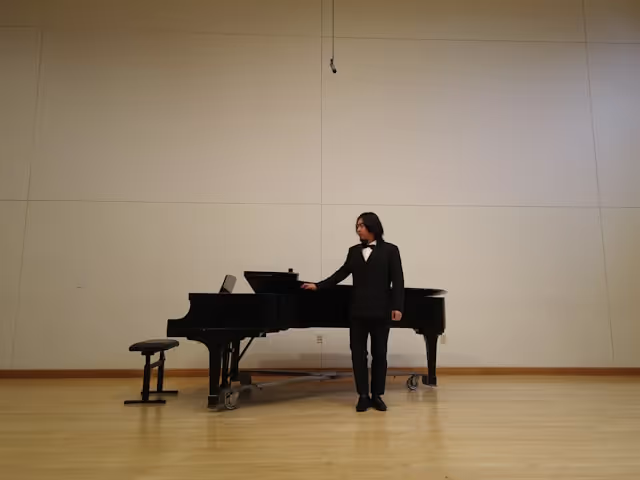
The RCM is a Canadian school based in Toronto and was founded in 1886. Its system is also recognized internationally and is popular in North America, used by 500,000 North American students today.
The RCM system starts with Prep A and Prep B, and then moves on to Grades 1-10. This means that RCM has spread its system into more exams than ABRSM and TCL.
Exams are more focused around classical and jazz, but there is an option to substitute some songs from the pop syllabus as well. From Grades 5-10 you must pass a music theory exam before taking that grade’s performance exam.
In an RCM exam, you will be tested on:
RCM is a popular option for North American pianists who still want internationally recognized certifications. This is one of the more theory-focused systems, so it’s great for those looking to include more theory in their piano education. With more grades, it’s also good for musicians who want a more incremental approach to their musical education.
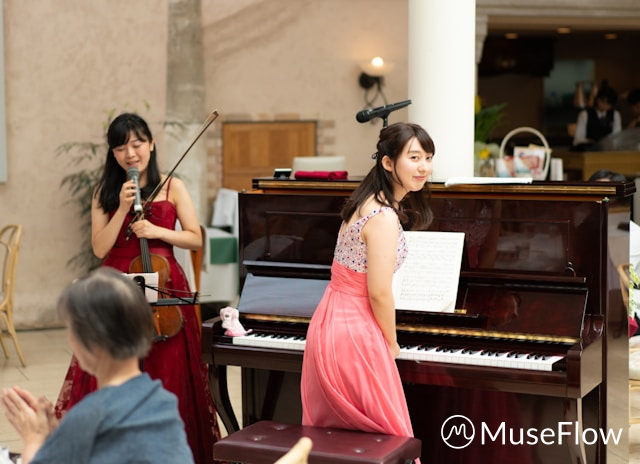
This is far from an exhaustive list of the piano grading systems, but ABRSM, TCL, and RCM are three of the most popular and widely recognized. The systems may come with different styles of exams, but all can help you set standardized goals, track progress, and offer certifications that can be useful for college applications and ensemble auditions. If you’re looking for a way to structure your piano learning progress, these piano grading systems can help you do just that.
When you’re choosing a new instrument to learn, the choices can be daunting. There are literally thousands of instruments out there to choose from, but there’s nothing quite like the piano. That’s why we at MuseFlow offer a fun and effective way to learn this popular and enduring instrument. But what is it about the piano that makes it so important?
The piano is one of the most played instruments in the world. And a big part of that is its versatility across musical genres. The soothing classical music of Beethoven’s “Fur Elise.” The energetic jazz riffs of Duke Ellington’s “Take the ‘A’ Train.” The emotional modern pop bop of Chappell Roan’s “Pink Pony Club.” The piano is a core, foundational component of all of these musical genres, as well as many others (R&B, electronic, musical theater, film scores, Bossa Nova, and Tango to name a few). When you play each genre, you’re introduced to new tempos, melodies, and styles of play. The combinations and play styles are truly endless.
So when you’re learning the piano, you’re really opening yourself up to an entire world of music!
.avif)
Going along with its versatility, the piano is the perfect instrument for composers. That’s because you can play up to 12 notes at once, and it can act as a compression for entire orchestras, bands, and choirs. You can play the bass and rhythm with the left hand and melody and harmony with the right, with both hands operating at different registers, roles, and meters at the same time.
The piano is actually considered a percussion instrument that creates percussive, rhythmic, and immediate sounds when you press a key and the internal hammer strikes a string, or set of strings. But the sound created can also be a sustained pitch, which allows for lyrical, harmonic, and legato sounds. There’s no other instrument on Earth that can do all of this!
Before the invention of the piano, music composers needed access to entire ensembles to write songs. But since its invention, those ensembles have become available at composers’ fingertips. This makes composition more affordable and accessible. If you want to compose a song, all you need to begin is your piano!
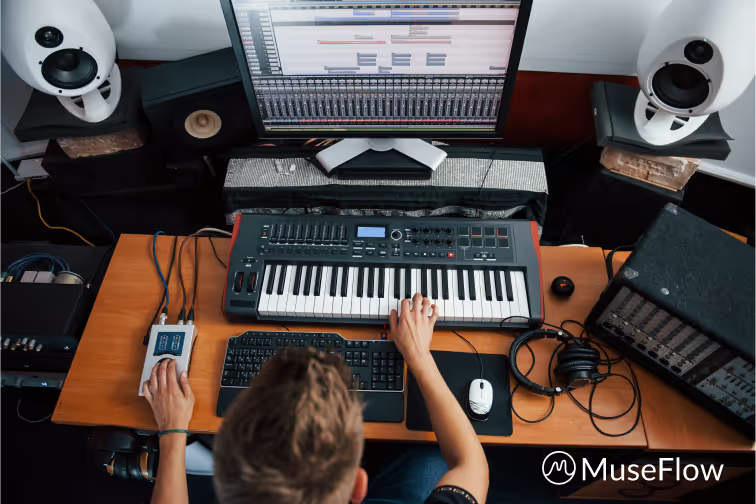
Learning the piano can be a fun way to challenge your brain. One study found that learning the piano can enhance your fine motor skills, since it’s an instrument that requires strong finger dexterity. The way your brain has to compute the sight reading and playing simultaneously can also activate two different parts of your brain at the same time.
It’s no surprise, then, that another study suggested that learning the piano can boost brain processing power. After just a few weeks of lessons, the participants’ ability to process multi-sensory information had improved. Amazingly enough, those participants also reported an enhanced mood, with less anxiety, stress, and depression!
So the next time you’re practicing the piano, you can know that you’re basically doing crunches with your brain.
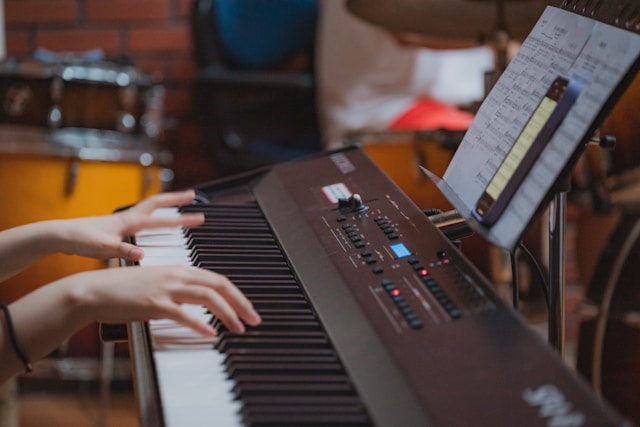
The piano is powerful. A somber chord in a movie soundtrack can bring us to tears. A springy tune at a wedding reception can send everyone, including that one uncle who never dances, running to the dance floor. A new song can stop us in our tracks. A recognizable melody can immediately pull us back to the first time we heard it. There’s an emotional resonance that we get from the piano that’s hard to put into words. But we know it when we feel it.
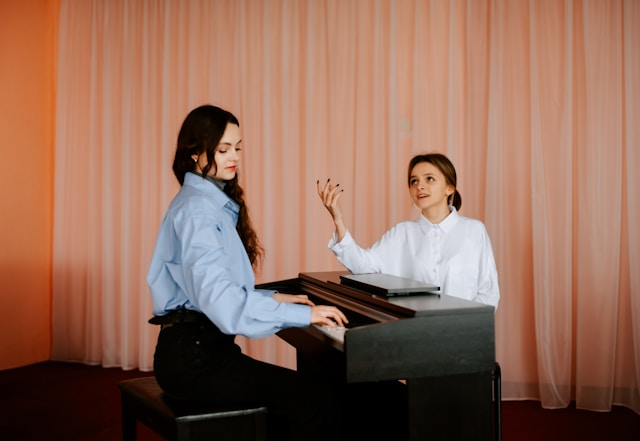
People have been playing this instrument since the 1700s. It’s been played for kings and queens. Its sound has filled massive stadiums of screaming fans as well as intimate living rooms with family and friends.
It’s an instrument unlike any other, able to stand in for just about any other instrument, even a full orchestra. You can play a limitless variety of music on those 88 keys. And since the piano doesn’t require size changes or “starter versions” like some other instruments, you can play a complex concerto on the same piano that you first learned “Ode to Joy” on.
The piano stands alone in its versatility, accessibility, and usefulness across musical genres. It’s a powerful and timeless instrument that has changed the worlds of music and composition forever. We’d say that makes it pretty darn important!
We here at MuseFlow know that there are as many different journeys to the piano bench as there are players - and just as many away from it, too. Below, we discuss the common reasons why people have trouble sticking with traditional music lessons and how the revolutionary app for learning piano MuseFlow challenges each one to help you learn to play, once and for all.
Traditionally, music is taught by a model of rote repetition with limited sight reading development. In fact, many other music apps teach you using this method. While it is entirely possible to learn this way, it takes much longer and can lead to burnout from boredom - especially in fast, intelligent learners. This can also lead to poor retention, slowing progress.
MuseFlow’s ingenious gamified interface makes learning feel like play, introducing music that never repeats to keep your brain engaged. Our adaptive learning adjusts to your skill level, allowing you to get into a Flow State while learning, promoting deep understanding in the quickest, most fun way possible. Studies show that fun is one of the most important factors for sticking with learning music.
The average music lesson in the United States in 2026 ranged from $280-$400 per month, not including access to music rooms throughout the week or purchasing books.
MuseFlow is a much more accessible piano learning option at $24.99 a month - including a free 14-day trial.

Especially if you initially played as a child, shifting priorities as we get older splits our focus and our time. Many little virtuosos had to choose between music and other extracurriculars.
MuseFlow helps you learn to play piano in your own time, even if that’s only 15 minutes a day; in your own space, even if that’s the kitchen table. The MIDI integration allows for support of various keyboard sizes.
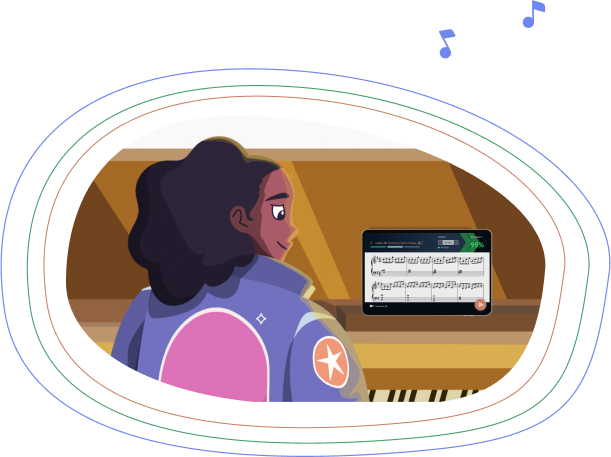
Anyone who has ever lived in an apartment, or with someone picking up the recorder, understands the limits of learning a new instrument in almost any home environment.
MuseFlow’s MIDI keyboard interface allows you to not only learn to play anywhere you can set up the app, but with a pair of headphones, you can play in any environment.

When alone, it can be frustrating to practice repetitively without any indication whether you’re doing anything correctly or incorrectly. Especially when people are beginning to learn on their own, they can drop the practice due to this frustration. Even in classical piano training, with taking lessons once a week, practicing alone six days a week incorrectly reinforces bad habits.
MuseFlow provides instant, precise feedback to gently help you correct mistakes in real-time, and instant audio and visual confirmation when you get it right. This is especially useful for complete beginners and self-taught pianists, so you can build confidence and a solid foundation. Seeing the fruits of your labor and success as you go is likely to increase self-confidence and empower you to keep up with your practice.
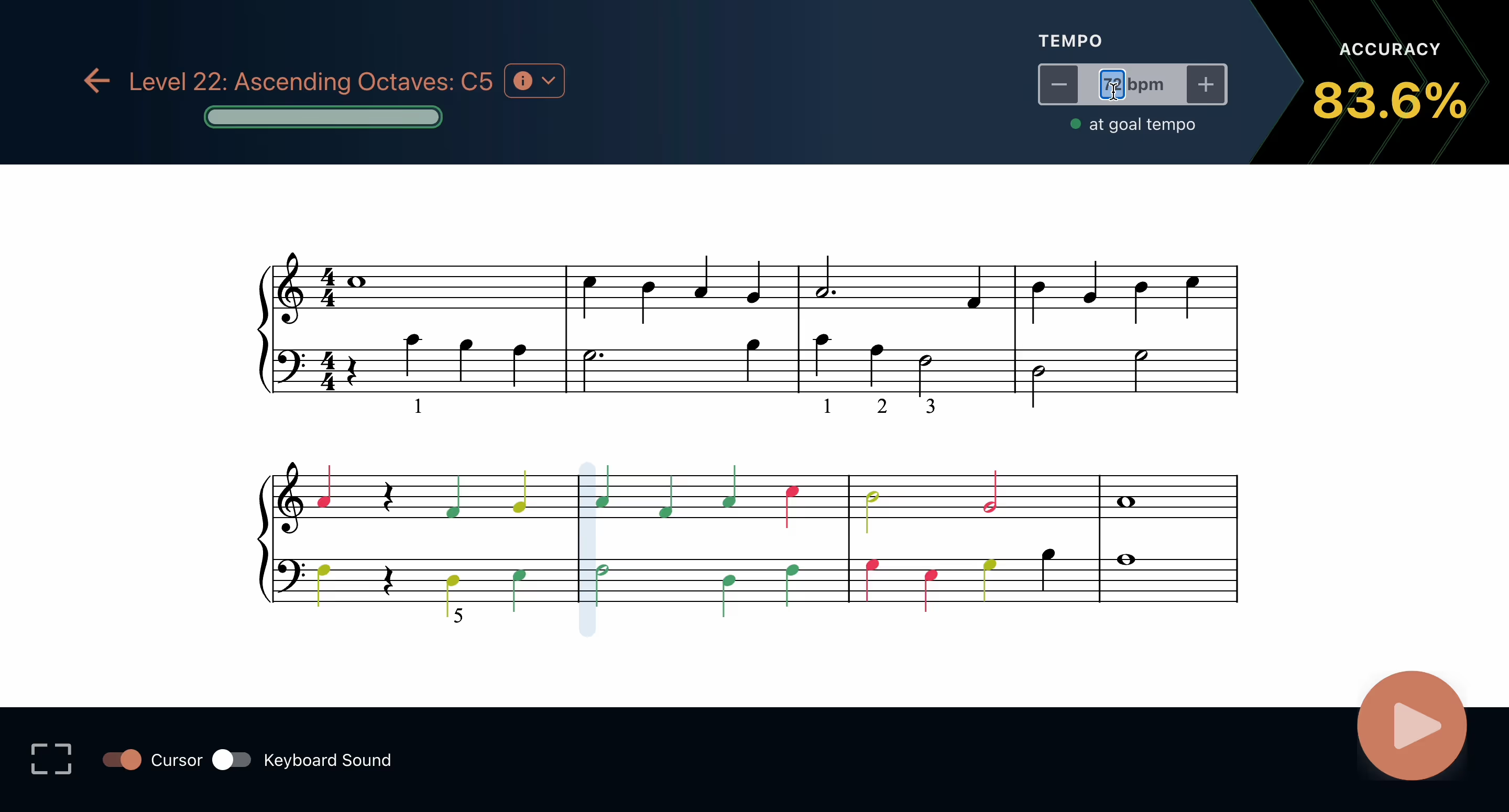
I get it - you want to get right to playing your favorite songs ASAP! The traditional method of rote memorization of the basics definitely has its value, but it does put a damper on your Elton John dreams. Progress can feel like a slog through inefficient exercises through traditional exercises.
MuseFlow’s sight reading first approach teaches you to read your favorite music fluently; not just the ones you’ve memorized, so you can get started once you’ve mastered each lesson. MuseFlow’s adaptive structure also allows you to progress at your own pace.
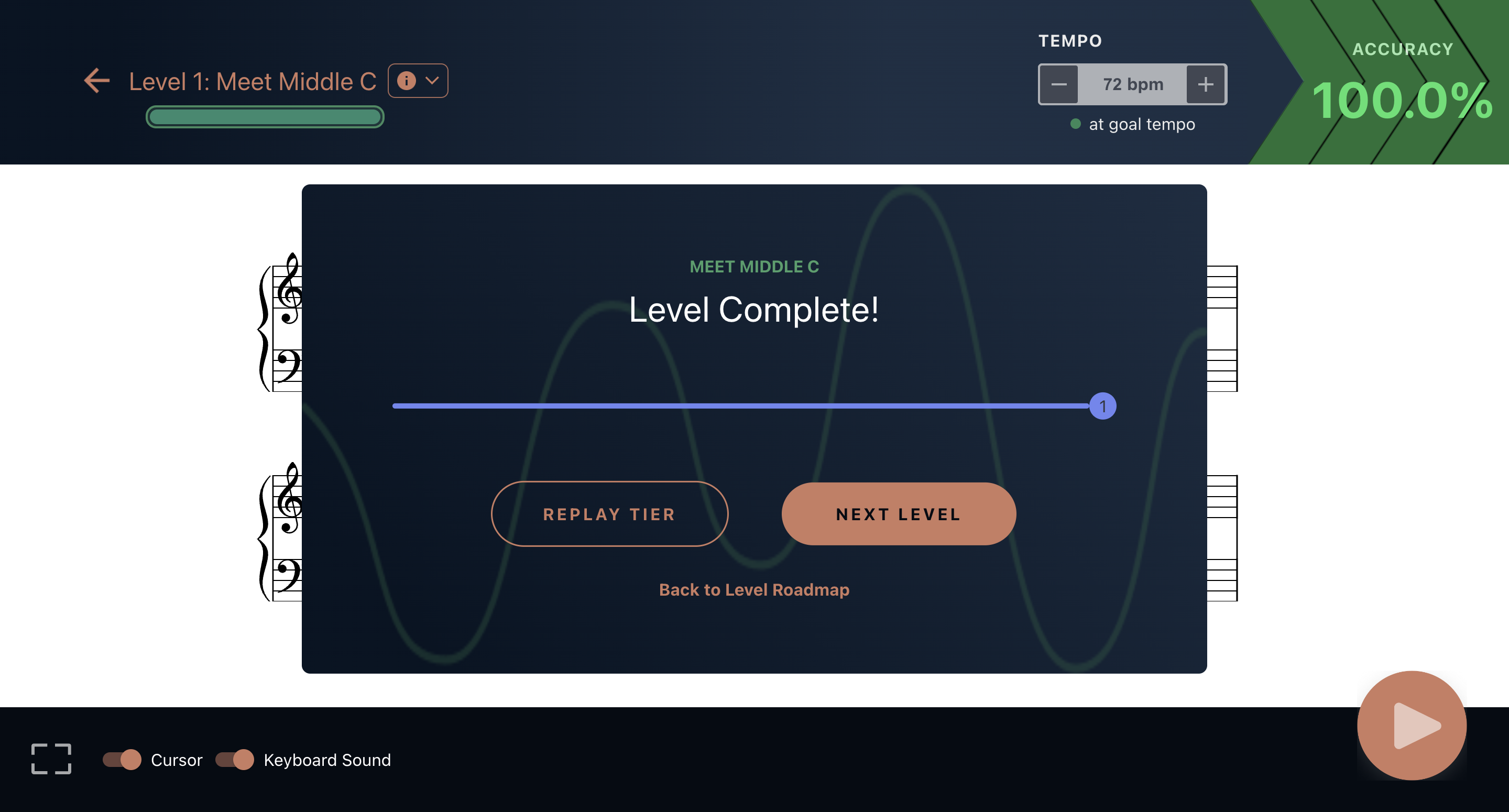
MuseFlow empowers you, no matter where you are in your music learning journey, to reach your music goals by using revolutionary, research and experience backed design to help you overcome common pitfalls.

Keep up to date on our progress as we continue to add new features!