.svg)
Gamified Piano Learning: Why It Works—and When It Helps Most
Many piano learners struggle not because they lack talent, but because sustaining motivation and effective practice over time is difficult. This challenge is especially common among beginners, who often face repetitive exercises before they experience the satisfaction of musical progress. In response, gamified piano learning has emerged as an alternative approach that aims to make practice more engaging while supporting skill development.
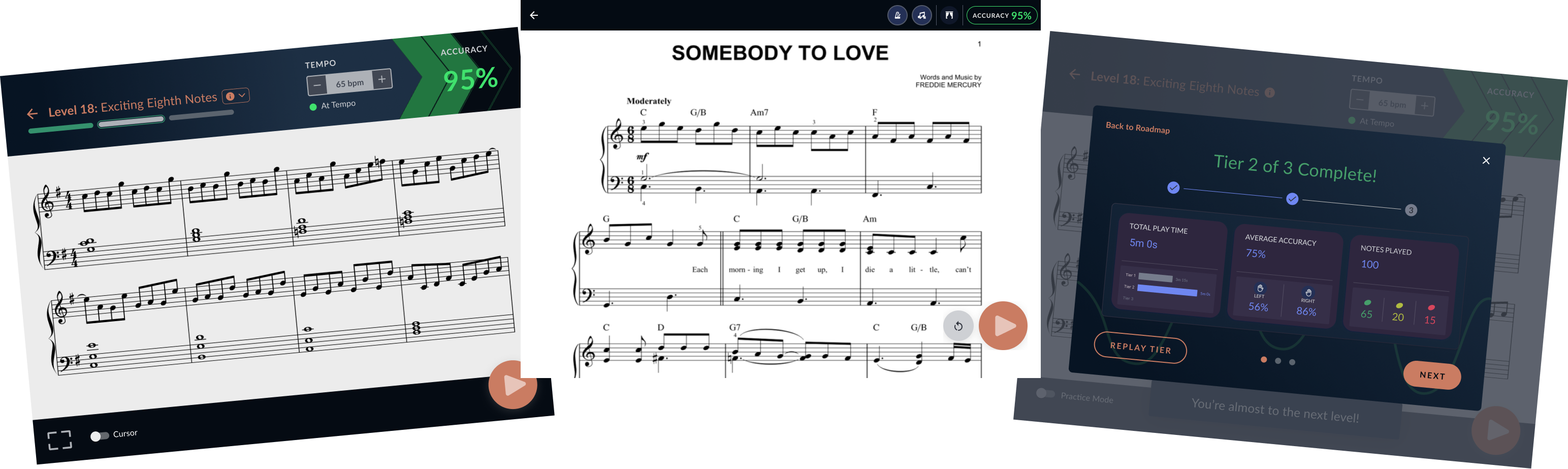
Rather than replacing established teaching traditions, gamified learning builds on insights from cognitive science and music education to address common obstacles such as disengagement, inconsistent practice, and delayed feedback. Platforms such as MuseFlow apply these principles by combining structured skill progression with real-time feedback to help learners maintain consistent practice habits.

Rethinking Traditional Piano Instruction
Conventional piano instruction has long emphasized scales, exercises, and repertoire study. These elements remain foundational in music education, but research suggests that how learners engage with practice can significantly influence outcomes. When instruction relies heavily on repetition without sufficient variation or feedback, learners may struggle to transfer skills across different musical contexts.
Educational research on music learning indicates that skill transfer depends strongly on how closely new tasks resemble prior learning experiences. Skills practiced only in narrow or repetitive contexts are less likely to generalize unless learners encounter them across varied musical material. This helps explain why some students plateau despite consistent effort.

Engagement, Feedback, and the Role of Gamification
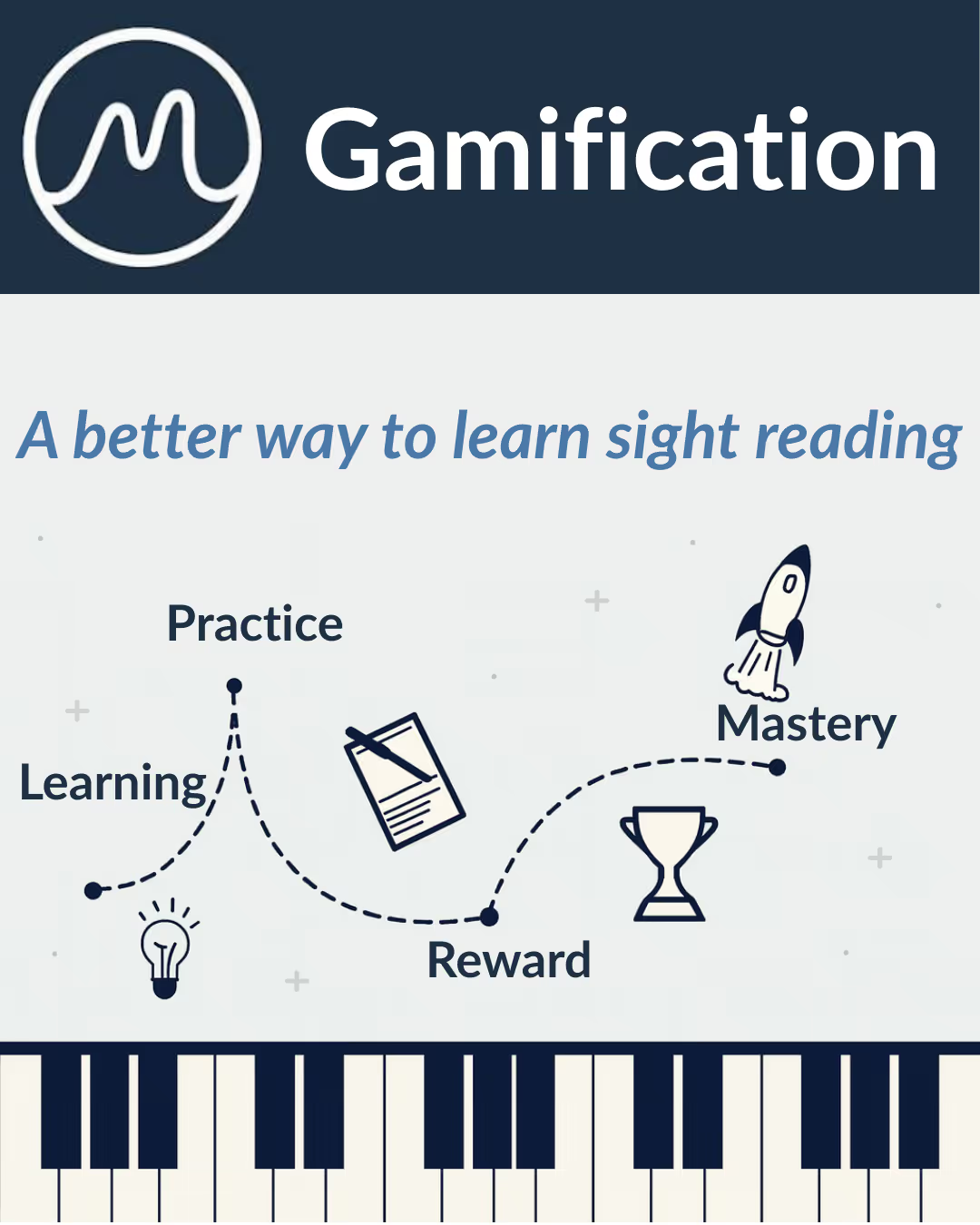
Gamified piano learning addresses these challenges by integrating structured feedback, progressive difficulty, and visible progress indicators. Gamification does not simply mean adding points or badges; it refers to applying design principles that support sustained attention and goal-directed behavior.
Research in educational psychology consistently shows that student engagement plays a critical role in learning outcomes, particularly when feedback is immediate and actionable. In music learning, timely feedback helps prevent errors from becoming ingrained habits, which is especially important for beginners developing fundamental skills like sight reading and rhythm.
Flow State and Effective Practice
One concept often referenced in discussions of gamified learning is flow state, a term introduced by psychologist Mihaly Csikszentmihalyi. Flow describes a mental state in which individuals are fully absorbed in an activity because the level of challenge closely matches their skill level. In educational contexts, this balance helps learners remain focused without becoming bored or overwhelmed.
In music education, flow is more likely to occur when learners encounter new but manageable material, receive clear feedback, and can measure progress. These conditions align closely with findings from learning science that emphasize optimal challenge and deliberate practice as drivers of skill acquisition.
Music educator Dr. John Koch has described this approach as transformative, noting that sustained flow is difficult for many learners to achieve through unstructured practice alone. His observation reflects a broader consensus in pedagogy: learning environments that actively manage challenge and feedback tend to support deeper engagement.

Applying These Principles in Piano Learning
Gamified piano platforms apply these research-backed ideas by:
- Providing real-time visual and auditory feedback that links action to outcome
- Adjusting difficulty incrementally to maintain optimal challenge
- Encouraging varied practice through continuously changing material rather than rote repetition
By emphasizing sight reading and pattern recognition across many short exercises, learners practice skills in multiple contexts. This supports better transfer when encountering unfamiliar music, a key goal of musicianship.
Importantly, this approach does not eliminate the role of teachers. Instead, it allows technical skill development to occur more efficiently between lessons, freeing instructional time for musical expression, interpretation, and creativity.

Measurable Benefits and Motivation
Motivation remains one of the strongest predictors of long-term learning success. Studies on gamified learning environments show that learners are more likely to maintain consistent practice when tasks provide immediate feedback and visible progress.
While individual results vary, platforms that incorporate these principles often report higher practice frequency and longer engagement compared with unstructured self-practice. This aligns with broader findings that enjoyment and perceived progress significantly influence persistence in skill-based learning.
Gamified Piano Learning for All Ages
Gamified learning is not limited to children. Adults, in particular, benefit from structured feedback and flexible practice schedules. Whether a learner is starting from scratch or returning to piano after years away, gamified approaches can support consistent practice while reinforcing core skills such as sight-reading and rhythm.
Final Thoughts
Gamified piano learning works not because it turns music into a game, but because it applies well-established learning principles: engagement, feedback, variation, and optimal challenge. When thoughtfully designed, it complements traditional instruction and helps learners build transferable skills more efficiently.
As music education continues to evolve, approaches that combine pedagogical rigor with learner-centered design may offer a more sustainable path for long-term musical growth.