.svg)
It’s a story as old as time. You picked up an instrument at a young age, stuck with it for a few years, took exams, played recitals. It was a part of who you were. Then one day your music lessons stopped, and before you knew it that instrument that was once so important to you was collecting dust in a closet.
One study showed that about 50% of students quit their instrument by the time they turn 17. So what are some of the reasons people drop out, and how do we address those so we can get back into it?

Frustration With the Legacy Methods
Students who drop out often cite boredom and frustration with the way they’ve been taught. The traditional learning systems tend to focus on rote memorization over real musicianship. The lack of variety of practicing the same song over and over again can suck the joy out of learning.
One study looked at some of the reasons students drop out of music education, and one of the main elements was the lack of autonomy associated with their classes. These students had started their music education “not out of personal interest but due to parental influence.” Furthermore, the study cited “a restrictive approach to learning, such as a limited repertoire” that creates a “gap between what is taught and personal interests.” If you aren’t learning the kinds of music that actually interest you, it can be hard to stay engaged!
These elements can all lead to music education feeling like an obligation rather than something you’re actively choosing to do. It makes a lot of sense that so many students quit in their high school years. The music classes of elementary and middle school disappear, school gets harder, and other interests start taking up more and more of your time. If music has felt like a frustrating obligation, you may find relief in focusing your energy on other interests.
The Solution
If the strict schedule of traditional methods feels like school, and if you’re not someone who thrives or engages with that very specific structure, you need to find a system that works with you. Make a plan that fits your schedule and can be flexible to the happenings of your life. Align your learning with the most productive period of your day. It doesn’t matter if it’s 9am or 2am (unless you have roommates or neighbors, then it might matter when you play).
Find the reason you want to pick up an instrument again. Maybe you miss the creativity of playing an instrument. Maybe you want to perform… whether it’s just for friends or on a stage. Maybe you just want to learn without the strict structures and expectations of classes and exams.
The key here is want. Let your interests drive you rather than your obligations. That will help you create the best conditions to maximize your enjoyment when you pick up your instrument, so you’ll want to pick it up again and again after that.
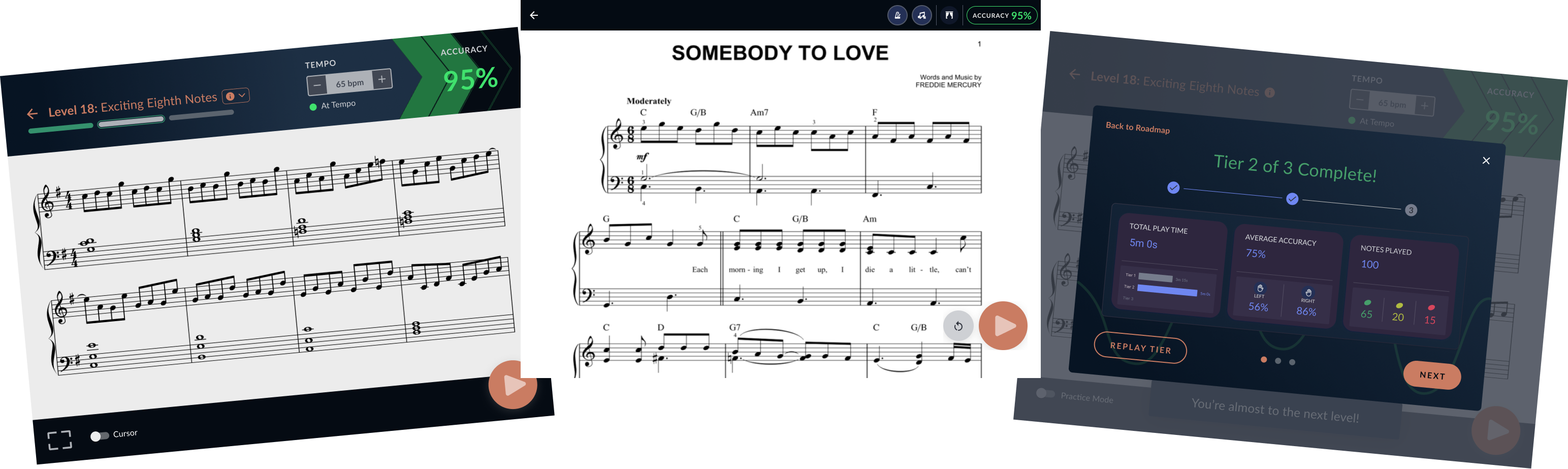
Our online learning system MuseFlow allows you to pick up the piano whenever you want, for however long you want. Learn at your own pace with your own timeline so you never feel like learning is an obligation again. And our focus on sight reading over rote memorization means you can learn to play the kinds of songs you actually want to play and align your learning with your interests!
.jpg)
Feeling Not Good Enough
That same study also found that competency concerns were a major factor in students dropping out of music learning. Music competitions, exams, and comparing to others are all cited as things that can make a student lose self-confidence in their musical abilities. The study also states, “As students progress, increased difficulty may exacerbate feelings of incompetence, particularly if they are not adequately prepared, indicating that the perception of effort versus reward may influence their decision to continue.”
Learning an instrument can be hard, especially if you don’t feel like your classes are doing enough to help you improve. At a young age when self-esteem can be so fragile, it can be hard to keep returning to something that makes you feel inadequate.
The Solution
You need a system that encourages Flow State. As we discussed in a previous post, Flow State is a state of deep focus that occurs when challenge and skill are carefully balanced. If a challenge is too easy you can get bored, but too hard and you can get frustrated. When you’re in your Flow State, you can feel engaged, motivated, and perfectly challenged. Time can pass without noticing because you’re so perfectly focused and having fun.
MuseFlow’s gamified system offers incremental challenge levels to ensure that you’re always presented with the perfect challenge. And our indefinite sheet music brings variety to your learning and keeps things fresh. These can come together to create the perfect conditions for Flow State, which can help you stay motivated, boost your self-confidence, and make learning fun.

Conclusion
There are plenty of reasons that you may have quit learning your instrument as a kid. And it can be hard to find the motivation to pick it up again. That’s okay. But picking up that instrument again can lead to a whole host of cognitive and emotional benefits. The key is asking yourself why you want to learn again and letting that drive you. If you create a learning environment that engages and motivates you rather than frustrates and discourages, you’ll get more enjoyment from your instrument, stay engaged, and keep with it. We at MuseFlow are here to help you do just that.