.svg)
How to Learn Piano With Game-Like Lessons?Evidence-Based Insights
Learning piano can feel overwhelming for beginners: tedious scales, repetitive exercises, and slow progress often lead to frustration. Recent advances in digital music education offer a new approach: applying principles from game design to piano learning. By structuring lessons around sight reading mastery, immediate feedback, and progressive challenges, learners can develop real musical skills while staying motivated.
This article explores how game-like learning works in piano education and how it can complement traditional instruction.

The Psychology Behind Game-Based Learning
Game-like learning leverages psychological principles that enhance motivation and skill acquisition:
- Immediate Feedback
Games provide instant feedback, allowing learners to correct mistakes, overcome learning challenges in real time. In piano practice, this means note accuracy, rhythm, and finger placement can be reinforced immediately rather than waiting for weekly lessons. Research in motor learning shows that immediate feedback improves skill retention and accelerates progress. - Progressive Challenge and Flow
Maintaining an optimal challenge level keeps learners in the “flow state,” where engagement is high, and skills are absorbed efficiently. Tasks that are too easy cause boredom, while tasks that are too hard trigger frustration. Gradually increasing difficulty helps learners stay in the zone for effective practice. - Achievement Systems and Motivation
Points, levels, and milestone tracking support intrinsic motivation. When progress is visible and structured, learners focus on mastering skills rather than simply completing exercises, creating positive associations with practice. - Social Interaction and Community
Collaborative features, leaderboards, or shared practice goals provide a sense of connection and accountability. Social engagement has been shown to enhance motivation and retention in adult learning contexts.
Sight Reading as the Core Mechanic
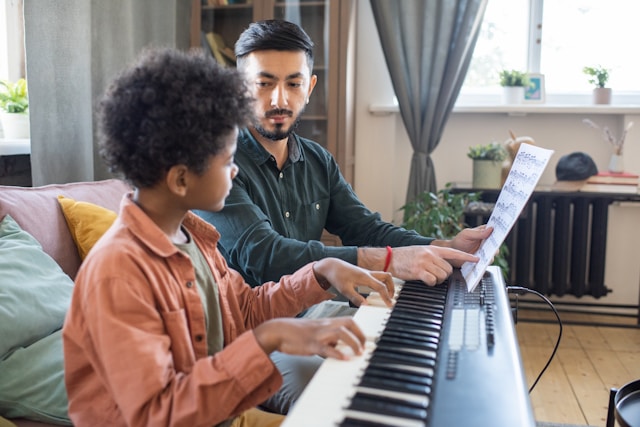
Unlike traditional apps that focus on memorizing songs, effective game-like piano lessons center on sight reading:
- Foundation of musical literacy: Reading notes fluently unlocks the ability to play any music.
- Transferable skills: Sight reading improves overall musical understanding and enhances rhythm, timing, and interpretation.
- Independent learning: Students develop confidence to explore new pieces without reliance on tutorials.
Studies indicate that proficient sight readers exhibit better integration of musical skills and understanding. Structuring lessons around sight reading turns practice into a skill-building game rather than a repetitive drill

Structuring Practice: Campaign and Exploration Modes
Game-inspired lesson design often combines structured progression with learner choice:
- Campaign Mode: Provides a clear, guided path from simple to complex skills. Ideal for beginners who benefit from scaffolding.
- Exploration Mode: Allows learners to focus on areas that interest them most, promoting autonomy and engagement.
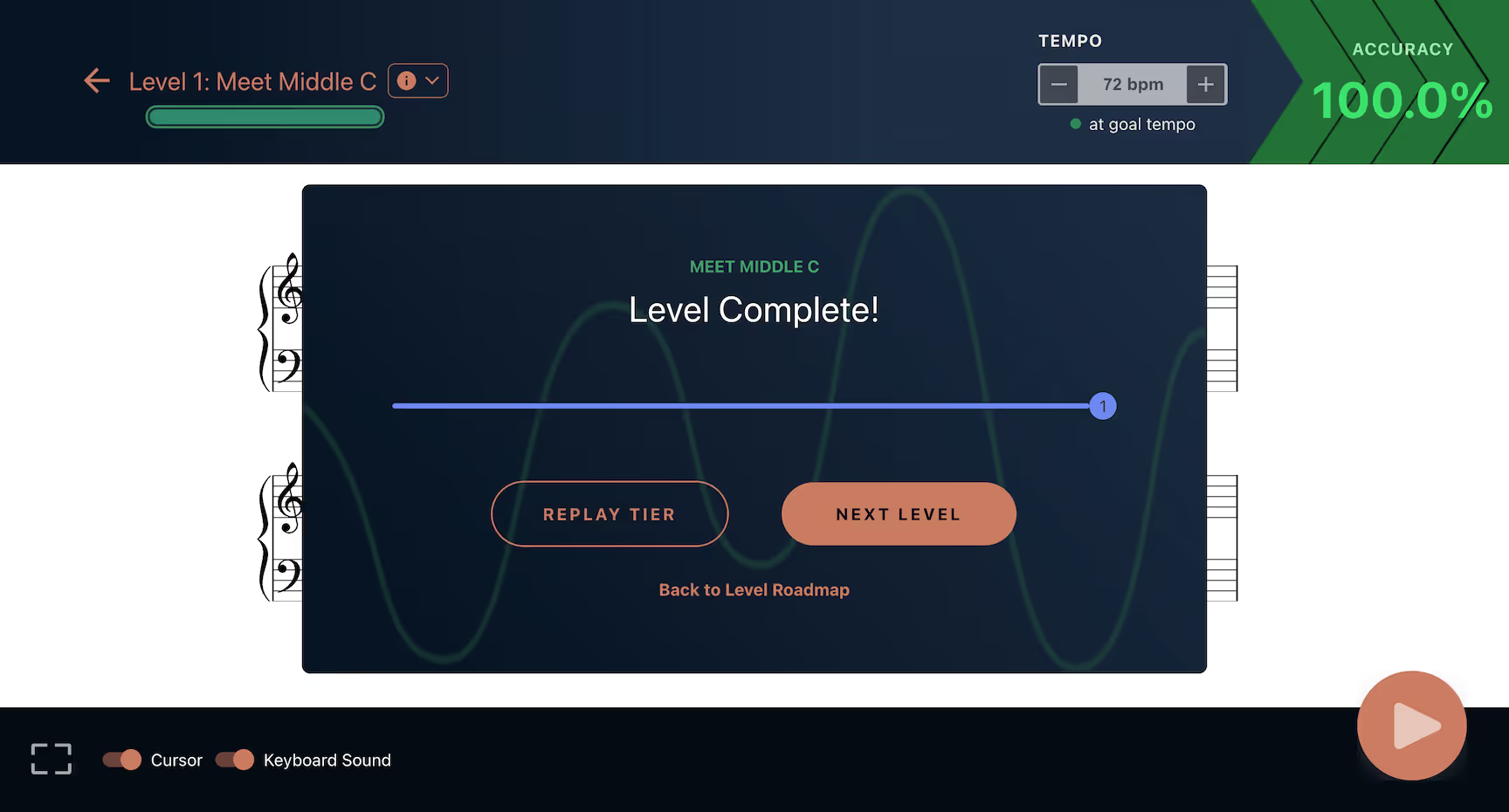
Both approaches reinforce real musical achievement rather than superficial progress. Every completed level corresponds to measurable skill improvement.
Real-Time Feedback and Visual Rewards
Integrating digital tools with a MIDI keyboard enables instant feedback:
- Correct notes are confirmed visually and aurally.
- Mistakes are gently highlighted without disrupting the learning flow.
- Progress tracking charts improvement over time, giving learners tangible evidence of skill development.
Research supports that such immediate, structured feedback improves retention and reduces error reinforcement.

Applying Game-Based Principles to Daily Practice
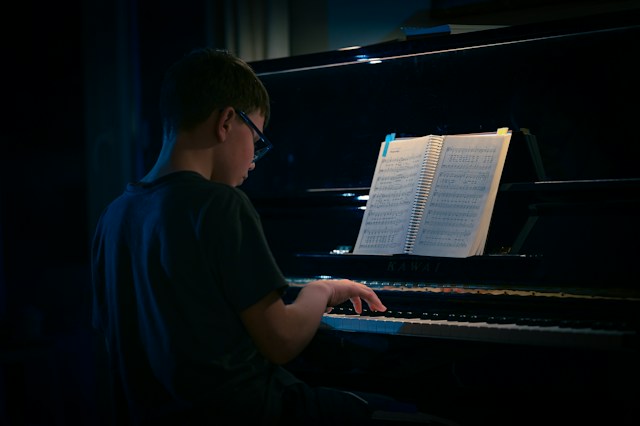
- Short, Focused Sessions: Practice 10–20 minutes daily rather than long, infrequent sessions. Distributed, consistent practice enhances retention.
- Set Specific Goals: Use levels or challenges to structure objectives for each session.
- Embrace Mistakes: Frame errors as learning opportunities to maintain motivation.
- Track Progress: Celebrate improvements to reinforce engagement and confidence.
By combining these strategies with sight reading exercises, learners steadily build transferable skills applicable to any musical style.

Evidence of Effectiveness
While testimonials provide anecdotal support, objective research validates these approaches:
- Immediate feedback accelerates learning and reduces frustration.
- Progressive difficulty promotes flow and sustained engagement.
- Gamified achievement systems enhance intrinsic motivation, a critical factor in adult learning.
Integrating these principles into practice produces measurable improvement, regardless of prior musical experience.
Getting Started
To begin a game-like piano learning journey:
- Choose a digital piano or MIDI keyboard compatible with your chosen platform. Such as MuseFlow
- Select a structured or flexible practice path based on your learning goals.
- Incorporate short, consistent practice sessions with clear objectives.
- Focus on sight reading first to build a foundation for independent exploration.
- Use progress tracking to maintain motivation and reinforce skill mastery.
This approach aligns practice with how the brain learns motor and cognitive skills, creating efficient and enjoyable lessons.
Conclusion
Game-like piano learning is more than a fun gimmick—it’s an evidence-based approach to mastering sight reading, technique, and musical literacy. By combining immediate feedback, structured progression, and intrinsic motivation, learners develop real musical skills while remaining engaged.
Structured, interactive lessons make every practice session meaningful. With consistent application, these methods can transform beginner frustration into confidence and genuine musical independence.

.jpg)