.svg)
Piano Learning as Stress ReliefA Science-Backed Alternative to Meditation
In a fast-paced, always-on world, many adults are searching for practical ways to manage daily stress. While meditation apps and breathing exercises are commonly recommended, they are not effective for everyone. For people who struggle with sitting still or quieting their thoughts, learning to play the piano can offer a surprisingly effective alternative for stress relief—one that is active, engaging, and emotionally rewarding.
Rather than attempting to “clear the mind,” piano learning provides structure, focus, and creative output. For many learners, this combination naturally reduces anxiety while producing something tangible: music.

How Music Engagement Reduces Stress
Decades of research in music psychology and clinical music therapy suggest that active music-making has measurable effects on the nervous system. Playing an instrument engages auditory, motor, and cognitive regions of the brain simultaneously, which helps redirect attention away from stressors.
Studies published in peer-reviewed music therapy and neuroscience journals have shown that engaging with music can support lower cortisol levels, improve mood, and activate reward pathways associated with relaxation and emotional regulation. Unlike passive music listening, piano playing requires intention and coordination, which encourages sustained focus and mental absorption.
Importantly, these benefits are not limited to advanced musicians. Even beginners practicing simple patterns or melodies can experience a calming effect when attention shifts from external stress to controlled, rhythmic movement.
Piano Practice vs. Traditional Meditation
Meditation is often recommended for stress management, but it can feel abstract or frustrating for beginners. Piano learning offers several practical advantages:
Active Focus
Instead of trying to silence thoughts, piano practice naturally occupies the mind with rhythm, timing, and coordination.
Immediate Feedback
Hearing correct notes and harmonies provides instant confirmation, reinforcing progress and confidence.
Visible Improvement
Unlike meditation, where progress is internal and gradual, musical improvement is audible—creating motivation and a sense of achievement.
Emotional Expression
Music allows emotional release in ways that silent mindfulness practices cannot always provide.
For individuals who find traditional meditation difficult to sustain, piano learning can deliver similar calming effects through a more engaging pathway.

Flow State and Stress Reduction
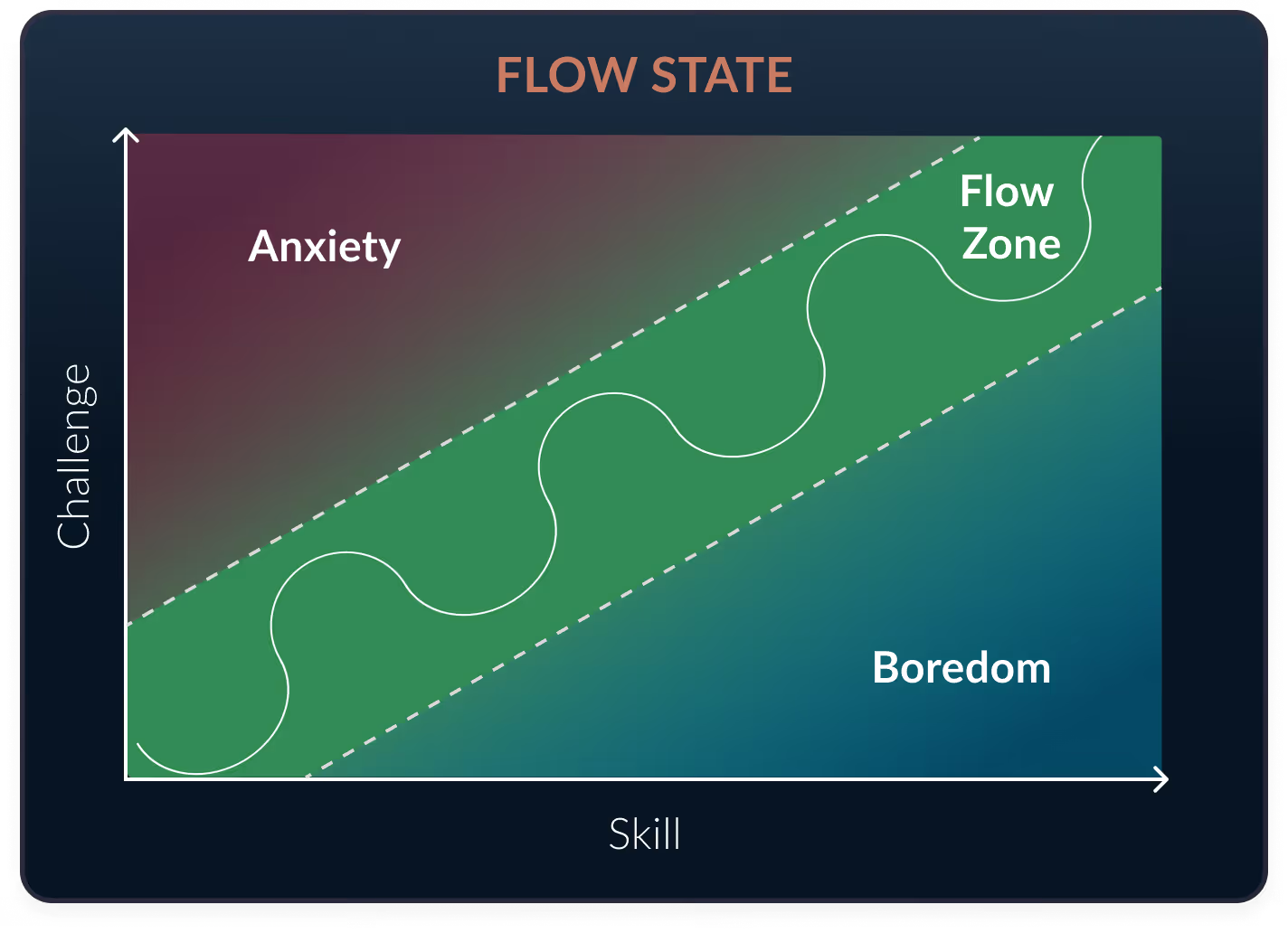
Psychological research on flow states—a condition where challenge and skill are well balanced—shows that people experience reduced self-criticism, heightened focus, and improved mood. Piano practice is particularly effective at inducing flow because it combines structure with creativity.
When learners enter this state, time perception often fades, mental noise quiets, and stress responses decrease. Flow shares many characteristics with mindfulness, but it occurs organically during meaningful activity rather than deliberate stillness.
Music educators frequently observe that learners feel mentally refreshed after even short sessions of focused piano practice, especially when tasks are appropriately matched to their ability level.
Real-World Experience from Adult Learners
Many adult beginners report that 15–20 minutes of piano practice produces noticeable physical and mental changes. Common observations include slower breathing, reduced shoulder tension, and improved emotional clarity after practice sessions.
Learners often describe piano time as the only part of their day where multitasking stops completely. The combination of hand movement, visual reading, and auditory feedback creates a mental “reset” that is difficult to achieve through passive relaxation methods.
This effect appears strongest when practice is pressure-free and goal-appropriate—focused on consistency rather than perfection in music.
Creating a Low-Pressure Learning Environment
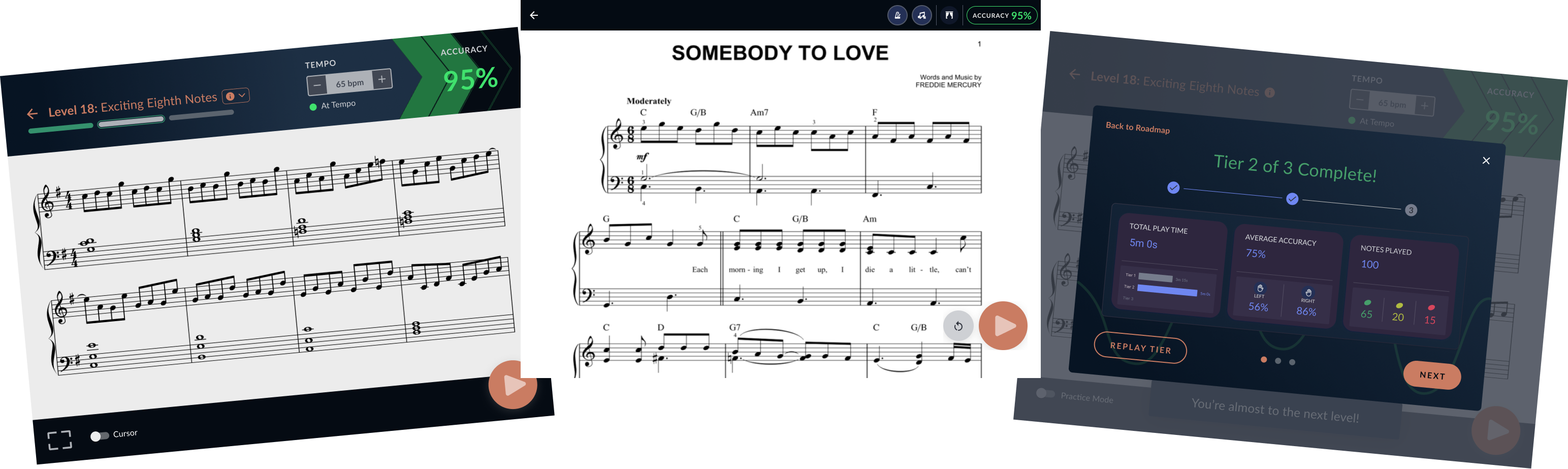
Traditional piano lessons can sometimes introduce performance anxiety, especially for adults returning to learning after many years. Modern digital piano learning platforms, including tools like MuseFlow, aim to reduce these stressors by emphasizing self-paced progress and supportive feedback.
By removing judgment and external pressure, learners are more likely to stay relaxed and engaged. Real-time feedback and structured exercises help maintain focus without triggering fear of mistakes. When progress is measured gently, practice sessions are more likely to feel restorative rather than demanding.
It’s important to note that piano learning is not a substitute for clinical mental health treatment, but it can complement healthy stress-management routines and support emotional well-being.
Practical Ways to Use Piano for Stress Relief
You don’t need long sessions to benefit. Research and learner experience suggest consistency matters more than duration:
- Morning Practice: Establish calm focus before daily demands begin.
- Midday Reset: Short sessions can restore mental energy more effectively than passive scrolling.
- Evening Wind-Down: Gentle practice helps transition from work stress to rest.
Why Active Music-Making Works
Compared to passive relaxation techniques, piano learning engages multiple systems at once:
- Cognitive: Improves attention, working memory, and emotional regulation.
- Physical: Releases muscle tension while supporting fine motor control.
- Emotional: Offers expression and satisfaction that silent techniques may lack.
Making Piano Part of Your Stress-Care Routine
Learning piano for stress relief is not about performance or mastery. It’s about creating a repeatable space for focus, expression, and calm. Over time, this practice can build resilience, confidence, and emotional balance alongside musical skill.
For many adults, the piano bench becomes more than a place to practice—it becomes a reliable refuge from daily pressure, offering both mental clarity and the joy of making music.