.svg)
Why Traditional Sight Reading Learning Methods Don't Work
Sight reading is the ability to play a piece on first sight. It’s a unique skill that requires reading, comprehending, and then translating sheet music in an instant. It involves deciphering rhythm, pitch, time pressure, and coordination…all at the same time.
The benefits of learning this skill are endless. As we talked about in our previous blog, sight reading:
- Is important for accompanists and members of orchestras, bands, and choirs
- Expands your repertoire
- Enhances your musical understanding
- Improves your versatility
- Boosts confidence.
- Raises your musical floor
A study in the International Journal of Music Education found that while sight reading is important, training is “often neglected,” even among advanced pianists.
But why is that? It may be in part because traditional piano learning systems are largely insufficient at helping you develop, track, and practice the skill.
PIANO GRADING SYSTEMS DON’T PRIORITIZE SIGHT READING
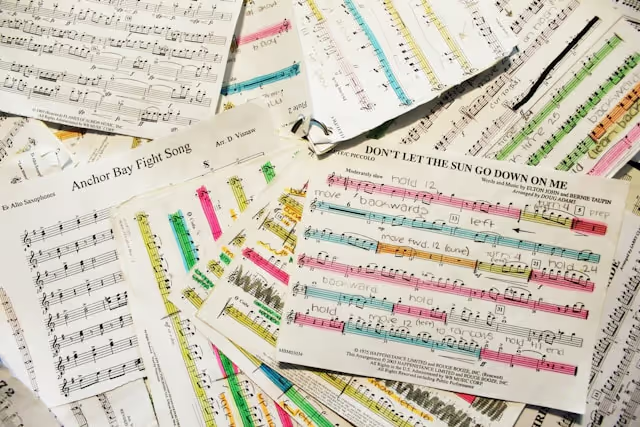
We’ve talked in a prior blog post about the different piano grading systems. Music exam boards like ABRSM and RCM offer these systems to help pianists track their progress, set goals, and offer standardized certifications that musicians can use for college and job applications. While these can be very useful, we’ve found that they just don’t prioritize sight reading.
A major component of these grading systems is preparing, polishing, and performing a number of songs. Learning these songs:
- Expands your repertoire
- Helps teach you the technical skills needed to execute those songs
- Rewards repetition and memorization over real-time music reading
In most cases, sight reading is only a small component of the exam. For ABRSM, often seen as the standard for piano grading systems, sight reading makes up about 14% of a typical exam. In fact, across the board, sight reading tends to only occupy about 10-15% of piano grading exams.
But you don’t learn sight reading by polishing your repertoire…you learn it by playing music you’ve never seen before.

EXAMS LACK NUANCE WHEN IT COMES TO SIGHT READING
Within these grading systems, the sight reading component is usually graded on a pass-fail basis. You either succeed at the given level or you don’t. But sight reading is a lot more nuanced than that.
Your sight reading ability exists on a spectrum. You could have advanced skills of reading fluently at tempo but struggle with rhythms. You could move quickly at the keys you know well but freeze at the ones you don’t. It’s a nuanced skill, and your assessments should be similarly nuanced.
BOOKS JUST AREN’T ENOUGH
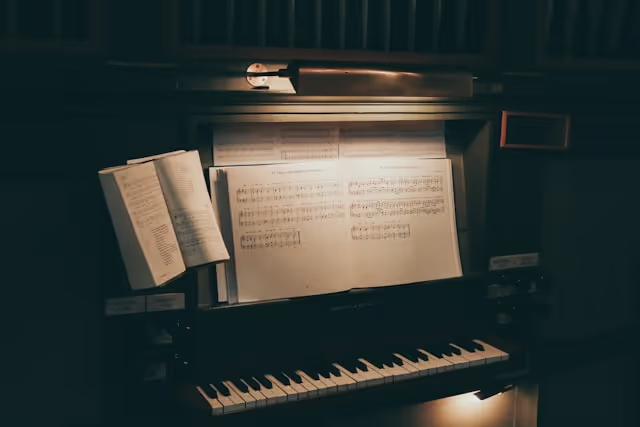
Just like every other aspect of playing the piano, learning sight reading requires practice. There are books that offer guidance and sheet music specifically for this. That could give you a good start, but you’ll always run into the same problem: running out of sheet music.
Sight reading involves playing a piece of music on your first exposure to it, so you can only really practice and get better if you have a steady stream of new-to-you songs. Sight reading books are finite resources that you’ll eventually read through and no longer have use for.
So if the traditional infrastructure for sight reading:
- Doesn’t prioritize it
- Lacks nuance
- Doesn’t offer enough material to actually practice
Then how are you supposed to actually learn it?

ENTER MUSEFLOW
This is where MuseFlow comes in. While most other piano learning systems treat sight reading as a secondary skill, MuseFlow treats it as a trainable system that’s foundational for your musical progress.
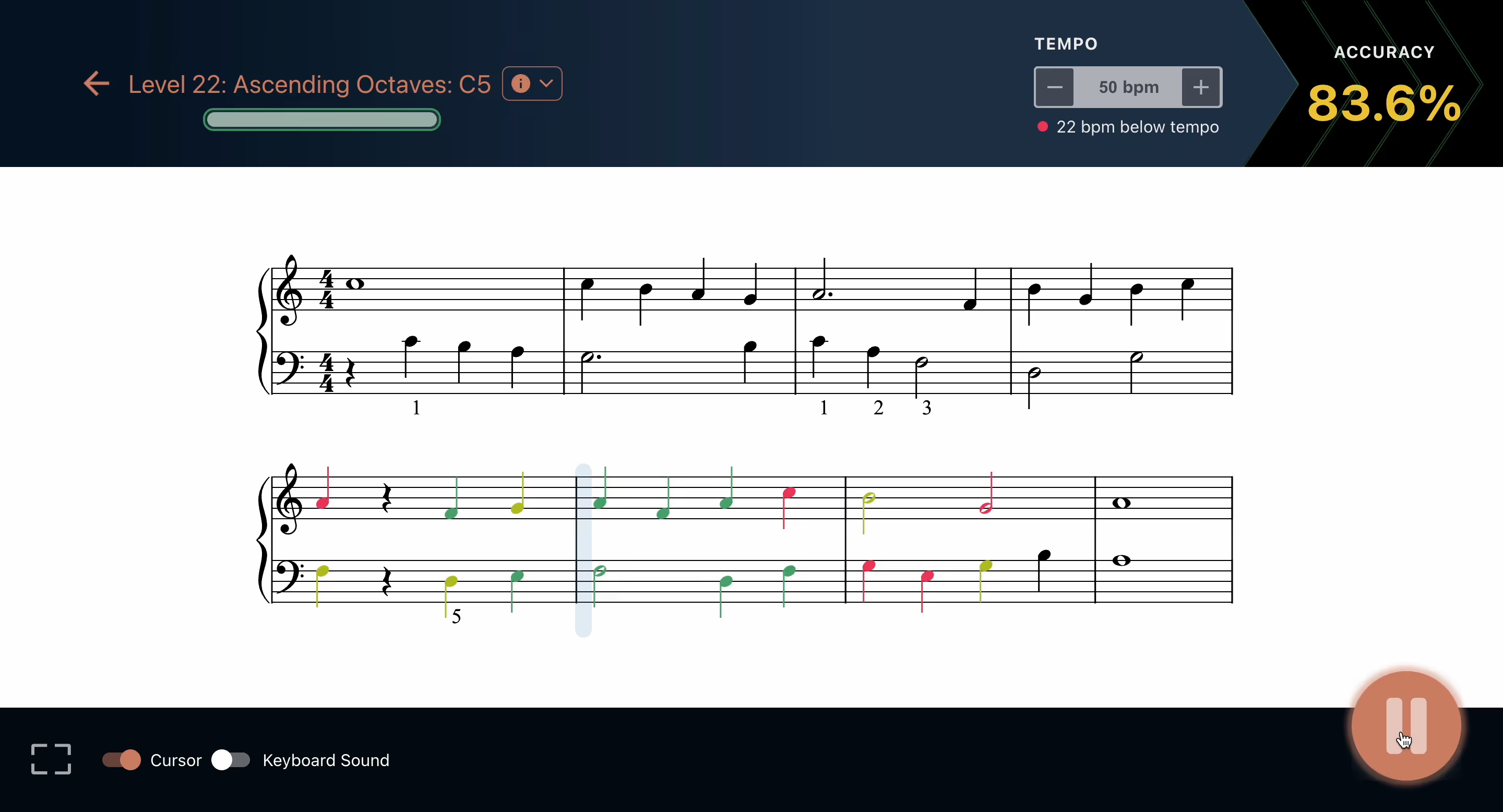
Compared to the pass-fail aspect of traditional piano exams, MuseFlow offers an adaptive, incremental approach to learning sight reading and tracking your skill level. When you play MuseFlow’s gamified system, the app gives you real-time feedback on the notes you play. So you’re able to see exactly where and how you can improve at any given level.
MuseFlow also introduces one new idea at a time, and you can change the tempo whenever you want less or more of a challenge. The hyper-specific nature of the program ensures that it’s always meeting you at your skill level and helping you along as you get better.
And perhaps most importantly, MuseFlow’s algorithm-based generative sheet music gives you an indefinite amount of songs. That means there’s no need to worry about running out of new-to-you music to practice your sight reading.
CONCLUSION
Sight reading is an essential building block to your musicianship as a pianist. But if learning this skill has ever felt hard for you, that’s totally normal! Traditional learning methods just haven’t been sufficient.
As opposed to traditional systems, MuseFlow:
- Gives a nuanced assessment of your sight reading
- Adapts to your specific skill level
- Offers indefinite music to practice
No matter your age and skill level, you can learn to sight read. All you need are the right tools!

.jpg)



.jpg)