.svg)
How to Learn Piano as a Complete Beginner:What Actually Works
Learning piano as a complete beginner often feels overwhelming—not because piano is unusually hard, but because beginners are rarely taught how skills are built. Many people quit not due to lack of talent, but due to ineffective practice structures, delayed feedback, and unclear progress markers.
If you want to learn piano efficiently, the real answer isn’t a shortcut or a trick. It’s understanding how musical skills develop and designing your practice around that reality.

Why Beginners Struggle With Piano Learning
Most traditional piano learning struggles with three structural problems — challenges that don’t match what music learners really want and need as they begin their journey.
Delayed feedback
Practicing incorrectly for days before receiving correction makes it easy to reinforce mistakes. When feedback is slow, your brain struggles to connect cause and effect.
Cognitive overload
Beginners are often asked to juggle notes, rhythm, fingering, posture, and expression all at once. This overwhelms working memory and slows progress.
Lack of visible progress
Without clear milestones, practice feels disconnected from improvement. Motivation drops when effort doesn’t feel rewarding.
These aren’t motivation problems. They’re learning design problems.
How Skill Acquisition Actually Works in Piano
Effective piano learning follows predictable principles:
Small, repeatable challenges
Progress happens fastest when tasks are slightly challenging but consistently achievable. Jumping too far ahead creates frustration; staying too easy causes stagnation.
Immediate correction
The closer feedback is to the action, the faster the brain adjusts. This applies whether you’re working with a teacher, software, or self-review.
Pattern recognition
Music is not memorization of individual notes. It’s recognition of patterns—intervals, rhythms, chord shapes, and hand positions.
When practice aligns with these principles, progress accelerates naturally.
Why Sight Reading Matters Earlier Than Most People Think
Sight reading is often treated as an advanced skill, but in reality, it’s foundational. Learning to read music early builds musical independence and removes reliance on memorization.
For beginners, sight reading:
- Reduces cognitive load over time
- Encourages pattern recognition
- Enables learning new pieces without starting from zero
- Supports long-term musical growth across styles
Think of sight reading like learning to read words instead of memorizing sentences. It unlocks flexibility and confidence.

Designing Practice That Actually Works
Effective beginner practice isn’t about long sessions—it’s about smart structure.
Short, focused sessions
Fifteen to thirty minutes of deliberate practice is more effective than unfocused hours.
Clear goals per session
Each session should answer: What skill am I improving today?
Consistent difficulty scaling
As skills improve, difficulty should increase gradually. This keeps practice engaging without becoming overwhelming.
Practicing this way builds momentum instead of burnout.
Motivation Comes From Progress, Not Pressure
Sustainable motivation doesn’t come from forcing discipline—it develops when learners can clearly see that today’s practice led to real improvement. When progress is visible, motivation becomes intrinsic and practice shifts from obligation to something genuinely rewarding.
Across real learning journeys, this is often the point where beginners enter periods of deep focus, where effort feels natural and time passes quickly. These flow states aren’t mysterious; they emerge when challenge and skill are closely aligned and the learner feels capable, not pressured.

Social and Creative Benefits of Piano Learning
Beyond technical skills, piano learning improves creative thinking and emotional regulation. Playing music provides a structured outlet for expression and stress relief.
It also encourages connection—whether through sharing progress, collaborating with others, or simply communicating emotion through sound. These benefits compound over time and reinforce long-term engagement.

A Note on Modern Learning Tools
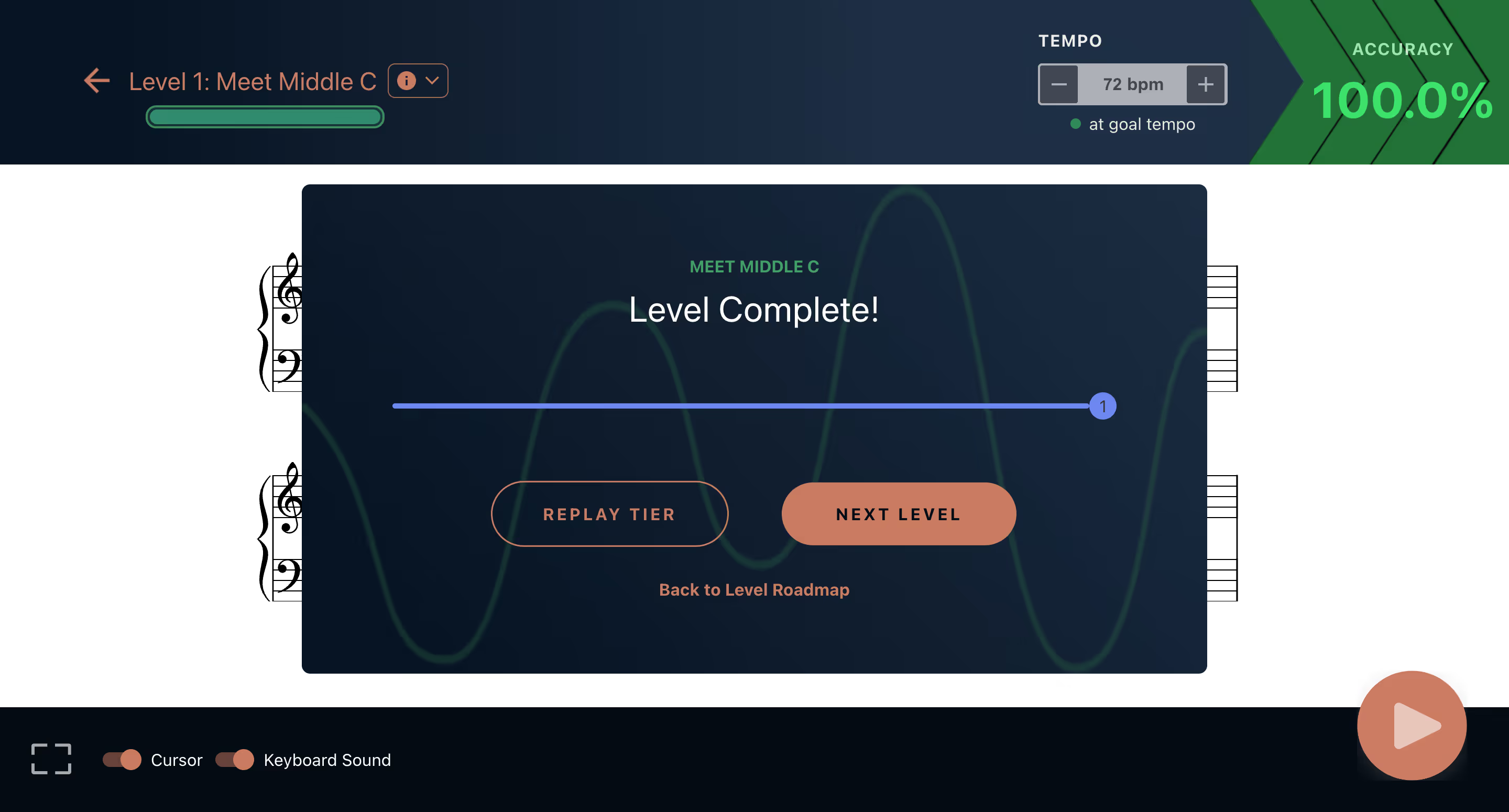
Today, learners have access to tools that provide real-time feedback, structured progression, and adaptive difficulty. When used thoughtfully, these tools can support effective practice habits—especially for beginners practicing independently.
Platforms like MuseFlow are designed to reinforce core learning principles such as immediate feedback, gradual difficulty scaling, and early skill literacy. While no tool replaces intentional practice, the right support can make learning more structured and less frustrating.
Final Takeaway
Learning piano efficiently isn’t about finding the “fastest” method—it’s about removing friction from the learning process.
Focus on:
- Early skill foundations
- Clear feedback loops
- Gradual challenge increases
- Consistent, focused practice
When these elements align, progress follows naturally.
Piano is not reserved for the gifted or the disciplined. With the right structure, beginners can build real musical ability—and enjoy the process along the way.

.jpg)