Beginners
Self-Improvement
How To Pick Up The Piano Again
September 25, 2026

It’s a story as old as time. You picked up an instrument at a young age, stuck with it for a few years, took exams, played recitals. It was a part of who you were. Then one day your music lessons stopped, and before you knew it that instrument that was once so important to you was collecting dust in a closet.
One study showed that about 50% of students quit their instrument by the time they turn 17. So what are some of the reasons people drop out, and how do we address those so we can get back into it?
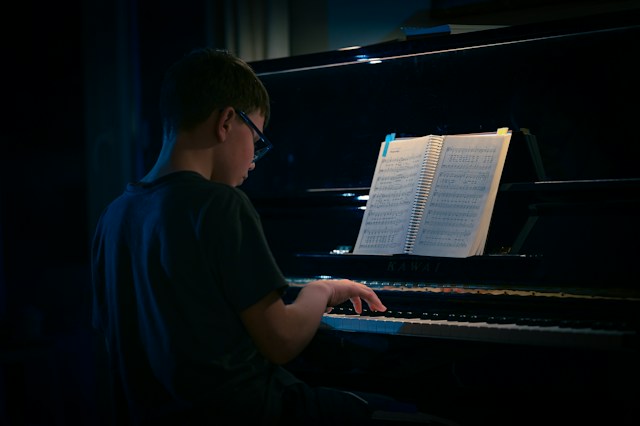
Students who drop out often cite boredom and frustration with the way they’ve been taught. The traditional learning systems tend to focus on rote memorization over real musicianship. The lack of variety of practicing the same song over and over again can suck the joy out of learning.
One study looked at some of the reasons students drop out of music education, and one of the main elements was the lack of autonomy associated with their classes. These students had started their music education “not out of personal interest but due to parental influence.” Furthermore, the study cited “a restrictive approach to learning, such as a limited repertoire” that creates a “gap between what is taught and personal interests.” If you aren’t learning the kinds of music that actually interest you, it can be hard to stay engaged!
These elements can all lead to music education feeling like an obligation rather than something you’re actively choosing to do. It makes a lot of sense that so many students quit in their high school years. The music classes of elementary and middle school disappear, school gets harder, and other interests start taking up more and more of your time. If music has felt like a frustrating obligation, you may find relief in focusing your energy on other interests.
If the strict schedule of traditional methods feels like school, and if you’re not someone who thrives or engages with that very specific structure, you need to find a system that works with you. Make a plan that fits your schedule and can be flexible to the happenings of your life. Align your learning with the most productive period of your day. It doesn’t matter if it’s 9am or 2am (unless you have roommates or neighbors, then it might matter when you play).
Find the reason you want to pick up an instrument again. Maybe you miss the creativity of playing an instrument. Maybe you want to perform… whether it’s just for friends or on a stage. Maybe you just want to learn without the strict structures and expectations of classes and exams.
The key here is want. Let your interests drive you rather than your obligations. That will help you create the best conditions to maximize your enjoyment when you pick up your instrument, so you’ll want to pick it up again and again after that.
Our online learning system MuseFlow allows you to pick up the piano whenever you want, for however long you want. Learn at your own pace with your own timeline so you never feel like learning is an obligation again. And our focus on sight reading over rote memorization means you can learn to play the kinds of songs you actually want to play and align your learning with your interests!
.jpg)
That same study also found that competency concerns were a major factor in students dropping out of music learning. Music competitions, exams, and comparing to others are all cited as things that can make a student lose self-confidence in their musical abilities. The study also states, “As students progress, increased difficulty may exacerbate feelings of incompetence, particularly if they are not adequately prepared, indicating that the perception of effort versus reward may influence their decision to continue.”
Learning an instrument can be hard, especially if you don’t feel like your classes are doing enough to help you improve. At a young age when self-esteem can be so fragile, it can be hard to keep returning to something that makes you feel inadequate.
You need a system that encourages Flow State. As we discussed in a previous post, Flow State is a state of deep focus that occurs when challenge and skill are carefully balanced. If a challenge is too easy you can get bored, but too hard and you can get frustrated. When you’re in your Flow State, you can feel engaged, motivated, and perfectly challenged. Time can pass without noticing because you’re so perfectly focused and having fun.
MuseFlow’s gamified system offers incremental challenge levels to ensure that you’re always presented with the perfect challenge. And our indefinite sheet music brings variety to your learning and keeps things fresh. These can come together to create the perfect conditions for Flow State, which can help you stay motivated, boost your self-confidence, and make learning fun.
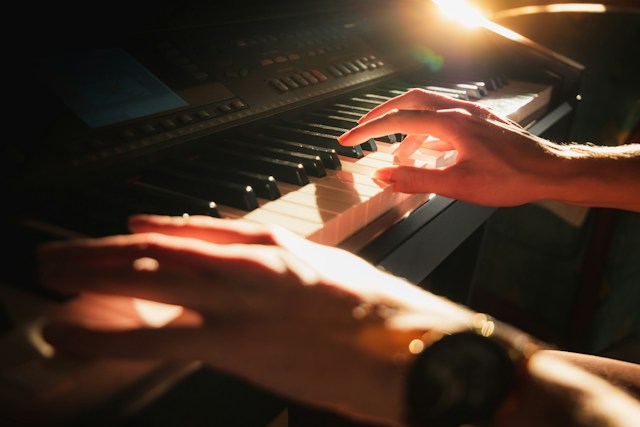
There are plenty of reasons that you may have quit learning your instrument as a kid. And it can be hard to find the motivation to pick it up again. That’s okay. But picking up that instrument again can lead to a whole host of cognitive and emotional benefits. The key is asking yourself why you want to learn again and letting that drive you. If you create a learning environment that engages and motivates you rather than frustrates and discourages, you’ll get more enjoyment from your instrument, stay engaged, and keep with it. We at MuseFlow are here to help you do just that.
Learning sight reading has come a long way in the past year. If you’re still using older methods, you’re missing out—not only on the enjoyment of learning with cutting-edge techniques, but also on your earning potential as a musician. Here’s a way to understand it.

You buy a series of sight reading books. You’re stuck following static exercises, with no way to know if you’re truly improving or if you’re even practicing correctly. Once you finish the book, you need another—and then another. The time commitment is high, much of it wasted on inefficient exercises, with no real-time feedback to tell you whether you’re playing the notes correctly.
The result? Frustration. Progress feels slow, and the vast majority of learners quit before reaching proficiency.
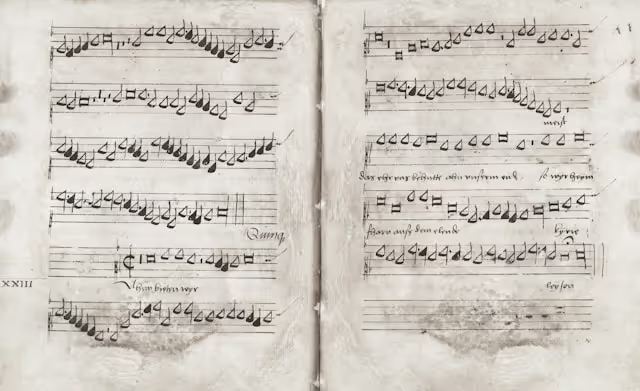
This is just an evolution of the Ancient Way—it’s more of the same. Along with sight reading books, you have access to websites with downloadable pages or apps featuring more static music. But ultimately, it’s still just a library of music.
Sure, online tools and mobile apps provide more material, but the burden is on you to figure out:
Even if you’re willing to pay for an app, you still need to sift through an overwhelming amount of material in a song library and curate a plan yourself. That mental overhead doesn’t go toward practicing sight reading—it’s spent assembling your tools.
And let’s not forget: You can only sight read a piece once. After the first play-through, your brain starts to memorize the music, and it’s no longer sight reading.

Thankfully, cutting-edge technology makes the Ancient Way and Old Way obsolete. With MuseFlow, you no longer need to waste time curating materials or wondering if you’re improving.
MuseFlow is radically different.
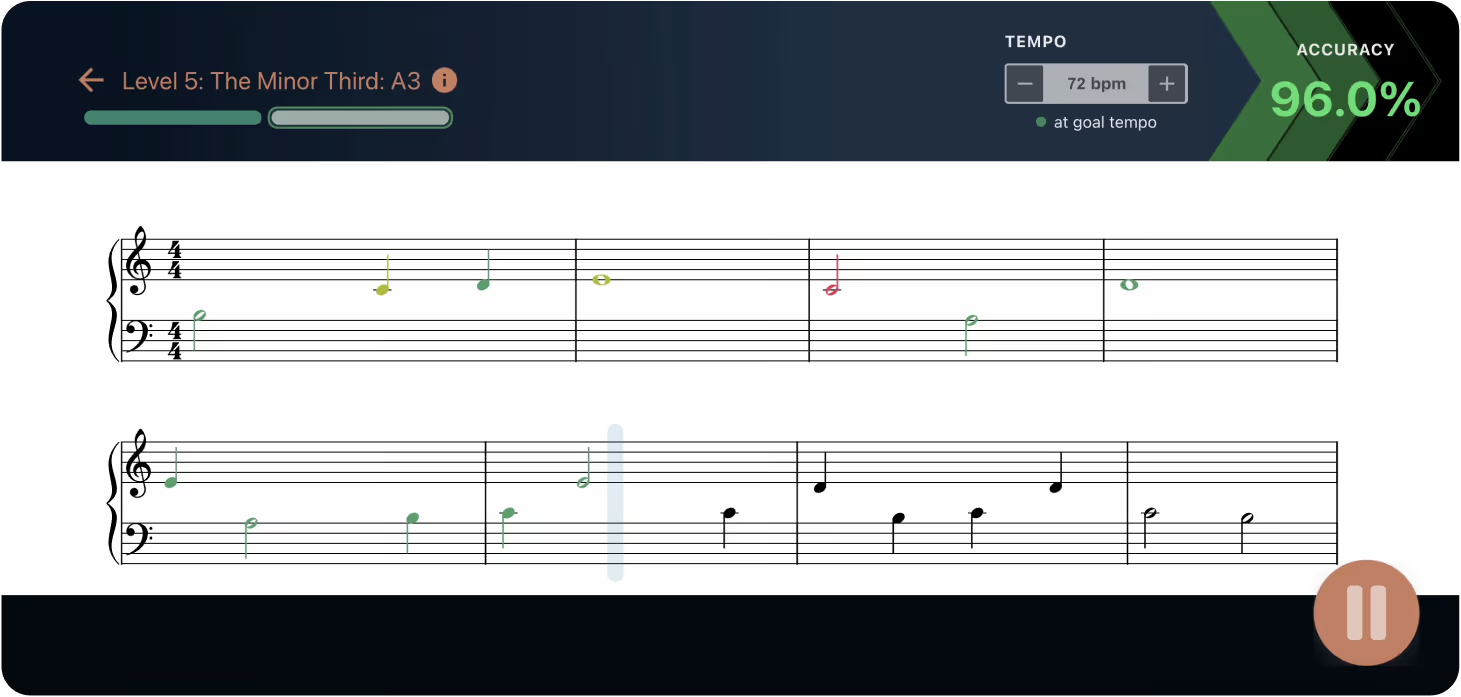
The unique value proposition of MuseFlow is that it offers infinite, dynamically generated music, precisely targeted to help you improve. MuseFlow is your personalized coach, tracking your progress and adapting dynamically to your needs.
With MuseFlow, progress is:
MuseFlow is completely different. MuseFlow just doesn’t give you more, but gives you the precise sequence of notes you need to make progress. Measures of music are being created on-the-fly according to your skill level. There’s no system that even comes close.
The unique value proposition of MuseFlow is not that you have "more" but that you have "infinite" AND that infinite amount of music is presented in real-time, in the context of mastering the skill.
MuseFlow is your personalized coach, delivering tailored exercises, tracking your progress, and adapting dynamically to your skill level. With real-time feedback, you know exactly how to improve, and every session brings you closer to mastery.
MuseFlow is radically efficient compared to other learning methods–You’re in the Flow! Progress is fast, engaging, and measurable.
Imagine three intermediate pianists in the same city—Sally, Sam, and Sarah—all competing for the same high-paying piano gigs. They share the same goal: to reach advanced sight reading proficiency and start earning from weddings, events, and restaurants.
Their chosen learning methods, however, set them on very different paths.
Sally’s faster progress gave her a critical advantage. By Year 1, she was already booking gigs, gaining experience, and building demand. Meanwhile, Sam and Sarah were still learning.
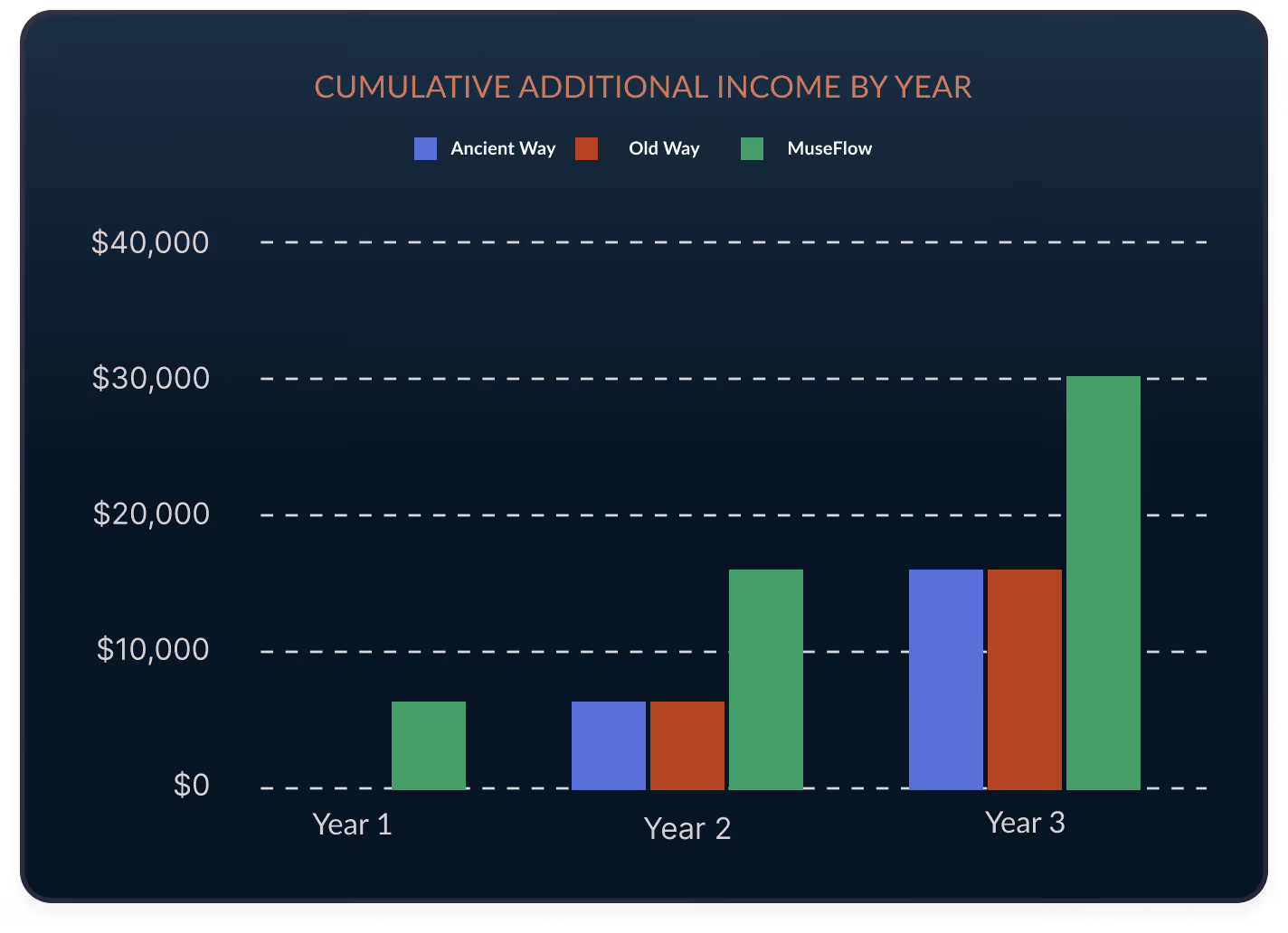
Sally’s faster proficiency gave her a head start. Starting Year 1, she was already booking gigs, gaining experience, and building demand. Sam and Sarah, meanwhile, were still learning, assuming they had even continued in their strategies (more on that later).
As a result, Sally consistently earned more across the three years, with increasing rates and more gigs over time. The cumulative effect of Sally’s early start is undeniable. By Year 3, she has out-earned both Sam and Sarah by a wide margin.
Sally’s choice to use MuseFlow didn’t just save her time—it accelerated her earning potential, giving her a distinct edge in the competitive gig market. With MuseFlow, she didn’t waste hours on inefficient methods or outdated tools. Instead, she focused on building her skills quickly and effectively, positioning herself for long-term success.
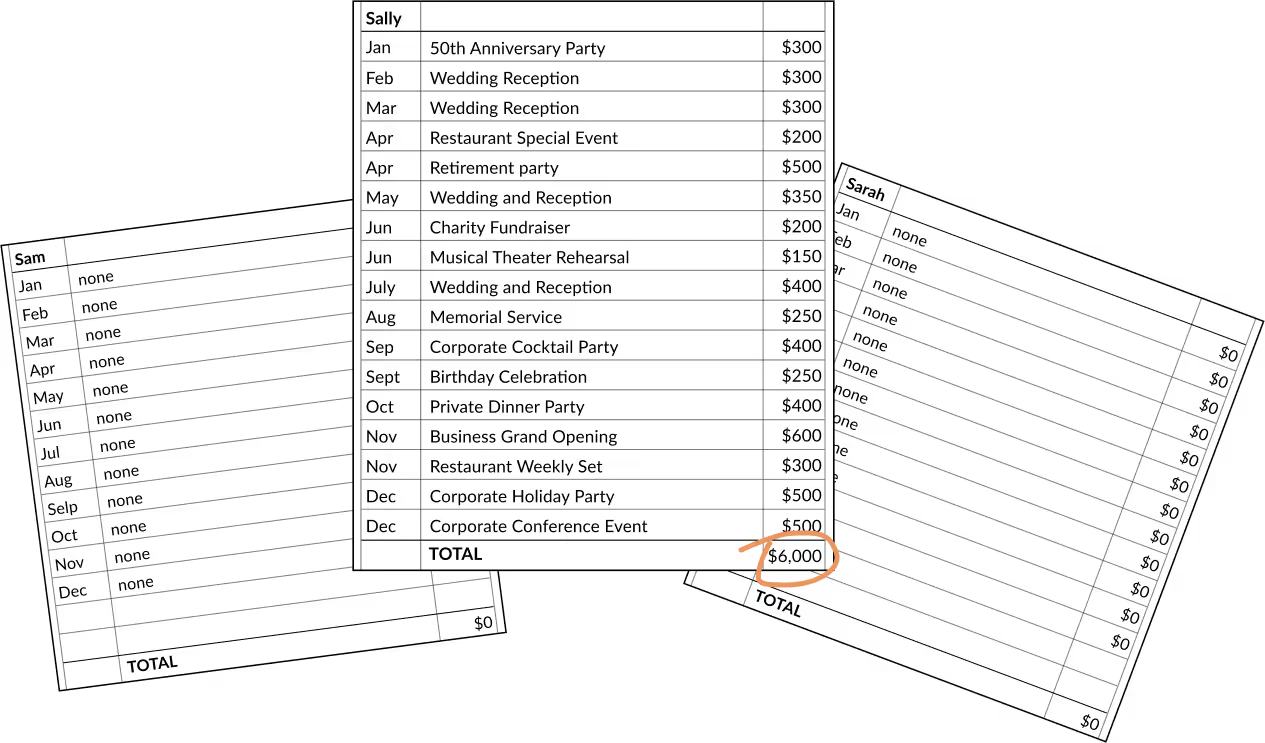
For example, if Sally plays at several gigs throughout the year, she will have earned $6,000 by the time Sam and Sarah are just getting started. She is more than a break-even point on her first gig where she gets to showcase her new-found sight reading proficiency. Sally can reinvest in her skills, gain more experience, and build her reputation faster. By the time Sam and Sarah reach proficiency, Sally is already well-established. MuseFlow enables learners to break even on their investment significantly faster. Look how the three of them compare for that first year.
But Sally’s competitive advantage doesn’t stop there.
Sally, Sam, and Sarah aren’t even close to equal footing when it comes to their ability or enjoyment of learning. Why? The likelihood for Sam or Sarah to actually complete all the coursework in the Ancient Way or the Old Way is highly unlikely.
Because of how MuseFlow harnesses our human desire to learn and be in Flow state, Sally is highly likely to actually achieve mastery. Her likelihood for success actually skyrockets.
Sam and Sarah have to select, purchase, and then curate their own path forward to learning by choosing from a myriad of exercise books and websites. Simply search for “sight reading books” and you’ll discover what variety is out there for all sorts of instruments, age levels, and interests.

Once Sam and Sarah have the books, apps, videos, or Internet resources, then they need to learn the particular system for each and then slog through them.
They will be the musician and judge simultaneously to determine if they are ready to proceed to the next exercise or book. They have zero feedback to know if they’re playing the exercises correctly.
In all likelihood, despite Sam and Sarah’s good intentions, most of their sight reading exercise books and online resources will go untouched. They will simply join the statistics of so many who do not increase their sight reading proficiency.
On the other hand, Sally opens her laptop with her digital keyboard, and the EXACT music she needs to learn sight reading is given to her. Down to the musical measure, it’s precise for her skillset. Even more than that, she has a built-in coach telling her how she’s doing. She can’t proceed until she’s mastered it.

This type of learning is incredibly motivating for Sarah. She’s in the flow. As a result, not only is Sarah learning more efficiently, but she’s far more likely to reach her goal compared to others using traditional methods.
Here is a comparison of sight reading resources available on the market. The bar chart represents the financial investment to purchase the resources. The line represents the likelihood to actually use the resources to learn to sight read.

Note that while MuseFlow requires more of an investment, the likelihood of actually fully using MuseFlow approaches 100%. The other methods may require less of a financial investment, but that also means there’s less of a likelihood to actually use them to learn how to sight read.
With the goal of increasing proficiency in sight reading, MuseFlow gives Sarah everything she needs to succeed:
MuseFlow doesn’t just give Sarah more of what she may–or may not–need to progress in her learning. MuseFlow delivers exactly the right amount of content, in the right context, so she masters every skill before progressing. Here’s where all this comes together.
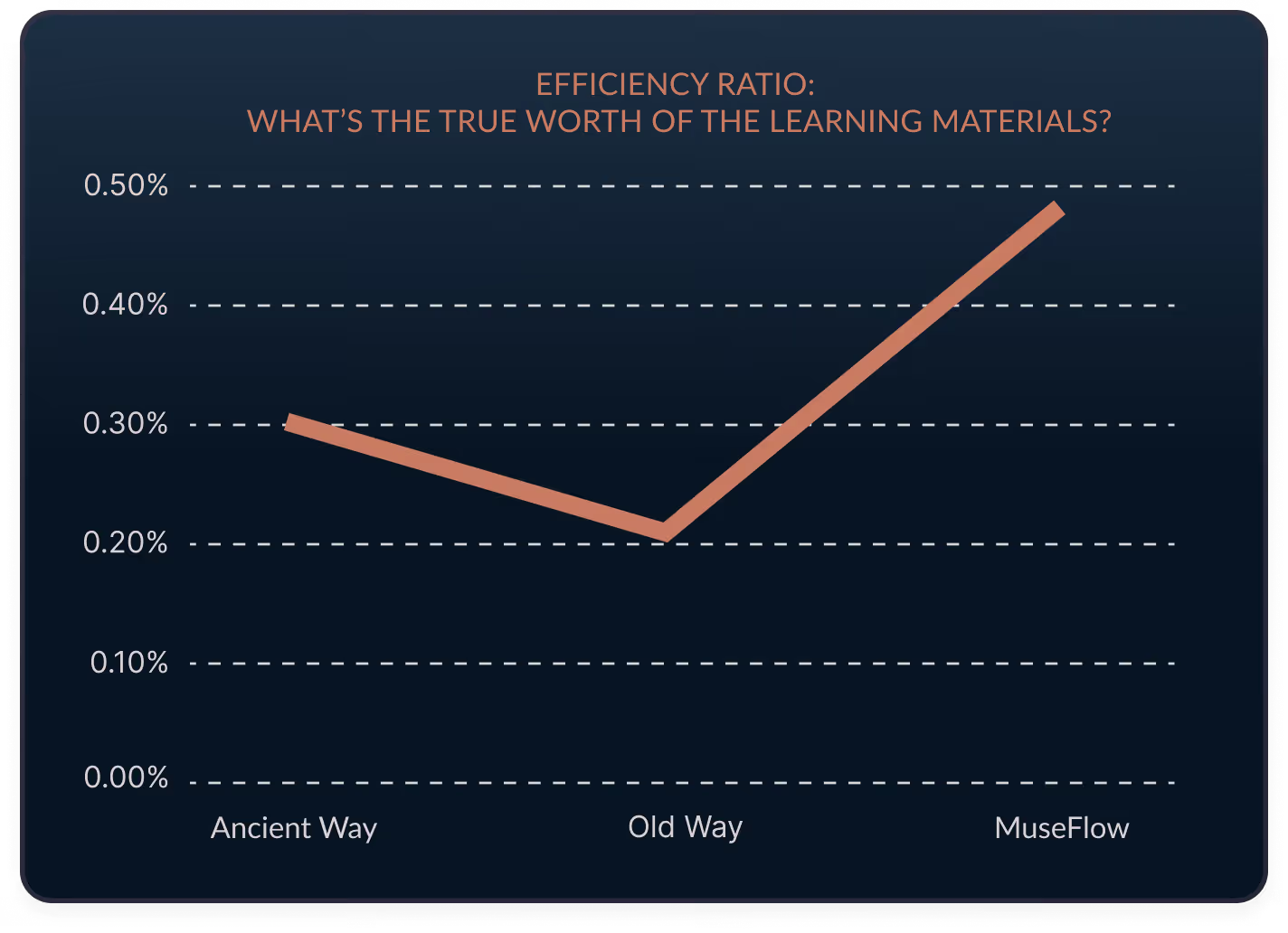
While MuseFlow might look “more expensive,” the advanced Flow state learning technique gives Sarah a much higher likelihood of success than the alternatives. Put another way, she is getting more value for her dollar. Why? Because Inexpensive-but-Incomplete is actually more costly than Expensive-and-Complete.
A common way to express this is an Efficiency Ratio. This calculation measures how much value you receive for every dollar you spend (Likelihood ÷ Cost).
What good does it do Sally if she saves a few dollars by purchasing a variety of exercise books, music library apps and other resources, yet never uses them? Sally is committed to improving her skillset, enriching her musicianship, and increasing her income. Wouldn’t she want the best resources and strategy to achieve that goal?
To explain this differently, let’s fast forward a few months with Sam, Sarah, and Sally.
After frustration of plodding haphazardly through exercises, Sarah has become weary. She’s starting to tell herself things like: “Learning to sight read is too hard…. Maybe I’ll try later.” Her dreams of being paid to play piano at weddings and events is starting to fade. She’s got a despondent look on her face.
Sam is facing a similar discouraging story. He’s spent an inordinate amount of time and effort to research and purchase various exercise books and music library apps. He’s probably spent more time cobbling together a system than he has actually learning how to sight read. It’s been over a week since he’s touched his piano, and he’s starting to rationalize: “Eh, I play good enough…”
If Sam and Sarah were to actually continue, they will have experienced “hidden costs” in inefficiency—time spent curating resources or stalled progress due to lack of motivation. This translates to wasted energy and opportunity costs for earning income. Also, they will not have enjoyed the sight reading learning process nearly as much as Sally.
Sally chose MuseFlow and wears a concentrated smile each time she plays. She is in Flow state within minutes. No guesswork or inefficiencies as to where to begin or where to focus her attention. She will play exercises precisely tailored to her skill level. As she plays, she will experience real-time feedback that keeps her in the Flow–motivated, engaged, and always progressing. That ever-increasing momentum builds a positive feedback cycle where each measure she plays builds to improve her outcomes.

Ready to be like Sally and unlock your full potential? Start with MuseFlow and begin your sight reading journey. Start learning, enjoying, and earning faster than you ever thought possible.

Learning piano has never been more accessible, thanks to revolutionary advances in digital education technology. But with countless options available, finding the best piano learning software for beginners can feel overwhelming. If you're a beginner seeking rapid progress, the right piano learning software can accelerate your journey from novice to confident player.
The key to fast progress lies in choosing software that combines proven educational principles with cutting-edge technology. The best software for this is Museflow.
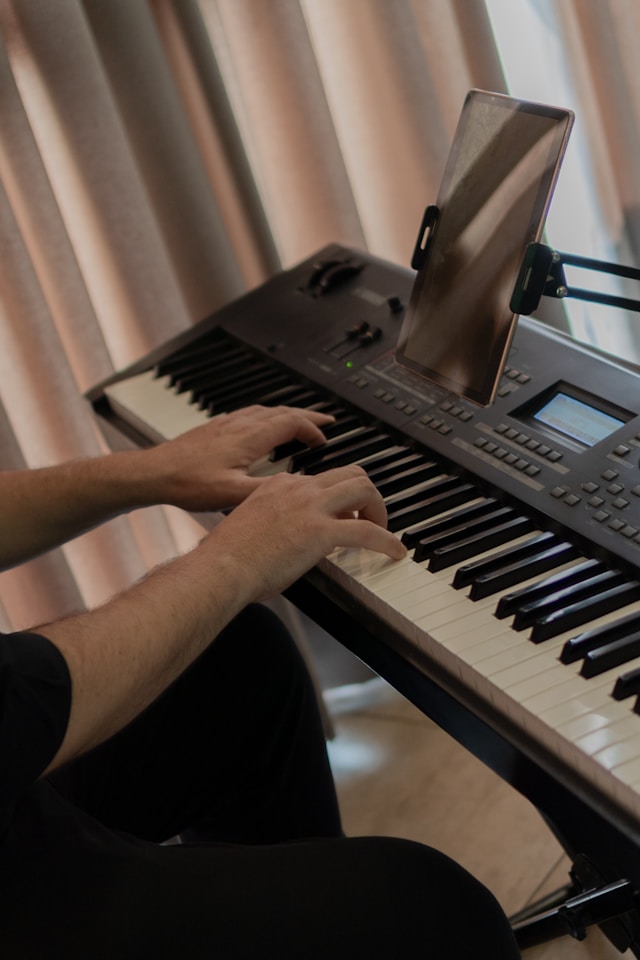
Museflow addresses fundamental challenges that traditional methods often overlook. Research demonstrates that effective piano education should engage visual, auditory, and psychomotor processes simultaneously. We all generally learn best when there's a multi-sensory learning experience that accelerates skill development. We hear of different learning styles: kinesthetic, auditory, reading, and visual.
What if, for fast progress, there was piano learning software that combined all those learning styles?
Fortunately, it exists.
Modern piano learning software excels in several critical areas:
Unlike traditional lessons that rely on weekly corrections, effective piano learning software provides instant feedback on every note you play. This immediate response system allows for rapid skill refinement and prevents the formation of incorrect techniques that can take months to unlearn.

Why does the best piano learning software produce faster results than traditional methods? The answer lies in how our brains process and retain musical information. Studies show that musical training creates plastic changes in adult brains, enhancing cognitive function and neural connectivity. Learning music changes adult brains, helping it function more effectively and build stronger connections that impact all of life.
Software-based learning amplifies neuroplasticity benefits through consistent engagement and optimized practice sessions. When you use piano learning software that maintains high levels of interaction, your brain forms stronger neural pathways more quickly than through passive learning methods.
The engagement factor cannot be understated. Research shows, and personal experience confirms, in any learning environment the engagement in the learning significantly impacts learning outcomes. This explains which explains why interactive software consistently outperforms traditional instruction for motivated learners.
MuseFlow, similar to Duolingo, accelerates learning by adapting in real time to the learner’s skill level and keeping them in an optimal challenge zone. This personalized progression keeps users engaged, motivated, and improving with every session. By eliminating guesswork and providing immediate feedback, MuseFlow helps learners build confidence and master skills more efficiently than traditional methods.
The best piano online learning software incorporates specific features that distinguish it from mediocre alternatives:
The fastest way to learn piano as a complete beginner article explores how modern software approaches create optimal learning conditions.
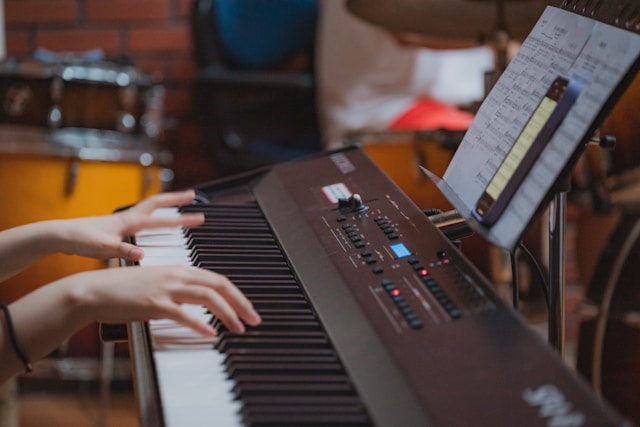
MuseFlow represents the pinnacle of piano learning software for beginners seeking fast progress. Unlike platforms that focus on entertainment over education, MuseFlow prioritizes genuine skill development through scientifically-backed teaching methods.
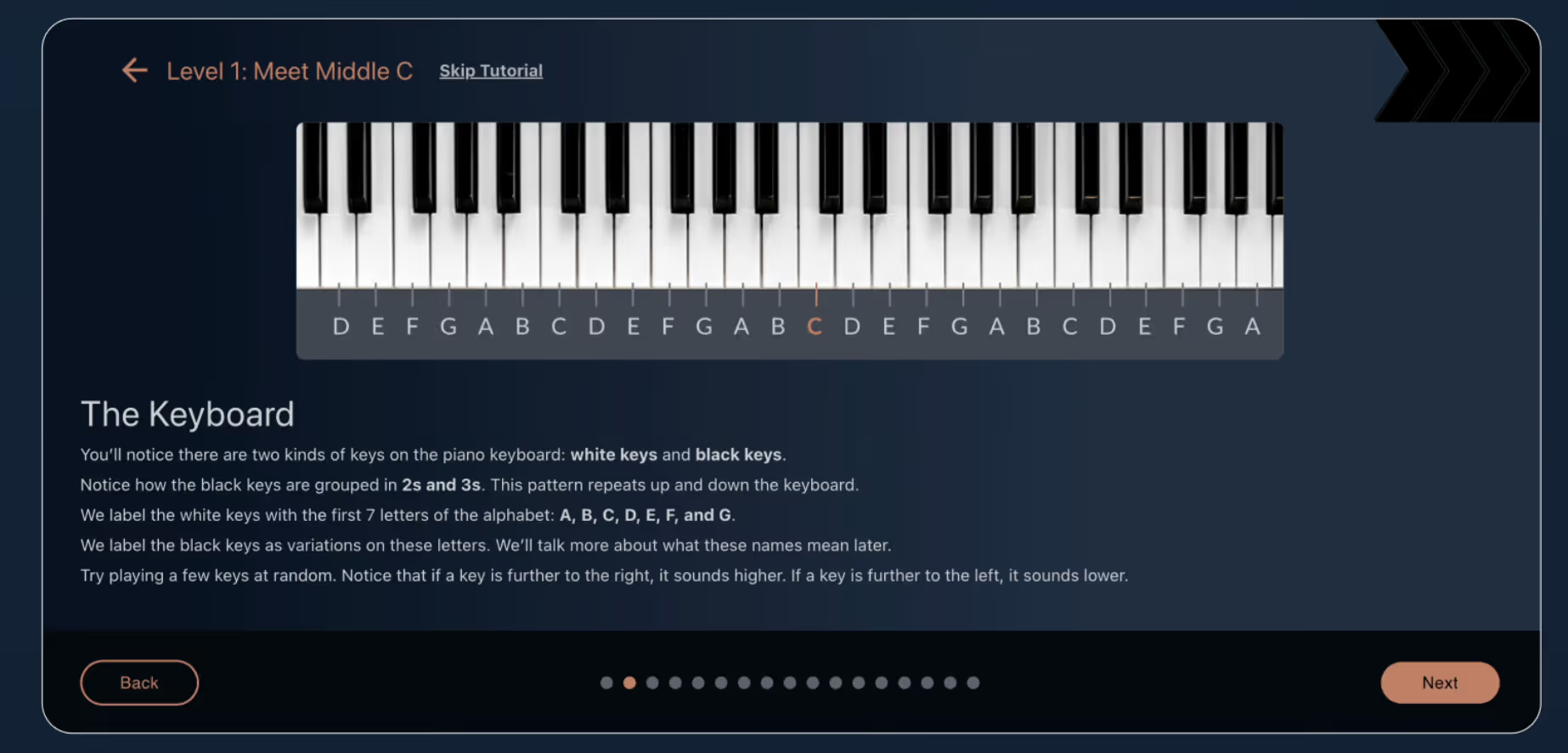
The MuseFlow advantage lies in its sight reading methodology. While other piano learning software might teach specific songs, MuseFlow develops fundamental skills that allow you to play any piece of music. With MuseFlow, musical notes are automatically generated so it feels far less like an exercise and much more like you're playing real music.
Real-time visual feedback transforms the learning experience. Notes cascade down the screen in perfect synchronization with your playing, creating immediate connection between what you see, play, and hear. How to learn piano with game-like lessons: Discover MuseFlow demonstrates how this platform makes complex musical concepts accessible for all learners.
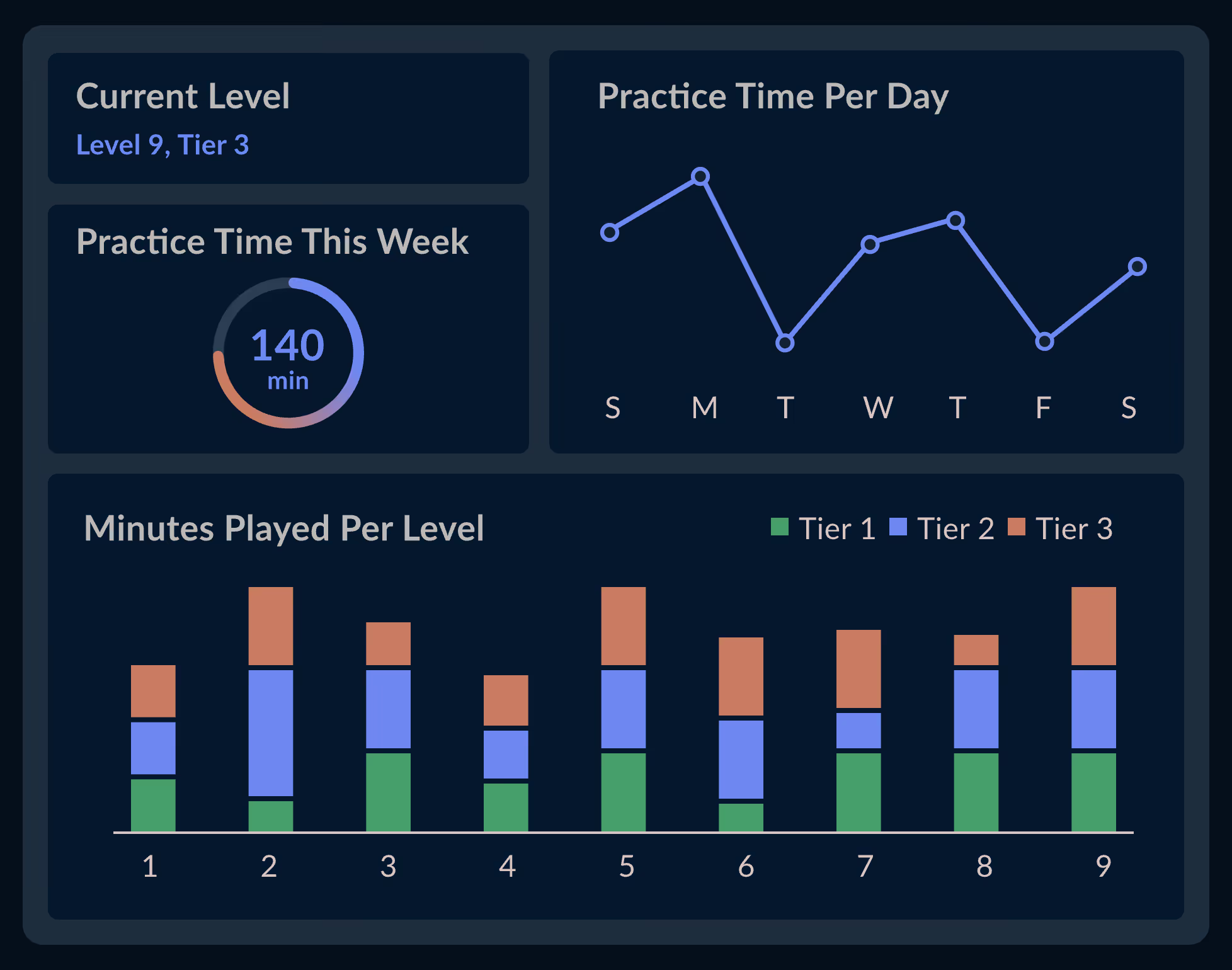
The best piano learning software provides clear metrics for tracking improvement. MuseFlow's analytics show exactly which skills you've mastered and which areas need focus, ensuring efficient practice sessions.
Motivation remains high when you can see tangible results. Quality piano learning software provides immediate feedback on accuracy, timing, and performance, while achievement systems keep beginners engaged during challenging phases.
Choosing the best piano online learning software depends on your specific goals. For beginners prioritizing rapid skill development, prioritize platforms that emphasize sight reading over song memorization and proven educational methodologies over flashy features.
Finally, consider your personal long-term learning trajectory. The best piano learning software grows with you, providing advanced challenges as your skills develop rather than limiting you to beginner-level content.
For some people that means simply enjoying music more deeply as a lifelong hobby. For others it could open the door to a career change, a little extra income playing gigs, or even the chance to serve by playing in a house of worship. The important part is that your practice connects to deeper goals that matter to you, not just finishing another exercise page.
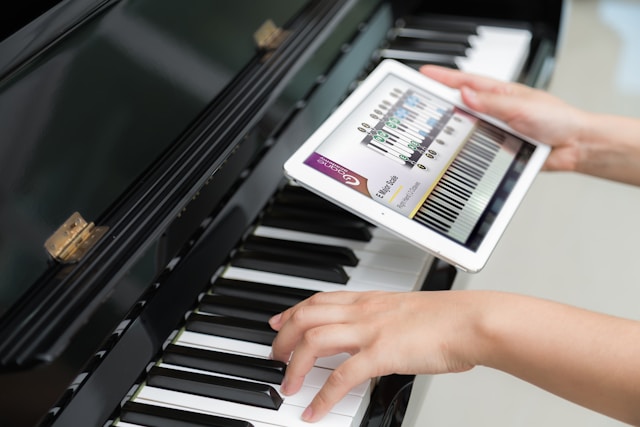
The right piano learning software can transform your musical journey from a slow process into an exciting adventure of rapid skill development. With platforms like MuseFlow leading innovation in digital music education, beginners have unprecedented opportunities to achieve their musical goals quickly.

Learning to read piano notes is often treated as a test of memory. Beginners are told to memorize every line and space on the staff, drill flashcards, and hope fluency appears over time. In reality, that approach is exactly why many students stall early. The easiest way to read piano notes is not memorization—it’s understanding how musical notation works as a visual system.
When note reading is taught through patterns and relationships, beginners progress faster, retain more, and develop confidence instead of frustration.
Many beginner piano methods rely heavily on rote learning. Students memorize note names without understanding how notes relate to each other on the staff or the keyboard. This creates a fragile skill set: if a note hasn’t been memorized, reading breaks down.
Educational research consistently shows that early music learning is most effective when it combines visual recognition, auditory feedback, and physical movement. When one of these elements is missing, learning becomes inefficient and discouraging. Treating note reading as a memory-only task ignores how the brain actually processes symbols and patterns.
The result is predictable: students can name isolated notes but struggle to read music smoothly in real time.

Reading music is a form of symbol decoding, similar to reading language. Neuroscience research published through the U.S. National Institutes of Health has shown that music literacy is associated with measurable changes in brain regions related to visual processing, motor coordination, and language-related skills.
Musicians, especially those trained to read notation fluently, often demonstrate stronger pattern recognition and reading fluency in non-musical tasks as well. These benefits don’t come from memorizing symbols; they come from learning how symbols relate to each other within a structured system.
For beginners, this means the goal should be recognition, not recall.
The easiest way to read piano notes is to anchor your reading around a small number of landmark notes. Instead of learning every note at once, beginners focus on a few reference points on the staff and keyboard.
Common landmarks include:
These notes act like navigation markers. Once a landmark is recognized instantly, other notes are identified by their distance and direction from that point rather than by memorization. This mirrors how fluent readers recognize words by shape and context rather than spelling each letter.

After landmarks, interval recognition becomes the next key skill. An interval is the distance between two notes. Beginners who learn to identify steps, skips, and repeated notes can read music faster—even without naming every note explicitly.
For example, if you know a note is Middle C, and the next note is one step higher, your brain processes the relationship immediately. This method reduces cognitive load and allows reading to keep pace with playing.
Interval-based reading is widely used in modern piano pedagogy because it scales. As music becomes more complex, the same principles still apply.
Digital tools can support note reading when they reinforce correct learning principles. Visual feedback, gradual difficulty increases, and immediate correction can help beginners avoid developing bad habits early.
However, technology should support pattern recognition, not replace it. Apps and platforms work best when they:
Used correctly, technology accelerates learning. Used poorly, it becomes another memorization crutch.

There is no shortcut that replaces consistency. Short, daily practice sessions are far more effective than occasional long ones. Even 10–15 minutes of focused reading practice can lead to noticeable improvement within weeks.
Over time, patterns become automatic. The staff stops feeling abstract, and note reading starts to resemble reading text—recognition happens instantly, without conscious decoding.
The difference between beginners who struggle and those who progress is not talent. It’s approach. When beginners learn to read piano notes through landmarks, intervals, and consistent practice, the skill becomes manageable—and even enjoyable.

The easiest way to read piano notes for beginners is to stop treating music as something to memorize and start treating it as something to understand. By focusing on patterns, using landmark notes as reference points, recognizing note relationships, and practicing consistently, beginners develop real reading fluency. When note reading aligns with how the brain naturally processes visual, auditory, and motor information, progress becomes faster and more sustainable. Digital learning platforms such as MuseFlow can support this approach by reinforcing pattern recognition through guided, structured practice.
Beginning piano can feel overwhelming. New learners encounter a wide range of advice: start with scales, focus on hand position, memorize favourite songs, or follow tutorial videos. Each approach reflects a valid teaching tradition, but they differ in how well they support long-term progress.
Rather than asking which method produces the fastest short-term results, a more useful question is which foundational skill best supports continued learning and independence over time. Research in music cognition and pedagogy suggests that early music reading skills—particularly sight reading—play a central role in sustainable piano development.

Sight reading refers to the ability to interpret written music and translate it into coordinated movement in real time. In many beginner methods, it is treated as an advanced skill introduced only after learners can already play several pieces.
Research published in the Journal of Eye Movement Research has shown that experienced sight readers require fewer eye fixations, process larger musical groupings, and allocate less cognitive effort to decoding individual notes. These efficiencies allow attention to shift toward timing, articulation, and expression rather than basic note recognition.
This suggests that sight reading is not merely a downstream skill—it actively shapes how musical information is processed from the beginning.
Additional research in music psychology links early reading proficiency with broader cognitive advantages in musical performance. Musicians with stronger sight reading ability demonstrate improved pattern recognition, more efficient working memory use for musical material, and better coordination between visual, auditory, and motor systems. These findings align with established theories of skill acquisition, where early exposure to structured symbolic input supports more flexible learning later on. This idea is consistent with models such as the floor–ceiling framework of skill development, which explains how early learning constraints can either limit or expand long-term progress depending on how foundational skills are introduced.
Importantly, these benefits do not require advanced repertoire. Even simple rhythmic patterns and limited pitch sets can train the perceptual and motor systems in ways that transfer across pieces.
Many popular beginner approaches emphasize rapid song acquisition, often through imitation or repetition. While this can be motivating initially, it frequently leads to what educators describe as a transfer gap: learners can reproduce familiar pieces but struggle to approach unfamiliar music independently.
Common consequences include:
This mirrors findings in literacy education, where memorization without decoding skills limits long-term reading ability. Piano learning follows a similar pattern.
A sight reading-first approach does not exclude technique, repertoire, or enjoyment. Instead, it prioritizes a small set of transferable skills early on:
These elements form a foundation that supports faster learning later, even if early progress feels more measured.
Technology can support early reading development when it reinforces sound pedagogy rather than bypassing it. Learning tools that provide immediate feedback, structured progression, and short, focused reading tasks align well with principles from motor learning and educational psychology.
MuseFlow, for example, is designed around progressive sight reading challenges, real-time timing feedback, and controlled difficulty adjustments. Rather than positioning sight reading as an advanced add-on, it integrates reading practice into every stage of learning. Used as a supplement—especially for independent learners—this approach can help reinforce consistent practice habits without replacing the role of a teacher.
What distinguishes tools built this way is not novelty, but alignment with how complex skills are acquired incrementally.

Evidence from music education research suggests that learners who develop reading skills early:
Scales, technique, and musical expression remain essential, but they are more effective when built on reading literacy.
For beginners deciding where to start, a sight reading-first approach offers a practical, research-aligned foundation—one that supports independence rather than short-term performance alone.
Learning piano has become more flexible in recent years, but one factor still has a disproportionate impact on long-term progress: the quality of the keyboard itself. Beginners often assume any digital keyboard will suffice, while experienced players know that early compromises in key feel, sound, or responsiveness can slow development or reinforce poor technique.
A keyboard suitable for piano learning in 2026 must balance two priorities. First, it should support correct physical technique that translates to an acoustic piano. Second, it should integrate smoothly with modern practice tools that help learners stay consistent and self-directed.
This guide explains the technical features that matter most—and why they matter—based on how pianists actually develop skill over time.
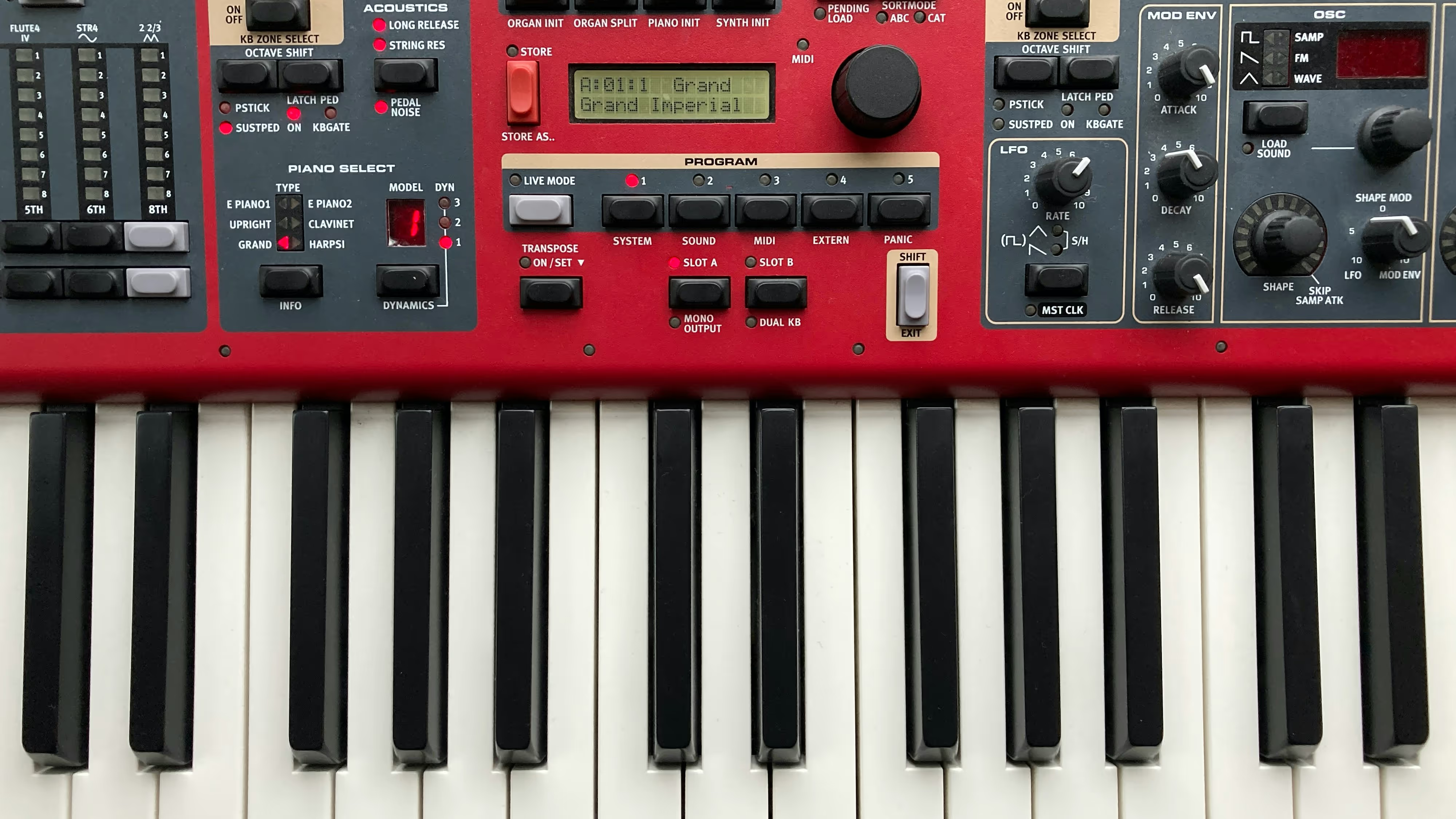
The most important characteristic of a learning keyboard is key action. Fully weighted or hammer-action keys replicate the resistance of an acoustic piano, training finger strength, control, and coordination.
Keyboards with unweighted or “synth-style” keys may feel easier at first, but they do not build the same muscle memory. Learners who start on light keys often struggle later with dynamics, control, and fatigue when transitioning to a real piano.
Semi-weighted keys can be acceptable for casual learners, but for anyone aiming beyond basic melodies, fully weighted keys remain the gold standard.

Compact keyboards with 61 or 76 keys are common because they are cheaper and easier to store. However, they introduce limitations surprisingly early. Many beginner and intermediate pieces already require the full keyboard range, especially when learning proper left-hand accompaniment or classical repertoire.
An 88-key layout also helps learners develop spatial awareness of the keyboard, which is essential for sight reading and hand positioning.
For serious learning, fewer keys should be treated as a temporary compromise, not a long-term solution.
Touch sensitivity—also called velocity response—allows the keyboard to produce different volumes depending on how a key is pressed. This is fundamental to musical expression.
Without velocity response, learners cannot practice dynamics, phrasing, or articulation properly. These are not advanced concepts; they are introduced early in structured piano education. A keyboard lacking this feature limits expressive development from the start.
Sound quality does not make someone a better pianist, but it directly affects motivation and ear training. Flat or unrealistic piano sounds make it difficult to judge tone, balance, and sustain.
Modern learning keyboards typically use multi-layer sampling or physical modeling based on acoustic grand pianos. What matters most is not brand prestige, but consistency across dynamics and a natural decay of sound when using a sustain pedal.
Learners who enjoy how their instrument sounds tend to practice longer and more attentively.
MIDI connectivity has become a standard requirement for piano learners. It allows keyboards to connect with learning apps, notation software, and digital practice tools.
With MIDI support, learners can:
USB-MIDI and Bluetooth-MIDI are now common and reduce setup complexity. While apps cannot replace foundational practice, they can reinforce consistency and provide structure for independent learners.
Several features matter less in marketing but more in daily use:
Large sound libraries, built-in rhythms, and visual effects rarely contribute to actual piano skill development and often distract beginners from fundamentals.

A well-chosen learning keyboard should continue to support skill development over time rather than becoming restrictive after the beginner phase. Models that emphasize realistic touch, expressive control, and dependable connectivity tend to offer a smoother transition into intermediate playing, particularly among thoughtfully reviewed budget instruments.
As piano education continues to evolve, keyboards that combine traditional technique support with modern flexibility give learners the strongest foundation—regardless of whether they study independently or with a teacher.
Future guides will examine specific keyboard models across different price ranges, evaluating them based on these criteria rather than marketing claims.
Music education has traditionally relied on structured progression: theory first, application later. While this approach has produced capable musicians, it also presents familiar challenges—slow engagement, delayed motivation, and students who struggle to connect abstract concepts with real musical experience. In response, modern learning research has highlighted two principles that offer a more effective alternative: just-in-time learning and flow state. Together, these ideas are reshaping how musical skills can be taught, practiced, and retained.
Just-in-time learning emphasizes acquiring knowledge at the moment it becomes relevant, rather than front-loading instruction with theory. Instead of memorizing rules in advance, learners encounter concepts as practical needs arise. This approach mirrors how many complex skills are learned naturally—through doing first, then refining understanding.
In music education, this principle is particularly powerful. When a student encounters a rhythmic challenge or unfamiliar notation while actively playing, the explanation that follows has immediate meaning. The learner can hear, feel, and apply the concept in context. This grounded approach contrasts with lengthy theoretical explanations that lack a clear connection to sound or movement.
Educational research consistently shows that knowledge learned in context is more likely to be retained and transferred. Music educator Lucy Green has documented how many successful musicians develop fluency through hands-on experimentation rather than formal theoretical instruction alone. When theory answers a question the learner already has, it becomes a tool instead of an obstacle
Flow state, a concept introduced by psychologist Mihály Csíkszentmihályi, describes a mental state of deep focus that occurs when challenge and skill are carefully balanced. Tasks that are too easy lead to boredom; tasks that are too difficult create frustration. Flow exists in the narrow space between the two.
For musicians, flow is often experienced during moments of immersive practice or performance—when time seems to disappear and effort feels effortless. Learning within this state is especially effective because attention is fully engaged and motivation becomes intrinsic rather than forced.
In educational settings, flow supports sustained practice and faster skill acquisition. When students consistently work at the edge of their ability, they receive continuous feedback about progress, which reinforces confidence and persistence. This is particularly important in early music education, where disengagement is a common reason students abandon learning altogether.
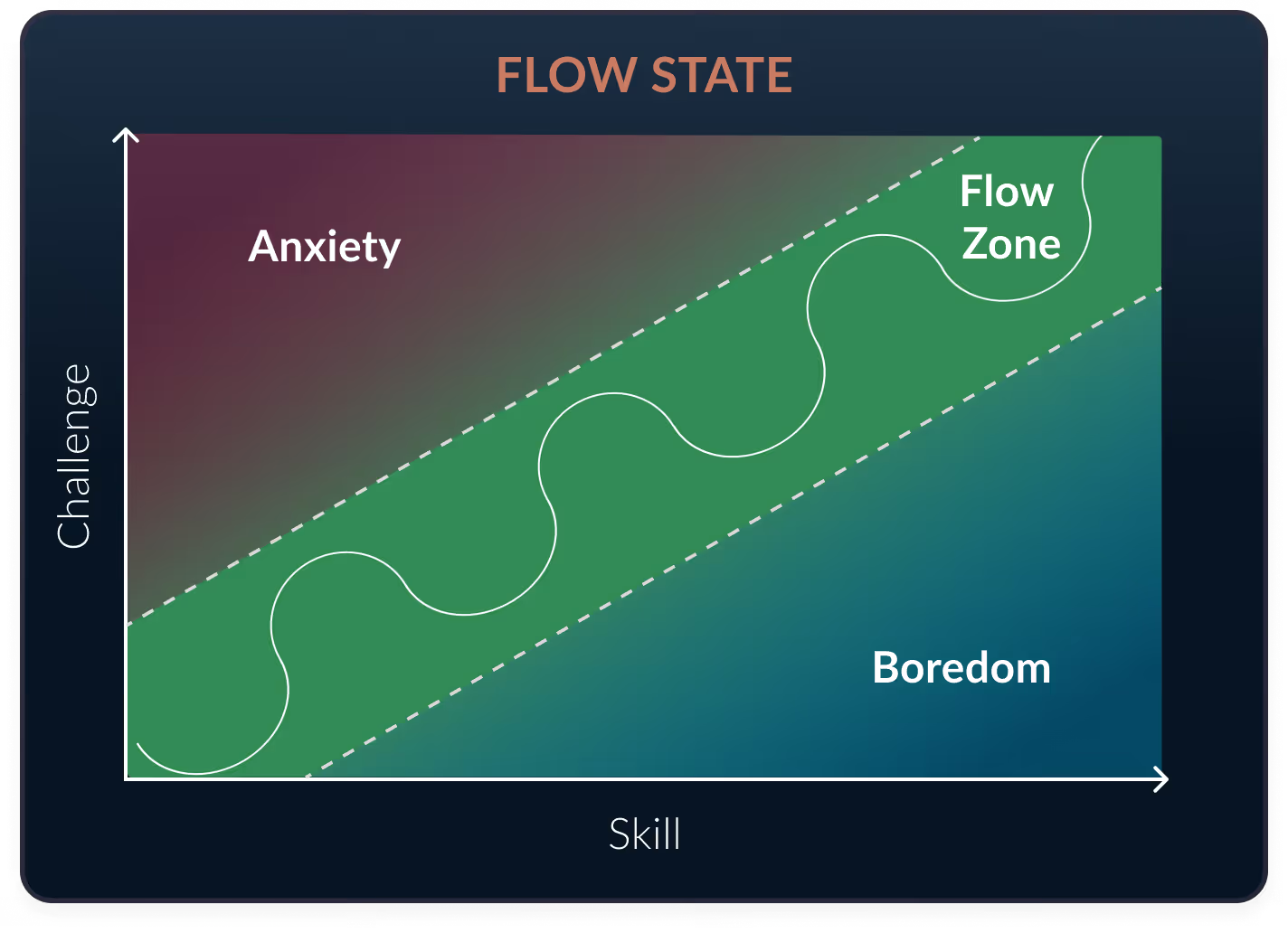
Traditional music instruction can unintentionally disrupt both just-in-time learning and flow. Theory is often introduced before students have a practical framework to apply it, while repetitive drills may fail to adjust to individual ability levels. The result is a mismatch between challenge and skill, leading to either boredom or discouragement.
By contrast, an approach centered on timely instruction and balanced difficulty encourages curiosity and resilience. Students develop technical skills alongside musical understanding, rather than treating them as separate goals. Over time, this builds not only competence but a stronger emotional connection to music itself.
These principles are especially relevant for sight-reading and foundational musicianship, where progress depends on repeated exposure to varied examples rather than memorization of isolated pieces. Practicing skills across diverse contexts helps learners generalize knowledge and apply it flexibly—an essential requirement for long-term musical growth.

Educational tools that incorporate just-in-time learning and flow aim to create environments where feedback is immediate, difficulty adapts naturally, and learning remains active. When students receive guidance exactly when mistakes occur, correction becomes part of the learning process rather than a delayed interruption.
Some modern music platforms, including MuseFlow, attempt to apply these principles by structuring practice around adaptive challenges and continuous feedback rather than static lesson plans. In this context, technology serves as a facilitator—not a replacement for teachers—by handling repetitive skill reinforcement so educators can focus on interpretation, expression, and musicality.
Importantly, the effectiveness of this approach depends less on specific features and more on the underlying pedagogy: learning through engagement, timely instruction, and sustained motivation.
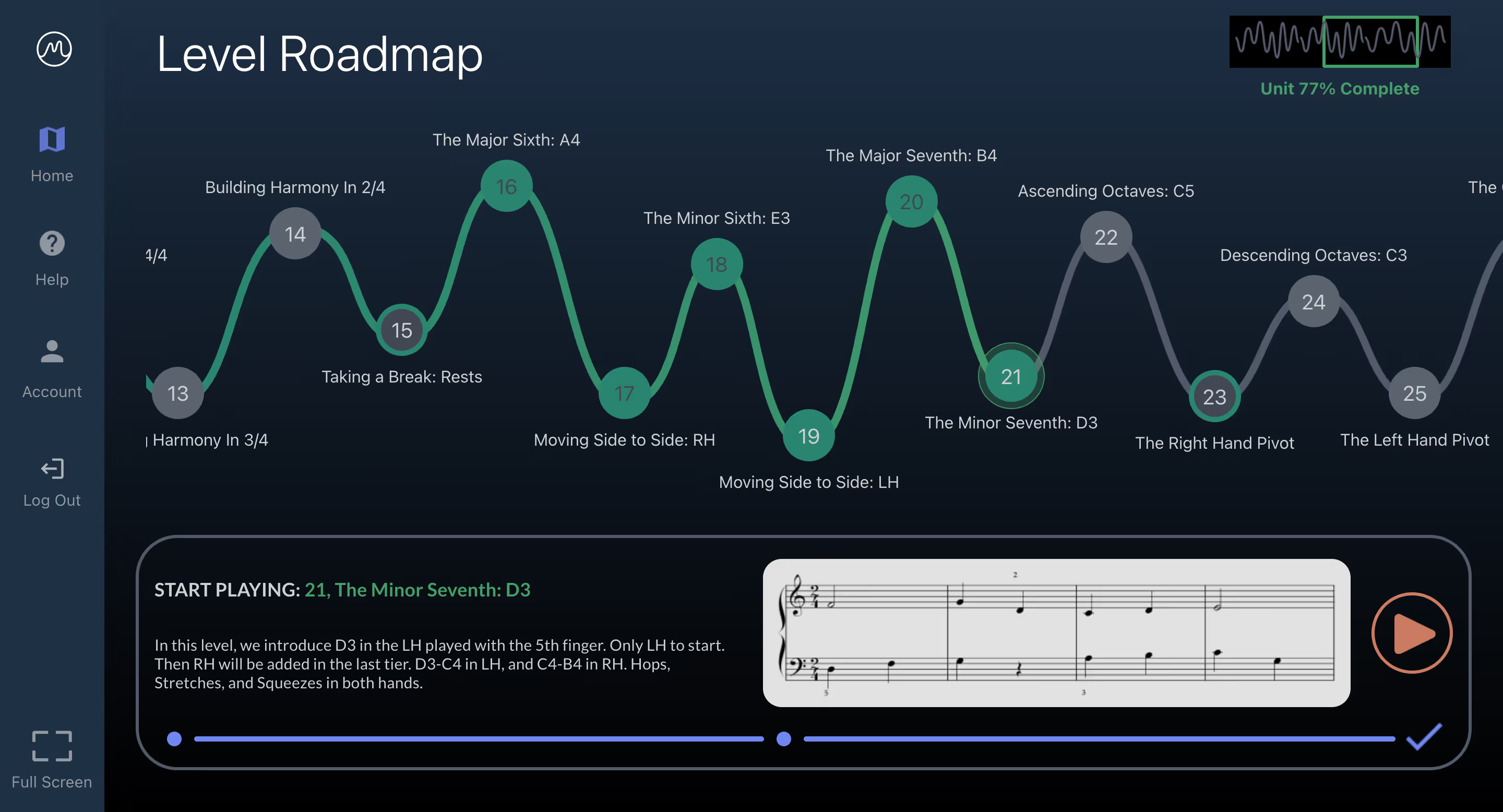
Just-in-time learning and flow state offer a framework for addressing long-standing challenges in music education. They align instruction with how learners naturally acquire skills—through action, feedback, and incremental challenge—rather than through abstraction alone.
Whether applied through digital tools, restructured lesson plans, or individualized practice strategies, these principles help learners stay engaged, build confidence, and experience music as a meaningful, enjoyable pursuit. As music education continues to evolve, approaches grounded in learning science offer a path toward deeper, more enduring musical development.


Keep up to date on our progress as we continue to add new features!