.svg)
5 Piano Learning Myths That Stop Adults From Starting
Introduction — Busting Misconceptions
Many adults hesitate to learn piano because of common myths about age, talent, and time. These misconceptions create unnecessary barriers, preventing beginners from discovering the joy and benefits of playing piano.
The truth? It’s never too late to start, and you don’t need “natural talent” to make meaningful progress. With structured practice and modern learning tools, adults can enjoy musical growth at any stage of life.

Myth 1: "You're Too Old to Start Learning Piano"
Some believe that age limits musical ability, but research shows otherwise. Adult brains are capable of neuroplastic changes, meaning they can form new neural connections and learn new skills throughout life.
Adult learners often have advantages over younger students, such as:
- Stronger focus and discipline
- Greater pattern recognition
- Life experiences that enhance emotional connection to music
- Clear goal orientation that drives efficient learning
Is it too late to learn piano? The answer is a resounding no. Check out this article if you wonder: "Can Adults Really Learn Piano From Scratch?" Adult learners often progress faster than children.

Myth 2: "You Need Natural Talent to Play Piano"
Perhaps the most destructive piano learning myths revolve around the concept of "natural talent." This fixed mindset prevents countless adults from even attempting to learn. The Reality: Do you need talent to learn piano? Research shows that musical training creates plastic changes in adult brains and benefits extend well into adulthood.
What people call "talent" is actually the result of effective practice and proper instruction. Modern neuroscience reveals that musical ability develops through deliberate practice, neuroplasticity, progressive skill building, and a growth mindset. Studies demonstrate that believing abilities can be developed through dedication leads to greater achievement than believing in fixed talents.
Myth 3: "Piano Learning Takes Years Before You Can Play Real Songs"
Many beginners assume that meaningful progress takes years, but modern teaching approaches have significantly shortened the time it takes to play recognizable music. Instead of delaying songs until after long technical drills, contemporary learning models introduce music earlier while building foundational skills in parallel.
Educational research on skill acquisition suggests that adults learn more effectively when practice is structured, feedback is timely, and difficulty increases gradually. In piano learning, this commonly involves:
- introducing note reading alongside simple musical pieces
- correcting mistakes early through immediate feedback
- adjusting challenge levels to avoid cognitive overload
- using familiar melodies to support motivation and consistency
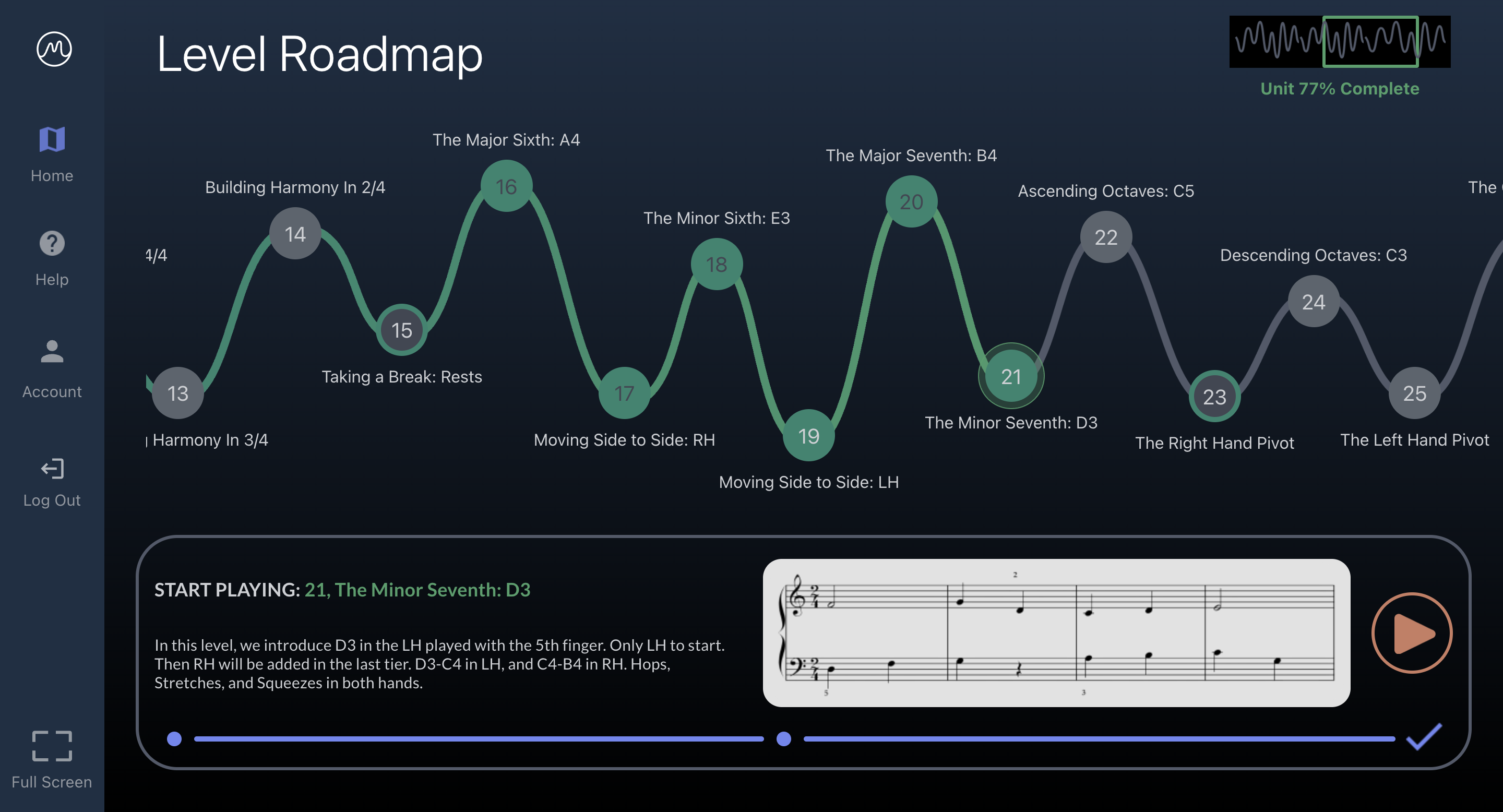
For learners who prefer guided practice without fixed lesson schedules, some digital platforms offer structured progression and real-time feedback designed around these principles. MuseFlow is one example of a tool built to support this type of learning approach.
Myth 4: "You Need Expensive Equipment and Lessons"
Many adults believe piano learning myths that center on costly requirements that make the hobby inaccessible.
The Reality: Modern technology has democratized piano learning. A basic digital piano and innovative solutions like MuseFlow provide everything needed to start your musical journey. Cost-effective learning includes digital pianos, technology-based learning, flexible scheduling, and no performance pressure. You can learn more about what makes a keyboard good for learning piano.
Myth 5: "Adults Learn Slower Than Children"
This persistent piano learning myth assumes that childhood is the only optimal time for musical development. This is patently false.
The Reality: While children may have certain advantages in motor skill development, adults excel in areas crucial for musical learning: analytical thinking, emotional maturity, self-direction, and consistency.
MuseFlow's innovative approach directly addresses every piano learning myth that stops adults from starting:
- Age-appropriate design recognizes adult learning preferences.
- Immediate gratification through real-time feedback satisfies adult need for measurable advancement.
- Flexible learning fits music into busy schedules.
- Confidence building eliminates performance anxiety.
- Scientific foundation leverages adult neuroplasticity and learning advantages

The Truth About Adult Piano Learning
Adults often delay starting due to comfortable excuses rather than real limitations. The reality is:
- Your brain is ready: adult neuroplasticity supports learning
- Your experience helps: life skills enhance musical understanding
- Modern tools support you: structured platforms provide feedback and guidance
Progress is measurable: adults often advance faster than children in structured practice.

Start Your Piano Journey Today
Is it too late to learn piano? Only if you believe the myths.
Do you need talent to learn piano? Only if you define talent as the willingness to practice consistently.
The biggest piano learning myth is that you can't start now. Every day you delay based on these misconceptions is another day you could have been making music.
Your piano journey doesn't require perfect conditions, natural talent, or childhood timing. It requires only the decision to begin and the right tools to support your learning.
Don't allow piano learning myths to control your musical future. Discover what you're truly capable of achieving.
.jpg)