Beginners
Curriculum
Flow State
Just-in-time
Self-Improvement
How to Learn Piano as a Complete Beginner: What Actually Works
July 4, 2026

Learning piano as a complete beginner often feels overwhelming—not because piano is unusually hard, but because beginners are rarely taught how skills are built. Many people quit not due to lack of talent, but due to ineffective practice structures, delayed feedback, and unclear progress markers.
If you want to learn piano efficiently, the real answer isn’t a shortcut or a trick. It’s understanding how musical skills develop and designing your practice around that reality.
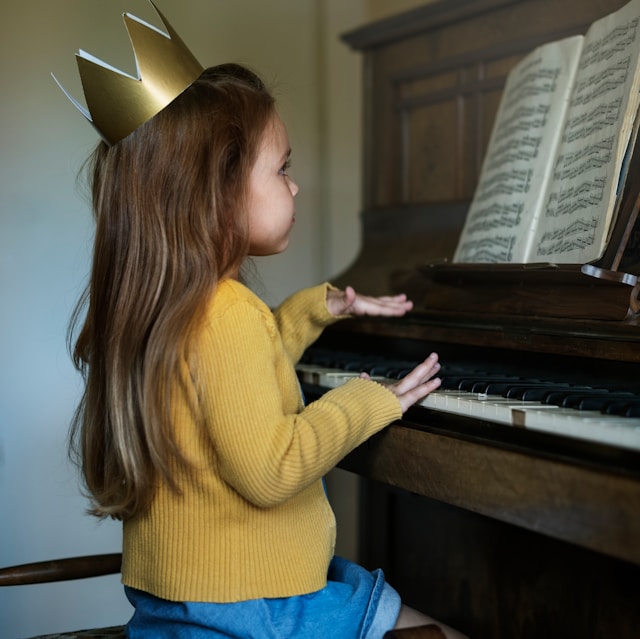
Most traditional piano learning struggles with three structural problems — challenges that don’t match what music learners really want and need as they begin their journey.
Delayed feedback
Practicing incorrectly for days before receiving correction makes it easy to reinforce mistakes. When feedback is slow, your brain struggles to connect cause and effect.
Cognitive overload
Beginners are often asked to juggle notes, rhythm, fingering, posture, and expression all at once. This overwhelms working memory and slows progress.
Lack of visible progress
Without clear milestones, practice feels disconnected from improvement. Motivation drops when effort doesn’t feel rewarding.
These aren’t motivation problems. They’re learning design problems.
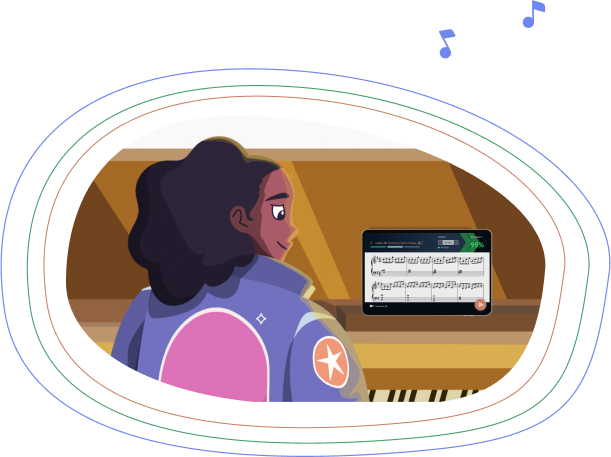
Effective piano learning follows predictable principles:
Small, repeatable challenges
Progress happens fastest when tasks are slightly challenging but consistently achievable. Jumping too far ahead creates frustration; staying too easy causes stagnation.
Immediate correction
The closer feedback is to the action, the faster the brain adjusts. This applies whether you’re working with a teacher, software, or self-review.
Pattern recognition
Music is not memorization of individual notes. It’s recognition of patterns—intervals, rhythms, chord shapes, and hand positions.
When practice aligns with these principles, progress accelerates naturally.
Sight reading is often treated as an advanced skill, but in reality, it’s foundational. Learning to read music early builds musical independence and removes reliance on memorization.
For beginners, sight reading:
Think of sight reading like learning to read words instead of memorizing sentences. It unlocks flexibility and confidence.

Effective beginner practice isn’t about long sessions—it’s about smart structure.
Short, focused sessions
Fifteen to thirty minutes of deliberate practice is more effective than unfocused hours.
Clear goals per session
Each session should answer: What skill am I improving today?
Consistent difficulty scaling
As skills improve, difficulty should increase gradually. This keeps practice engaging without becoming overwhelming.
Practicing this way builds momentum instead of burnout.
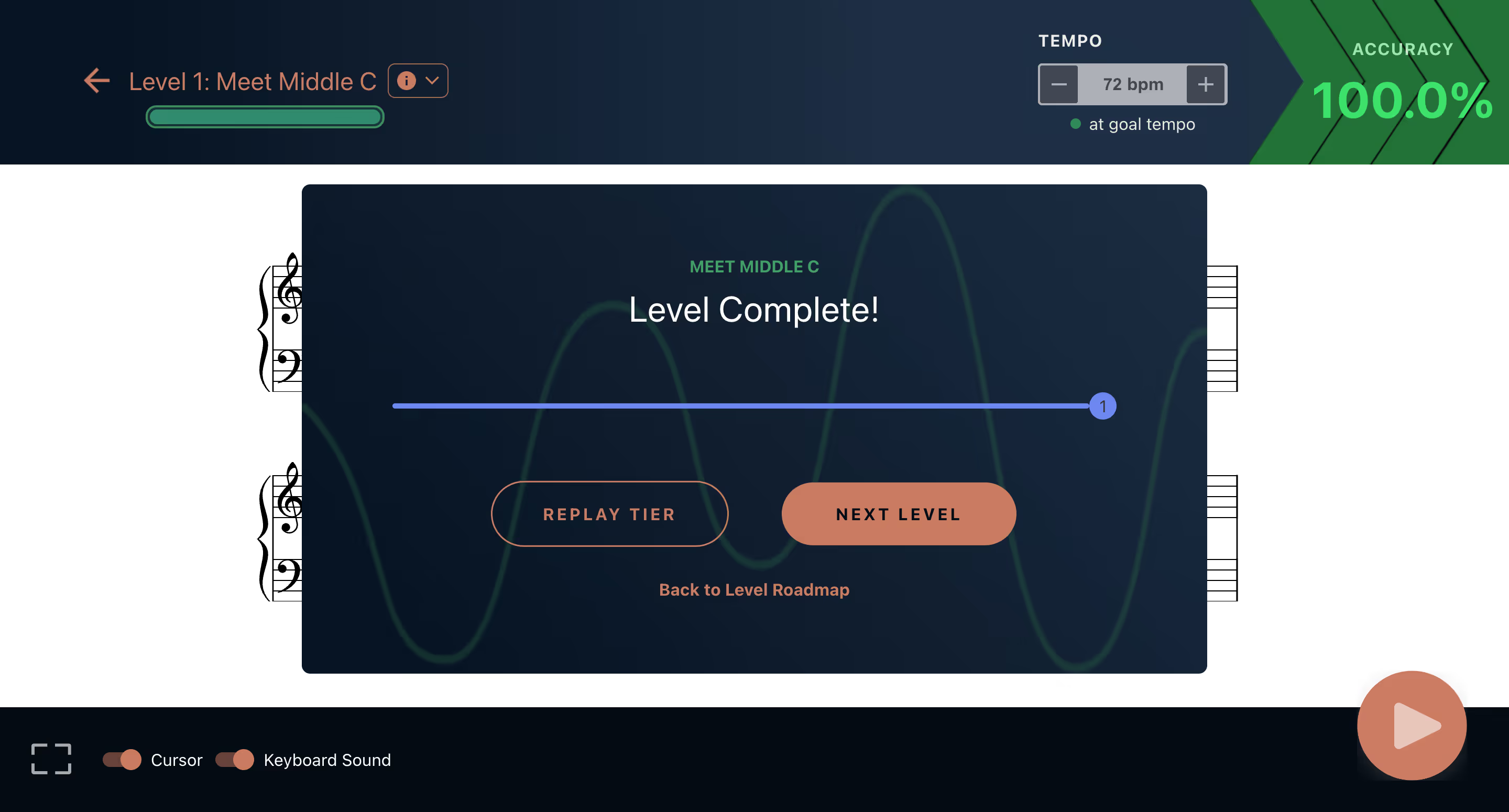
Sustainable motivation doesn’t come from forcing discipline—it develops when learners can clearly see that today’s practice led to real improvement. When progress is visible, motivation becomes intrinsic and practice shifts from obligation to something genuinely rewarding.
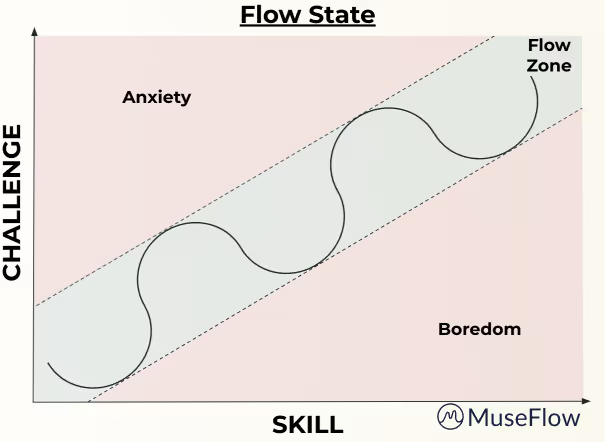
Across real learning journeys, this is often the point where beginners enter periods of deep focus, where effort feels natural and time passes quickly. These flow states aren’t mysterious; they emerge when challenge and skill are closely aligned and the learner feels capable, not pressured.

Beyond technical skills, piano learning improves creative thinking and emotional regulation. Playing music provides a structured outlet for expression and stress relief.
It also encourages connection—whether through sharing progress, collaborating with others, or simply communicating emotion through sound. These benefits compound over time and reinforce long-term engagement.
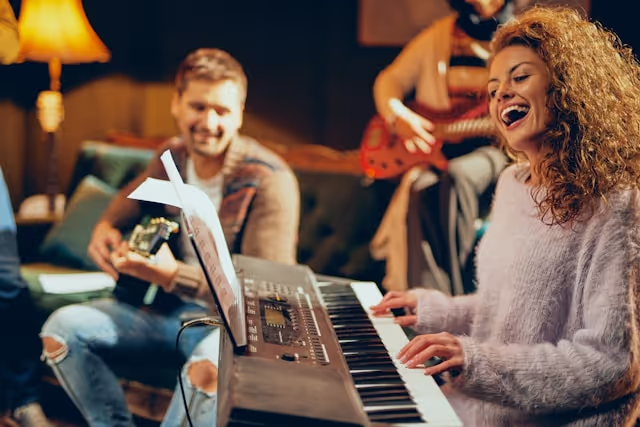
Today, learners have access to tools that provide real-time feedback, structured progression, and adaptive difficulty. When used thoughtfully, these tools can support effective practice habits—especially for beginners practicing independently.
Platforms like MuseFlow are designed to reinforce core learning principles such as immediate feedback, gradual difficulty scaling, and early skill literacy. While no tool replaces intentional practice, the right support can make learning more structured and less frustrating.
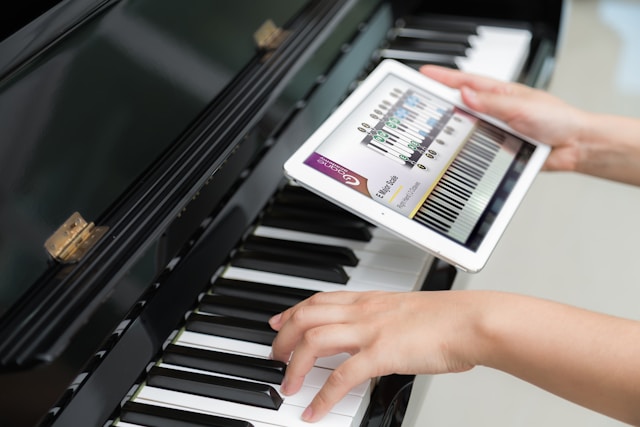
Learning piano efficiently isn’t about finding the “fastest” method—it’s about removing friction from the learning process.
Focus on:
When these elements align, progress follows naturally.
Piano is not reserved for the gifted or the disciplined. With the right structure, beginners can build real musical ability—and enjoy the process along the way.

Learning piano can feel overwhelming for beginners: tedious scales, repetitive exercises, and slow progress often lead to frustration. Recent advances in digital music education offer a new approach: applying principles from game design to piano learning. By structuring lessons around sight reading mastery, immediate feedback, and progressive challenges, learners can develop real musical skills while staying motivated.
This article explores how game-like learning works in piano education and how it can complement traditional instruction.

Game-like learning leverages psychological principles that enhance motivation and skill acquisition:
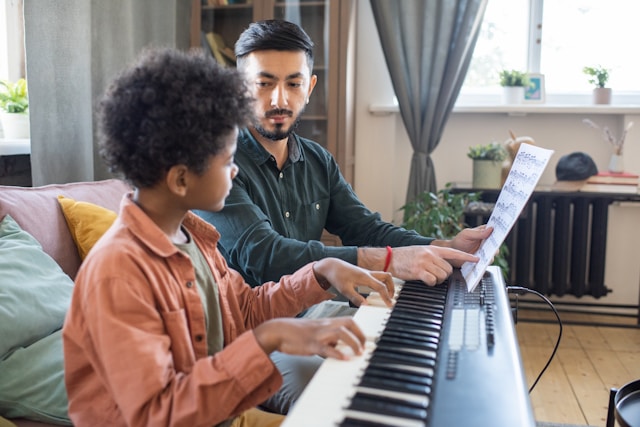
Unlike traditional apps that focus on memorizing songs, effective game-like piano lessons center on sight reading:
Studies indicate that proficient sight readers exhibit better integration of musical skills and understanding. Structuring lessons around sight reading turns practice into a skill-building game rather than a repetitive drill

Game-inspired lesson design often combines structured progression with learner choice:
Both approaches reinforce real musical achievement rather than superficial progress. Every completed level corresponds to measurable skill improvement.
Integrating digital tools with a MIDI keyboard enables instant feedback:
Research supports that such immediate, structured feedback improves retention and reduces error reinforcement.

By combining these strategies with sight reading exercises, learners steadily build transferable skills applicable to any musical style.

While testimonials provide anecdotal support, objective research validates these approaches:
Integrating these principles into practice produces measurable improvement, regardless of prior musical experience.
To begin a game-like piano learning journey:
This approach aligns practice with how the brain learns motor and cognitive skills, creating efficient and enjoyable lessons.
Game-like piano learning is more than a fun gimmick—it’s an evidence-based approach to mastering sight reading, technique, and musical literacy. By combining immediate feedback, structured progression, and intrinsic motivation, learners develop real musical skills while remaining engaged.
Structured, interactive lessons make every practice session meaningful. With consistent application, these methods can transform beginner frustration into confidence and genuine musical independence.
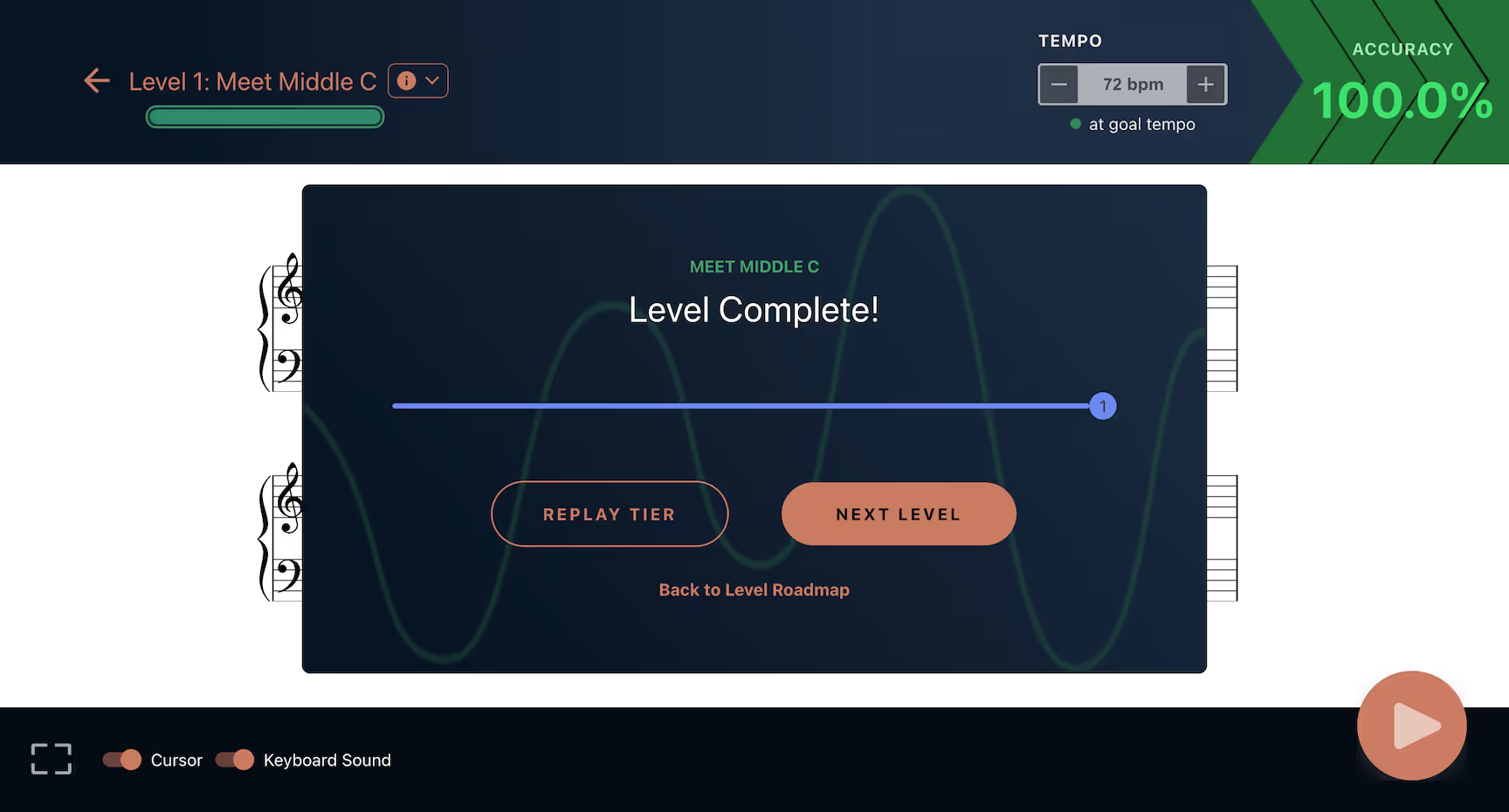
Learning an instrument is more than mastering notes and rhythms—it’s a gateway to improved cognitive function, emotional well-being, and lifelong creativity. Adults who engage in regular music practice often demonstrate enhanced memory, auditory processing, and motor coordination compared to non-musicians. This combination of mental and physical engagement makes music learning a uniquely powerful form of personal development.

Learning to play an instrument actively engages multiple brain regions. Musical training strengthens connections between hemispheres, improving memory and language skills—a relationship explored in how music enhances creativity and mental health. Practicing scales, chords, or improvisation develops fine motor control, auditory discrimination, and executive function. Long-term musicians tend to experience slower cognitive decline as they age, suggesting that music may act as a natural cognitive enhancer.
In my experience teaching piano for over a decade, students who consistently practice demonstrate noticeable improvements in attention span, problem-solving, and multitasking abilities within just a few months.
Mastering an instrument requires consistent practice and patience. Early progress can feel slow, but maintaining a regular schedule cultivates perseverance, time management, and focus. These skills transfer beyond music, enhancing productivity in work, school, and personal projects.
Structured practice, whether through traditional lessons or self-guided sessions, teaches learners to break complex tasks into manageable steps—a valuable strategy for academic and professional challenges.

Playing music offers a unique outlet for expressing complex emotions. Musical practice can reduce stress and anxiety while promoting positive mood states. Engaging deeply with music also induces “flow states,” where individuals experience immersion and focus, contributing to overall well-being.
Many students report feeling calmer and more centered after just 20–30 minutes of playing, making music a practical tool for emotional regulation in daily life.

Music naturally fosters social interaction. Joining ensembles, choirs, or online communities enables learners to connect with diverse groups, creating a sense of belonging and shared purpose. Collaborative music-making strengthens empathy, cooperation, and social cohesion.
Even informal jam sessions or virtual collaborations can create meaningful bonds, enriching both personal and professional relationships.

Music encourages creative thinking, learning new language, adaptive problem-solving. Improvisation, composition, and experimenting with different genres stretch the mind, improving flexibility in approaching challenges.
As learners navigate complex pieces or experiment with new melodies, they develop resilience and inventive thinking applicable beyond music. Whether troubleshooting a tricky passage or improvising a melody, musicians strengthen mental flexibility that supports everyday problem-solving.

Instrument learning and practice refines both fine and gross motor skills. Pianists develop precise finger movements and enhanced hand-eye coordination, while string and wind instrument players improve breath control, posture, and dexterity. For younger learners, early motor skill development contributes to long-term physical competence, including sports and daily activities.
These physical benefits reinforce the interconnected nature of mind and body, highlighting music as a holistic developmental tool.

One of the most rewarding aspects of learning an instrument is achieving a flow state.This occurs when you become fully immersed in an activity, with deep focus and effortless performance. Music naturally facilitates this balance between skill and challenge, allowing learners to experience satisfaction, relaxation, and personal expression.
Exploring dynamics, tempo, and expression while playing enhances both creativity and self-awareness, creating a fulfilling and enjoyable learning experience.
Learning an instrument provides a rich blend of cognitive, emotional, social, and physical benefits. Whether improving brain function, relieving stress, or fostering social connections, music equips individuals with skills that extend far beyond the instrument itself.
Expert Tip: Practicing effectively often means knowing where you’re starting and how far you can push yourself—a concept explained by the floor-ceiling model of skill acquisition. Start with small, consistent practice sessions and gradually increase complexity. Tracking progress enhances motivation and reinforces a sense of achievement.
For those looking for guided learning tools, AI-driven music apps like MuseFlow can help tailor practice sessions to your skill level and support steady improvement. While such tools can aid learning, the true benefits of music come from consistent engagement, personal exploration, and dedication.

A MIDI keyboard looks like a piano, but functionally it’s closer to a controller than an instrument. It doesn’t generate sound on its own—it sends performance data (notes, velocity, timing) to software that turns those actions into sound. That distinction matters, because how you use a MIDI keyboard depends entirely on your goal: producing tracks, composing scores, or learning piano fundamentals.
This guide focuses on how MIDI keyboards are actually used in real workflows, not just what they are.
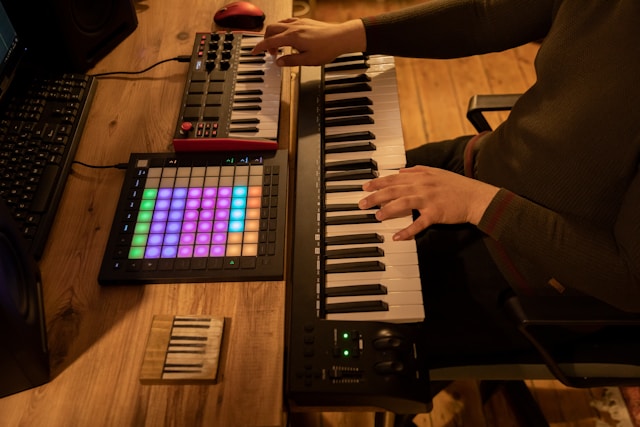
MIDI (Musical Instrument Digital Interface) is a communication standard, not a sound format. When you press a key, the keyboard sends information like:
Your software—whether a DAW like Logic Pro or notation software like Sibelius—decides how that data sounds. This is why the same performance can trigger a piano, synth, string section, or drum kit with zero re-recording.
That flexibility is why MIDI keyboards are central to modern music workflows.
In production, MIDI keyboards are mainly used for speed and iteration. Instead of clicking notes with a mouse, producers sketch ideas in real time, then refine them.
A common beginner mistake is trying to record everything perfectly on the first take. In practice, most producers:
The keyboard is for capturing intent, not perfection.
Instead of a long checklist, here’s how this typically plays out:
The MIDI keyboard’s value here isn’t realism—it’s speed, experimentation, and control.
For composers, MIDI keyboards act as an input device for notation, not a final performance tool.
When entering notes into notation software:
Many experienced composers intentionally play simplified versions and refine later.
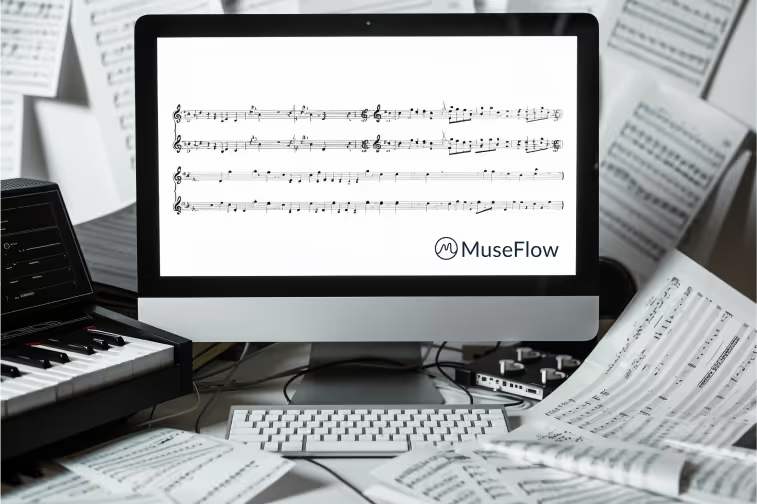
A realistic composing process looks like this:
Using a MIDI keyboard here reduces fatigue and speeds up note entry—but musical judgment still comes from the composer, not the tool.
This is where confusion often happens. A MIDI keyboard is not automatically a piano teacher. It becomes useful for learning only when paired with software like that provides:
Without that, beginners often reinforce bad habits.
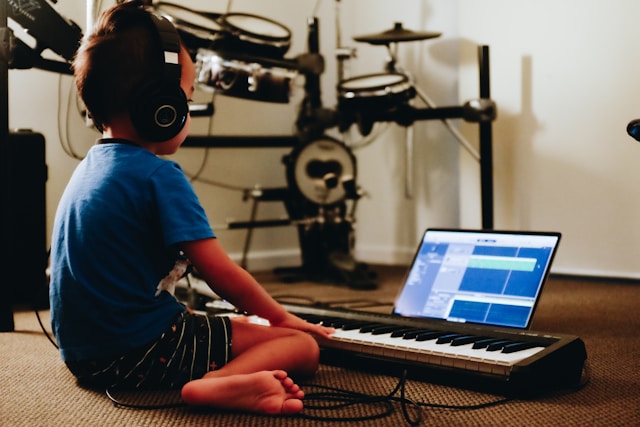
Students who make the most progress usually:
This aligns with well-established learning psychology research on skill acquisition.
Instead of a sales pitch, here’s the objective use case.
MuseFlow is one example of software that uses MIDI input to:
From a learning-design perspective, the value is not “gamification,” but tight feedback loops—students know immediately what went wrong and can correct it before mistakes become habits.

The keyboard itself doesn’t make you better. The workflow around it does.
If you already own a MIDI keyboard and want to explore structured piano learning, tools like MuseFlow can be tested using only a browser and a compatible keyboard.
For a long time, learning piano without a teacher was seen as unrealistic. Traditional instruction was expensive, time-bound, and often intimidating, which stopped many people from even trying. Today, that assumption no longer holds. With the right approach, learning piano by yourself is not only possible—it can be effective and rewarding.
The real question isn’t whether you can teach yourself piano. It’s how you do it.
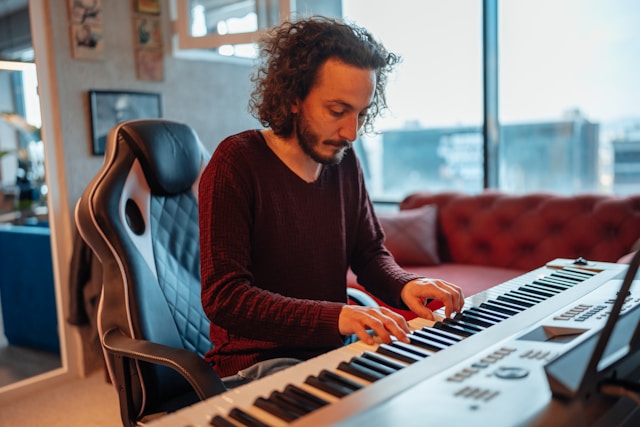
Many people start with enthusiasm but struggle to maintain progress. These challenges are common, especially for a complete beginner, and they’re worth understanding before you begin.
When you practice alone, it’s easy to reinforce mistakes without realizing it. Incorrect fingerings, posture issues, or timing errors can become ingrained. Research on piano learning and motor skill acquisition shows that correct, timely feedback is essential for long-term improvement and effective neural adaptation.
To overcome this, self-learners benefit from tools or methods that provide immediate feedback on accuracy and timing, helping them correct mistakes early instead of relearning later.

One of the biggest frustrations for beginners is not knowing where to start. Online tutorials, books, and apps often contradict each other. Should you focus on songs, chords, or theory? Without a structured plan, progress becomes inconsistent.
Educational research on sight reading development consistently emphasizes the importance of a progressive, systematic approach. Learning to read music early builds musical independence and reduces reliance on memorization alone. A clear roadmap removes guesswork and helps learners build skills logically.
Initial excitement often fades once progress slows. Practicing alone can feel isolating, and without visible improvement, many learners quit. Studies on musical engagement show that sustained practice improves when learners experience achievable challenges and a sense of progress.
This is where the concept of flow state becomes relevant. Flow occurs when difficulty and skill are well matched, allowing focused, enjoyable practice. Learning environments that adapt to the learner’s level help maintain motivation over time.
Self-teaching doesn’t mean learning without support—it means choosing the right kind of support. Effective tools for piano self-learners tend to share a few characteristics:
Some digital platforms aim to replicate these principles by combining structured lessons, real-time input, and adaptive pacing. MuseFlow is one example of a tool designed around these ideas, particularly with its focus on sight reading-first learning and progressive difficulty. Importantly, it should be seen as a support system—not a shortcut or replacement for effort.
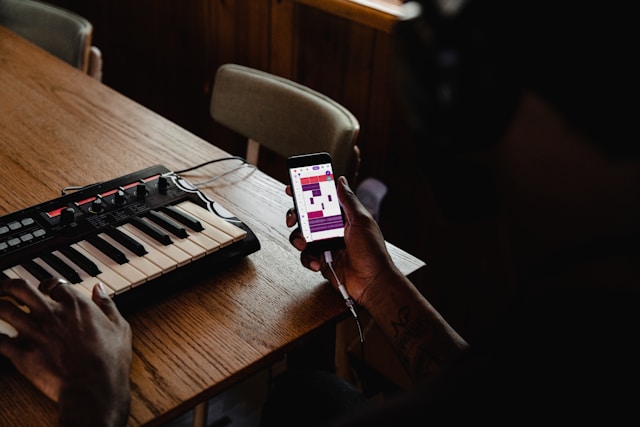
Many beginner resources focus on teaching a few recognizable songs quickly. While this can feel motivating, it often limits long-term growth. Learning music—understanding rhythm, reading notation, and coordinating both hands—creates transferable skills that allow you to play new material independently.
A focus on musicianship supports long-term development and aligns with research on effective music education. This approach helps learners move beyond imitation toward genuine musical literacy.
The benefits of learning an instrument extend well past entertainment. Educational research from reputable music institutions and academic studies has linked music learning with improvements in cognitive flexibility, memory, emotional regulation, and creative problem-solving. These benefits are most pronounced when learning is consistent and skill-based rather than purely recreational.
Whether you’re a complete beginner or returning after years away, a few principles make self-learning more effective:
Yes—learning piano by yourself is absolutely achievable. Success depends less on talent and more on approach: structured learning, consistent practice, and the right support systems. Modern tools can reduce traditional barriers, but the real progress still comes from focused effort and thoughtful practice.
If you choose to use an app like MuseFlow, treat it as one part of a broader learning strategy. When combined with patience, curiosity, and good habits, self-teaching piano can be both effective and deeply satisfying.
Most piano learners don’t quit because they lose interest in music. They quit because progress becomes harder to recognize. Around the point where sight reading slows down and mistakes increase, practice starts to feel emotionally expensive. Understanding why this happens — and how to redesign practice to reduce friction — is the key to staying motivated long-term.
Staying motivated isn’t about forcing discipline or practicing longer hours. Research in music education and learning psychology shows that motivation improves when practice feels purposeful, achievable, and engaging. The goal is to redesign how you practice so progress becomes visible and emotionally rewarding again.

Many learners lose motivation because they focus only on outcomes: playing a piece perfectly or advancing as fast as possible. These goals are distant and fragile. When progress slows, frustration rises.
Process goals work better:
Process goals create frequent wins and reduce perfectionism challenges, which often cause learners to stop practicing altogether. When success is defined by improvement rather than perfection, motivation becomes more stable.
Practicing the same piece every day can quietly drain motivation. Cognitive fatigue sets in long before musical growth stops.
A more sustainable approach is repertoire rotation:
Access to a flexible repertoire library makes this easier. When learners can switch pieces without guilt, practice feels adaptable rather than restrictive. Variety reinforces musical skills while keeping curiosity alive.

Motivation fades fastest when practice feels overwhelming. Studies on learning psychology consistently show that short, focused sessions with clear goals outperform long, unfocused ones.
Try:
Short, repeatable routines reduce the mental cost of starting a practice session. Instead of relying on motivation, learners rely on predictability. Over time, this consistency supports deeper concentration and makes it easier to enter a flow state, where attention stabilizes and practice feels less effortful.
One of the most demotivating feelings is believing you’re “not improving.” Often, progress is happening — it’s just not obvious.
Ways to make improvement visible:
Visible progress reinforces confidence and helps learners stay engaged during slower phases of development
Highly motivated practice often occurs during a Flow state — a mental state where challenge and skill are balanced and time seems to disappear. Flow is not accidental; it’s designed.
Flow-friendly practice includes:
When learners operate near their current skill level — not too easy, not too hard — practice feels immersive rather than exhausting. This state dramatically improves motivation and learning efficiency.

Delayed feedback is a major motivation killer. Repeating mistakes unknowingly builds frustration.
Modern learning tools that provide real-time feedback help learners correct errors immediately, preventing bad habits and keeping practice efficient. Faster feedback leads to faster confidence — a critical factor in sustaining motivation.
Technology-assisted learning platforms like MuseFlow apply these principles by combining structured progression, instant feedback, sight reading development, and flexible pacing — but the underlying concept applies universally: feedback should match effort in real time.
Learning piano is not linear. Motivation naturally fluctuates, even for experienced musicians. What matters is building a practice system that adapts to low-energy days instead of collapsing under them.
By rotating your repertoire, emphasizing sight reading, tracking progress, designing for Flow state, and easing perfectionism challenges, motivation becomes something you support rather than something you constantly chase.
Piano learning doesn’t fail because people lack passion — it fails when practice stops feeling rewarding. Redesign the experience, and motivation follows.
Sight reading is a foundational skill for pianists, yet finding online resources that genuinely support learning can be challenging. Many websites provide exercises, but not all help learners develop true fluency. Understanding the criteria for effective sight reading practice allows pianists to select platforms that truly enhance skill development.
In practical learning environments, sight reading improvement is rarely linear. Adult learners often report progress appearing in short bursts rather than steady increases, especially when transitioning between difficulty levels. Observations from independent piano instructors and self-directed learners consistently show that regular exposure to unfamiliar but manageable material is more effective than repeating the same patterns for extended periods. This highlights the importance of platforms that support gradual progression while accounting for individual pacing differences.
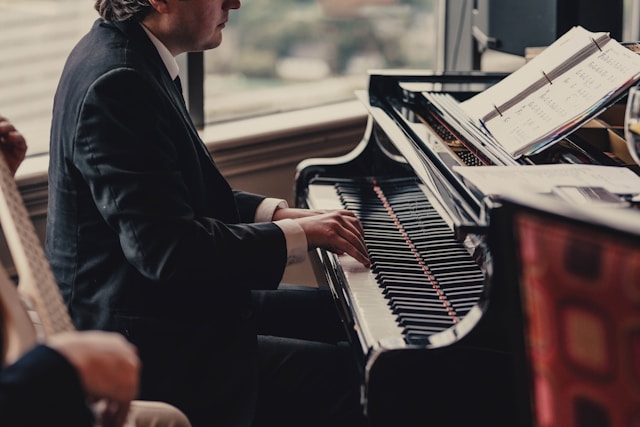
Effective sight reading platforms adjust exercises according to the learner’s skill and performance. Adaptive systems consider accuracy, timing, and consistency, ensuring challenges remain achievable yet stimulating.
Research in music education shows that appropriately scaled challenges improve retention and motivation, while a fixed, one-size-fits-all approach can frustrate learners.. Platforms that track performance and adapt difficulty allow learners to progress efficiently without repeating exercises that are too easy or overwhelming.
For example, MuseFlow uses performance tracking to adjust lesson difficulty dynamically, illustrating how adaptive learning principles can be applied in practice.
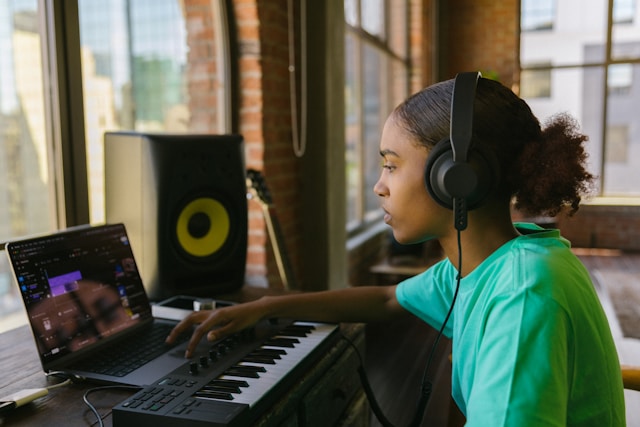
Immediate feedback is critical for sight reading development. When learners receive guidance on mistakes—whether in rhythm, pitch, or timing—they can correct errors immediately instead of reinforcing them over multiple sessions.
This feature is especially helpful for beginners, who may struggle to self-assess while playing. Visual or auditory cues provide clear direction, supporting proper technique and boosting confidence.
Platforms such as MuseFlow demonstrate how real-time feedback can guide independent practice, but the principle applies across any effective learning system.
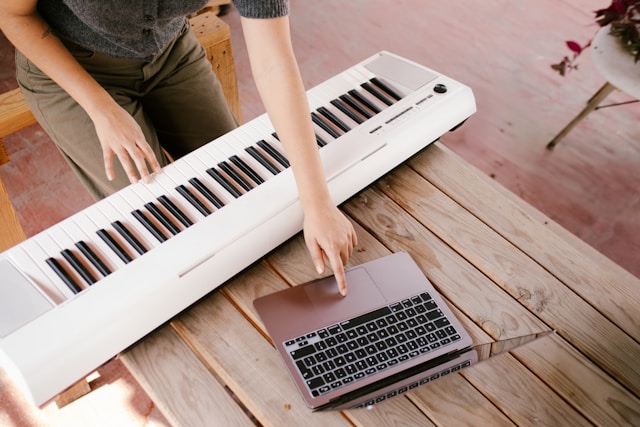
Sustained practice depends on maintaining focus and motivation. Engagement doesn’t require excessive gamification; rather, progress indicators, clear goals, and structured challenges help learners stay consistent.
Adult learners particularly benefit from visible improvement and structured routines. These cues reinforce consistency while keeping attention on musical fundamentals rather than novelty.
Some modern platforms include light gamified elements—such as skill milestones or completion tracking—to encourage regular practice while keeping the emphasis on learning rather than entertainment.
A strong sight reading platform balances structured progression with variety. Curated exercises ensure systematic skill development, while diverse repertoire challenges learners musically and reinforces reading fluency.
Variety helps prevent memorization of patterns and promotes true sight reading ability, including rhythm, pitch, and dynamic accuracy. Platforms that integrate both structured exercises and musical application allow learners to practice in a way that feels both educational and rewarding.
MuseFlow, for instance, combines targeted skill exercises with a rotating repertoire library to illustrate this principle.
Consistency is more important than session length. Platforms that support short, flexible practice sessions allow learners to engage daily without scheduling conflicts or rigid routines.
Research in adult learning emphasizes that self-paced control and visible progress improve persistence and retention. Platforms that allow learners to resume exactly where they left off help maintain momentum and reduce frustration.

Another often overlooked factor is how clearly a platform communicates why specific exercises are assigned. Sight reading improves most effectively when learners understand the purpose behind rhythmic drills, interval jumps, or key changes rather than practicing them mechanically.
Educational research on adult learning consistently shows that transparency in instructional design increases engagement and long-term retention. Websites that briefly explain the skill focus of each exercise help learners practice more intentionally, avoid mindless repetition, and develop transferable reading skills that apply across new musical material.
When evaluating websites for piano sight reading exercises, consider these five criteria:
Platforms implement these features differently. MuseFlow is cited here as an example of a system that aligns with these principles, but the framework itself applies broadly across modern sight reading tools.
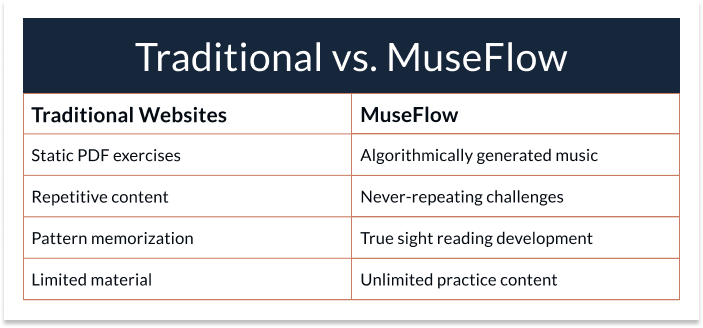

Keep up to date on our progress as we continue to add new features!