.svg)
Is It Possible to Learn Piano by Yourself?Here's How
For a long time, learning piano without a teacher was seen as unrealistic. Traditional instruction was expensive, time-bound, and often intimidating, which stopped many people from even trying. Today, that assumption no longer holds. With the right approach, learning piano by yourself is not only possible—it can be effective and rewarding.
The real question isn’t whether you can teach yourself piano. It’s how you do it.
What Actually Makes Self-Teaching Piano Difficult
Many people start with enthusiasm but struggle to maintain progress. These challenges are common, especially for a complete beginner, and they’re worth understanding before you begin.
1. Lack of Feedback Leads to Bad Habits
When you practice alone, it’s easy to reinforce mistakes without realizing it. Incorrect fingerings, posture issues, or timing errors can become ingrained. Research on piano learning and motor skill acquisition shows that correct, timely feedback is essential for long-term improvement and effective neural adaptation.
To overcome this, self-learners benefit from tools or methods that provide immediate feedback on accuracy and timing, helping them correct mistakes early instead of relearning later.

2. No Clear Starting Point
One of the biggest frustrations for beginners is not knowing where to start. Online tutorials, books, and apps often contradict each other. Should you focus on songs, chords, or theory? Without a structured plan, progress becomes inconsistent.
Educational research on sight reading development consistently emphasizes the importance of a progressive, systematic approach. Learning to read music early builds musical independence and reduces reliance on memorization alone. A clear roadmap removes guesswork and helps learners build skills logically.
3. Motivation Drops Over Time
Initial excitement often fades once progress slows. Practicing alone can feel isolating, and without visible improvement, many learners quit. Studies on musical engagement show that sustained practice improves when learners experience achievable challenges and a sense of progress.
This is where the concept of flow state becomes relevant. Flow occurs when difficulty and skill are well matched, allowing focused, enjoyable practice. Learning environments that adapt to the learner’s level help maintain motivation over time.
What to Look for in Modern Self-Learning Tools
Self-teaching doesn’t mean learning without support—it means choosing the right kind of support. Effective tools for piano self-learners tend to share a few characteristics:
- Immediate feedback to prevent bad habits
- Structured progression instead of random lessons
- Emphasis on musicianship, not just song memorization
- Adaptive difficulty that encourages flow state during practice
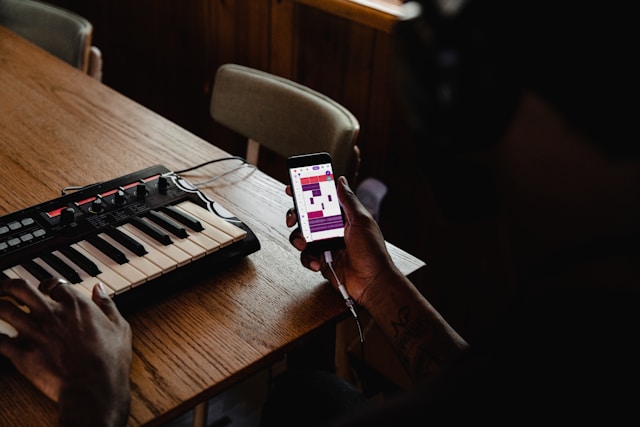
Some digital platforms aim to replicate these principles by combining structured lessons, real-time input, and adaptive pacing. MuseFlow is one example of a tool designed around these ideas, particularly with its focus on sight reading-first learning and progressive difficulty. Importantly, it should be seen as a support system—not a shortcut or replacement for effort.
Learning Music vs. Memorizing Songs
Many beginner resources focus on teaching a few recognizable songs quickly. While this can feel motivating, it often limits long-term growth. Learning music—understanding rhythm, reading notation, and coordinating both hands—creates transferable skills that allow you to play new material independently.
A focus on musicianship supports long-term development and aligns with research on effective music education. This approach helps learners move beyond imitation toward genuine musical literacy.
The Benefits of Learning an Instrument Go Beyond Music
The benefits of learning an instrument extend well past entertainment. Educational research from reputable music institutions and academic studies has linked music learning with improvements in cognitive flexibility, memory, emotional regulation, and creative problem-solving. These benefits are most pronounced when learning is consistent and skill-based rather than purely recreational.
Essential Tips for Beginners Teaching Themselves Piano
Whether you’re a complete beginner or returning after years away, a few principles make self-learning more effective:
- Start slow and prioritize accuracy over speed
- Build sight reading skills early
- Practice regularly in short, focused sessions
- Use tools that provide feedback and structure
- Stay patient—progress is gradual but cumulative

So, Can You Learn Piano by Yourself?
Yes—learning piano by yourself is absolutely achievable. Success depends less on talent and more on approach: structured learning, consistent practice, and the right support systems. Modern tools can reduce traditional barriers, but the real progress still comes from focused effort and thoughtful practice.
If you choose to use an app like MuseFlow, treat it as one part of a broader learning strategy. When combined with patience, curiosity, and good habits, self-teaching piano can be both effective and deeply satisfying.

.jpg)