Curriculum
Self-Improvement
Technology
Flow State
News
What Music Learners Really Want - and How MuseFlow Delivers
July 27, 2026

When learning to sight read music, frustrations can easily derail progress. We know that mastering this skill is challenging enough without running into roadblocks caused by the tools themselves. That’s why MuseFlow was created: to address the biggest challenges music learners face and offer a superior learning experience.

To illustrate, we’ve gathered some anonymized, recent reviews from other systems for sight reading—both books and online. These reviews reflect real frustrations learners have encountered—and highlight how MuseFlow solves these issues.
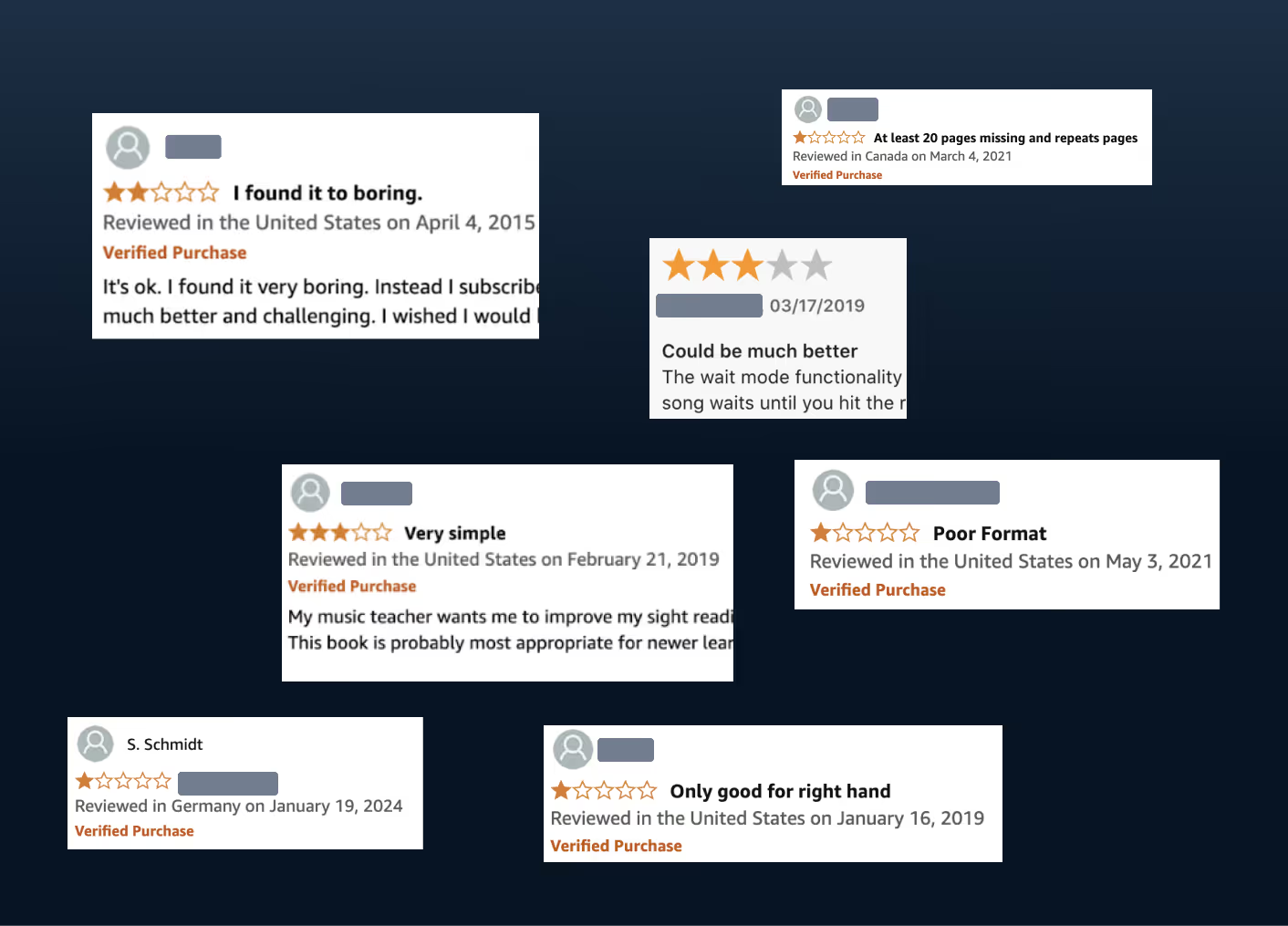
“I just wish there were a few more things they added in, like actually listening to the piano to check if notes/rhythm right and if the answer is wrong, revealing the right answer.”
By connecting to a digital piano, MuseFlow provides precise, real-time feedback on both notes and rhythm. You’ll always know whether you’re playing correctly, and you’ll receive instant corrections to improve faster.
“The inability for it to properly recognize notes is frustrating and interrupts flow and learning.”
This is exactly what MuseFlow doesn’t do. With advanced AI, MuseFlow seamlessly recognizes the notes you play and keeps you in a flow state... free from interruptions or misreads.
“It has a hard time picking up certain notes. This severely disrupts my flow during a song when I have to repeat a key until it finally recognizes, or it randomly skips notes sometimes.”
MuseFlow is built to prioritize uninterrupted learning. With its accurate note recognition and adaptive technology, you’ll never have to stop mid-song to troubleshoot. MuseFlow ensures your learning experience stays smooth and engaging.
“I found it very boring.”
With MuseFlow, boredom is a thing of the past. Its dynamic, real-time generated exercises keep you continuously engaged. You’re always in flow state—not too bored, not too overwhelmed—right in that pocket of the goldilocks zone, just perfectly challenged to keep progressing.
“My music teacher wants me to improve my sight reading and recommended this book. I found it rather simple. My teacher thinks I have picked up my skill, but I'm not convinced- I'd like to find something a bit more challenging.”
MuseFlow ensures every exercise is tailored to your skill level. You’ll never feel under-challenged or stuck with static materials. The app’s adaptive AI grows with you, ensuring that your learning remains engaging and appropriately difficult. The piano learning software makes sure everyone is on their own SUCCESSFUL journey.
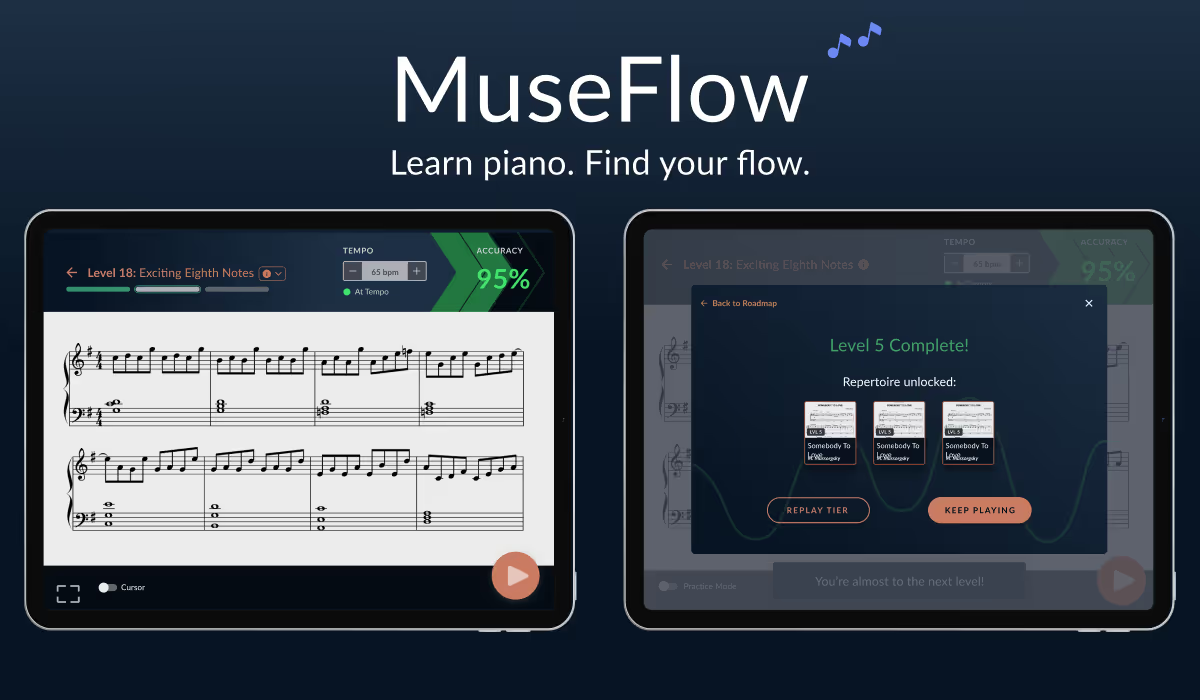
Learning sight reading should be a fulfilling journey... not a frustrating one. MuseFlow’s cutting-edge technology solves the issues that have plagued music learners for years:
With MuseFlow, you’ll move beyond outdated tools and experience a revolutionary way to master sight reading.

This holiday season, give a gift that goes beyond the ordinary; a gift that opens up the world of learning piano music. MuseFlow isn’t just any music learning app; it’s a gateway to mastering the skill of sight reading - the act of reading music at first sight - making music performance more accessible, meaningful, and enjoyable. Here’s why MuseFlow is the perfect gift for those looking to excel in piano performance, find personal fulfillment, and spread joy through music.

For those who perform, music isn’t just a passion… it’s a way to connect, impress, and earn some extra cash. Imagine walking into any gig, ready and able to play any popular songs on the spot. People throw you request after request, you pull them up on your iPad with Ultimate Guitar or MuseScore, and you just go! MuseFlow gives performers the confidence to do just that, offering a seamless, personalized curriculum that strengthens sight reading skills, enabling users to read and adapt to playing never before seen music quickly.
MuseFlow’s real-time feedback, and adaptive sight reading levels are designed to boost not only proficiency but also versatility. This isn’t about memorizing a few songs; it’s about mastering the skills that let performers meet any song request with ease, broadening their repertoire quickly and enjoyably. Think about how much more you could earn in gigs with even a 20% improvement in sight reading! MuseFlow is the tool that lets you take that leap with ease.

For those juggling family, work, and personal time, music often serves as a cherished retreat. MuseFlow’s unique, adaptable approach brings the joy of learning piano into even the busiest lifestyle. With the flexibility to practice anywhere, at any time, for any duration, and a curriculum that meets users where they are, MuseFlow empowers them to progress steadily and enjoyably, making every practice session a moment of personal enrichment.
Imagine being able to sight read and enjoy playing any piece of sheet music that comes your way, whether it’s for a family gathering, a community event, or a peaceful evening at home. MuseFlow is more than a tool… it’s an opportunity to deepen musical skills, and to share that passion with loved ones, whether through playing together or inspiring the next generation to love music.

MuseFlow is the ideal gift for anyone who has a love for music, whether they’re performers looking to build their skillset, or enthusiasts seeking personal fulfillment. It’s a thoughtful way to show someone that you believe in their potential, that you’re investing in their joy, and that music can be part of their life in a meaningful way.
With flexible subscription plans and bundles, MuseFlow is easy to give and even easier to love. This season, give the gift that resonates long after the holidays… a gift that brings music to life, one note at a time.
What if you could turn sight reading into a game that's so fun and engaging you'd actually look forward to practicing? Piano sight reading as a game isn't just a fantasy.. it's a revolutionary approach that's transforming how musicians develop this essential skill and more.
MuseFlow has mastered the art of making sight reading practice as addictive as your favorite video game while building genuine musical literacy.
Most pianists struggle with sight reading because traditional methods create barriers to learning this skill, instead of finding a way to bridge the gap and limitations to learning. Traditional methods:
Students avoid sight reading practice, never developing a fluency that unlocks musical freedom and expression.
Research from NC State University shows that game-based learning significantly improves student achievement by increasing engagement and motivation. When you turn sight reading into a fun game, you utilize powerful psychological principles of flow and engagement!
Essential Elements for Success:
Studies from Iowa State University reveal that game-based learning motivates students across age groups, making piano sight reading as a game incredibly effective for all levels.
MuseFlow doesn't just add game elements to traditional sight reading. it completely reimagines the experience as an immersive game that builds real musical skills.
The game-changer? MuseFlow generates music that literally never repeats. Every practice session:
.png)
When you connect your digital piano, MuseFlow becomes an interactive game with instant feedback through green lights for perfect notes and timing, visual indicators showing exactly what to improve, immediate correction that builds proper habits, and achievement tracking that celebrates progress.
This real-time feedback is what research identifies as crucial for effective gamification in education.
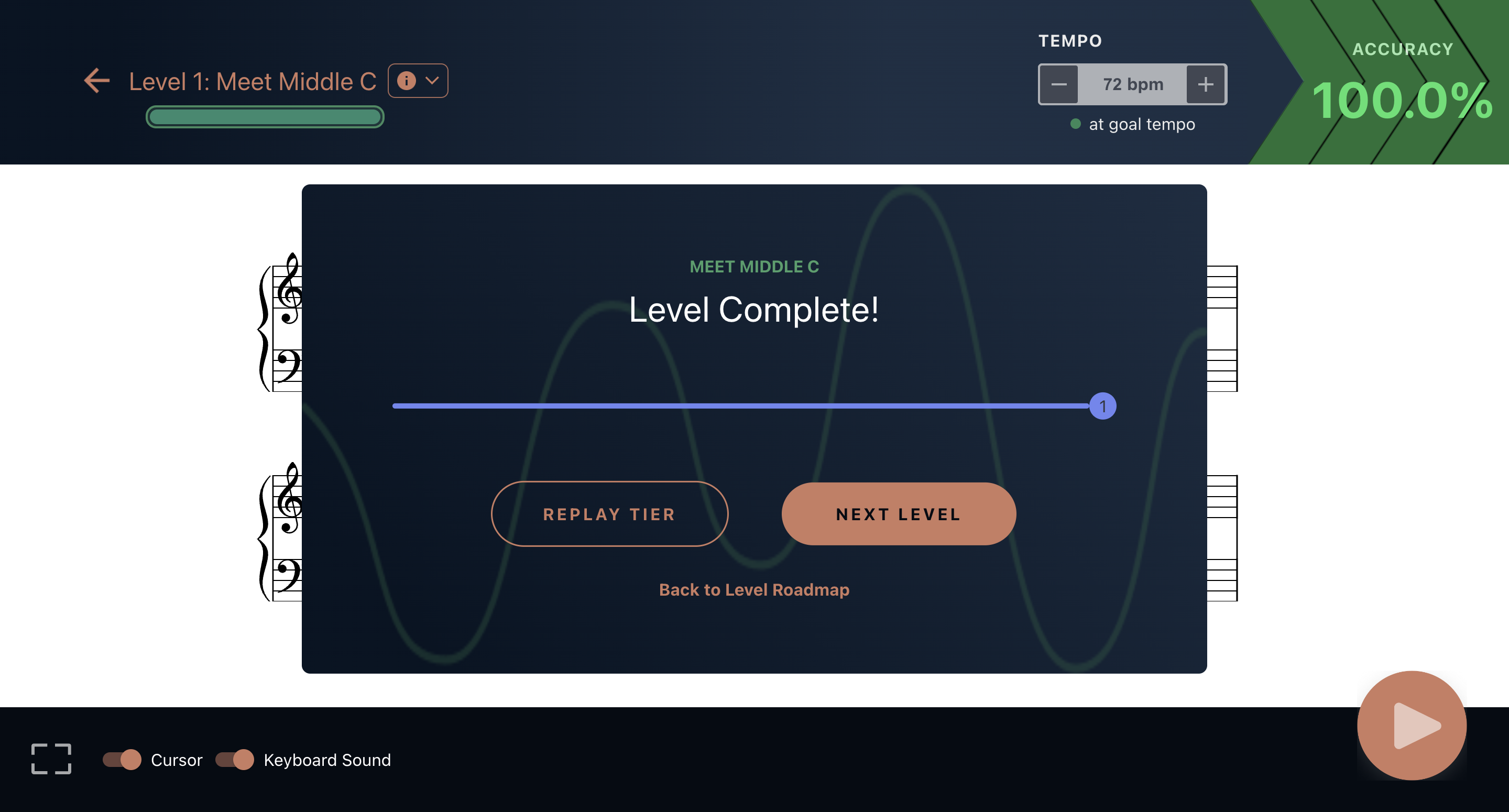
MuseFlow combines open-world and campaign mode game design:
Campaign Mode Features: 27 progressive levels from beginner to advanced, structured curriculum with clear objectives, and unlockable content that rewards advancement.
Open-World Mode Features: Choose your own adventure based on interests, flexible exploration of different musical styles and songs, and personalized challenges that you can adjust to your skill level.
When you turn sight reading into a fun game with MuseFlow, you unlock:
Engagement Mastery:
Technical Excellence:
Learning Innovation:
Practical Application:
Traditional practice relies on willpower and discipline. Game-based sight reading leverages intrinsic motivation through proven psychological mechanisms.
Flow State Creation: When a challenge perfectly matches your skill level, you enter that magical zone where time disappears, learning happens effortlessly, and progress feels natural and rewarding.
Confidence Building: Small, frequent wins boosts self-confidence, reduces performance anxiety, encourages risk-taking in a safe learning space, and develops resilience when facing challenges.
Motivation Enhancement: Game elements transform practice from obligation to entertainment through visual rewards, progressive unlocking of content, competitive elements, and social sharing of achievements.
Ready to experience what happens when you turn sight reading into a fun game? MuseFlow makes this skill accessible and enjoyable.
Your transformation from sight reading avoider to enthusiast starts with understanding that practice doesn't have to feel like work. With MuseFlow's piano learning through games and game-like lessons, you'll discover why thousands choose to turn sight reading into a game.
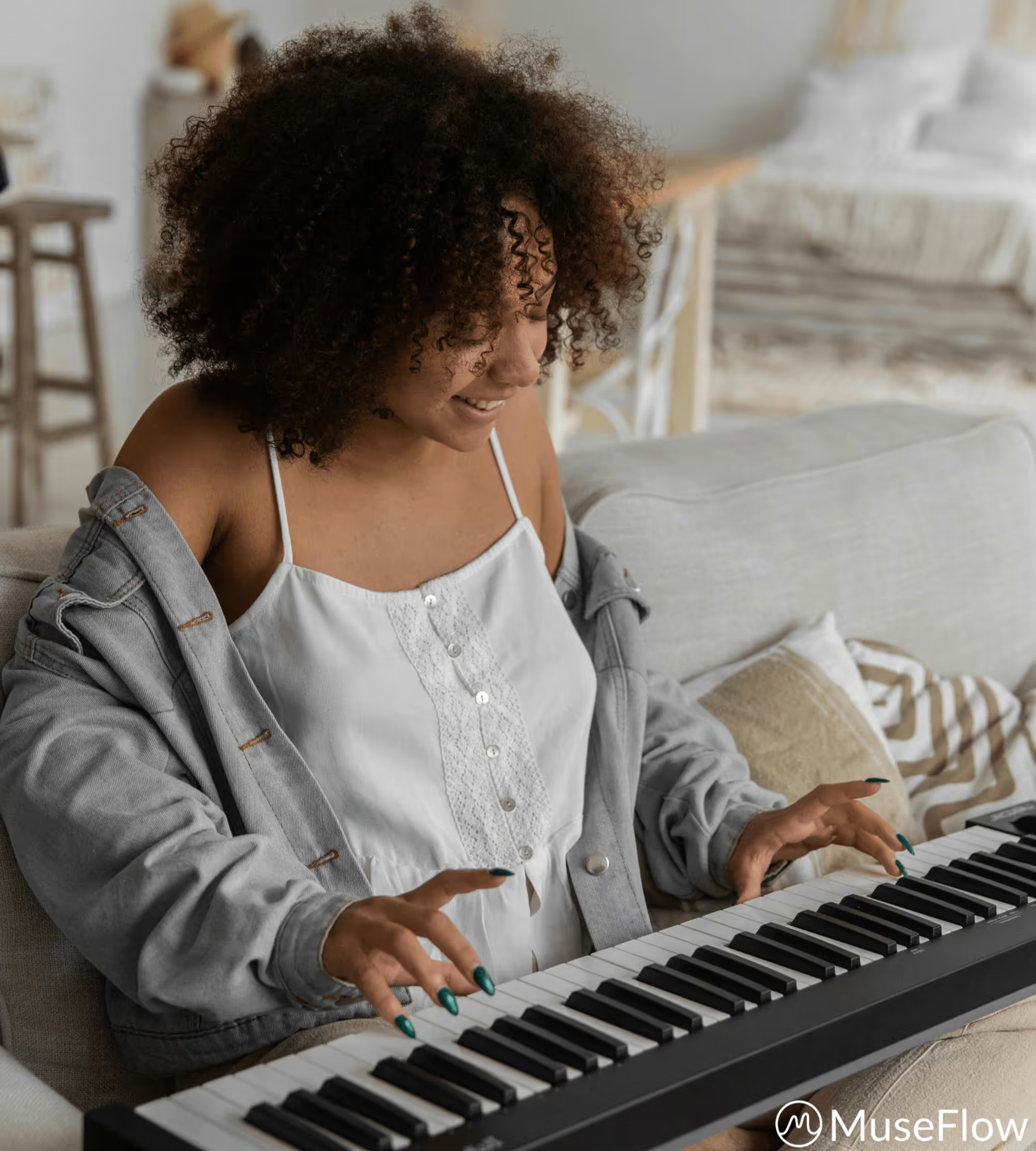

Looking for real piano learning success stories? MuseFlow isn’t just another piano app… it’s a revolutionary piano education with an app that helps students of all levels master piano with the help of an app that adapts to their progress. But don’t just take our word for it. hear from real students who’ve transformed their piano skills using MuseFlow.

One of the biggest barriers to learning piano is simply knowing where to begin. Many aspiring musicians feel overwhelmed before they even press a key. Kyle put it best:
“If this was the norm for music education, I firmly believe the landscape would be radically different. Yes, people quit or don’t bother to learn because it can be frustrating, but I actually think the ambiguity of where to begin and how to effectively progress creates this analysis paralysis and discourages people from even trying.”
MuseFlow eliminates that uncertainty with a structured, step-by-step approach that guides learners through the process. For Megan, it provided what traditional lessons never did:
“When I took piano lessons as a child, I just learned how to play songs so I could pass them off. How I wish I had learned how to play notes.”
By shifting the focus to true note-reading and understanding, MuseFlow helps students build the foundational skills they wish they had from the start.
For many musicians, sight reading has always been a struggle. But MuseFlow’s adaptive approach and real-time feedback have helped students break through their plateaus. Arjuna shared a major breakthrough:
“I don’t think I’ve ever been this good at reading music. It never made sense to me before.”
Katherine echoed that sentiment, noticing her progress with ease:
“Sight reading is getting really easy.”
The moment sight reading clicks is a powerful one. Sharon described how her brain and fingers started working in sync:
“My eyes would see the notes, and my fingers would just go to the right keys on their own, without my brain having to get involved much at all!”
That kind of instinctive playing is exactly what MuseFlow was designed to develop.
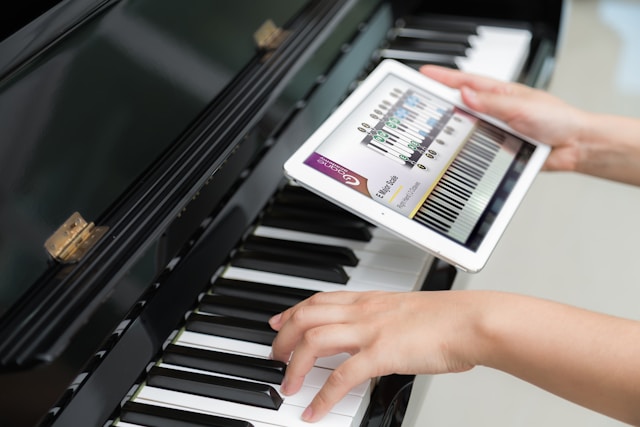
One of the standout features of MuseFlow is its unique piano app, using gamification to keep students engaged and striving for more. Dave admitted he was hooked:
“The gamified approach to learning is brilliant, I'm addicted! The app provides instant feedback.”
Similarly, Kalan was motivated by the visual roadmap of progress:
“I want to beat every level so that all the dots turn green.”
Even those who’ve struggled with consistency in the past, like Dennis, found themselves pushing forward:
“Any success I achieve is its own reward. Just having moved to the next higher level, I feel good and surprised that it went so quickly.”
By turning learning into a rewarding experience, MuseFlow keeps students coming back, ensuring their growth over time.
Unlike traditional sight reading books or rigid lesson plans, MuseFlow’s interface is designed for smooth, distraction-free learning. Artur compared it to conventional methods and found it superior:
“When compared to traditional methods such as the ‘Improve Your Sight Reading’ book by Paul Harris, which is quite good by the way, your app's interactive way of working and real-time, immediate feedback simply outperforms traditional methods.”
Brandon also appreciated how well the app’s design supports learning:
“The endlessly generated tracks to play along with is a very great design idea.”
When the technology works effortlessly, students can focus entirely on the music. Andre summed it up simply:
“It's a genius idea and great execution. As far as I'm concerned, it’s the best in its class.”
Perhaps the most inspiring part of these piano learning success stories is how MuseFlow doesn’t just improve piano skills. it builds confidence and true fluency. For Kyle, it helped erase the self-doubt he carried for years:
“My poor sight reading has been the thorn in my side, the concrete piece of evidence that gives my insecurities justification for screaming that I am not good. And MF is directly training that skill, washing away the remnants of what my insecurities are trying to latch onto. I feel empowered!”
From beginners to seasoned musicians, MuseFlow provides a structured, intuitive, and motivating way to learn. Whether it’s building confidence, overcoming sight reading struggles, or just finding joy in the process, these students prove that mastering piano with an app is possible with the right tools.

Looking for your own piano app with incredible testimonials that provides results? MuseFlow is helping students master piano with their unique music education app like never before. Whether you’re a beginner or looking to refine your sight reading skills, this piano app truly gives students the success they need, and delivers true joy in the process of progressing to proficiency.
Are you ready to start your own success story? Try MuseFlow today and experience the difference for yourself.
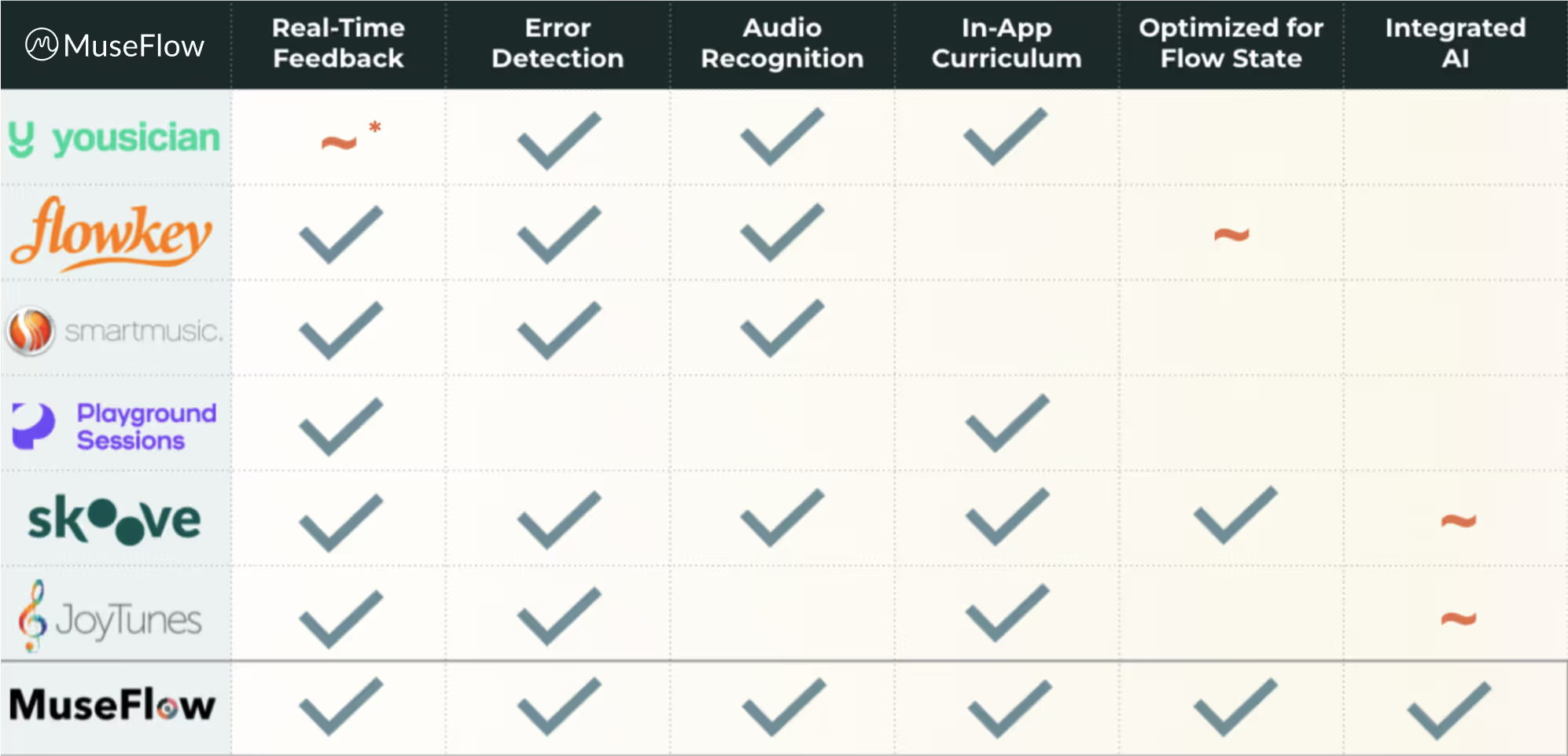
Digital piano learning apps have made music education more accessible than ever. Among them, Flowkey is one of the most widely known platforms, especially for beginners who want to start playing familiar songs quickly. But popularity doesn’t always mean suitability for every learner. Many pianists eventually ask a deeper question: do I want to play specific songs, or do I want to truly understand music?
That distinction is where the comparison between Flowkey and MuseFlow becomes meaningful.
Flowkey is designed around learning songs from a curated library. Lessons typically combine video demonstrations, falling-note visuals, and real-time feedback when connected to a digital piano. For beginners, this can be motivating because progress feels immediate: you recognize the melody, follow along, and produce music quickly.
This approach works particularly well for:
Flowkey’s strength lies in song-based learning. However, that same strength can become a limitation for learners who want transferable skills rather than song-specific memory.
Learning through individual songs often relies on pattern recognition and repetition, not full musical literacy. Many learners eventually notice that when the visual guide is removed, their ability to read unfamiliar sheet music remains limited.
This is not a flaw unique to Flowkey—it’s a common characteristic of repertoire-driven apps. The challenge arises when learners want to:
At this stage, the focus shifts from what to play to how music works.
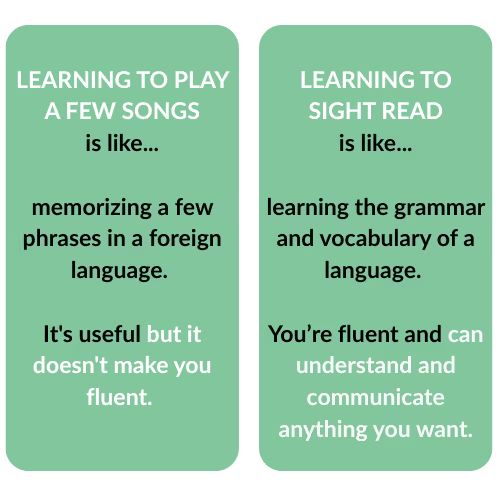
MuseFlow approaches piano learning from a different educational foundation: sight-reading first, songs second.
Rather than centering lessons around fixed pieces, MuseFlow uses procedurally generated music that never repeats. This forces the brain to engage with notation in real time, building fluency rather than memorization. The goal is not to “complete a song,” but to read and interpret music instinctively.
An effective way to understand the difference is through language learning:
Once musical “grammar” is internalized, learners are no longer dependent on tutorials or visual aids.
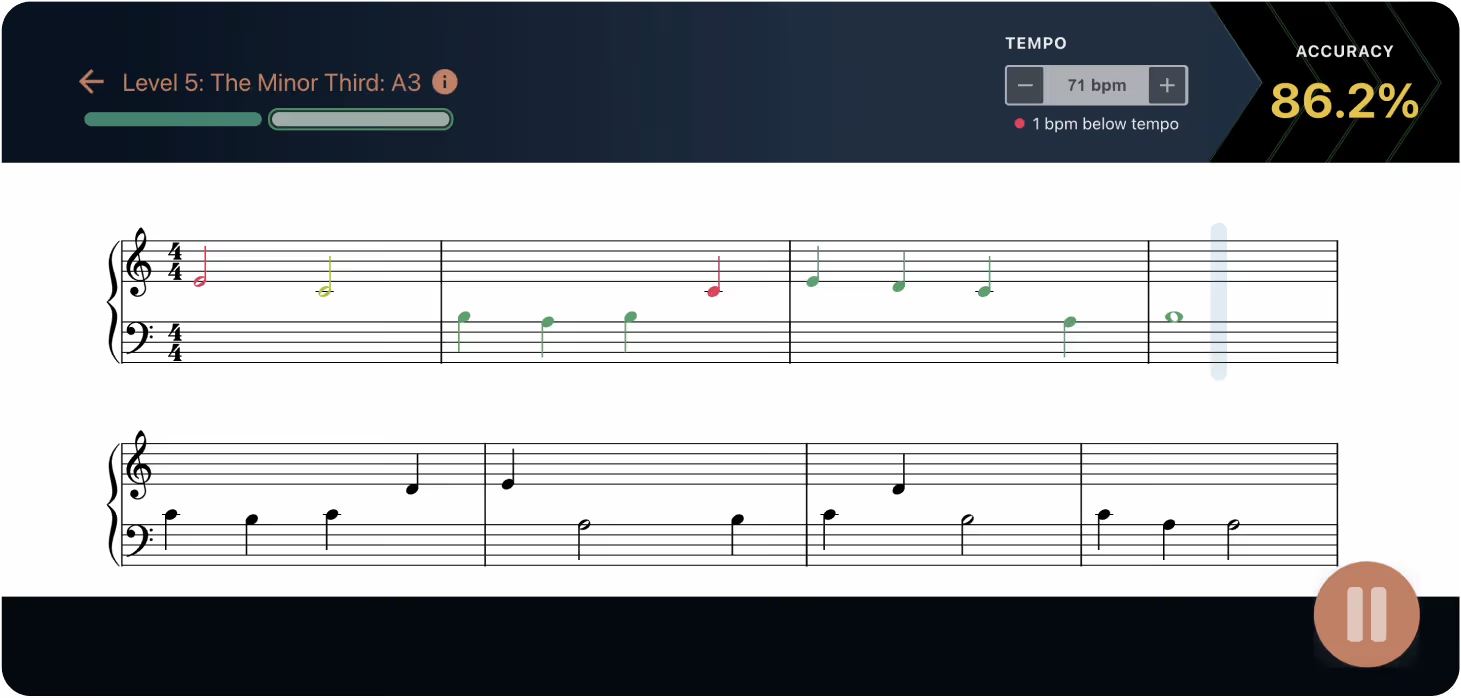
MuseFlow applies game-design principles—such as instant feedback, adaptive difficulty, and progression systems—to an area traditionally considered difficult: sight reading.
Educational research consistently shows that gamification improves engagement, motivation, and skill retention, especially when feedback is immediate and challenges scale gradually. By keeping learners in a balanced challenge zone, MuseFlow reduces frustration while maintaining cognitive demand.
Key mechanisms include:
This structure encourages focused practice rather than passive play.
Strong music education ultimately aims to create independent musicians—people who can approach unfamiliar music with confidence. Sight-reading is central to that independence.
As sight reading improves, learners gain the ability to:
MuseFlow is designed around this outcome, emphasizing long-term skill development over short-term completion.
The choice between Flowkey and MuseFlow depends on your goals:
Both tools serve valid purposes—but they solve different problems
There is no single “best” piano app—only the best fit for how you want to grow musically. Understanding whether you value song completion or musical fluency will make that choice much clearer.
If you’re aiming for long-term independence at the keyboard, focusing on sight-reading early can fundamentally change how you experience music learning.
Many piano learners struggle not because they lack talent, but because sustaining motivation and effective practice over time is difficult. This challenge is especially common among beginners, who often face repetitive exercises before they experience the satisfaction of musical progress. In response, gamified piano learning has emerged as an alternative approach that aims to make practice more engaging while supporting skill development.
Rather than replacing established teaching traditions, gamified learning builds on insights from cognitive science and music education to address common obstacles such as disengagement, inconsistent practice, and delayed feedback. Platforms such as MuseFlow apply these principles by combining structured skill progression with real-time feedback to help learners maintain consistent practice habits.

Conventional piano instruction has long emphasized scales, exercises, and repertoire study. These elements remain foundational in music education, but research suggests that how learners engage with practice can significantly influence outcomes. When instruction relies heavily on repetition without sufficient variation or feedback, learners may struggle to transfer skills across different musical contexts.
Educational research on music learning indicates that skill transfer depends strongly on how closely new tasks resemble prior learning experiences. Skills practiced only in narrow or repetitive contexts are less likely to generalize unless learners encounter them across varied musical material. This helps explain why some students plateau despite consistent effort.

Gamified piano learning addresses these challenges by integrating structured feedback, progressive difficulty, and visible progress indicators. Gamification does not simply mean adding points or badges; it refers to applying design principles that support sustained attention and goal-directed behavior.
Research in educational psychology consistently shows that student engagement plays a critical role in learning outcomes, particularly when feedback is immediate and actionable. In music learning, timely feedback helps prevent errors from becoming ingrained habits, which is especially important for beginners developing fundamental skills like sight reading and rhythm.
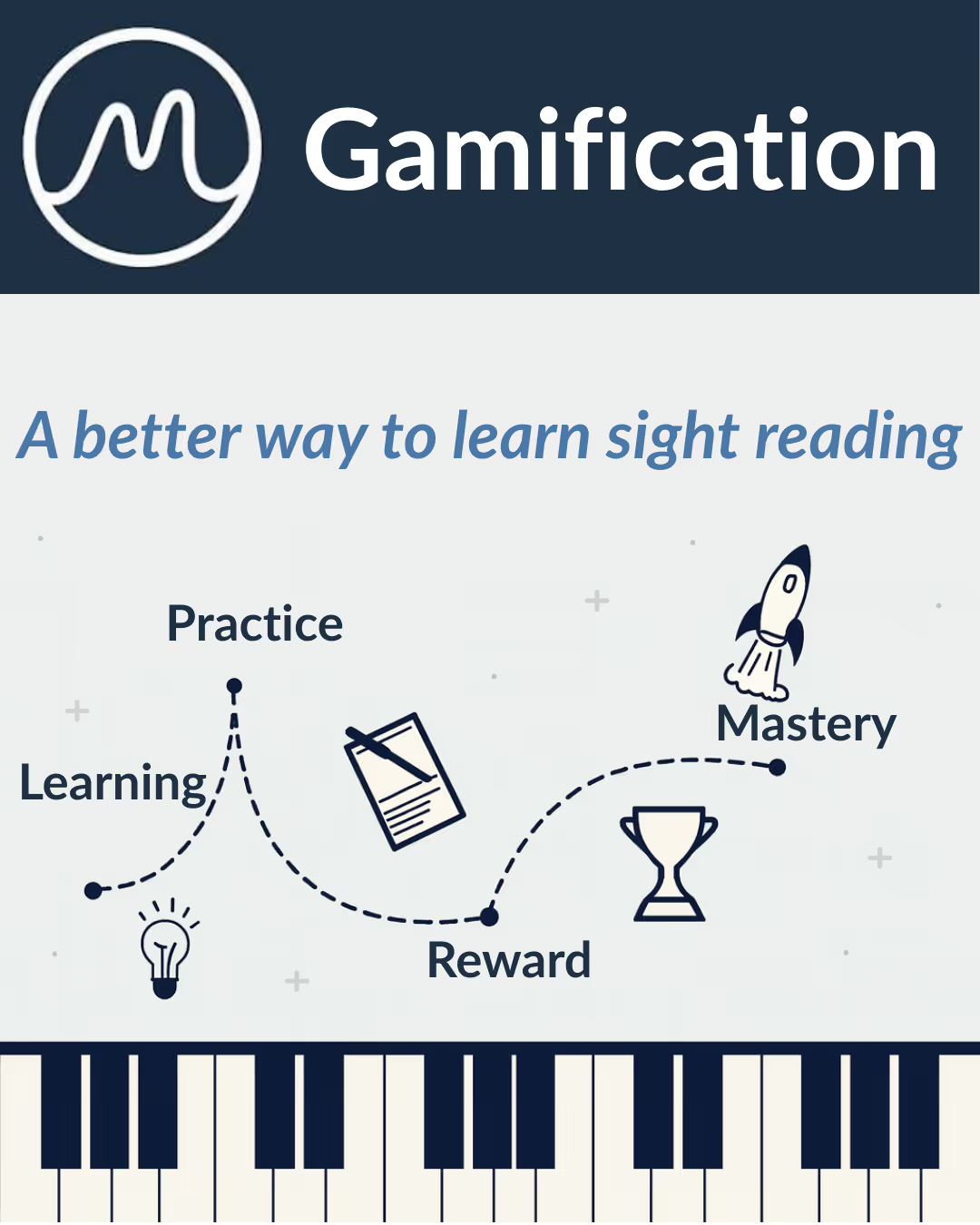
One concept often referenced in discussions of gamified learning is flow state, a term introduced by psychologist Mihaly Csikszentmihalyi. Flow describes a mental state in which individuals are fully absorbed in an activity because the level of challenge closely matches their skill level. In educational contexts, this balance helps learners remain focused without becoming bored or overwhelmed.
In music education, flow is more likely to occur when learners encounter new but manageable material, receive clear feedback, and can measure progress. These conditions align closely with findings from learning science that emphasize optimal challenge and deliberate practice as drivers of skill acquisition.
Music educator Dr. John Koch has described this approach as transformative, noting that sustained flow is difficult for many learners to achieve through unstructured practice alone. His observation reflects a broader consensus in pedagogy: learning environments that actively manage challenge and feedback tend to support deeper engagement.

Gamified piano platforms apply these research-backed ideas by:
By emphasizing sight reading and pattern recognition across many short exercises, learners practice skills in multiple contexts. This supports better transfer when encountering unfamiliar music, a key goal of musicianship.
Importantly, this approach does not eliminate the role of teachers. Instead, it allows technical skill development to occur more efficiently between lessons, freeing instructional time for musical expression, interpretation, and creativity.

Motivation remains one of the strongest predictors of long-term learning success. Studies on gamified learning environments show that learners are more likely to maintain consistent practice when tasks provide immediate feedback and visible progress.
While individual results vary, platforms that incorporate these principles often report higher practice frequency and longer engagement compared with unstructured self-practice. This aligns with broader findings that enjoyment and perceived progress significantly influence persistence in skill-based learning.
Gamified learning is not limited to children. Adults, in particular, benefit from structured feedback and flexible practice schedules. Whether a learner is starting from scratch or returning to piano after years away, gamified approaches can support consistent practice while reinforcing core skills such as sight-reading and rhythm.
Gamified piano learning works not because it turns music into a game, but because it applies well-established learning principles: engagement, feedback, variation, and optimal challenge. When thoughtfully designed, it complements traditional instruction and helps learners build transferable skills more efficiently.
As music education continues to evolve, approaches that combine pedagogical rigor with learner-centered design may offer a more sustainable path for long-term musical growth.
Many adults wonder if it’s too late to learn piano at 30, 40, or even 60. Concerns about age-related limitations and the so-called “critical period” for learning often discourage adults from pursuing musical goals. However, research in neuroscience and adult learning suggests that the brain remains capable of acquiring new skills well into adulthood. Adult learners bring unique advantages that can make starting piano later in life both practical and rewarding.

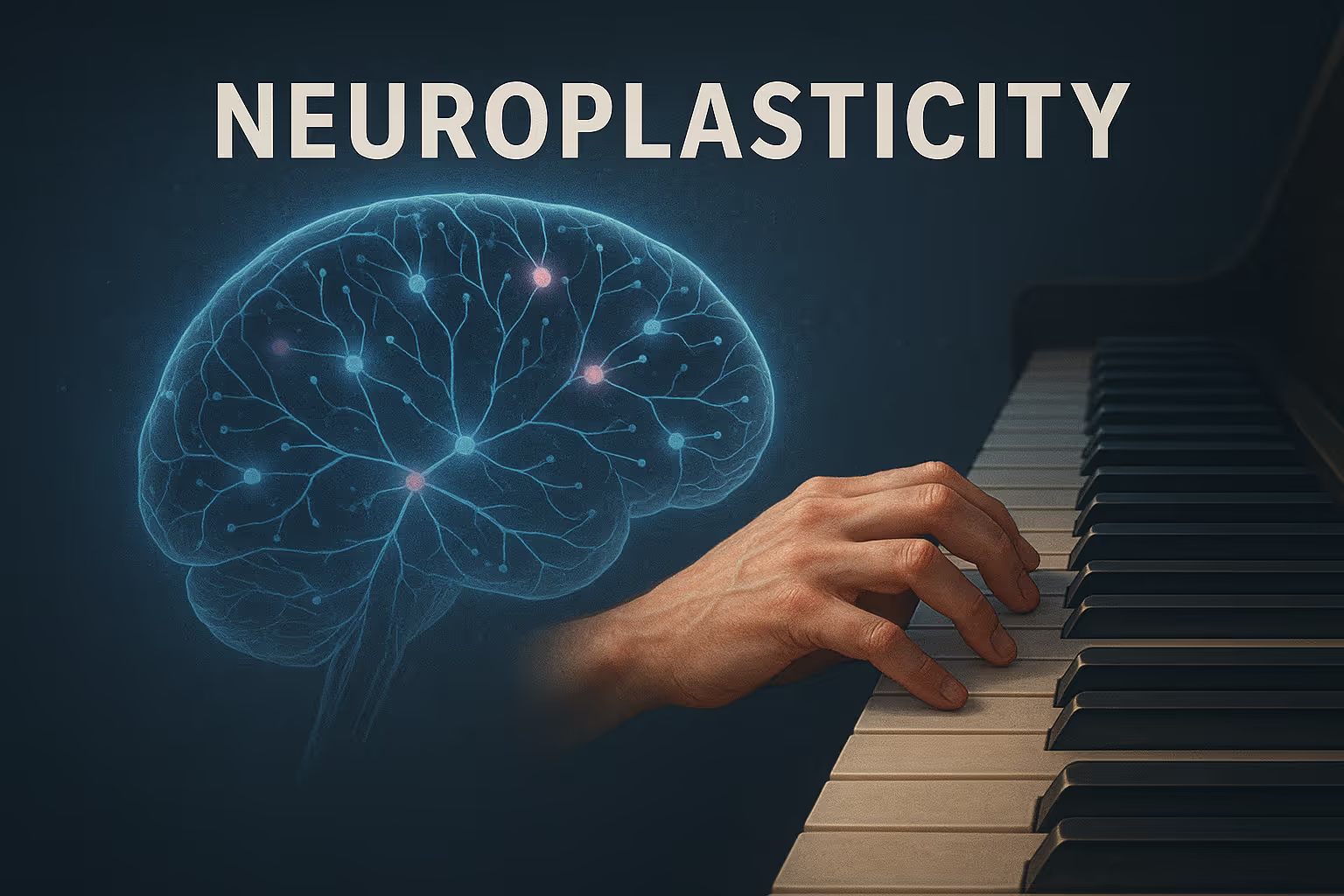
For decades, people believed that musical ability had to be developed in childhood. Modern neuroscience challenges this notion. Studies indicate that adult brains maintain the ability to form new neural connections, a property known as neuroplasticity. Musical training in adults has been shown to produce measurable changes in brain structure and function, improving coordination, memory, and auditory processing. While adults may learn differently than children, these neural adaptations support sustained, meaningful skill development.
Neuroplasticity allows adult learners to integrate new information with existing knowledge, enhancing pattern recognition and retention. This capacity, combined with focused attention and deliberate practice, enables adults to make steady progress on the piano.
Adults possess several characteristics that can accelerate learning:
While these advantages are significant, adult learners may still benefit from guidance or feedback from teachers or structured learning tools, especially for technical skills or sight reading.
Digital tools like MuseFlow offer structured support for adult learners. The platform provides adaptive exercises, real-time performance analysis, and a structured approach to skill development, allowing adults to practice independently while maintaining efficiency.
Key features include:
These features create a framework that aligns with adult learning principles, supporting consistent practice and measurable progress without requiring constant instructor oversight.
Adults may encounter specific obstacles when learning piano:
By adopting a growth mindset and integrating structured practice tools, adults can navigate these challenges successfully.
Adults bring an emotional depth to learning that can accelerate skill acquisition. Music linked to personal memories or experiences provides motivation and meaningful engagement. This emotional connection enhances memory retention and supports sustained practice. Coupled with neuroplasticity, these factors allow adults to develop piano skills in a way that is both cognitively and emotionally rewarding.

Research and practical experience indicate that adult learners are well-equipped to begin piano study at any age. Brain plasticity, intrinsic motivation, and goal-oriented practice provide a foundation for effective learning. Platforms like MuseFlow offer structured practice environments, adaptive feedback, and flexible scheduling that support these principles.
Adult learners can make steady, meaningful progress by combining deliberate practice, technology-assisted learning, and a growth-oriented mindset. Age alone is not a barrier; with the right approach, the journey to piano proficiency can start at 30, 40, or beyond.

Keep up to date on our progress as we continue to add new features!