.svg)
Learning Piano Through Rhythm Games: What Guitar Hero Got Right — and How Apps Like MuseFlow Apply It
Many people who grew up playing rhythm games like Guitar Hero still remember how quickly they developed timing, coordination, and confidence — often without realizing they were practicing core musical skills. That experience raises a reasonable question: can the same design principles be applied to learning a real instrument like piano?
The short answer is partially — and carefully. While rhythm games don’t teach full musicianship on their own, the psychological mechanics behind them have influenced a new generation of music-learning tools. Platforms such as MuseFlow attempt to translate those mechanics into structured piano practice without replacing the fundamentals of music education.
What Guitar Hero Actually Taught Players (Beyond the Illusion)
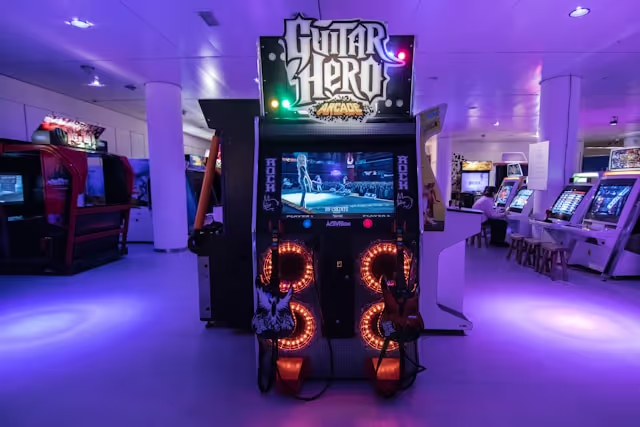
Guitar Hero worked not because it simulated a guitar accurately, but because it optimized learning conditions. Research in motor learning and skill acquisition consistently shows that frequent feedback, progressive challenge, and clear goals accelerate early-stage learning.
The game delivered this through:
- Immediate visual and auditory feedback
- Gradual increases in difficulty
- Clear performance metrics (accuracy, streaks, scores)
- A low penalty for mistakes, encouraging repetition
While players weren’t learning fretboard theory or harmony, they were developing rhythmic timing, bimanual coordination, and sustained focus — all transferable skills.
Why Piano Learning Often Feels Slower (and Why That’s Not a Failure)
Traditional piano instruction emphasizes long-term skill development: reading notation, hand independence, posture, and expressive control. For many learners, especially beginners, the delay between effort and audible results can feel discouraging.
This doesn’t mean traditional lessons are ineffective — they remain the gold standard for many students — but they can present psychological barriers, particularly for adults or casual learners who struggle with:
- Delayed feedback between lessons
- Abstract early exercises disconnected from music they enjoy
- Difficulty maintaining consistent practice habits
This is where digital tools attempt to complement, not replace, established teaching methods.

Applying Rhythm-Game Design to Real Piano Learning
Apps like MuseFlow borrow selectively from rhythm games while grounding practice in real musical tasks. Instead of pressing colored buttons, learners interact with actual notation and real keys, using game mechanics to support consistency and motivation.
Key design choices include:
1. Immediate Feedback at Note Level
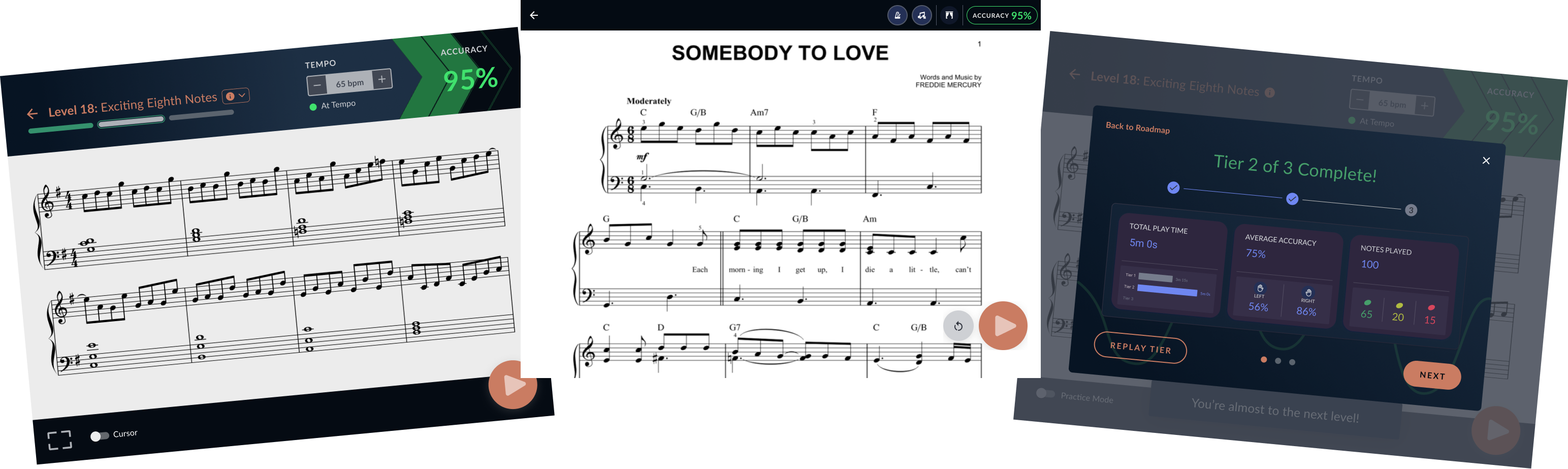
Every played note is detected in real time, allowing learners to correct timing and pitch instantly rather than waiting for external evaluation.
2. Progressive Difficulty Curves
Exercises scale gradually, helping learners stay within an achievable challenge range — a principle well supported in educational psychology.
3. Measurable Performance Without Punishment
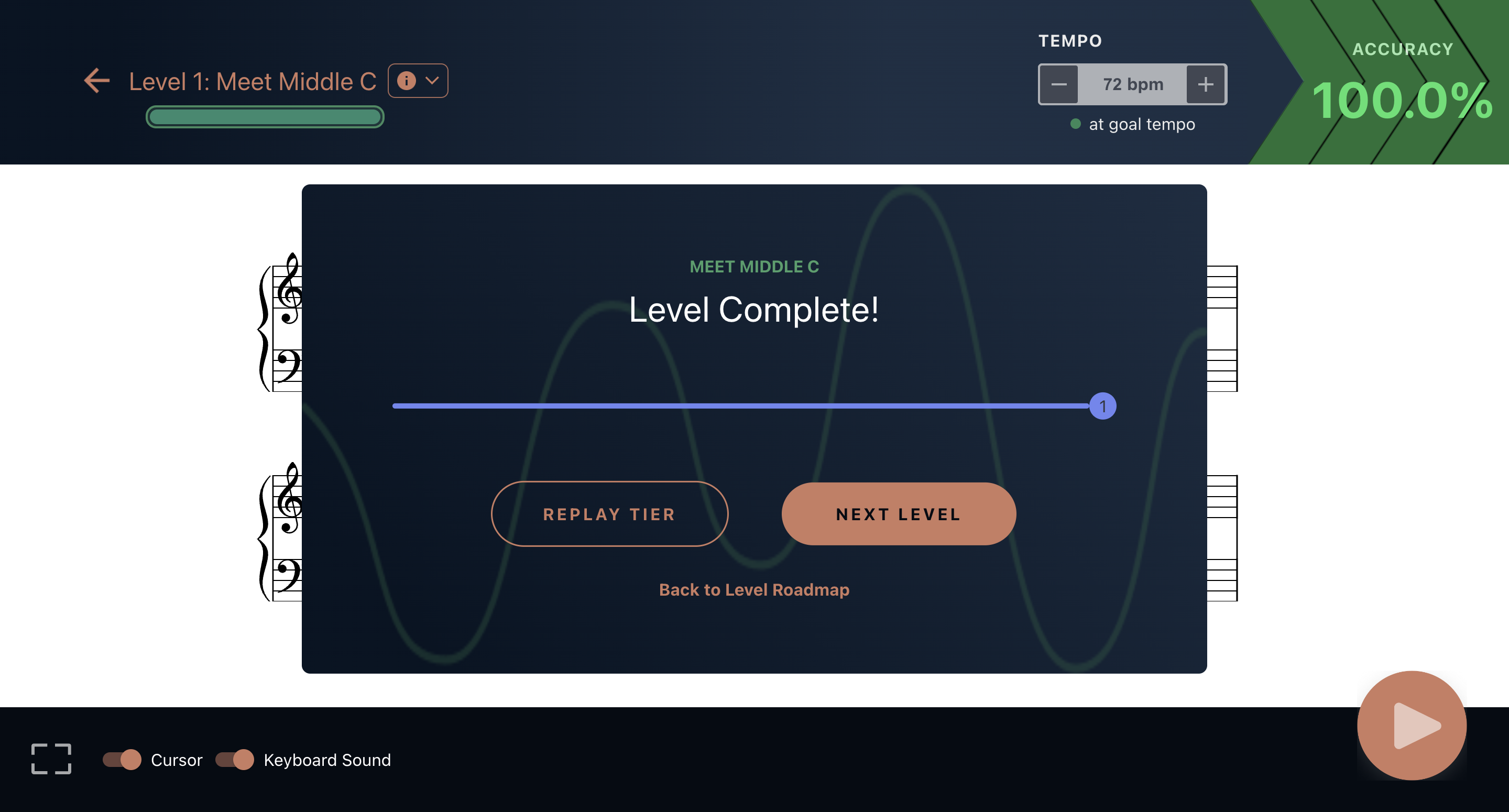
Accuracy tracking and visual indicators provide clarity without framing mistakes as failure, encouraging repetition rather than avoidance.
Sight Reading as a Core Skill (Not a Marketing Claim)
One notable design decision in MuseFlow is placing sight reading at the center of the experience, rather than relying on memorization or fixed song tutorials.
From an educational standpoint, this matters because:
- Sight reading supports long-term independence
- Skills transfer across genres and repertoire
- Learners avoid dependency on visual cues tied to specific songs
Rather than promising instant fluency, this approach aligns with how professional musicians are trained: incremental exposure to new material under controlled difficulty.
How Prior Rhythm-Game Experience Helps (and Where It Doesn’t)
Players familiar with rhythm games often bring useful foundations:
- Strong internal timing
- Visual-motor coordination
- Comfort practicing in short, focused sessions
However, real piano introduces additional complexity: pitch relationships, fingering strategy, dynamics, and physical technique. Tools like MuseFlow can accelerate early engagement, but sustained progress still depends on deliberate practice, consistency, and — for many learners — occasional guidance from an instructor.
Technology as a Practice Partner, Not a Replacement
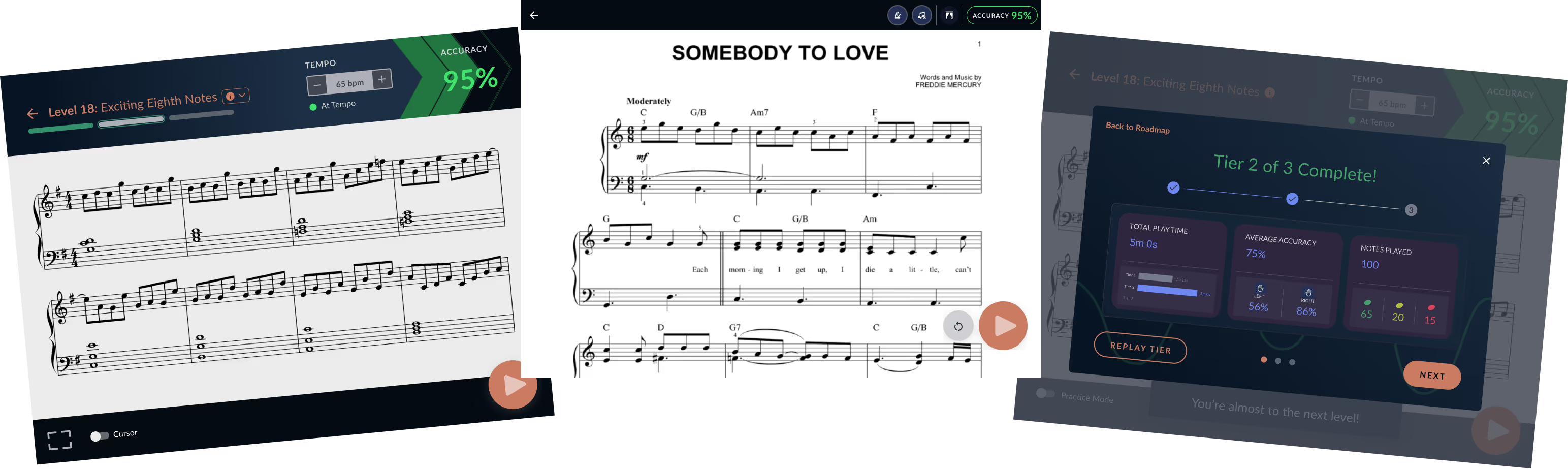
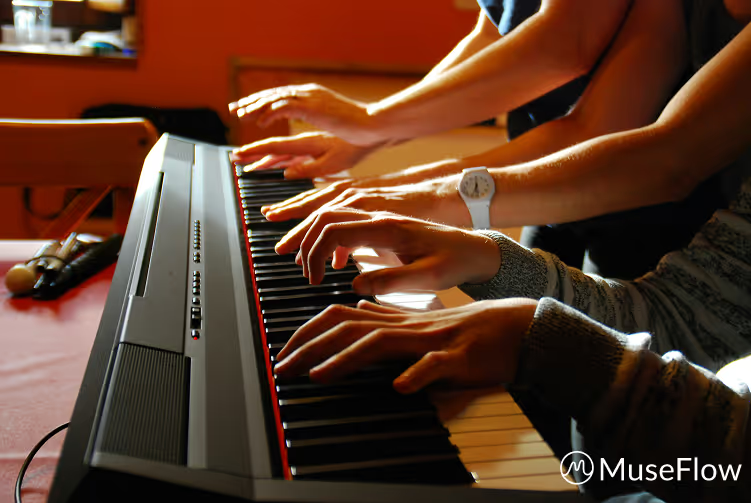
When paired with a MIDI keyboard or digital piano, platforms like MuseFlow function as a responsive practice environment:
- Notes are tracked precisely
- Errors are contextualized
- Progress is visible over time
Used responsibly, this can support habit formation and reduce dropout rates — a common issue in beginner music education.
Who This Approach Is Best For
Gamified piano learning tends to work well for:
- Adult beginners returning to music
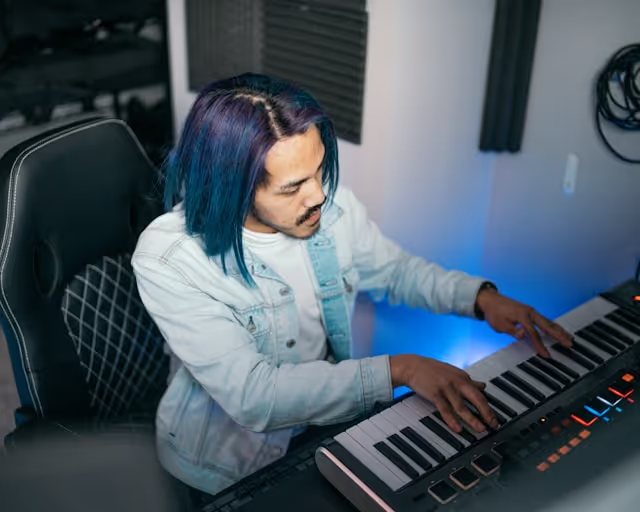
- Gamers transitioning into real instruments
- Self-directed learners who value structure and feedback
It may be less suitable as a standalone solution for advanced repertoire, expressive interpretation, or technique refinement — areas where human instruction remains difficult to replace.
The Bigger Picture: Games as Learning Systems
The real lesson from Guitar Hero isn’t that music should be simplified — it’s that well-designed systems make effort sustainable. When learning environments reward consistency, normalize mistakes, and clarify progress, learners are more likely to persist.
MuseFlow represents one interpretation of this philosophy: using game design to reduce friction in early piano learning while keeping the skills transferable to real musical contexts.
Final Takeaway
You can’t truly learn piano from Guitar Hero — but you can learn from why it worked.
When rhythm-game mechanics are applied thoughtfully, they can support motivation, reinforce timing, and make early practice more approachable. Platforms like MuseFlow show how those ideas can be adapted to real instruments — not as shortcuts, but as structured on-ramps into musicianship.
The goal isn’t a high score.
It’s staying engaged long enough for real skills to take root.