.svg)
How MuseFlow Supports Effective Piano Practice: A Research-Informed Review
Choosing a piano practice app can significantly influence how efficiently a learner develops technical skills and maintains a consistent routine. Many piano students—especially independent learners—struggle with issues such as unfocused practice, limited feedback, and difficulty tracking long-term progress. In response, modern digital practice tools increasingly rely on adaptive technology, real-time analysis, and engagement design to support structured learning outside traditional lessons.
This review examines how MuseFlow approaches piano practice through adaptive learning, feedback systems, and engagement mechanics, while aligning its design with widely recognized principles from music education and learning science.
1. Personalized Learning Through Adaptive Technology
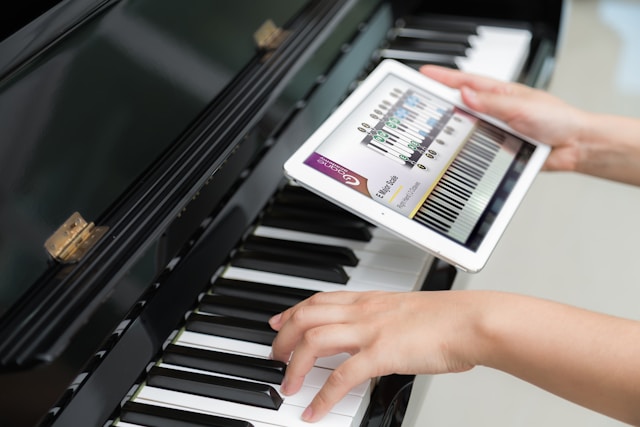
MuseFlow uses artificial intelligence to tailor practice sessions based on a learner’s ongoing performance. Rather than following a fixed sequence of lessons, the app evaluates factors such as note accuracy, timing stability, and tempo consistency to adjust exercises dynamically.
Adaptive learning systems are commonly associated with improved learning efficiency because they help learners focus on areas that require the most attention instead of repeating material they have already mastered. In music practice, this can mean isolating rhythmic inconsistencies, addressing fingering challenges, or reinforcing coordination between hands before introducing more complex material.
For example, a beginner experiencing difficulty with hand independence may receive targeted coordination exercises, while a more advanced learner may encounter material that emphasizes sight reading or expressive control. This approach reflects principles of deliberate practice, which emphasize focused, goal-oriented repetition rather than generalized rehearsal.
2. Real-Time Feedback and Progress Tracking
Immediate, actionable feedback plays a central role in skill acquisition, particularly for instruments that require precise motor coordination. MuseFlow analyzes a learner’s playing in real time and provides feedback related to accuracy, rhythm, and articulation during practice sessions.
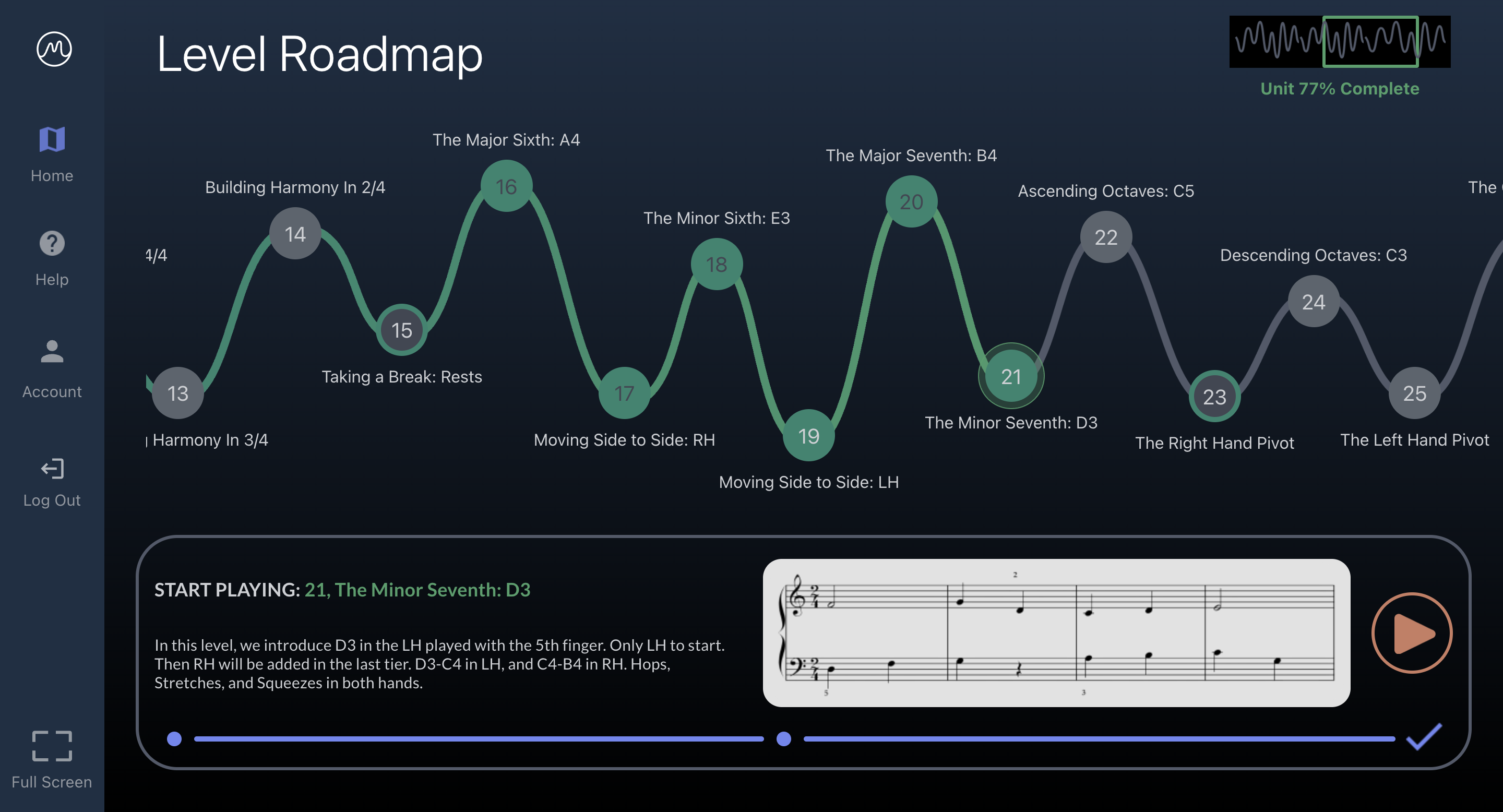
Correcting mistakes at the moment they occur helps prevent inefficient repetition and reduces the likelihood of reinforcing incorrect techniques. Beyond live feedback, MuseFlow also records performance data across sessions, allowing learners to review progress over time.
Tracked metrics may include:
- Note accuracy trends
- Tempo consistency
- Time spent on specific exercises
- Progression across difficulty levels
By visualizing improvement and highlighting recurring problem areas, the app supports more intentional practice planning. Research on expert skill development consistently shows that learners benefit from feedback systems that make performance gaps visible and measurable, particularly when practicing independently.
.png)
3. Engagement and Practice Consistency Through Gamification
Maintaining regular practice habits is one of the most persistent challenges in learning an instrument. MuseFlow incorporates gamified elements such as progress indicators, structured challenges, and achievement milestones to support consistency.
Educational research suggests that gamification can increase learner engagement when rewards are tied to meaningful learning outcomes rather than superficial interaction. In the context of music education, structured milestones can help learners break long-term goals into manageable steps, reinforcing persistence rather than replacing discipline.
Within MuseFlow, gamified elements are used to encourage routine formation by providing short-term goals, such as completing accuracy-focused exercises or maintaining tempo stability across repetitions. These features are designed to complement, rather than distract from, core practice objectives.
4. Learning-Centered Design and Instructional Structure
MuseFlow’s overall design reflects an emphasis on common challenges faced by independent piano learners, including unclear progress benchmarks, inconsistent feedback, and loss of motivation over time. Instead of presenting exercises as isolated tasks, the app structures practice sessions around observable performance outcomes.
The interface prioritizes clarity and ease of use, allowing learners to focus attention on the instrument rather than navigation or setup. Exercises are introduced based on demonstrated readiness, aligning with instructional design principles commonly applied in skill-based learning environments.
Rather than positioning itself as a replacement for traditional instruction, MuseFlow functions as a structured practice companion. It can be used alongside lessons or as a self-guided option for learners seeking data-informed practice support.
Conclusion
Effective piano practice depends on focused repetition, timely feedback, and sustained engagement. MuseFlow integrates adaptive learning technology, real-time performance analysis, and structured engagement features to support these core requirements.
By grounding its design in principles associated with deliberate practice, adaptive learning, and instructional clarity, the platform reflects broader trends in modern music education. For learners exploring technology-supported practice methods, understanding how such tools structure feedback and progression can help inform better practice decisions and long-term skill development.

.jpg)



.jpg)