.svg)
MuseFlow vs. Flowkey: Choosing the Right Piano App for Your Learning Goals
Digital piano learning apps have made music education more accessible than ever. Among them, Flowkey is one of the most widely known platforms, especially for beginners who want to start playing familiar songs quickly. But popularity doesn’t always mean suitability for every learner. Many pianists eventually ask a deeper question: do I want to play specific songs, or do I want to truly understand music?
That distinction is where the comparison between Flowkey and MuseFlow becomes meaningful.
What Flowkey Does Well
Flowkey is designed around learning songs from a curated library. Lessons typically combine video demonstrations, falling-note visuals, and real-time feedback when connected to a digital piano. For beginners, this can be motivating because progress feels immediate: you recognize the melody, follow along, and produce music quickly.
This approach works particularly well for:
- Casual learners who want to play familiar tunes
- Self-taught beginners looking for quick wins
- Users motivated by repertoire rather than theory
Flowkey’s strength lies in song-based learning. However, that same strength can become a limitation for learners who want transferable skills rather than song-specific memory.
Where Song-First Learning Can Plateau
Learning through individual songs often relies on pattern recognition and repetition, not full musical literacy. Many learners eventually notice that when the visual guide is removed, their ability to read unfamiliar sheet music remains limited.
This is not a flaw unique to Flowkey—it’s a common characteristic of repertoire-driven apps. The challenge arises when learners want to:
- Play music outside the app’s library
- Learn faster without memorizing note sequences
- Collaborate with other musicians using standard notation
At this stage, the focus shifts from what to play to how music works.
MuseFlow’s Core Difference: Sight Reading as a Skill
MuseFlow approaches piano learning from a different educational foundation: sight-reading first, songs second.
Rather than centering lessons around fixed pieces, MuseFlow uses procedurally generated music that never repeats. This forces the brain to engage with notation in real time, building fluency rather than memorization. The goal is not to “complete a song,” but to read and interpret music instinctively.
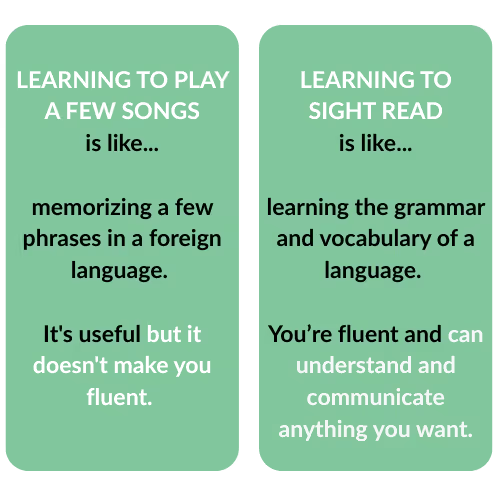
An effective way to understand the difference is through language learning:
- Memorizing a song is like memorizing phrases
- Sight reading is like learning grammar and vocabulary
Once musical “grammar” is internalized, learners are no longer dependent on tutorials or visual aids.
Why Gamified Sight Reading Works
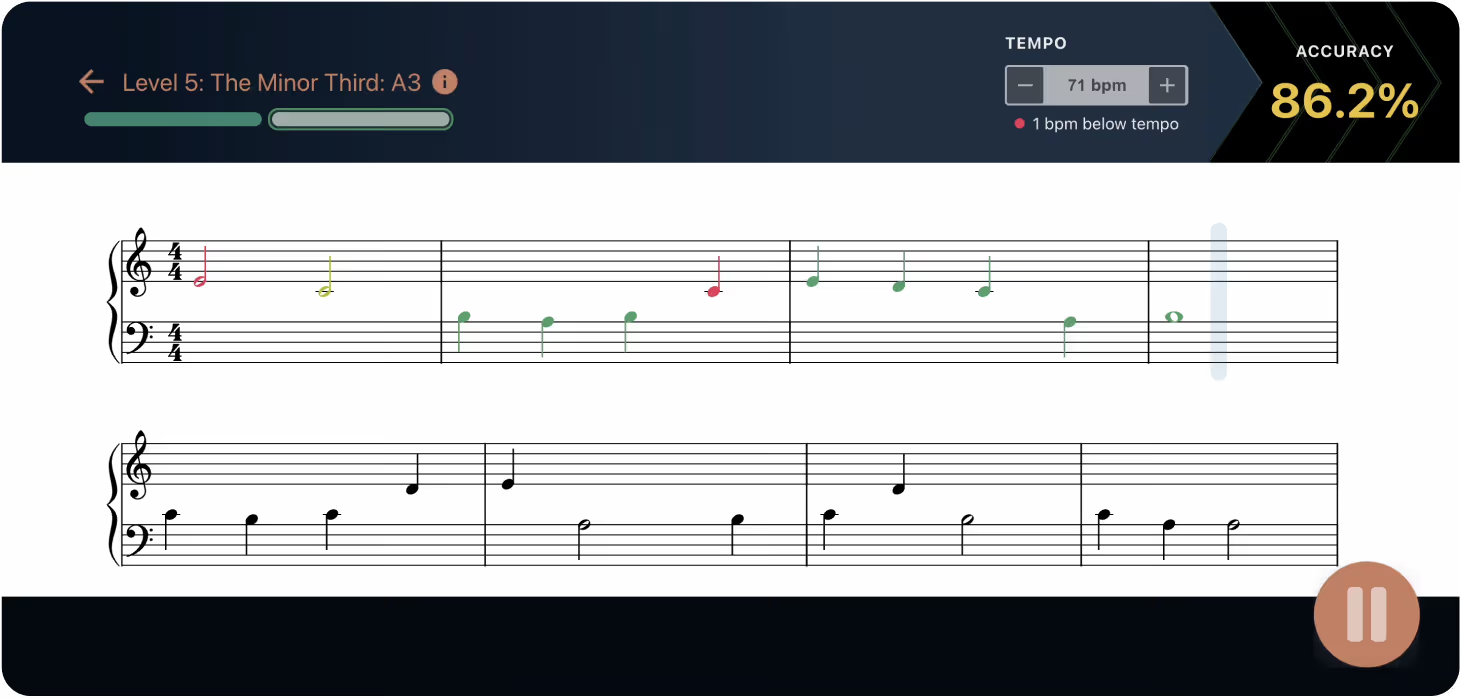
MuseFlow applies game-design principles—such as instant feedback, adaptive difficulty, and progression systems—to an area traditionally considered difficult: sight reading.
Educational research consistently shows that gamification improves engagement, motivation, and skill retention, especially when feedback is immediate and challenges scale gradually. By keeping learners in a balanced challenge zone, MuseFlow reduces frustration while maintaining cognitive demand.
Key mechanisms include:
- Immediate feedback that reinforces correct note recognition
- Progressive complexity that adapts as reading speed improves
- Clear performance metrics that track accuracy and consistency
This structure encourages focused practice rather than passive play.
Musical Independence as the End Goal
Strong music education ultimately aims to create independent musicians—people who can approach unfamiliar music with confidence. Sight-reading is central to that independence.
As sight reading improves, learners gain the ability to:
- Explore any sheet music, regardless of genre
- Learn new pieces faster with less repetition
- Play collaboratively using standard notation
MuseFlow is designed around this outcome, emphasizing long-term skill development over short-term completion.
MuseFlow vs. Flowkey: Which Should You Choose?
The choice between Flowkey and MuseFlow depends on your goals:
- Choose Flowkey if your primary motivation is playing recognizable songs quickly and enjoying guided practice.
- Choose MuseFlow if you want to build transferable skills that allow you to read, learn, and play independently across any repertoire.
Both tools serve valid purposes—but they solve different problems
Final Thought
There is no single “best” piano app—only the best fit for how you want to grow musically. Understanding whether you value song completion or musical fluency will make that choice much clearer.
If you’re aiming for long-term independence at the keyboard, focusing on sight-reading early can fundamentally change how you experience music learning.

.jpg)