.svg)
Piano Marvel AlternativeHow MuseFlow Helps You Learn
When exploring digital tools for learning piano, many learners encounter platforms like Piano Marvel. It is widely known for its structured exercises and extensive content library. At the same time, a growing number of learners look for Piano Marvel alternatives that align more closely with how adults actually practice, stay motivated, and develop long-term musical fluency. MuseFlow has emerged in this space by approaching piano learning from a different educational perspective.
Rather than positioning one platform as universally better, it is more useful to understand how their underlying learning models differ and which type of learner each approach supports best.
How MuseFlow Compares to Piano Marvel
Piano Marvel follows a traditional, exercise-driven model rooted in repetition and structured drills. This approach works well for learners who enjoy methodical progression and clearly segmented practice tasks. MuseFlow, by contrast, is designed around continuous interaction, emphasizing real-time response, adaptive pacing, and sight reading development from the beginning.
Music education research has long shown that effective learning combines visual, auditory, and motor processes. Notes are not learned as isolated symbols, but as patterns that connect movement, sound, and spatial recognition. Modern learning platforms increasingly reflect this understanding by integrating feedback directly into the act of playing, rather than separating practice from evaluation.
Real-Time Feedback Versus Static Exercises
One of the most significant differences between MuseFlow and exercise-focused platforms lies in how feedback is delivered. Traditional systems often require learners to complete an exercise before reviewing accuracy. While this can be effective, it places a cognitive burden on beginners who must play, remember mistakes, and self-evaluate simultaneously.
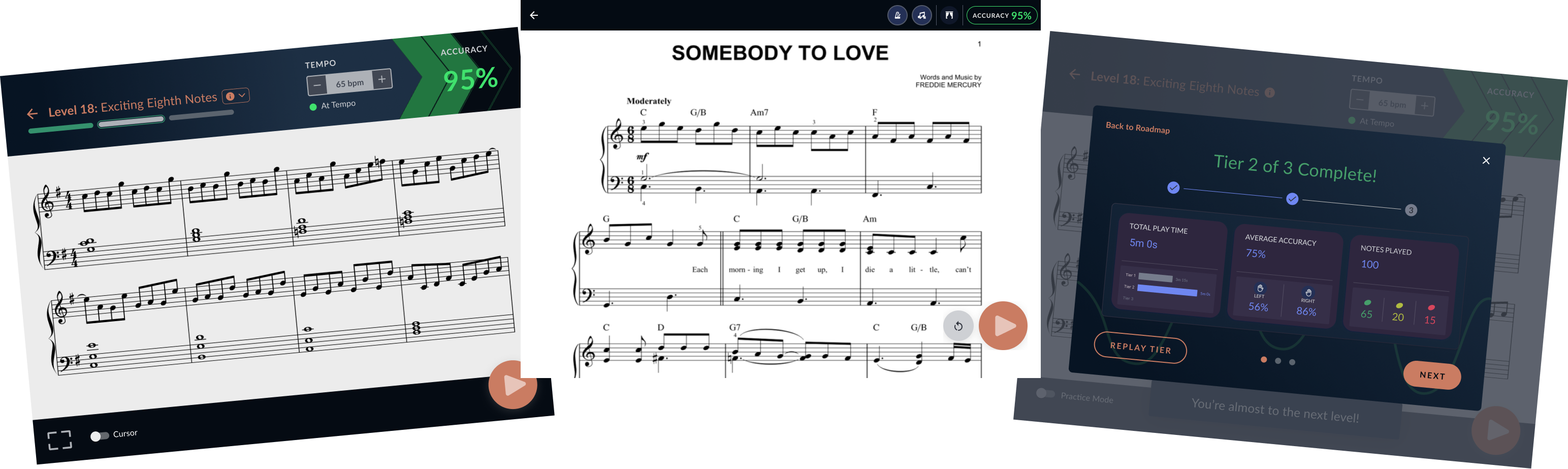
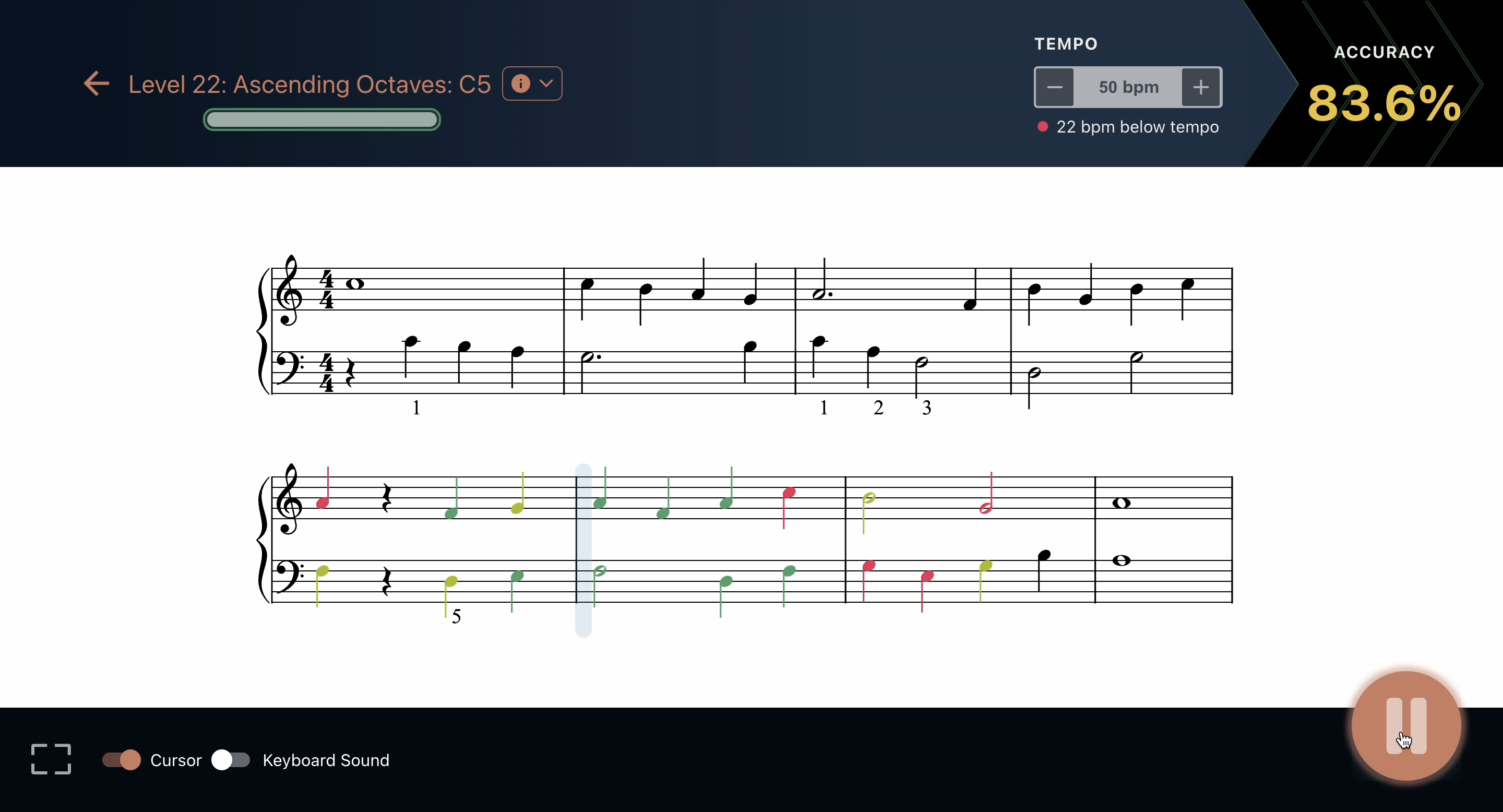
MuseFlow provides immediate visual feedback as notes are played, highlighting timing and pitch accuracy in real time. This approach aligns with findings from adult learning and motor-skill research, which suggest that timely correction helps prevent the reinforcement of incorrect habits and supports more efficient skill acquisition.
By reducing the delay between action and feedback, learners can focus entirely on playing with attention and consistency, rather than constantly questioning whether they are practicing correctly.
Sight Reading as a Foundational Skill
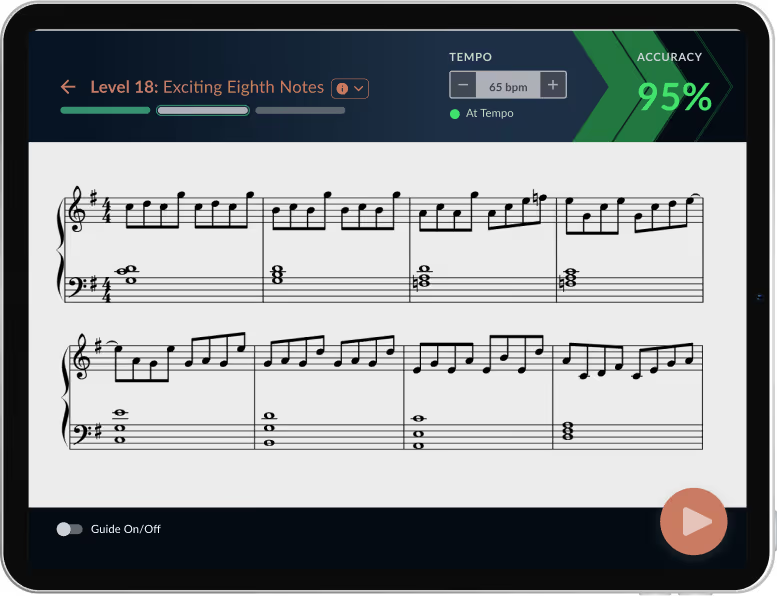
Sight reading is often treated as an advanced or secondary skill in many piano programs. MuseFlow takes a different position, treating sight reading as the foundation of musical independence. Educational studies in music pedagogy consistently associate strong sight reading ability with broader musical competence, faster repertoire learning, and greater long-term retention.
Instead of memorizing individual songs, learners are exposed to continuously varied material that encourages pattern recognition and fluent reading. This helps prevent over-reliance on muscle memory and supports transferable skills that apply across styles and difficulty levels.
For beginners, this approach can shorten the gap between early practice and meaningful musical progress, while intermediate learners often benefit from breaking plateaus caused by memorization-heavy routines.
Engagement Without Excessive Gamification
Some learning platforms rely heavily on points, scores, and rewards to maintain engagement. While these elements can be motivating in moderation, adult learners often respond better to visible progress and clear structure rather than novelty alone.
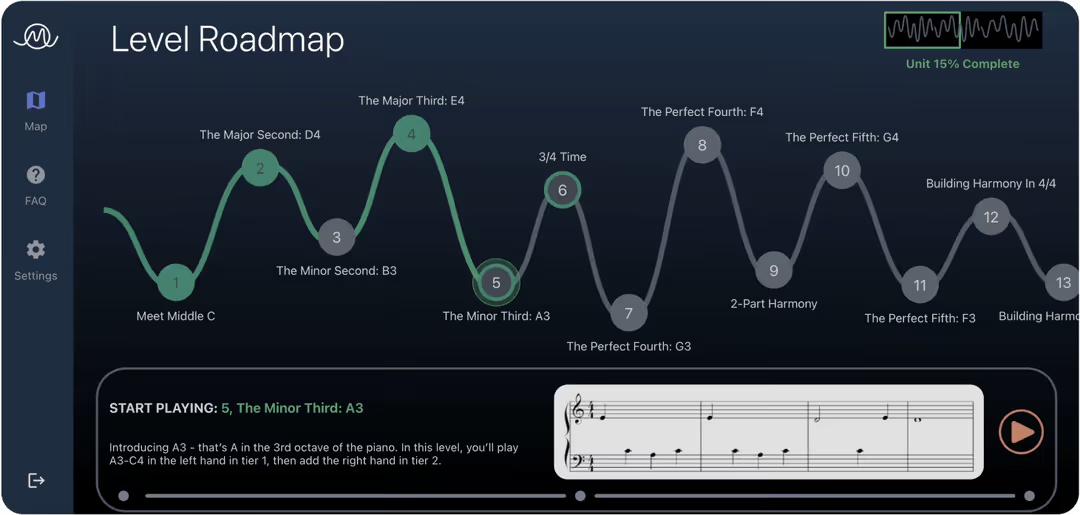
MuseFlow incorporates light gamified elements—such as progression markers and adaptive challenges—without turning practice into a distraction. This balance supports sustained focus while still providing enough feedback to reinforce consistency.
Psychological research on flow states suggests that learners remain most engaged when task difficulty closely matches skill level. By adjusting challenges dynamically, platforms can help learners stay motivated without frustration or boredom becoming barriers to regular practice.
.png)
Which Type of Learner Benefits Most?
Learners who prefer traditional, exercise-heavy practice and clearly segmented drills may find Piano Marvel well suited to their goals. Those seeking a more adaptive, feedback-driven experience often look for alternatives that emphasize efficiency, engagement, and skill transfer.
MuseFlow is designed for learners who want practice sessions to feel purposeful and time-effective, particularly adults balancing learning with other responsibilities. Rather than maximizing content volume, the focus is on making each interaction meaningful and aligned with how musical skills develop over time.
The Direction of Modern Piano Learning
Digital piano education continues to evolve alongside advances in learning science and interactive technology. Platforms increasingly reflect a shift away from rigid, one-size-fits-all instruction toward personalized systems that respond to how individuals actually play.
As a Piano Marvel alternative, MuseFlow represents this broader movement toward adaptive learning, integrated feedback, and sight reading-centered instruction. For learners evaluating their options, understanding these pedagogical differences is often more valuable than comparing feature lists alone.
Choosing the right platform ultimately depends on learning style, goals, and preferred practice structure—but informed decisions are best made when the focus remains on educational value rather than marketing claims.
.avif)