.svg)
Best Sight Reading App for Beginners:Learn Piano in 2 Minutes a Day with MuseFlow
Sight reading is one of the most important skills for pianists, especially for beginners. It enables musicians to interpret sheet music in real time instead of relying on memorization, opening the door to a broader repertoire and greater musical independence. Many adult learners struggle with sight reading because of limited practice time, inconsistent routines, or a lack of structured material. Even a few minutes of focused, high-quality practice can significantly improve fluency and confidence over time.
The “2-Minute Sight Reading Challenge” from MuseFlow demonstrates an approach designed to address these issues. By combining short, structured sessions with immediate feedback and varied exercises, this method provides an efficient pathway to developing sight reading skills.
The 2-Minute Sight Reading Challenge
This method is simple and practical for beginners, particularly adults with limited time.
Step 1: Connect Your Instrument
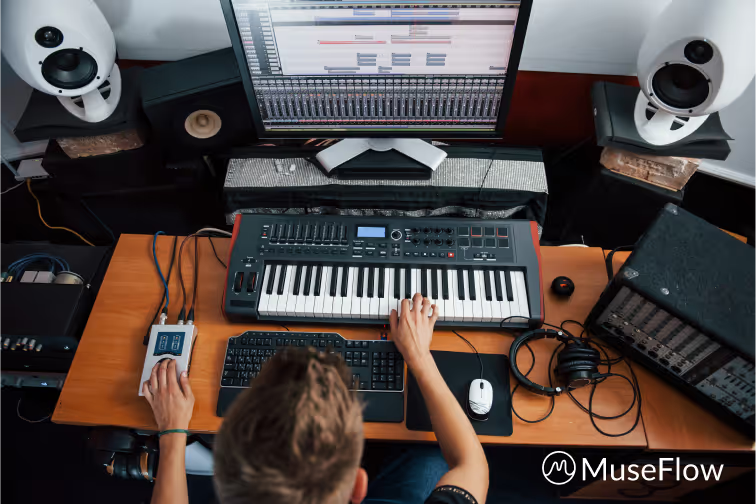
Begin by connecting a MIDI keyboard to the MuseFlow app. Real-time feedback is central to this approach. Immediate correction allows learners to identify mistakes as they occur, reinforcing accurate patterns and reducing the chance of ingrained errors. Studies on learning show that instant feedback accelerates skill acquisition by strengthening neural pathways and supporting automatic recognition.
Step 2: Use the Sight Reading Trainer
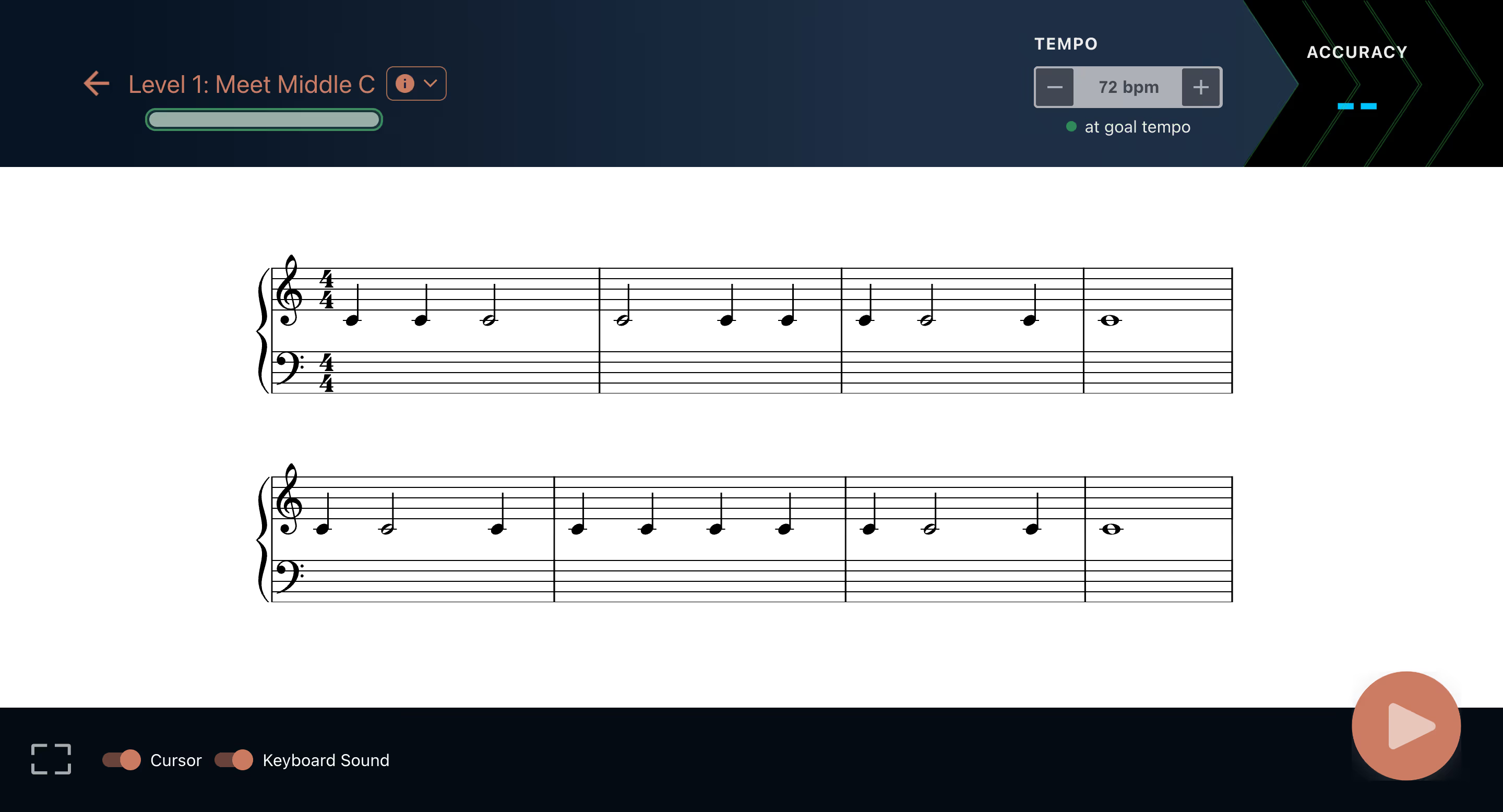
Unlike traditional sheet music or fixed libraries, the Sight Reading Trainer generates an ongoing sequence of new exercises. This ensures that learners practice true sight reading rather than memorization. By encountering novel material at the right difficulty level, learners develop anticipation skills, pattern recognition, and adaptability—core components of fluent sight reading.
Step 3: Focus for 2 Minutes
Short, concentrated sessions are surprisingly effective. A two-minute commitment removes the mental friction of starting practice while encouraging full attention. Research indicates that brief, highly focused practice often produces better retention than longer, distracted sessions. Adults benefit from micro-practice sessions that fit into busy schedules, allowing consistent progress without feeling overwhelmed.
Step 4: Track Feedback in Real Time
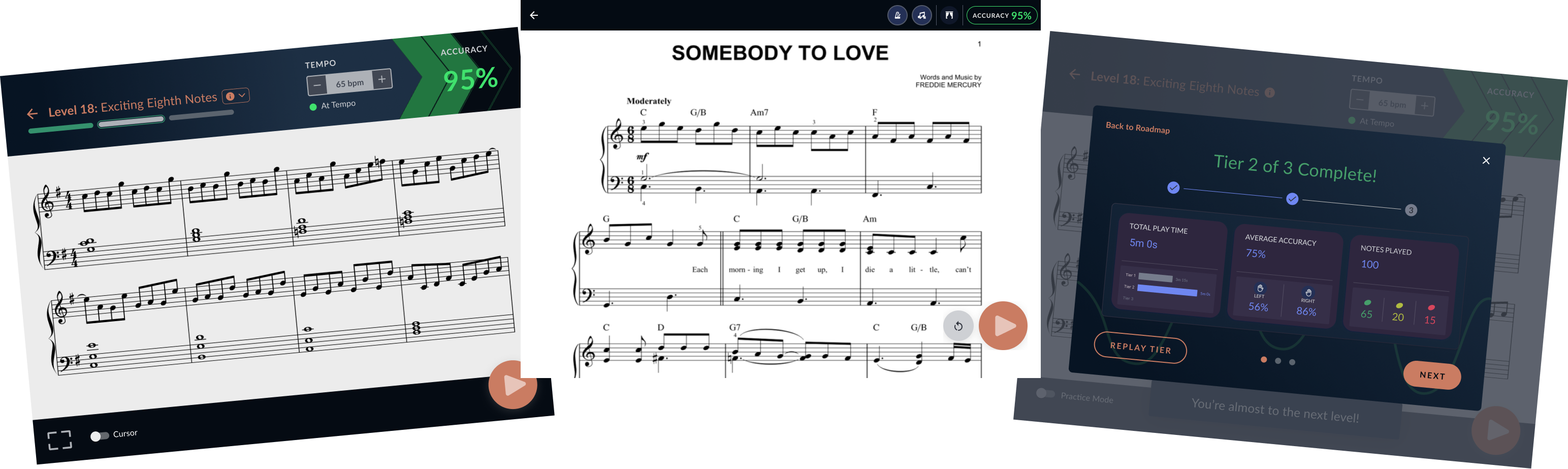
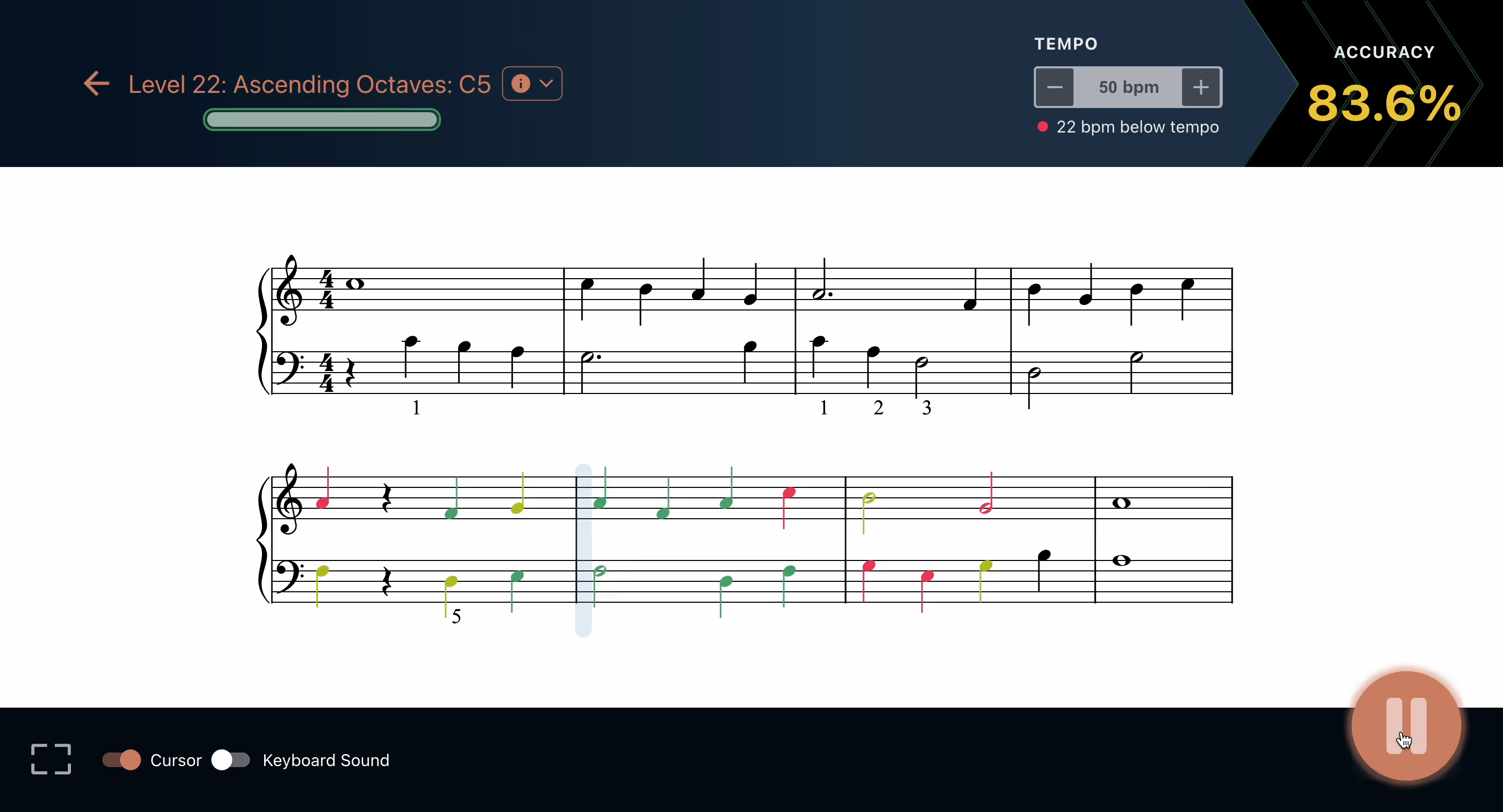
Color-coded feedback—green for correct notes, yellow for timing adjustments, and red for errors—guides learners immediately. This enables rapid correction and reinforces proper technique. Immediate visual cues help learners internalize patterns more effectively than delayed feedback, which can slow progress and reduce engagement.
Step 5: Stop While Engaged
Ending practice at the point of peak engagement prevents fatigue and promotes a positive association with piano practice. Cognitive psychology research supports this strategy, showing that learners are more likely to sustain consistent routines when sessions end before exhaustion.
Why This Method Works
Several factors make the 2-minute approach effective for building sight reading skills:
- Reduces Starting Barriers: Short sessions make it easy to begin, overcoming the common obstacle of procrastination.
- Supports Focused Practice: Concentrated attention improves neural encoding, helping learners recognize musical patterns faster.
- Provides High-Volume Exposure: Algorithmically generated exercises introduce more musical variations in a short time than repetitive song practice, enhancing skill development efficiently.
- Encourages Consistency: Small, repeatable sessions create sustainable habits that support long-term learning.
The combination of these elements allows adult learners to steadily increase their sight reading fluency without overwhelming practice demands.
.png)
Cognitive and Musical Benefits
Sight reading practice offers benefits beyond simply playing new music. Consistent exposure to varied musical material strengthens memory, attention, and pattern recognition. It also enhances broader cognitive abilities such as problem-solving, auditory discrimination, and executive functioning. By developing musical literacy through structured practice, learners gain skills that contribute to overall cognitive flexibility and creative thinking.
Choosing an Effective Tool
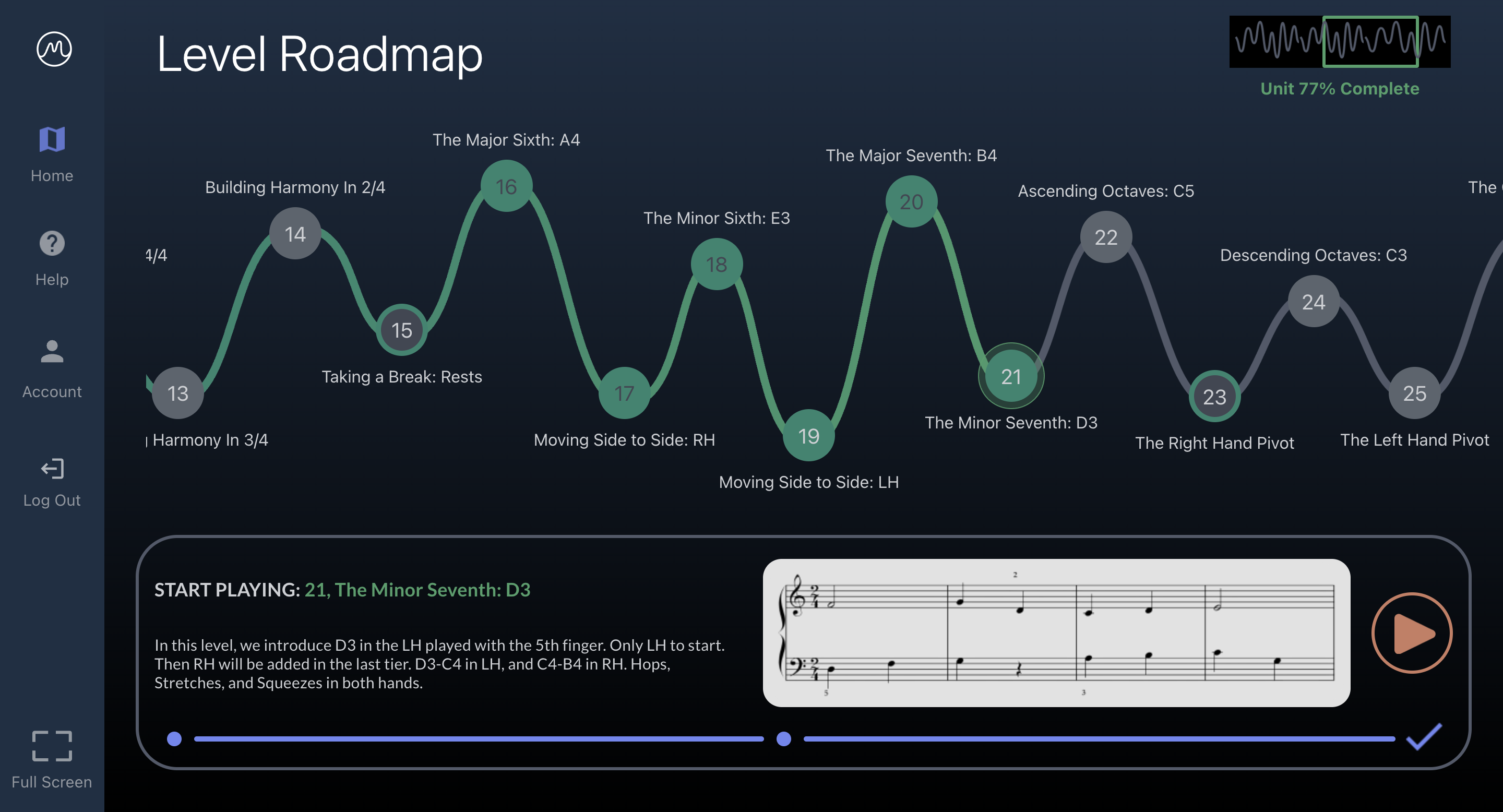
Many apps focus primarily on memorization or gamification. While engaging, these approaches often fail to build genuine sight reading skills. A truly effective tool prioritizes structured progression, immediate feedback, and adaptive exercises that match the learner’s level. The 2-Minute Sight Reading Challenge demonstrates how short, well-designed sessions can produce measurable progress, even for busy adults.
Adopting short, repeatable practice sessions that gradually increase in complexity can help learners develop a foundation of sight reading skills that continues to grow over time. Combining focus, feedback, and varied material ensures that learners are not simply repeating the same exercises but are building real musical independence.
Conclusion
Evidence shows that short, structured practice sessions accelerate skill acquisition for beginners when combined with immediate feedback and clear progress tracking, an idea supported by research on microlearning and mastering skills in short time spans. By making practice approachable and rewarding, learners can steadily improve their sight reading and overall musicianship.
For practical guidance on integrating these principles into daily practice, see the MuseFlow blog for tips and example routines. By aligning piano practice with research-based learning strategies, beginners can build confidence, fluency, and long-term musical growth.