News
Adult Learning
Beginners
How Much Does MuseFlow Cost?
July 27, 2026

Learning sight reading has come a long way in the past year. If you’re still using older methods, you’re missing out—not only on the enjoyment of learning with cutting-edge techniques, but also on your earning potential as a musician. Here’s a way to understand it.
You buy a series of sight reading books. You’re stuck following static exercises, with no way to know if you’re truly improving or if you’re even practicing correctly. Once you finish the book, you need another—and then another. The time commitment is high, much of it wasted on inefficient exercises, with no real-time feedback to tell you whether you’re playing the notes correctly.
The result? Frustration. Progress feels slow, and the vast majority of learners quit before reaching proficiency.
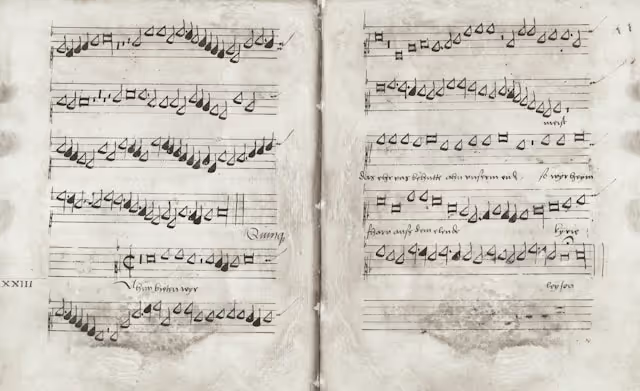
This is just an evolution of the Ancient Way—it’s more of the same. Along with sight reading books, you have access to websites with downloadable pages or apps featuring more static music. But ultimately, it’s still just a library of music.
Sure, online tools and mobile apps provide more material, but the burden is on you to figure out:
Even if you’re willing to pay for an app, you still need to sift through an overwhelming amount of material in a song library and curate a plan yourself. That mental overhead doesn’t go toward practicing sight reading—it’s spent assembling your tools.
And let’s not forget: You can only sight read a piece once. After the first play-through, your brain starts to memorize the music, and it’s no longer sight reading.

Thankfully, cutting-edge technology makes the Ancient Way and Old Way obsolete. With MuseFlow, you no longer need to waste time curating materials or wondering if you’re improving.
MuseFlow is radically different.
The unique value proposition of MuseFlow is that it offers infinite, dynamically generated music, precisely targeted to help you improve. MuseFlow is your personalized coach, tracking your progress and adapting dynamically to your needs.
With MuseFlow, progress is:
MuseFlow is completely different. MuseFlow just doesn’t give you more, but gives you the precise sequence of notes you need to make progress. Measures of music are being created on-the-fly according to your skill level. There’s no system that even comes close.
The unique value proposition of MuseFlow is not that you have "more" but that you have "infinite" AND that infinite amount of music is presented in real-time, in the context of mastering the skill.
MuseFlow is your personalized coach, delivering tailored exercises, tracking your progress, and adapting dynamically to your skill level. With real-time feedback, you know exactly how to improve, and every session brings you closer to mastery.
MuseFlow is radically efficient compared to other learning methods–You’re in the Flow! Progress is fast, engaging, and measurable.
Imagine three intermediate pianists in the same city—Sally, Sam, and Sarah—all competing for the same high-paying piano gigs. They share the same goal: to reach advanced sight reading proficiency and start earning from weddings, events, and restaurants.
Their chosen learning methods, however, set them on very different paths.
Sally’s faster progress gave her a critical advantage. By Year 1, she was already booking gigs, gaining experience, and building demand. Meanwhile, Sam and Sarah were still learning.
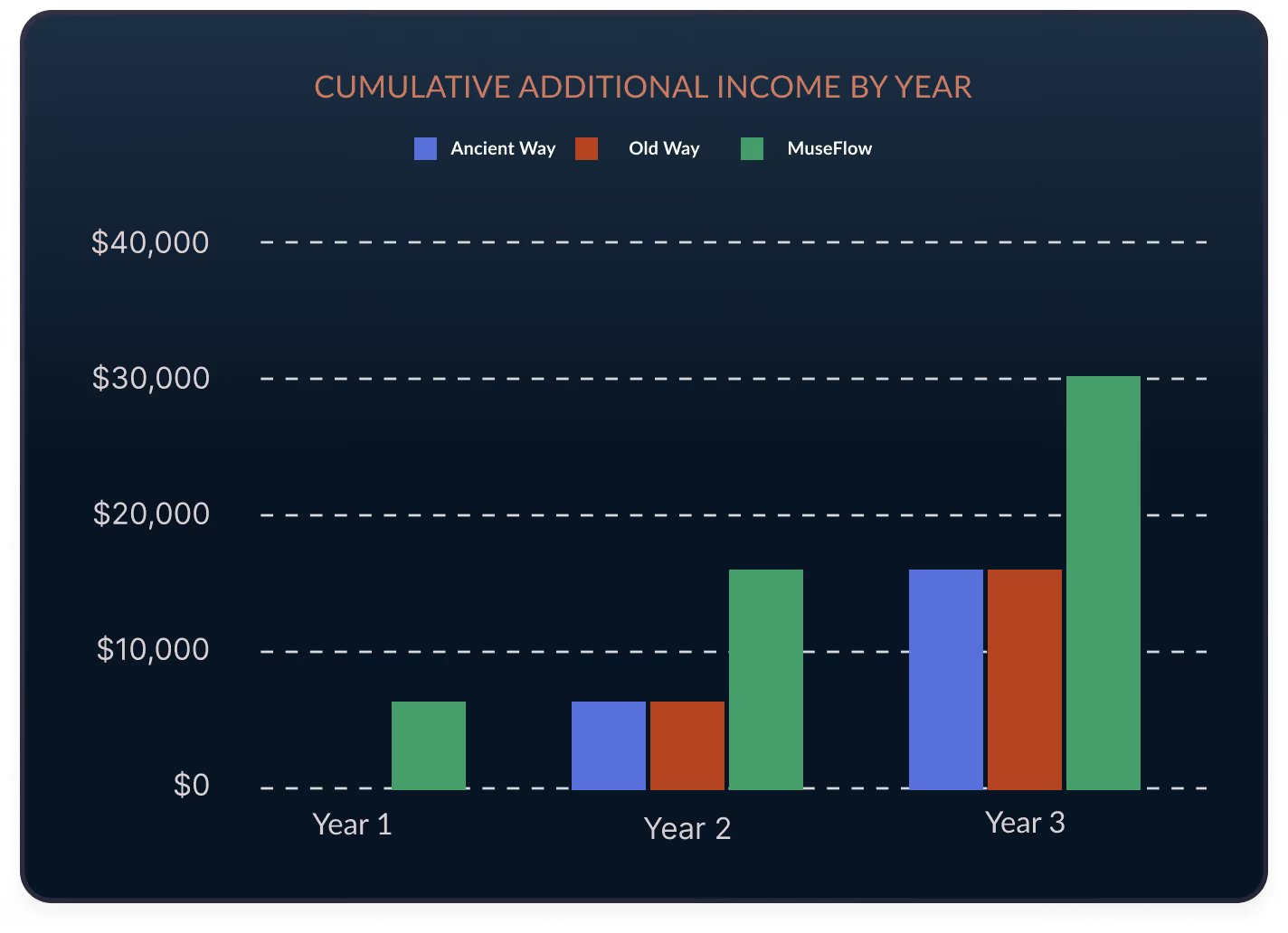
Sally’s faster proficiency gave her a head start. Starting Year 1, she was already booking gigs, gaining experience, and building demand. Sam and Sarah, meanwhile, were still learning, assuming they had even continued in their strategies (more on that later).
As a result, Sally consistently earned more across the three years, with increasing rates and more gigs over time. The cumulative effect of Sally’s early start is undeniable. By Year 3, she has out-earned both Sam and Sarah by a wide margin.
Sally’s choice to use MuseFlow didn’t just save her time—it accelerated her earning potential, giving her a distinct edge in the competitive gig market. With MuseFlow, she didn’t waste hours on inefficient methods or outdated tools. Instead, she focused on building her skills quickly and effectively, positioning herself for long-term success.
For example, if Sally plays at several gigs throughout the year, she will have earned $6,000 by the time Sam and Sarah are just getting started. She is more than a break-even point on her first gig where she gets to showcase her new-found sight reading proficiency. Sally can reinvest in her skills, gain more experience, and build her reputation faster. By the time Sam and Sarah reach proficiency, Sally is already well-established. MuseFlow enables learners to break even on their investment significantly faster. Look how the three of them compare for that first year.
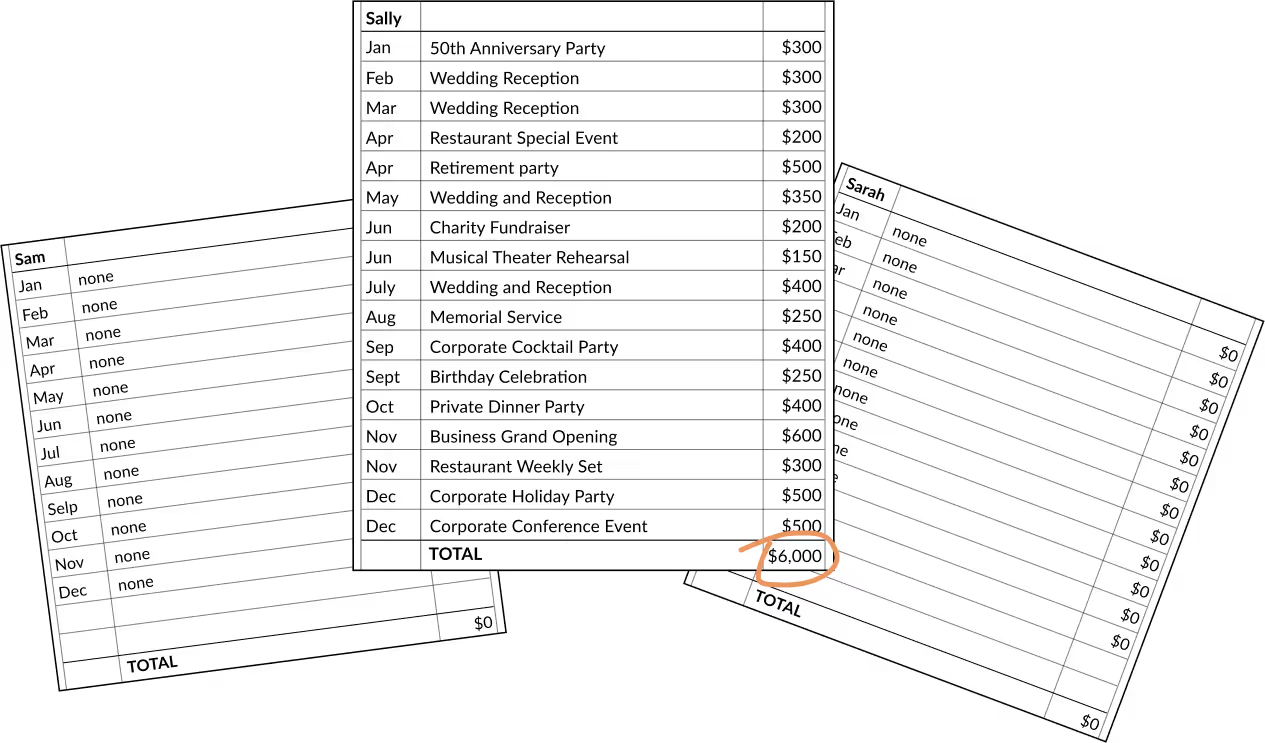
But Sally’s competitive advantage doesn’t stop there.
Sally, Sam, and Sarah aren’t even close to equal footing when it comes to their ability or enjoyment of learning. Why? The likelihood for Sam or Sarah to actually complete all the coursework in the Ancient Way or the Old Way is highly unlikely.
Because of how MuseFlow harnesses our human desire to learn and be in Flow state, Sally is highly likely to actually achieve mastery. Her likelihood for success actually skyrockets.
Sam and Sarah have to select, purchase, and then curate their own path forward to learning by choosing from a myriad of exercise books and websites. Simply search for “sight reading books” and you’ll discover what variety is out there for all sorts of instruments, age levels, and interests.

Once Sam and Sarah have the books, apps, videos, or Internet resources, then they need to learn the particular system for each and then slog through them.
They will be the musician and judge simultaneously to determine if they are ready to proceed to the next exercise or book. They have zero feedback to know if they’re playing the exercises correctly.
In all likelihood, despite Sam and Sarah’s good intentions, most of their sight reading exercise books and online resources will go untouched. They will simply join the statistics of so many who do not increase their sight reading proficiency.
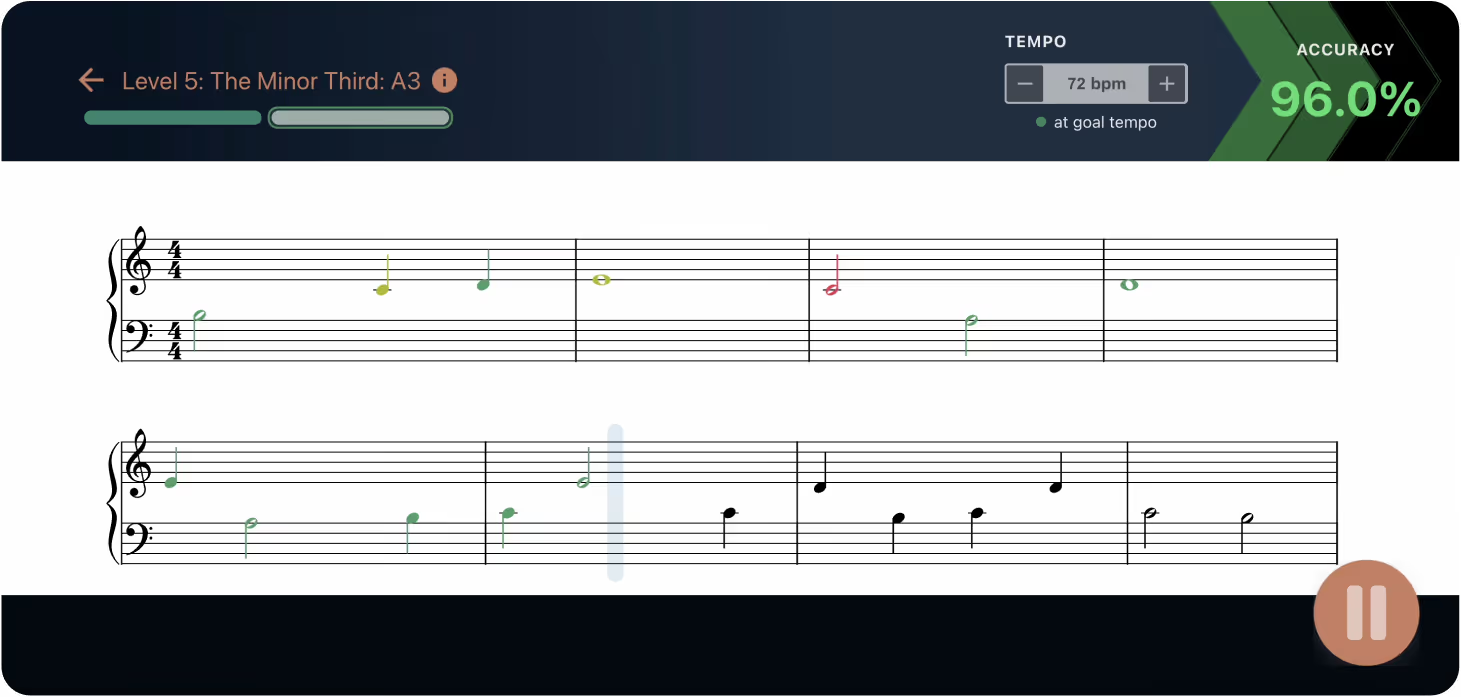
On the other hand, Sally opens her laptop with her digital keyboard, and the EXACT music she needs to learn sight reading is given to her. Down to the musical measure, it’s precise for her skillset. Even more than that, she has a built-in coach telling her how she’s doing. She can’t proceed until she’s mastered it.

This type of learning is incredibly motivating for Sarah. She’s in the flow. As a result, not only is Sarah learning more efficiently, but she’s far more likely to reach her goal compared to others using traditional methods.
Here is a comparison of sight reading resources available on the market. The bar chart represents the financial investment to purchase the resources. The line represents the likelihood to actually use the resources to learn to sight read.

Note that while MuseFlow requires more of an investment, the likelihood of actually fully using MuseFlow approaches 100%. The other methods may require less of a financial investment, but that also means there’s less of a likelihood to actually use them to learn how to sight read.
With the goal of increasing proficiency in sight reading, MuseFlow gives Sarah everything she needs to succeed:
MuseFlow doesn’t just give Sarah more of what she may–or may not–need to progress in her learning. MuseFlow delivers exactly the right amount of content, in the right context, so she masters every skill before progressing. Here’s where all this comes together.
While MuseFlow might look “more expensive,” the advanced Flow state learning technique gives Sarah a much higher likelihood of success than the alternatives. Put another way, she is getting more value for her dollar. Why? Because Inexpensive-but-Incomplete is actually more costly than Expensive-and-Complete.
A common way to express this is an Efficiency Ratio. This calculation measures how much value you receive for every dollar you spend (Likelihood ÷ Cost).
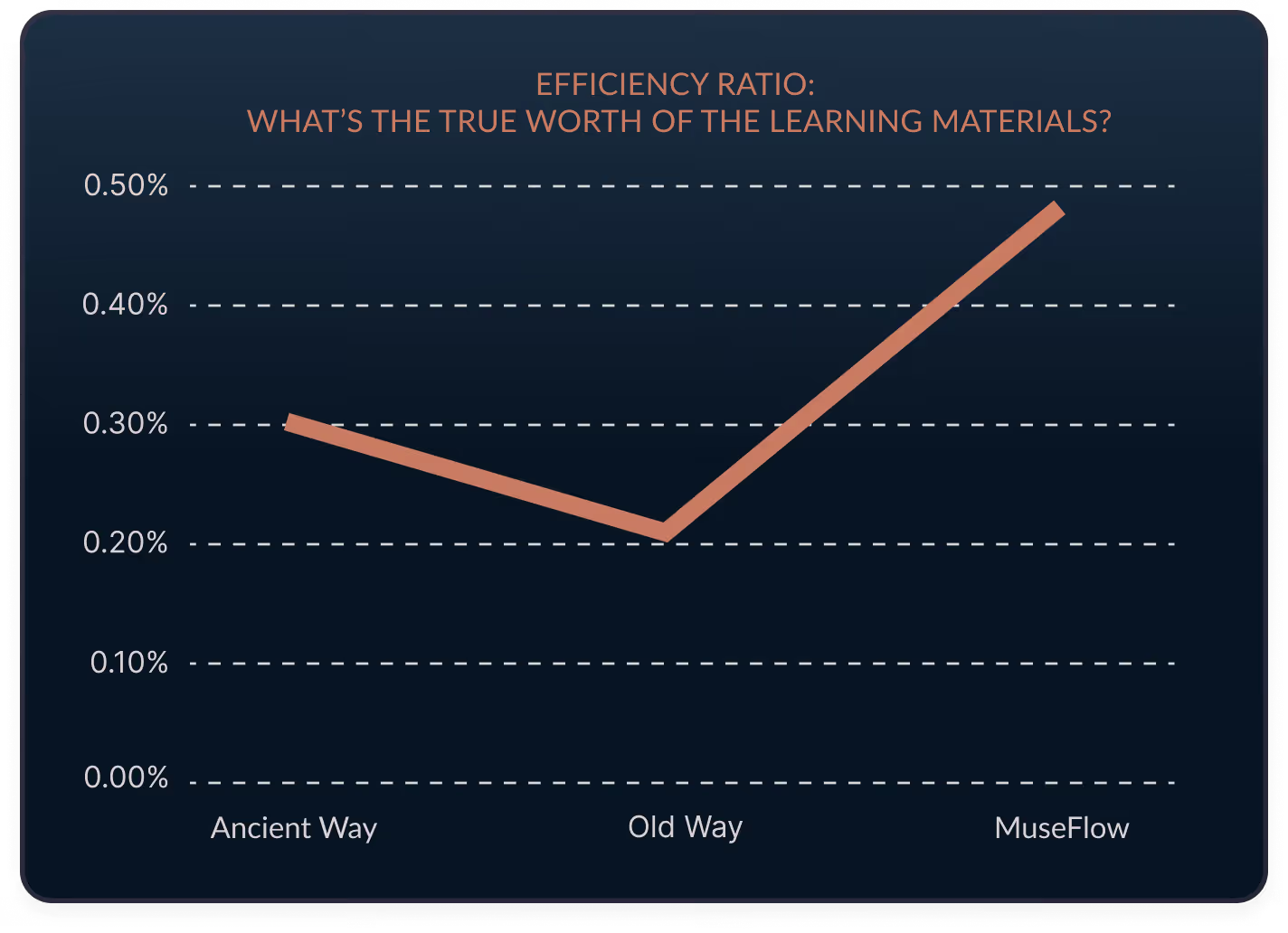
What good does it do Sally if she saves a few dollars by purchasing a variety of exercise books, music library apps and other resources, yet never uses them? Sally is committed to improving her skillset, enriching her musicianship, and increasing her income. Wouldn’t she want the best resources and strategy to achieve that goal?
To explain this differently, let’s fast forward a few months with Sam, Sarah, and Sally.
After frustration of plodding haphazardly through exercises, Sarah has become weary. She’s starting to tell herself things like: “Learning to sight read is too hard…. Maybe I’ll try later.” Her dreams of being paid to play piano at weddings and events is starting to fade. She’s got a despondent look on her face.
Sam is facing a similar discouraging story. He’s spent an inordinate amount of time and effort to research and purchase various exercise books and music library apps. He’s probably spent more time cobbling together a system than he has actually learning how to sight read. It’s been over a week since he’s touched his piano, and he’s starting to rationalize: “Eh, I play good enough…”
If Sam and Sarah were to actually continue, they will have experienced “hidden costs” in inefficiency—time spent curating resources or stalled progress due to lack of motivation. This translates to wasted energy and opportunity costs for earning income. Also, they will not have enjoyed the sight reading learning process nearly as much as Sally.
Sally chose MuseFlow and wears a concentrated smile each time she plays. She is in Flow state within minutes. No guesswork or inefficiencies as to where to begin or where to focus her attention. She will play exercises precisely tailored to her skill level. As she plays, she will experience real-time feedback that keeps her in the Flow–motivated, engaged, and always progressing. That ever-increasing momentum builds a positive feedback cycle where each measure she plays builds to improve her outcomes.

Ready to be like Sally and unlock your full potential? Start with MuseFlow and begin your sight reading journey. Start learning, enjoying, and earning faster than you ever thought possible.

When learning to sight read music, frustrations can easily derail progress. We know that mastering this skill is challenging enough without running into roadblocks caused by the tools themselves. That’s why MuseFlow was created: to address the biggest challenges music learners face and offer a superior learning experience.

To illustrate, we’ve gathered some anonymized, recent reviews from other systems for sight reading—both books and online. These reviews reflect real frustrations learners have encountered—and highlight how MuseFlow solves these issues.
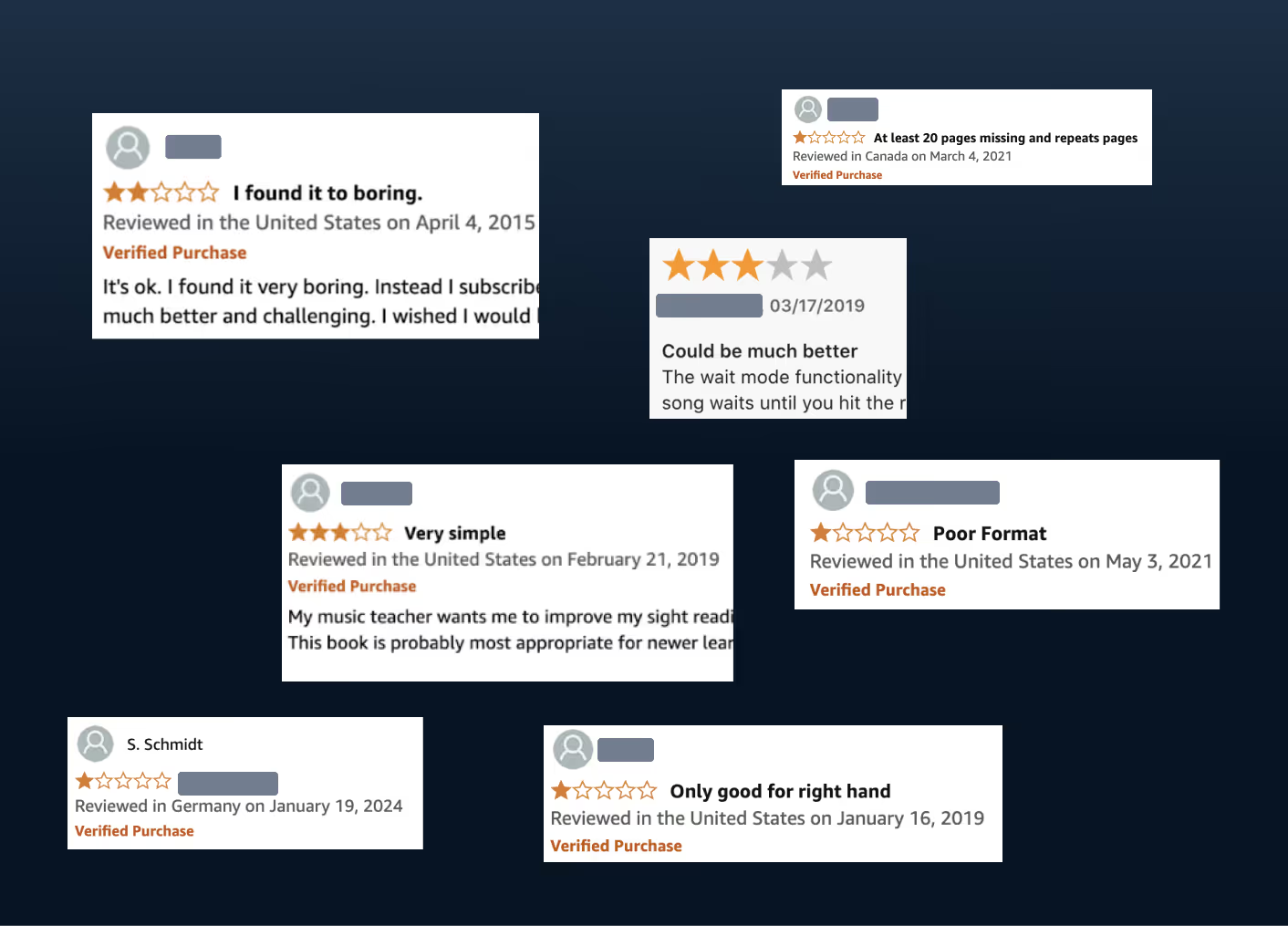
“I just wish there were a few more things they added in, like actually listening to the piano to check if notes/rhythm right and if the answer is wrong, revealing the right answer.”
By connecting to a digital piano, MuseFlow provides precise, real-time feedback on both notes and rhythm. You’ll always know whether you’re playing correctly, and you’ll receive instant corrections to improve faster.
“The inability for it to properly recognize notes is frustrating and interrupts flow and learning.”
This is exactly what MuseFlow doesn’t do. With advanced AI, MuseFlow seamlessly recognizes the notes you play and keeps you in a flow state... free from interruptions or misreads.
“It has a hard time picking up certain notes. This severely disrupts my flow during a song when I have to repeat a key until it finally recognizes, or it randomly skips notes sometimes.”
MuseFlow is built to prioritize uninterrupted learning. With its accurate note recognition and adaptive technology, you’ll never have to stop mid-song to troubleshoot. MuseFlow ensures your learning experience stays smooth and engaging.
“I found it very boring.”
With MuseFlow, boredom is a thing of the past. Its dynamic, real-time generated exercises keep you continuously engaged. You’re always in flow state—not too bored, not too overwhelmed—right in that pocket of the goldilocks zone, just perfectly challenged to keep progressing.
“My music teacher wants me to improve my sight reading and recommended this book. I found it rather simple. My teacher thinks I have picked up my skill, but I'm not convinced- I'd like to find something a bit more challenging.”
MuseFlow ensures every exercise is tailored to your skill level. You’ll never feel under-challenged or stuck with static materials. The app’s adaptive AI grows with you, ensuring that your learning remains engaging and appropriately difficult. The piano learning software makes sure everyone is on their own SUCCESSFUL journey.
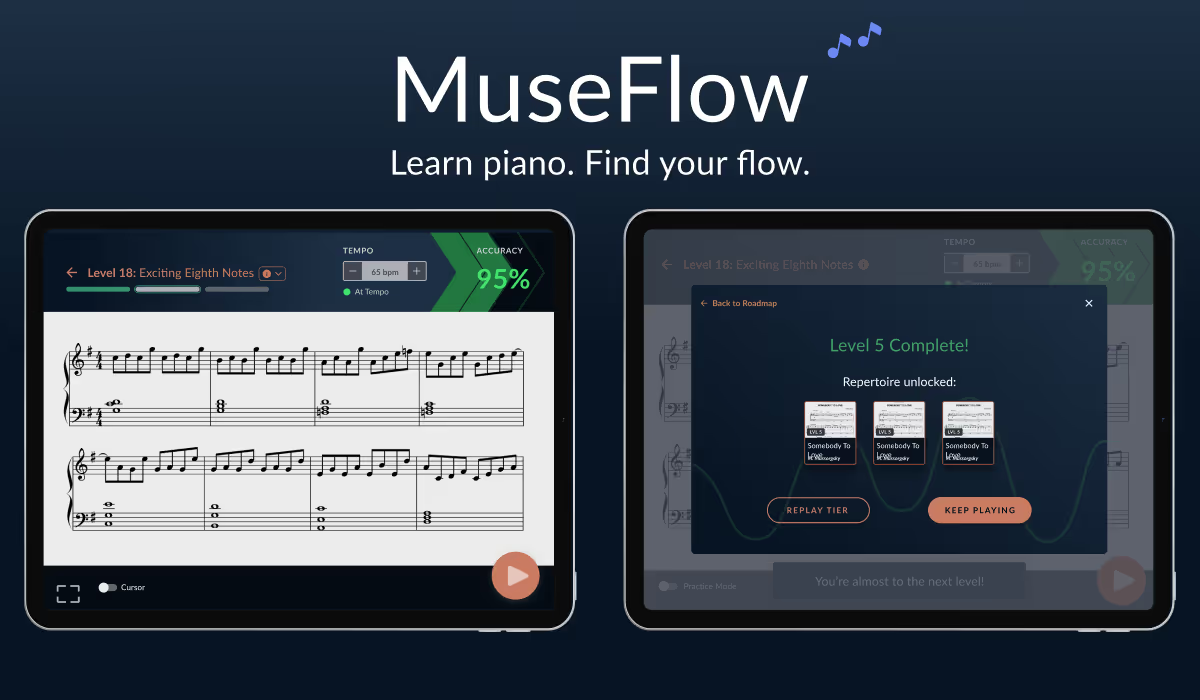
Learning sight reading should be a fulfilling journey... not a frustrating one. MuseFlow’s cutting-edge technology solves the issues that have plagued music learners for years:
With MuseFlow, you’ll move beyond outdated tools and experience a revolutionary way to master sight reading.

This holiday season, give a gift that goes beyond the ordinary; a gift that opens up the world of learning piano music. MuseFlow isn’t just any music learning app; it’s a gateway to mastering the skill of sight reading - the act of reading music at first sight - making music performance more accessible, meaningful, and enjoyable. Here’s why MuseFlow is the perfect gift for those looking to excel in piano performance, find personal fulfillment, and spread joy through music.

For those who perform, music isn’t just a passion… it’s a way to connect, impress, and earn some extra cash. Imagine walking into any gig, ready and able to play any popular songs on the spot. People throw you request after request, you pull them up on your iPad with Ultimate Guitar or MuseScore, and you just go! MuseFlow gives performers the confidence to do just that, offering a seamless, personalized curriculum that strengthens sight reading skills, enabling users to read and adapt to playing never before seen music quickly.
MuseFlow’s real-time feedback, and adaptive sight reading levels are designed to boost not only proficiency but also versatility. This isn’t about memorizing a few songs; it’s about mastering the skills that let performers meet any song request with ease, broadening their repertoire quickly and enjoyably. Think about how much more you could earn in gigs with even a 20% improvement in sight reading! MuseFlow is the tool that lets you take that leap with ease.

For those juggling family, work, and personal time, music often serves as a cherished retreat. MuseFlow’s unique, adaptable approach brings the joy of learning piano into even the busiest lifestyle. With the flexibility to practice anywhere, at any time, for any duration, and a curriculum that meets users where they are, MuseFlow empowers them to progress steadily and enjoyably, making every practice session a moment of personal enrichment.
Imagine being able to sight read and enjoy playing any piece of sheet music that comes your way, whether it’s for a family gathering, a community event, or a peaceful evening at home. MuseFlow is more than a tool… it’s an opportunity to deepen musical skills, and to share that passion with loved ones, whether through playing together or inspiring the next generation to love music.

MuseFlow is the ideal gift for anyone who has a love for music, whether they’re performers looking to build their skillset, or enthusiasts seeking personal fulfillment. It’s a thoughtful way to show someone that you believe in their potential, that you’re investing in their joy, and that music can be part of their life in a meaningful way.
With flexible subscription plans and bundles, MuseFlow is easy to give and even easier to love. This season, give the gift that resonates long after the holidays… a gift that brings music to life, one note at a time.
Looking for real piano learning success stories? MuseFlow isn’t just another piano app… it’s a revolutionary piano education with an app that helps students of all levels master piano with the help of an app that adapts to their progress. But don’t just take our word for it. hear from real students who’ve transformed their piano skills using MuseFlow.
One of the biggest barriers to learning piano is simply knowing where to begin. Many aspiring musicians feel overwhelmed before they even press a key. Kyle put it best:
“If this was the norm for music education, I firmly believe the landscape would be radically different. Yes, people quit or don’t bother to learn because it can be frustrating, but I actually think the ambiguity of where to begin and how to effectively progress creates this analysis paralysis and discourages people from even trying.”
MuseFlow eliminates that uncertainty with a structured, step-by-step approach that guides learners through the process. For Megan, it provided what traditional lessons never did:
“When I took piano lessons as a child, I just learned how to play songs so I could pass them off. How I wish I had learned how to play notes.”
By shifting the focus to true note-reading and understanding, MuseFlow helps students build the foundational skills they wish they had from the start.
For many musicians, sight reading has always been a struggle. But MuseFlow’s adaptive approach and real-time feedback have helped students break through their plateaus. Arjuna shared a major breakthrough:
“I don’t think I’ve ever been this good at reading music. It never made sense to me before.”
Katherine echoed that sentiment, noticing her progress with ease:
“Sight reading is getting really easy.”
The moment sight reading clicks is a powerful one. Sharon described how her brain and fingers started working in sync:
“My eyes would see the notes, and my fingers would just go to the right keys on their own, without my brain having to get involved much at all!”
That kind of instinctive playing is exactly what MuseFlow was designed to develop.
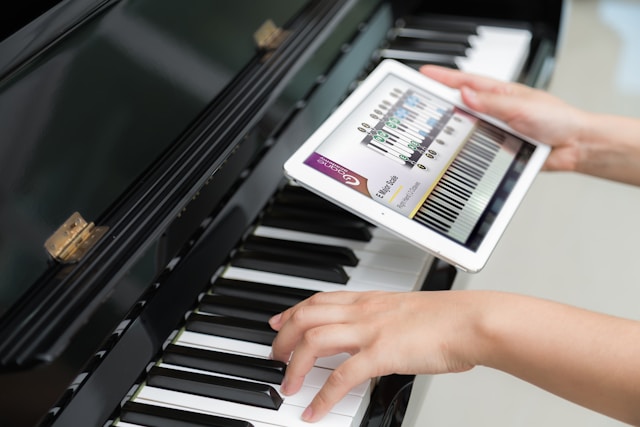
One of the standout features of MuseFlow is its unique piano app, using gamification to keep students engaged and striving for more. Dave admitted he was hooked:
“The gamified approach to learning is brilliant, I'm addicted! The app provides instant feedback.”
Similarly, Kalan was motivated by the visual roadmap of progress:
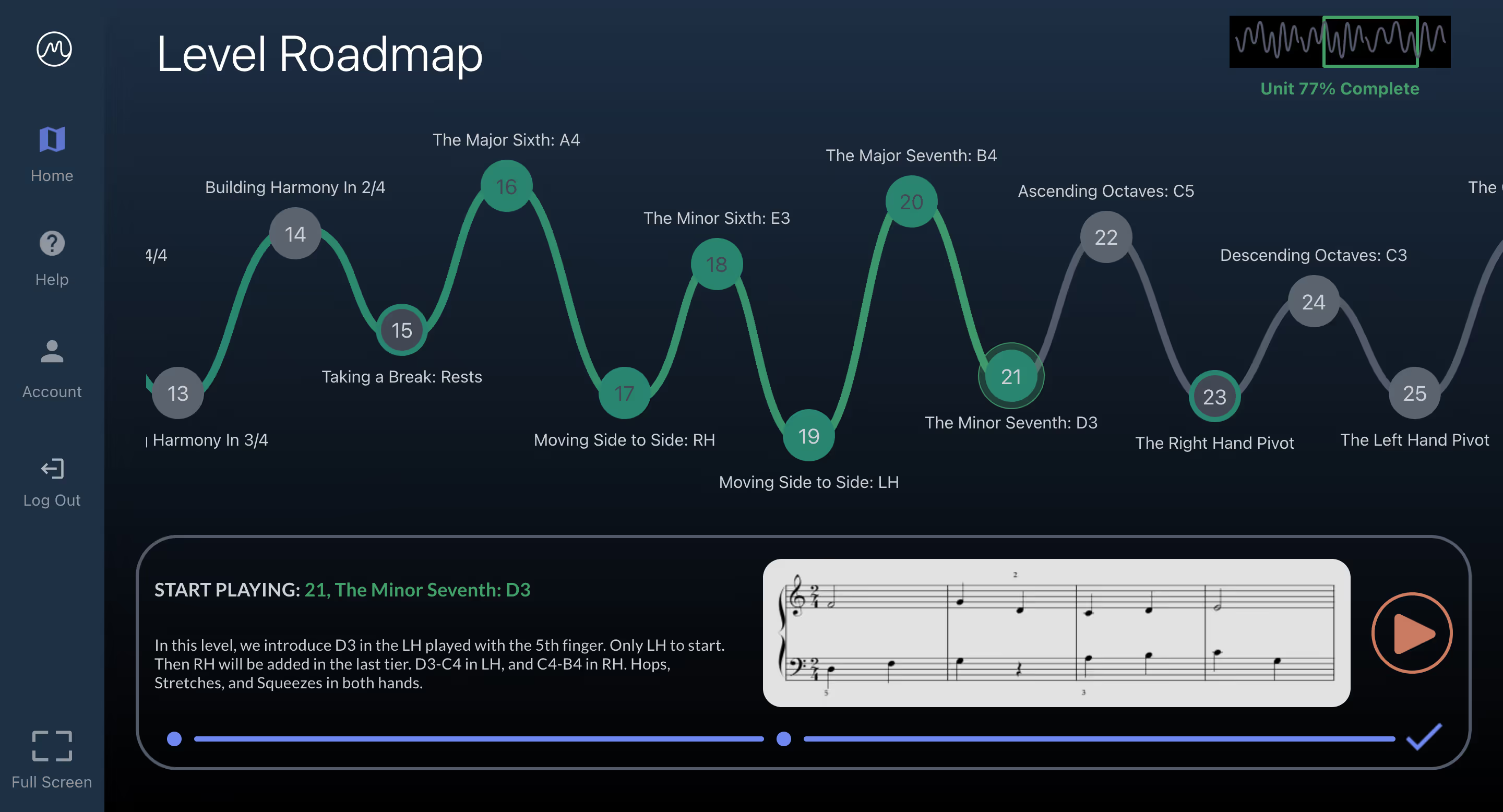
“I want to beat every level so that all the dots turn green.”
Even those who’ve struggled with consistency in the past, like Dennis, found themselves pushing forward:
“Any success I achieve is its own reward. Just having moved to the next higher level, I feel good and surprised that it went so quickly.”
By turning learning into a rewarding experience, MuseFlow keeps students coming back, ensuring their growth over time.
Unlike traditional sight reading books or rigid lesson plans, MuseFlow’s interface is designed for smooth, distraction-free learning. Artur compared it to conventional methods and found it superior:
“When compared to traditional methods such as the ‘Improve Your Sight Reading’ book by Paul Harris, which is quite good by the way, your app's interactive way of working and real-time, immediate feedback simply outperforms traditional methods.”
Brandon also appreciated how well the app’s design supports learning:
“The endlessly generated tracks to play along with is a very great design idea.”
When the technology works effortlessly, students can focus entirely on the music. Andre summed it up simply:
“It's a genius idea and great execution. As far as I'm concerned, it’s the best in its class.”
Perhaps the most inspiring part of these piano learning success stories is how MuseFlow doesn’t just improve piano skills. it builds confidence and true fluency. For Kyle, it helped erase the self-doubt he carried for years:
“My poor sight reading has been the thorn in my side, the concrete piece of evidence that gives my insecurities justification for screaming that I am not good. And MF is directly training that skill, washing away the remnants of what my insecurities are trying to latch onto. I feel empowered!”
From beginners to seasoned musicians, MuseFlow provides a structured, intuitive, and motivating way to learn. Whether it’s building confidence, overcoming sight reading struggles, or just finding joy in the process, these students prove that mastering piano with an app is possible with the right tools.

Looking for your own piano app with incredible testimonials that provides results? MuseFlow is helping students master piano with their unique music education app like never before. Whether you’re a beginner or looking to refine your sight reading skills, this piano app truly gives students the success they need, and delivers true joy in the process of progressing to proficiency.
Are you ready to start your own success story? Try MuseFlow today and experience the difference for yourself.
One of the biggest challenges piano learners face—especially beginners and self-directed students—is knowing whether they are practicing correctly. Unlike reading or watching a tutorial, piano practice happens in real time, and mistakes in pitch, rhythm, or timing can easily go unnoticed. Over time, these errors become habits, slowing progress and increasing frustration.
This is where real-time feedback has become increasingly important in modern piano learning. Instead of waiting for a weekly lesson or relying on guesswork, learners receive immediate information about what they played correctly and what needs adjustment. Educational research consistently shows that timely feedback accelerates skill acquisition and improves retention, particularly in complex motor tasks such as music performance.

In traditional practice, feedback is often delayed. A learner might repeat an exercise dozens of times before discovering a mistake. According to research in motor learning and music pedagogy, delayed correction makes errors harder to unlearn and reduces overall efficiency.
Immediate feedback, by contrast, helps the brain link action and outcome while neural pathways are still forming. This principle is widely supported in educational psychology and has been applied successfully in language learning, athletics, and music education.
Another problem with conventional piano practice is disengagement. Repeating static drills can feel mechanical, especially when learners are unsure whether the repetition is productive. Studies on learner motivation show that engagement increases when feedback is clear, specific, and tied directly to performance outcomes.
When feedback is visual or auditory and delivered instantly, learners remain focused on the task rather than worrying about evaluation later. This reduces cognitive overload and allows attention to stay on reading, timing, and coordination.
Psychological research on flow states—a condition where challenge and skill are well balanced—suggests that learners are more likely to remain engaged and sustain practice when tasks are neither too easy nor too difficult.
In music learning, flow is especially valuable. When difficulty adjusts appropriately and feedback is continuous, practice becomes immersive rather than exhausting. Time perception fades, frustration decreases, and learners are more likely to practice consistently.
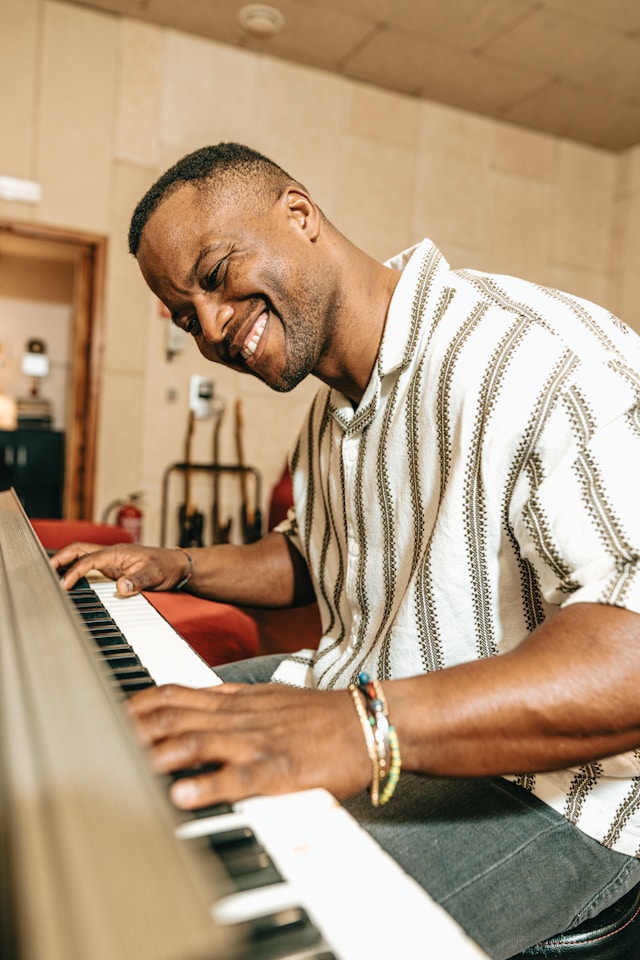
While engagement is important, accuracy remains essential. Piano learning depends on precise timing, rhythm control, and pitch recognition. Research in music cognition shows that early reinforcement of correct responses leads to stronger long-term performance outcomes than later correction
Real-time feedback supports this precision by correcting errors at the moment they occur. Instead of reinforcing incorrect fingerings or rhythms, learners adjust immediately, which improves technical stability and reading fluency over time.
Learners progress at different speeds. Fixed lesson paths often move too quickly for some and too slowly for others. Adaptive learning systems, which respond to performance data rather than predefined schedules, have been shown to improve persistence and learning efficiency in adult education contexts.
In piano learning, personalization means spending more time on weak areas and less on skills already mastered. Feedback-driven systems naturally support this by highlighting recurring issues and adjusting difficulty accordingly.
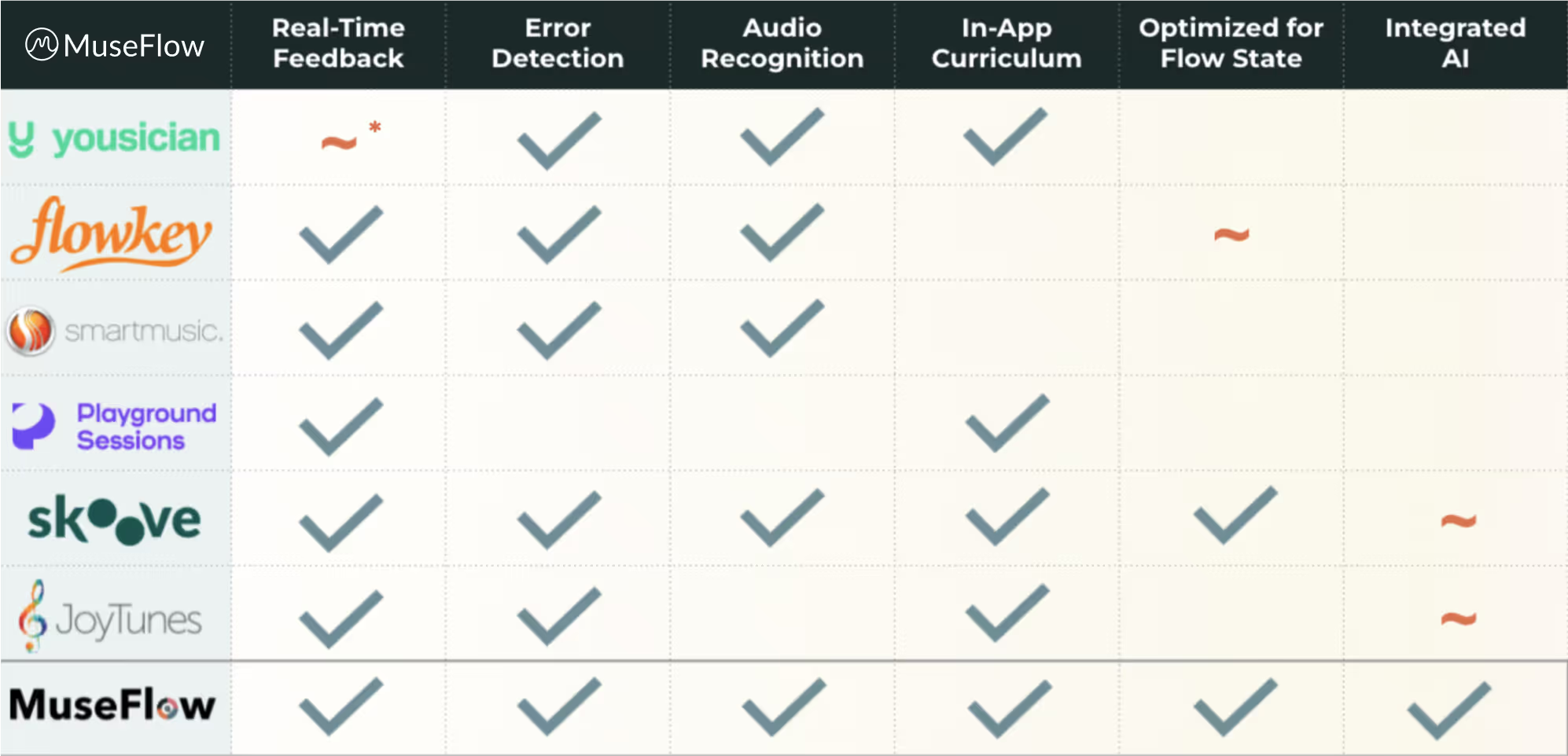
MuseFlow is one example of a piano learning platform that applies these principles. Its real-time, color-coded feedback shows pitch and timing accuracy as learners play, reducing uncertainty during practice. Instead of relying on delayed evaluation, learners receive continuous guidance while reading music.
The system also emphasizes sight reading through never-repeating exercises, which encourages true reading ability rather than memorization. Difficulty adjusts based on performance, helping learners remain in a productive challenge range rather than becoming bored or overwhelmed.
Importantly, these features are not valuable because they are “gamified,” but because they align with established learning science: immediate feedback, adaptive difficulty, and consistent exposure to new material.
The real benefit of real-time feedback in piano practice is sustainability. When learners understand what they are doing correctly and why they are improving, practice becomes more intentional and less stressful. Short, focused sessions become effective, which is especially important for adults balancing music with work and family responsibilities.
Rather than replacing traditional instruction, feedback-based tools complement it by filling the gaps between lessons and supporting independent practice.
Effective piano learning is not about practicing longer—it is about practicing with clarity. Real-time feedback reduces uncertainty, strengthens foundational skills, and keeps learners engaged over the long term. When combined with structured progression and thoughtful difficulty adjustment, it turns practice into a focused, rewarding experience.
For learners seeking more consistency and confidence in their practice, tools like MuseFlow demonstrate how feedback-driven design can support meaningful musical progress—without sacrificing accuracy or depth.

The most exciting thing about learning to play the piano is the freedom to play songs already familiar to you. One of the most motivating parts of learning to play piano was learning my favorite song for a talent show. And did you know that there’s evidence that this can actually help you learn more effectively? When you’re having fun and playing songs you know and love, you’re more likely to stick to the habit!
Below are some of the best songs to help you get started. We chose songs from different decades that made an incredible impact on the world that you start learning to play today!
Hallelujah was released by Leonard Cohen in 1984 on his album Various Positions. Since then, several versions of the folk rock classic have been released, including a version by John Cale that you might have heard featured in the 2001 Dreamworks film Shrek.
The incredibly poetic lyrics are set to a haunting progression of C, F, G, A minor, and back to F - even being referenced in the famous first verse: “it goes like this, the fourth (F), the fifth (G), the minor fall (A minor), and the major lift (F).”
Since then, the song has continued to be immortalized through covers throughout the decades. Jeff Buckley released a cover in 1994 that eclipsed the popularity of the original, even earning a spot in the Library of Congress in 2013. The song continues to live on with people offering new interpretations, including Kate McKinnon famously covering it during an SNL cold open in 2020.
Paul Simon and Art Garfunkel were one of the best selling musical acts of the 1960s. They were known for their truly eclectic musical influences, which incorporated their haunting harmonies on to folk, Latin, and gospel influences. Their pair added their own twist to the traditional English ballad Scarborough Fair by incorporating the melody of an anti-war song written by Paul Simon, resulting in the phenomenon known as counterpoint - which is you combine two independently satisfying melodies. This resulted in what is arguably the most popular rendition of Scarborough Fair.
Their cover of Scarborough Fair appeared on their third studio album, Parsley, Sage, Rosemary, and Thyme. The album is named after the refrain in Scarborough Fair, where the singer bemoans the impossible tasks they require one to accomplish for their love.
Scarborough Fair is also an excellent example of Dorian mode - which is a type of musical scale that gives the English standard its dreamy, gut stirring feeling. Other songs written in Dorian mode include Blue Jeans by Lana Del Rey, and Billie Jean by Michael Jackson.
Now we enter the 70s - don’t worry, I have some extra bellbottoms you can borrow! Billy Joel released Piano Man in 1974, about his time moonlighting as a piano lounge singer when he needed to pay the bills. At the time, he was in a legal battle with his record company and went by his middle name, Bill Martin.
The lyrics detail different regulars that come into the bar where the singer, the Piano Man, is playing. The 1974 version is in the key of C Major, and begins with a jazzy riff before falling into a ¾ time signature.
The song was moderately successful initially. It peaked at number 24 in the Billboard Top 40, making it Billy Joel’s first ever Top 40 hit. However, it’s since become one of his most recognizable and most loved songs. In 2015, it was selected as one of 25 songs to be preserved by the Library of Congress.
Christina Perri wrote and recorded A Thousand Years for the penultimate film in the Twilight film franchise, The Twilight Saga: Breaking Dawn - Part 1. While the song had a slow climb up the charts initially, it has persisted and gained a life of its own. As of May 2026, it has almost 29 million uses on TikTok and 3.8 billion views on Youtube.
Written in the key of B-flat, Perri sings about the at-times tragic love story of Edward and Bella from the Twilight franchise.
The piano has been a mainstay on the chart throughout history. All of these songs are available for you to learn now on MuseFlow, tailored to your pace and current skill level. Our lessons:

As you switch through the TV channels, you’re bound to find characters who play the piano. We’ve watched a wide range of pianists grace our screens, from serious doctors to puppet dogs. Some have even been portrayed by skilled musicians!
In our previous post we explored movies about playing the piano. Now, we at MuseFlow dive in to some of the biggest pianists in TV history and what they can teach us about playing this iconic instrument.

It’s hard to think about TV pianists and not think about Schroeder. The Peanuts’ resident pianist was first introduced in Charles M. Schulz’s comics in 1951 and made his first TV appearance in 1965. Schroeder is a musical prodigy who has been playing the piano since before he could walk. He idolizes Ludwig van Beethoven and is constantly practicing on his small toy piano.
It’s rare to see a child character with such a deep love for classical music. Schroeder teaches us that musical passion, focus, and Flow State can come at any age. All we need is something or someone to inspire us…whether that’s a legendary composer or a dancing beagle.
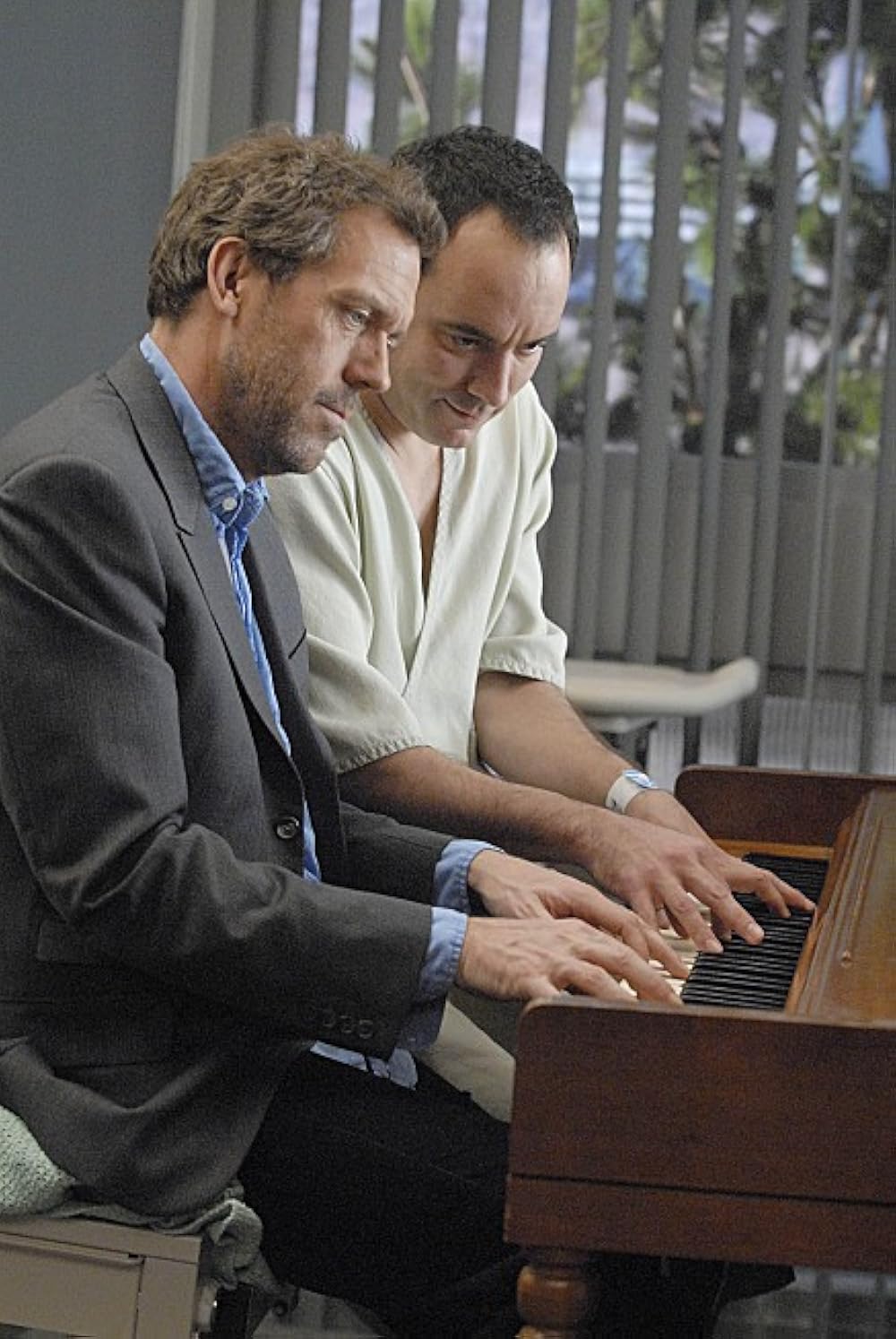
When some actors play the piano, they just pretend to play and the music is added in post. But not when Hugh Laurie’s on the keys. The actor behind House is a talented pianist (and also singer, guitarist, drummer, saxophonist, and harmonica player). His character Dr. House even has a scene playing the piano with a patient…who happens to be Dave Matthews!
In media, playing the piano is often used as visual shorthand for intelligence. If a character plays the piano, it usually means they’re smart. And it makes sense…studies have shown that playing the piano is tied to cognitive function. With Dr. House, we see a character whose genius spreads across multiple disciplines, from medical to musical. Learning to play the piano may not make us as smart as Dr. House, but hey…even he had to start somewhere!
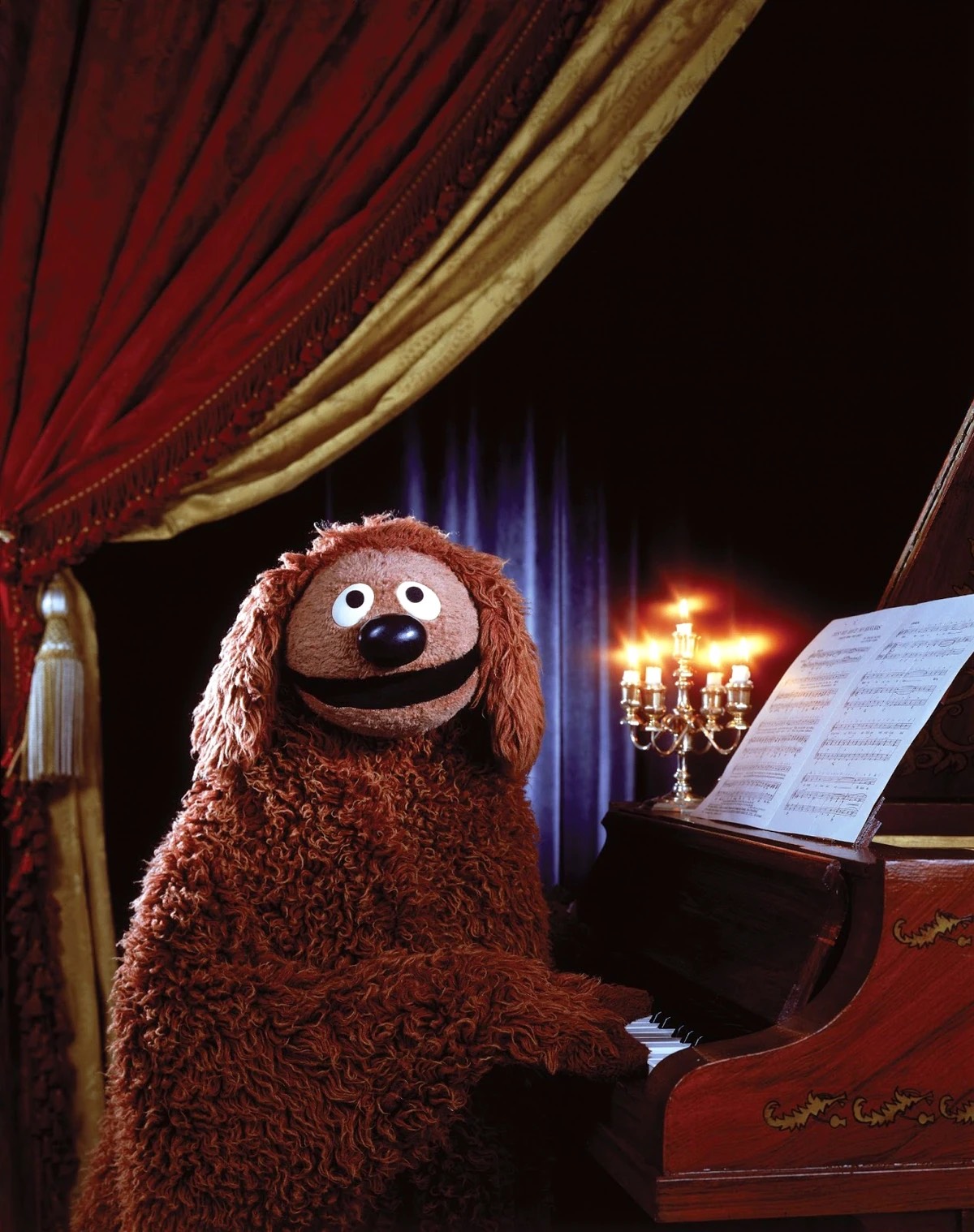
How could we leave out TV’s most famous piano playing dog? Rowlf was created and played by Jim Henson and was the resident pianist on The Muppet Show, performing melodic piano numbers coupled with his gruff voice and comedic lyrics. Rowlf was also the first Muppet to achieve widespread popularity as a recurring character on The Jimmy Dean Show.
Rowlf is said to be the closest to Jim Henson’s real-life persona. The wisecracking dog shows us the value of introducing play to our musical learning. If you approach your music the same way Rowlf approaches this song about his friend George, you’ll never take anything too seriously

We had to include a character from a musical show, and what better than the campy jukebox musical Glee? Darren Criss consistently impresses as singer and pianist Blaine Anderson. It doesn’t hurt that Darren Criss is also a very talented pianist in real life. He studied musical theater at the University of Michigan and even has his own piano bar in Los Angeles called Tramp Stamp Granny’s…where our very own COO Patrick Boylan performs!
Blaine Anderson is sensitive and romantic, bringing those strong emotions with him into his musicality. Just look at how Blaine holds back tears while singing Katy Perry's Teenage Dream. If there’s one thing we can learn from Blaine, it’s that infusing emotion into our music can be rewarding and cathartic.
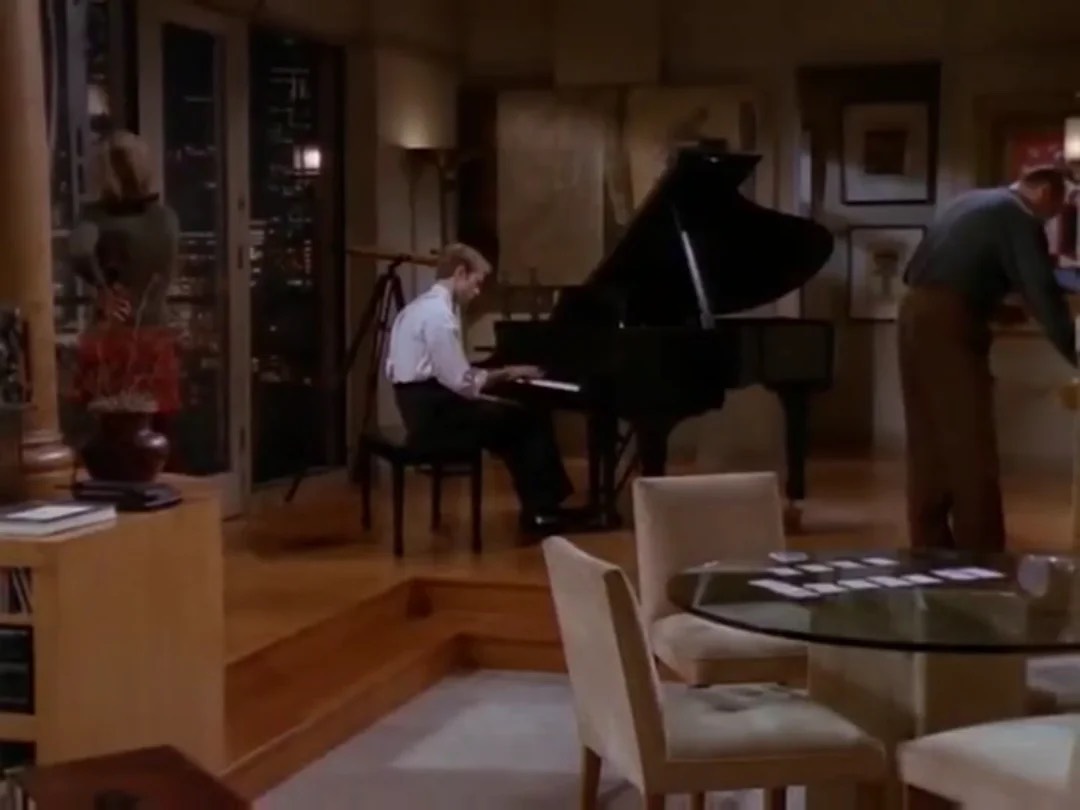
Remember what I said about pianos making characters look smart? Well, they can also make them look classy and refined, as they do with Frasier and Niles Crane in Frasier. In fact, Frasier’s apartment — one of the main locations for the show — has a prominently featured grand piano that both characters play throughout the series.
Both Kelsey Grammer and David Hyde Pierce actually play the piano, with Pierce having studied piano performance at Yale (which feels very Niles of him). Frasier and Niles show how the piano can give you an air of sophistication — even if you also enjoy more modern music when nobody’s watching!
The piano has enjoyed countless forms of TV representation over the years. Its association with intelligence and refinement can give you a clear sense of who a character is just by seeing them play. My favorite thing to see is when an actor brings their love of piano into their roles, like Frasier’s David Hyde Pearce or The Office’s Craig Robinson. That passion for the piano can be inspiring to the next generation.
At MuseFlow, we love to be a part of that inspiration. That’s why MuseFlow offers:
No matter your personal skill level or musical journey, there’s a TV character you can look up to and be inspired by. And with enough practice, one day you could be that inspiration for somebody else.

Keep up to date on our progress as we continue to add new features!