Curriculum
Self-Improvement
Technology
Flow State
News
What Music Learners Really Want - and How MuseFlow Delivers
July 27, 2026

When learning to sight read music, frustrations can easily derail progress. We know that mastering this skill is challenging enough without running into roadblocks caused by the tools themselves. That’s why MuseFlow was created: to address the biggest challenges music learners face and offer a superior learning experience.

To illustrate, we’ve gathered some anonymized, recent reviews from other systems for sight reading—both books and online. These reviews reflect real frustrations learners have encountered—and highlight how MuseFlow solves these issues.
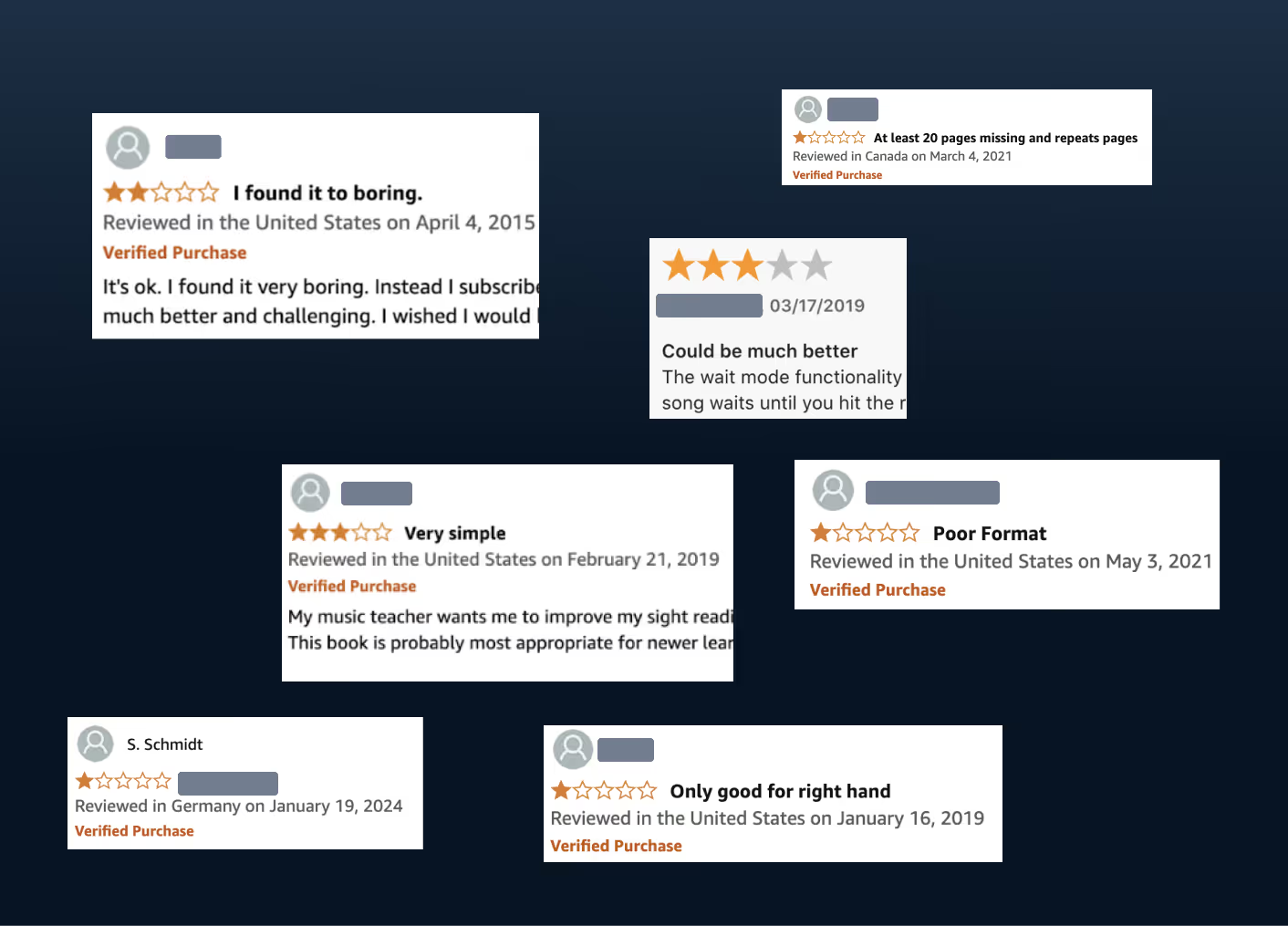
“I just wish there were a few more things they added in, like actually listening to the piano to check if notes/rhythm right and if the answer is wrong, revealing the right answer.”
By connecting to a digital piano, MuseFlow provides precise, real-time feedback on both notes and rhythm. You’ll always know whether you’re playing correctly, and you’ll receive instant corrections to improve faster.
“The inability for it to properly recognize notes is frustrating and interrupts flow and learning.”
This is exactly what MuseFlow doesn’t do. With advanced AI, MuseFlow seamlessly recognizes the notes you play and keeps you in a flow state... free from interruptions or misreads.
“It has a hard time picking up certain notes. This severely disrupts my flow during a song when I have to repeat a key until it finally recognizes, or it randomly skips notes sometimes.”
MuseFlow is built to prioritize uninterrupted learning. With its accurate note recognition and adaptive technology, you’ll never have to stop mid-song to troubleshoot. MuseFlow ensures your learning experience stays smooth and engaging.
“I found it very boring.”
With MuseFlow, boredom is a thing of the past. Its dynamic, real-time generated exercises keep you continuously engaged. You’re always in flow state—not too bored, not too overwhelmed—right in that pocket of the goldilocks zone, just perfectly challenged to keep progressing.
“My music teacher wants me to improve my sight reading and recommended this book. I found it rather simple. My teacher thinks I have picked up my skill, but I'm not convinced- I'd like to find something a bit more challenging.”
MuseFlow ensures every exercise is tailored to your skill level. You’ll never feel under-challenged or stuck with static materials. The app’s adaptive AI grows with you, ensuring that your learning remains engaging and appropriately difficult. The piano learning software makes sure everyone is on their own SUCCESSFUL journey.
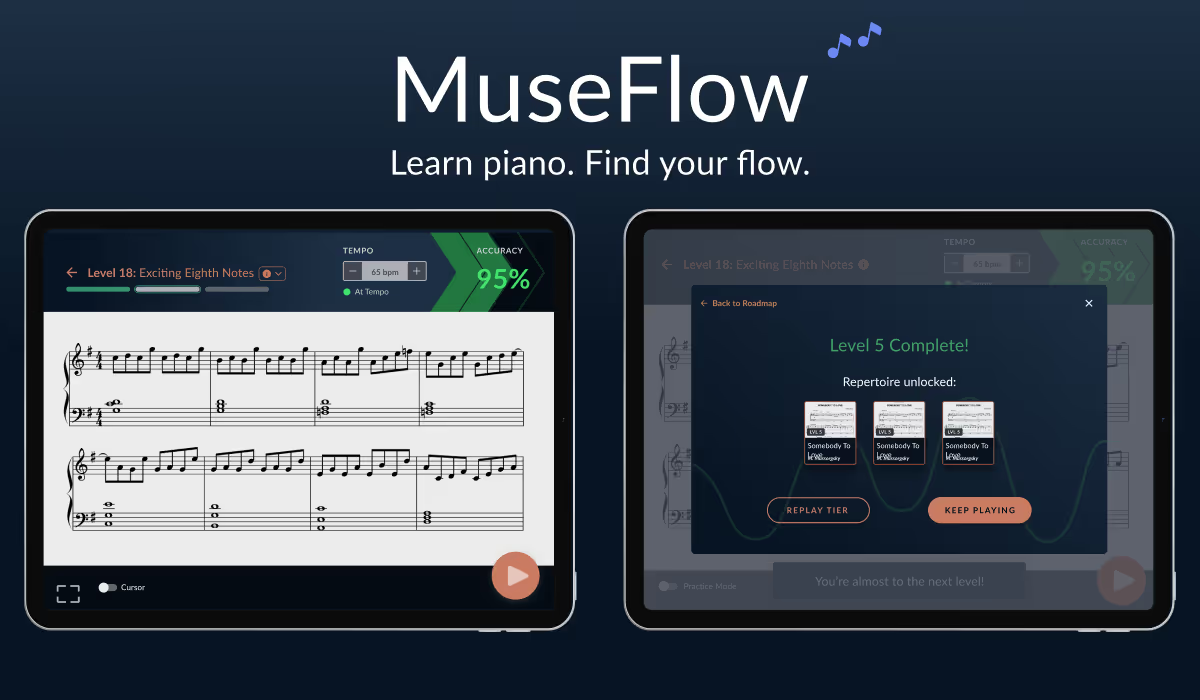
Learning sight reading should be a fulfilling journey... not a frustrating one. MuseFlow’s cutting-edge technology solves the issues that have plagued music learners for years:
With MuseFlow, you’ll move beyond outdated tools and experience a revolutionary way to master sight reading.

Learning piano has never been more accessible, thanks to revolutionary advances in digital education technology. But with countless options available, finding the best piano learning software for beginners can feel overwhelming. If you're a beginner seeking rapid progress, the right piano learning software can accelerate your journey from novice to confident player.
The key to fast progress lies in choosing software that combines proven educational principles with cutting-edge technology. The best software for this is Museflow.
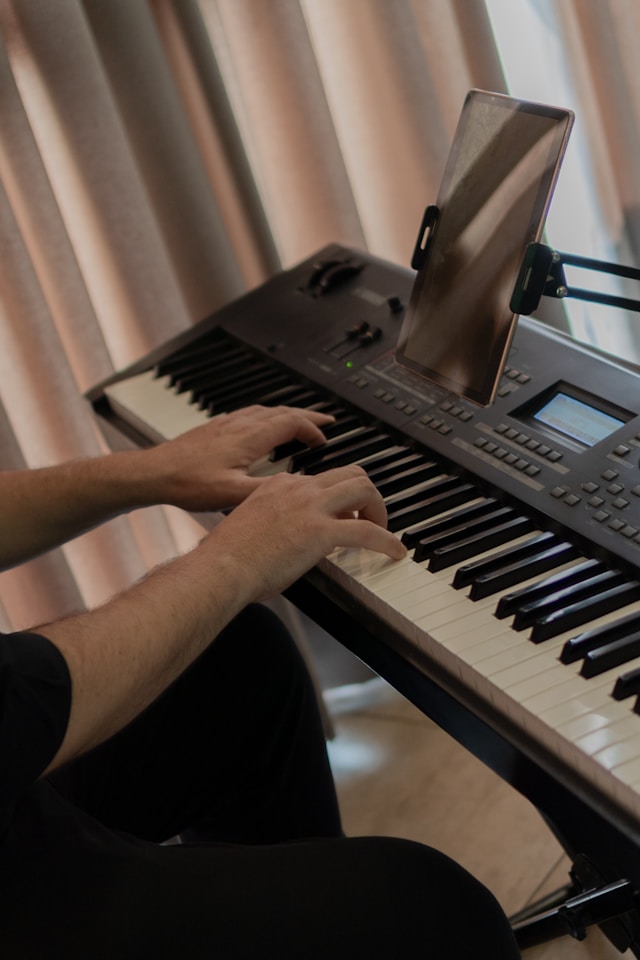
Museflow addresses fundamental challenges that traditional methods often overlook. Research demonstrates that effective piano education should engage visual, auditory, and psychomotor processes simultaneously. We all generally learn best when there's a multi-sensory learning experience that accelerates skill development. We hear of different learning styles: kinesthetic, auditory, reading, and visual.
What if, for fast progress, there was piano learning software that combined all those learning styles?
Fortunately, it exists.
Modern piano learning software excels in several critical areas:
Unlike traditional lessons that rely on weekly corrections, effective piano learning software provides instant feedback on every note you play. This immediate response system allows for rapid skill refinement and prevents the formation of incorrect techniques that can take months to unlearn.

Why does the best piano learning software produce faster results than traditional methods? The answer lies in how our brains process and retain musical information. Studies show that musical training creates plastic changes in adult brains, enhancing cognitive function and neural connectivity. Learning music changes adult brains, helping it function more effectively and build stronger connections that impact all of life.
Software-based learning amplifies neuroplasticity benefits through consistent engagement and optimized practice sessions. When you use piano learning software that maintains high levels of interaction, your brain forms stronger neural pathways more quickly than through passive learning methods.
The engagement factor cannot be understated. Research shows, and personal experience confirms, in any learning environment the engagement in the learning significantly impacts learning outcomes. This explains which explains why interactive software consistently outperforms traditional instruction for motivated learners.
MuseFlow, similar to Duolingo, accelerates learning by adapting in real time to the learner’s skill level and keeping them in an optimal challenge zone. This personalized progression keeps users engaged, motivated, and improving with every session. By eliminating guesswork and providing immediate feedback, MuseFlow helps learners build confidence and master skills more efficiently than traditional methods.
The best piano online learning software incorporates specific features that distinguish it from mediocre alternatives:
The fastest way to learn piano as a complete beginner article explores how modern software approaches create optimal learning conditions.
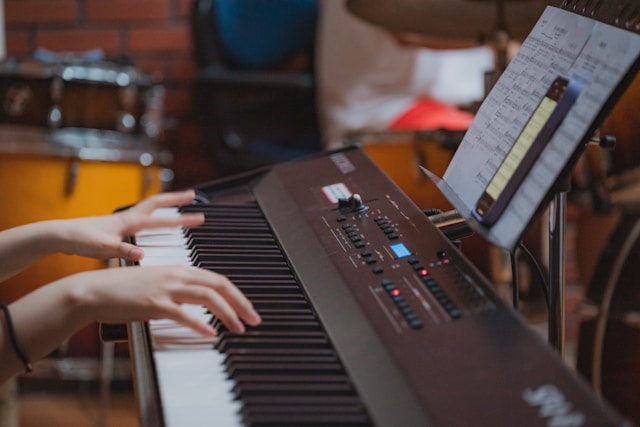
MuseFlow represents the pinnacle of piano learning software for beginners seeking fast progress. Unlike platforms that focus on entertainment over education, MuseFlow prioritizes genuine skill development through scientifically-backed teaching methods.
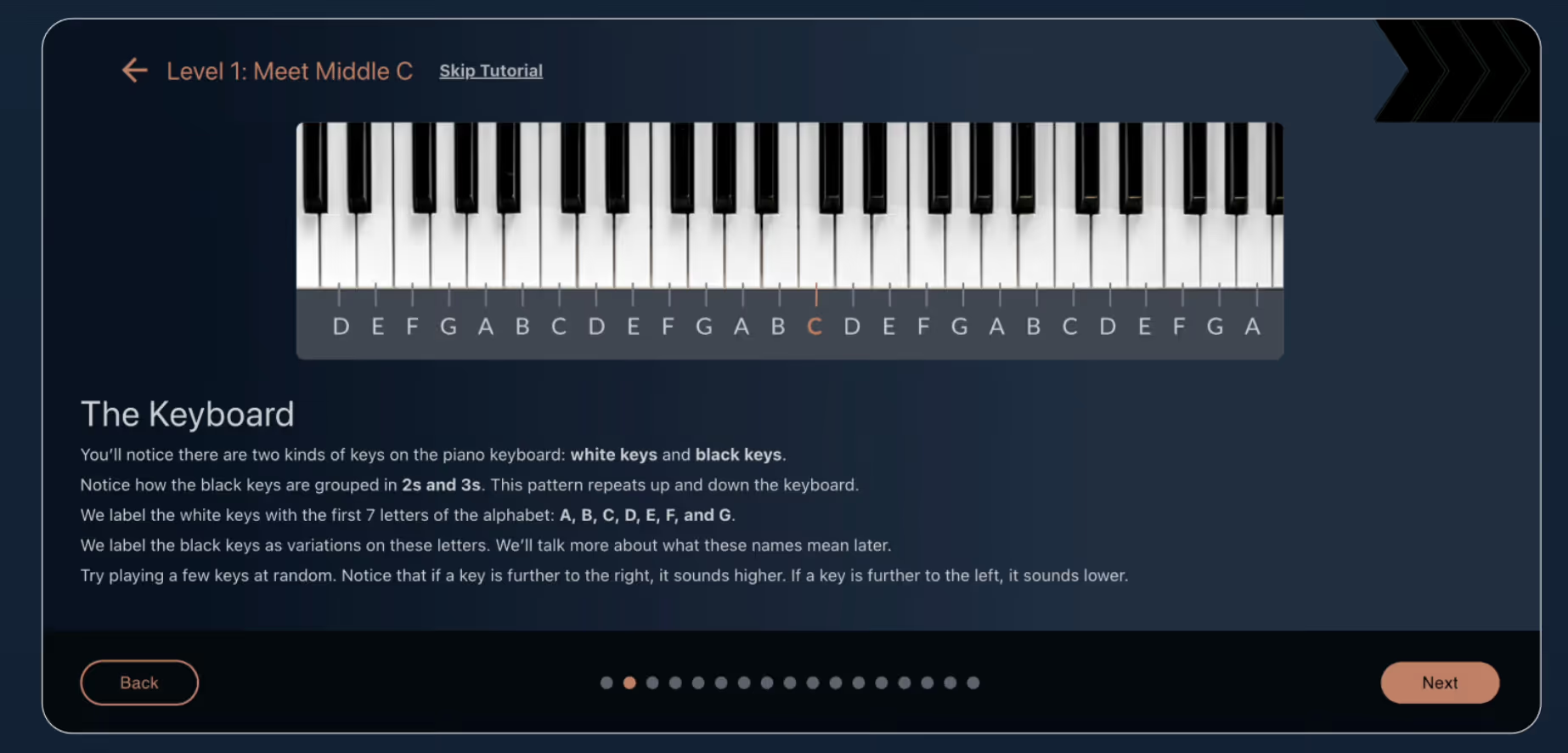
The MuseFlow advantage lies in its sight reading methodology. While other piano learning software might teach specific songs, MuseFlow develops fundamental skills that allow you to play any piece of music. With MuseFlow, musical notes are automatically generated so it feels far less like an exercise and much more like you're playing real music.
Real-time visual feedback transforms the learning experience. Notes cascade down the screen in perfect synchronization with your playing, creating immediate connection between what you see, play, and hear. How to learn piano with game-like lessons: Discover MuseFlow demonstrates how this platform makes complex musical concepts accessible for all learners.
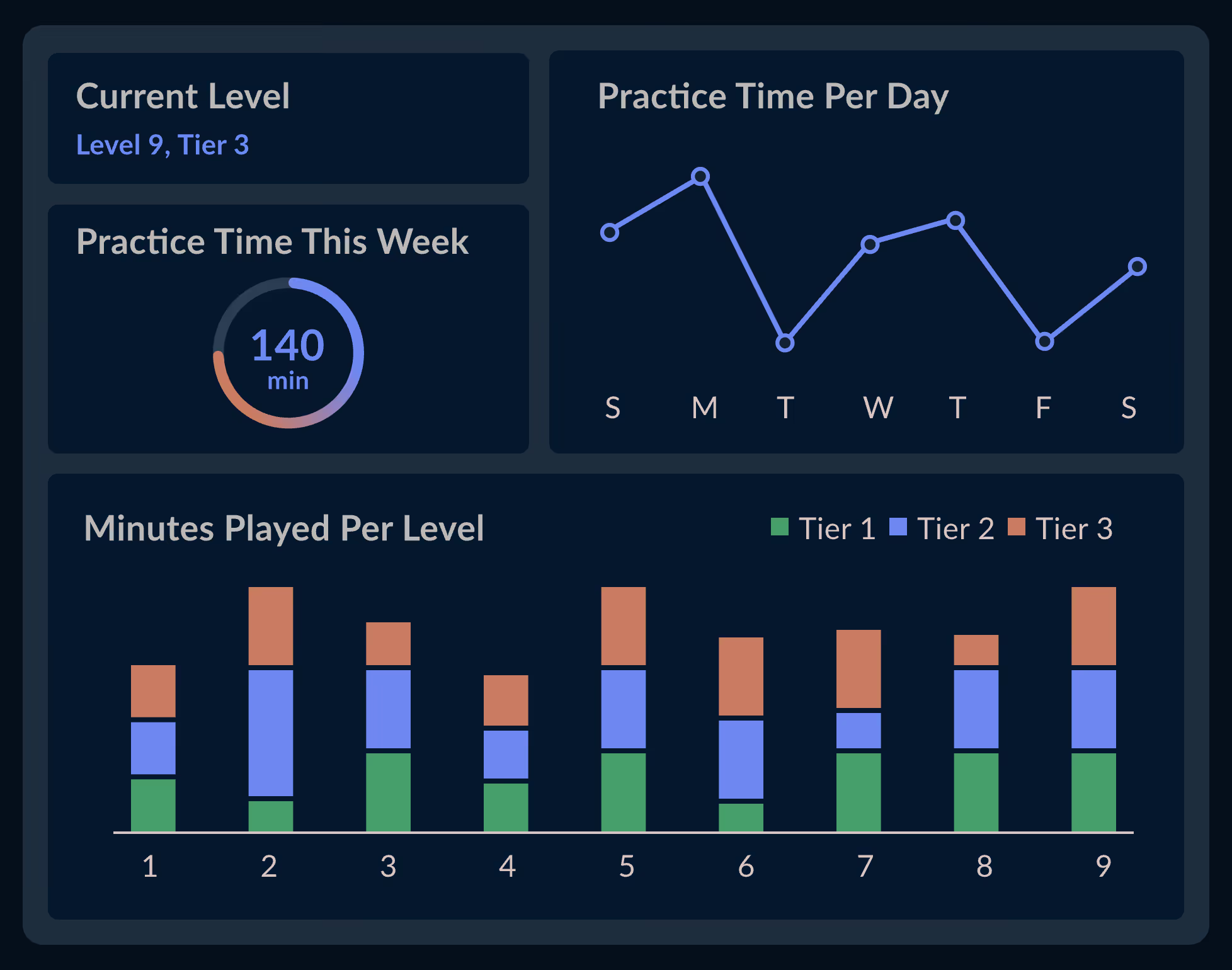
The best piano learning software provides clear metrics for tracking improvement. MuseFlow's analytics show exactly which skills you've mastered and which areas need focus, ensuring efficient practice sessions.
Motivation remains high when you can see tangible results. Quality piano learning software provides immediate feedback on accuracy, timing, and performance, while achievement systems keep beginners engaged during challenging phases.
Choosing the best piano online learning software depends on your specific goals. For beginners prioritizing rapid skill development, prioritize platforms that emphasize sight reading over song memorization and proven educational methodologies over flashy features.
Finally, consider your personal long-term learning trajectory. The best piano learning software grows with you, providing advanced challenges as your skills develop rather than limiting you to beginner-level content.
For some people that means simply enjoying music more deeply as a lifelong hobby. For others it could open the door to a career change, a little extra income playing gigs, or even the chance to serve by playing in a house of worship. The important part is that your practice connects to deeper goals that matter to you, not just finishing another exercise page.
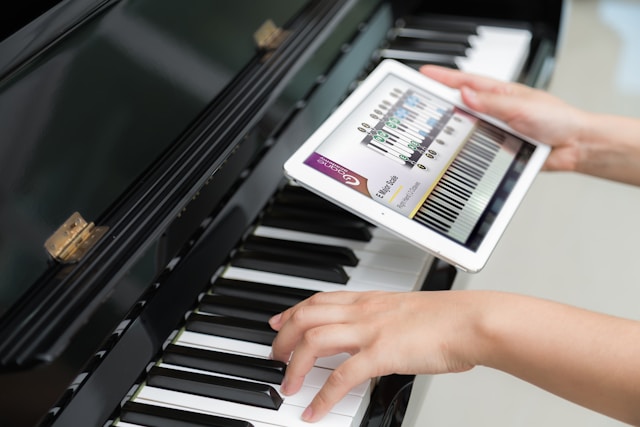
The right piano learning software can transform your musical journey from a slow process into an exciting adventure of rapid skill development. With platforms like MuseFlow leading innovation in digital music education, beginners have unprecedented opportunities to achieve their musical goals quickly.

Digital piano learning apps have made music education more accessible than ever. Among them, Flowkey is one of the most widely known platforms, especially for beginners who want to start playing familiar songs quickly. But popularity doesn’t always mean suitability for every learner. Many pianists eventually ask a deeper question: do I want to play specific songs, or do I want to truly understand music?
That distinction is where the comparison between Flowkey and MuseFlow becomes meaningful.
Flowkey is designed around learning songs from a curated library. Lessons typically combine video demonstrations, falling-note visuals, and real-time feedback when connected to a digital piano. For beginners, this can be motivating because progress feels immediate: you recognize the melody, follow along, and produce music quickly.
This approach works particularly well for:
Flowkey’s strength lies in song-based learning. However, that same strength can become a limitation for learners who want transferable skills rather than song-specific memory.
Learning through individual songs often relies on pattern recognition and repetition, not full musical literacy. Many learners eventually notice that when the visual guide is removed, their ability to read unfamiliar sheet music remains limited.
This is not a flaw unique to Flowkey—it’s a common characteristic of repertoire-driven apps. The challenge arises when learners want to:
At this stage, the focus shifts from what to play to how music works.
MuseFlow approaches piano learning from a different educational foundation: sight-reading first, songs second.
Rather than centering lessons around fixed pieces, MuseFlow uses procedurally generated music that never repeats. This forces the brain to engage with notation in real time, building fluency rather than memorization. The goal is not to “complete a song,” but to read and interpret music instinctively.
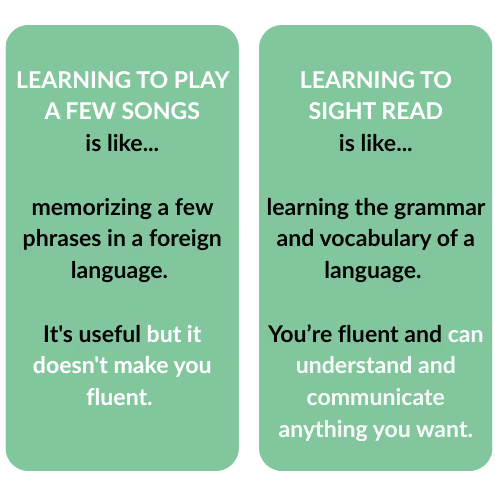
An effective way to understand the difference is through language learning:
Once musical “grammar” is internalized, learners are no longer dependent on tutorials or visual aids.
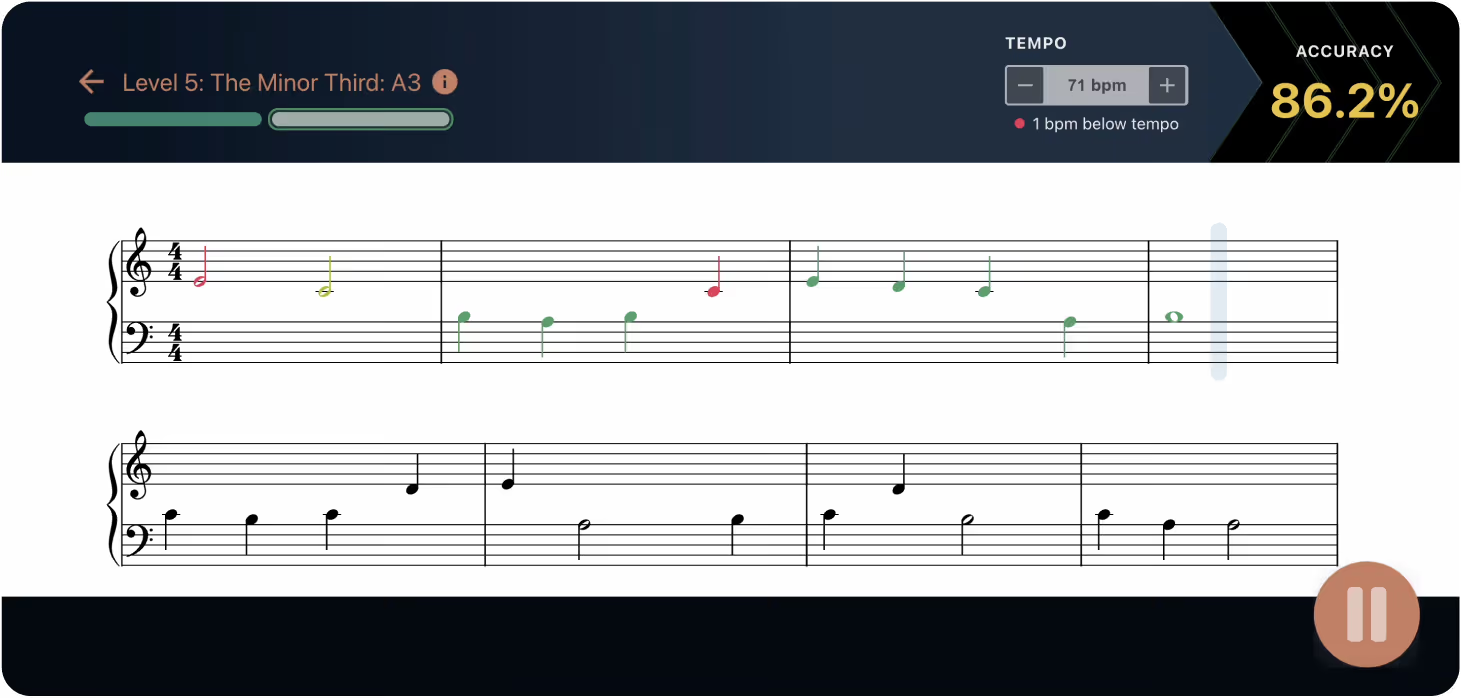
MuseFlow applies game-design principles—such as instant feedback, adaptive difficulty, and progression systems—to an area traditionally considered difficult: sight reading.
Educational research consistently shows that gamification improves engagement, motivation, and skill retention, especially when feedback is immediate and challenges scale gradually. By keeping learners in a balanced challenge zone, MuseFlow reduces frustration while maintaining cognitive demand.
Key mechanisms include:
This structure encourages focused practice rather than passive play.
Strong music education ultimately aims to create independent musicians—people who can approach unfamiliar music with confidence. Sight-reading is central to that independence.
As sight reading improves, learners gain the ability to:
MuseFlow is designed around this outcome, emphasizing long-term skill development over short-term completion.
The choice between Flowkey and MuseFlow depends on your goals:
Both tools serve valid purposes—but they solve different problems
There is no single “best” piano app—only the best fit for how you want to grow musically. Understanding whether you value song completion or musical fluency will make that choice much clearer.
If you’re aiming for long-term independence at the keyboard, focusing on sight-reading early can fundamentally change how you experience music learning.
Choosing a piano learning app is no longer just about finding songs to play—it’s about choosing a learning method that aligns with your long-term goals. Apps like Skoove have helped many beginners get started, especially those interested in guided song-based learning. However, a growing group of learners is now looking for tools that prioritize independent music reading skills rather than song memorization alone.
This is where MuseFlow enters the conversation—not as a replacement for traditional piano apps, but as a focused alternative for learners who want to build sight-reading fluency as a core skill.

Skoove offers a structured, lesson-based approach that combines popular songs, classical repertoire, and foundational music theory. For learners who enjoy guided tutorials and playing recognizable pieces early on, this model can be motivating and accessible.
Like many traditional digital piano platforms, Skoove’s progression is largely song-centric. Learners often work through individual pieces step by step, repeating them until they are comfortable. This approach can be effective for repertoire building, but some educators note that extended reliance on guided play can slow the development of independent note-reading skills if sight reading is not consistently emphasized alongside repertoire practice.
MuseFlow takes a different educational position by centering its entire curriculum around sight-reading development. Rather than treating sight reading as a supporting skill, it becomes the main learning objective.
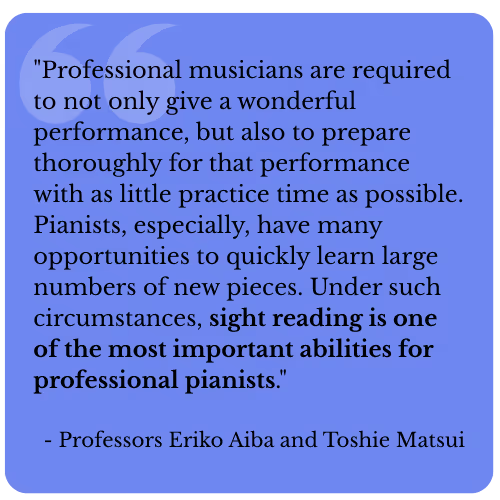
Instead of replaying the same pieces, learners are exposed to a continuous stream of short, structured musical material designed to reinforce:
This design encourages learners to process notation in real time—an ability closely associated with long-term musical independence.
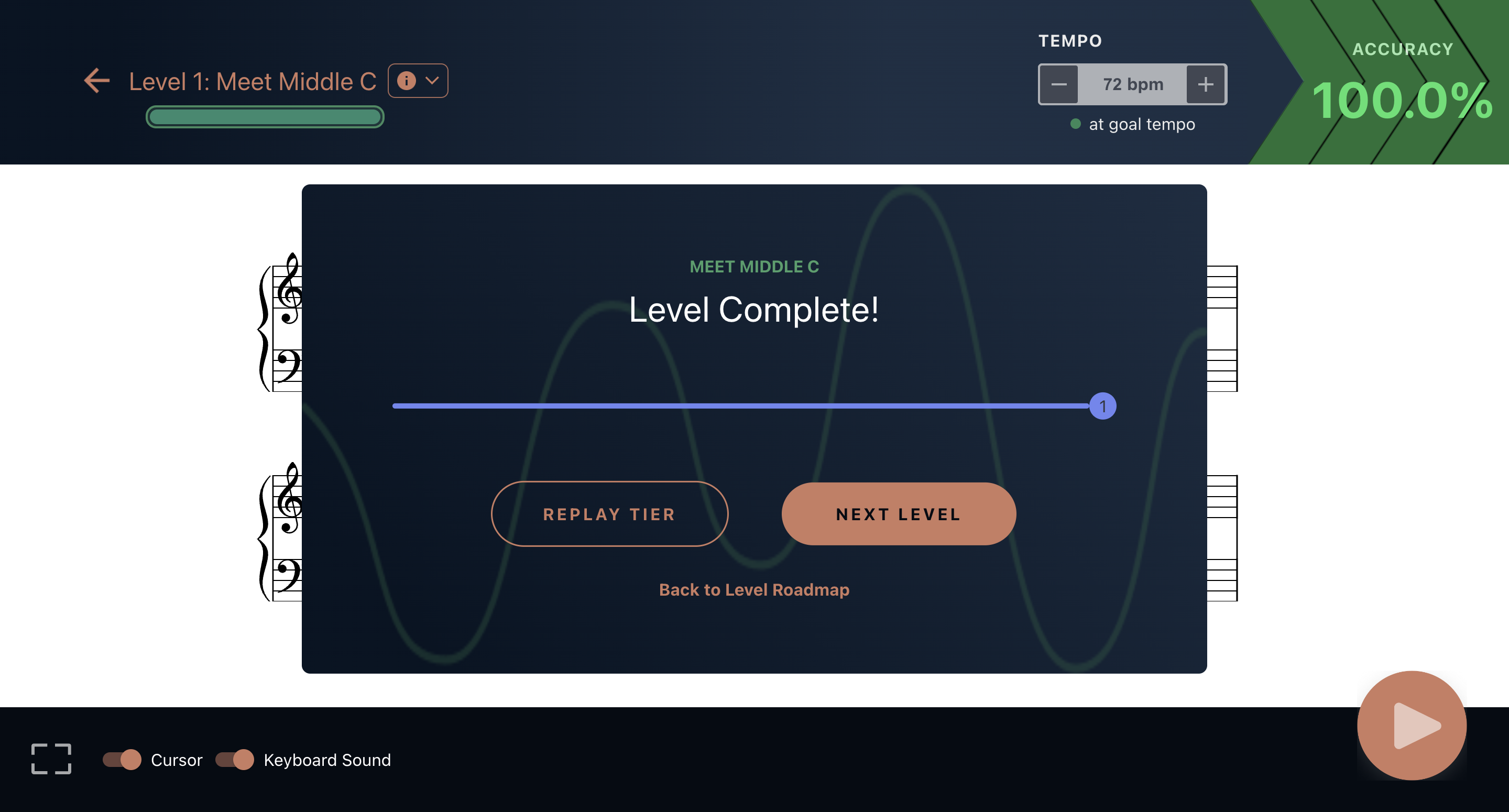
Rather than relying on static lessons, MuseFlow uses adaptive difficulty scaling. Exercises adjust based on timing accuracy, pitch accuracy, and reading speed, keeping the material challenging but achievable.
This balance is critical. Educational psychology research consistently shows that skills develop most efficiently when task difficulty closely matches the learner’s current ability—challenging enough to require focus, but not so difficult that it leads to frustration.
MuseFlow’s real-time feedback loop reinforces this process by immediately connecting:
This tight feedback cycle is particularly effective for sight reading, where delayed correction can lead to ingrained errors.
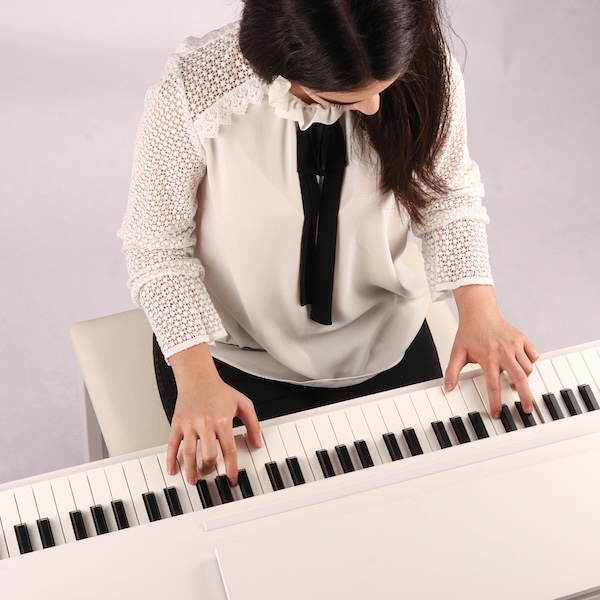
A practical distinction between platforms like Skoove and MuseFlow is learning outcomes:
MuseFlow emphasizes the second outcome. By constantly presenting new material rather than fixed songs, learners are trained to decode notation rather than rely on memory. Over time, this supports faster learning of new repertoire—both inside and outside the app.
Gamification itself isn’t new, and not all implementations are effective. Its value depends on whether game mechanics support learning objectives rather than distract from them.
When applied correctly, gamified learning environments have been shown to:
MuseFlow uses gamification primarily to reinforce reading accuracy and timing, not as a reward system disconnected from musical outcomes. Progress indicators, adaptive pacing, and short achievement cycles are tied directly to measurable reading improvements.
.png)
There is no single “best” piano app—only tools that align better with specific goals.
Understanding this distinction helps learners choose tools intentionally rather than switching apps out of frustration later.
MuseFlow stands out not because it replaces traditional piano apps, but because it solves a specific, well-documented learning gap: fluent sight-reading. For learners who want to read music with confidence rather than rely on memorized pieces, it represents a focused and methodologically sound alternative.
For much of its history, piano education has followed a familiar structure: weekly lessons, fixed curricula, and long periods of unguided practice. While this model has produced accomplished musicians, it has also created barriers for many learners—slow progress, inconsistent motivation, and limited access to high-quality instruction. Today, advances in artificial intelligence (AI), data science, and learning design are reshaping how people approach piano study, opening new possibilities for more adaptive and engaging education.
Rather than replacing traditional teaching, modern technology is changing how learning happens between lessons and how practice time is used.
One of the most meaningful shifts in piano learning is personalization. AI-enabled learning systems can analyze a student’s playing in real time and adjust difficulty, pacing, and content accordingly. This allows learners to work at an appropriate level of challenge rather than following a rigid, pre-set sequence.
Key benefits of adaptive systems include:
Educational research consistently shows that timely feedback and appropriately matched challenges accelerate skill acquisition, particularly in complex motor tasks like playing an instrument.

Learning piano is not only a technical process—it is also a motivational one. Many learners abandon lessons not because of lack of ability, but because practice feels unrewarding or disconnected from progress.
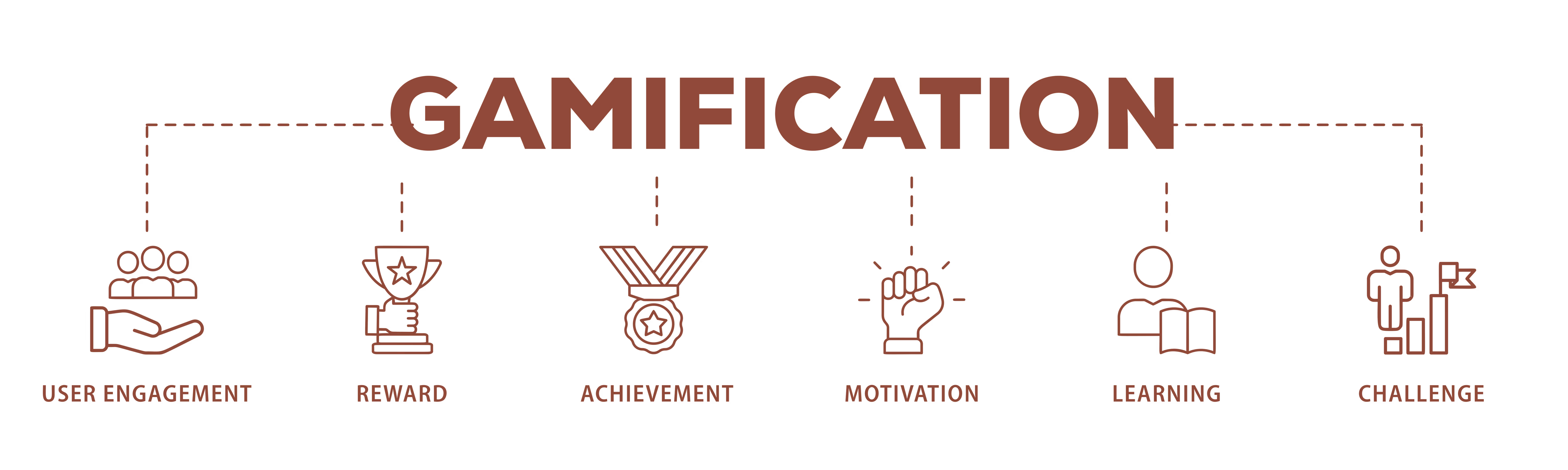
This is where gamification plays an important role. Gamification applies structured challenges, progress tracking, and clear goals to learning environments. When used thoughtfully, it helps learners maintain consistency and focus over long periods.
Effective gamified learning systems emphasize:
Rather than trivializing music education, well-designed gamification supports the cognitive conditions needed for deep learning.
AI in piano education does not mean automation for its own sake. At its best, technology supports learners in areas where consistency and precision matter most. Tasks such as monitoring timing, pitch accuracy, and repetition benefit from software that can respond instantly and patiently.
Modern piano learning platforms—including systems like MuseFlow—use these capabilities to support structured practice outside of lessons. This allows students to arrive better prepared and more confident, having already addressed technical fundamentals during independent practice.
A common misconception is that AI-driven learning tools aim to replace teachers. In practice, the opposite is true. When technology handles repetitive technical feedback, teachers can focus on higher-level musical skills that require human insight.
Human instructors excel at:
The most effective learning environments combine intelligent practice tools with experienced educators who help students develop musical identity and expression.

Technology is also reducing long-standing barriers to music education. High costs, inflexible schedules, and geographic limitations have historically restricted access to piano instruction. Digital tools make it possible for more learners to practice consistently, regardless of location or background.
This broader access does not dilute musical standards; instead, it allows more students to build solid foundations before pursuing advanced study, whether independently or with a teacher.
Learners navigating today’s educational landscape can benefit from a few core principles:
By aligning practice with how people actually learn, modern piano education becomes more sustainable, motivating, and effective.
The future of piano education is not defined by AI or gamification alone. It lies in thoughtful integration—using technology to enhance learning while preserving the human elements that make music meaningful. When applied with care, these tools help learners progress efficiently, stay motivated, and develop lasting musical skills.
Many piano learners struggle not because they lack talent, but because sustaining motivation and effective practice over time is difficult. This challenge is especially common among beginners, who often face repetitive exercises before they experience the satisfaction of musical progress. In response, gamified piano learning has emerged as an alternative approach that aims to make practice more engaging while supporting skill development.
Rather than replacing established teaching traditions, gamified learning builds on insights from cognitive science and music education to address common obstacles such as disengagement, inconsistent practice, and delayed feedback. Platforms such as MuseFlow apply these principles by combining structured skill progression with real-time feedback to help learners maintain consistent practice habits.

Conventional piano instruction has long emphasized scales, exercises, and repertoire study. These elements remain foundational in music education, but research suggests that how learners engage with practice can significantly influence outcomes. When instruction relies heavily on repetition without sufficient variation or feedback, learners may struggle to transfer skills across different musical contexts.
Educational research on music learning indicates that skill transfer depends strongly on how closely new tasks resemble prior learning experiences. Skills practiced only in narrow or repetitive contexts are less likely to generalize unless learners encounter them across varied musical material. This helps explain why some students plateau despite consistent effort.

Gamified piano learning addresses these challenges by integrating structured feedback, progressive difficulty, and visible progress indicators. Gamification does not simply mean adding points or badges; it refers to applying design principles that support sustained attention and goal-directed behavior.
Research in educational psychology consistently shows that student engagement plays a critical role in learning outcomes, particularly when feedback is immediate and actionable. In music learning, timely feedback helps prevent errors from becoming ingrained habits, which is especially important for beginners developing fundamental skills like sight reading and rhythm.
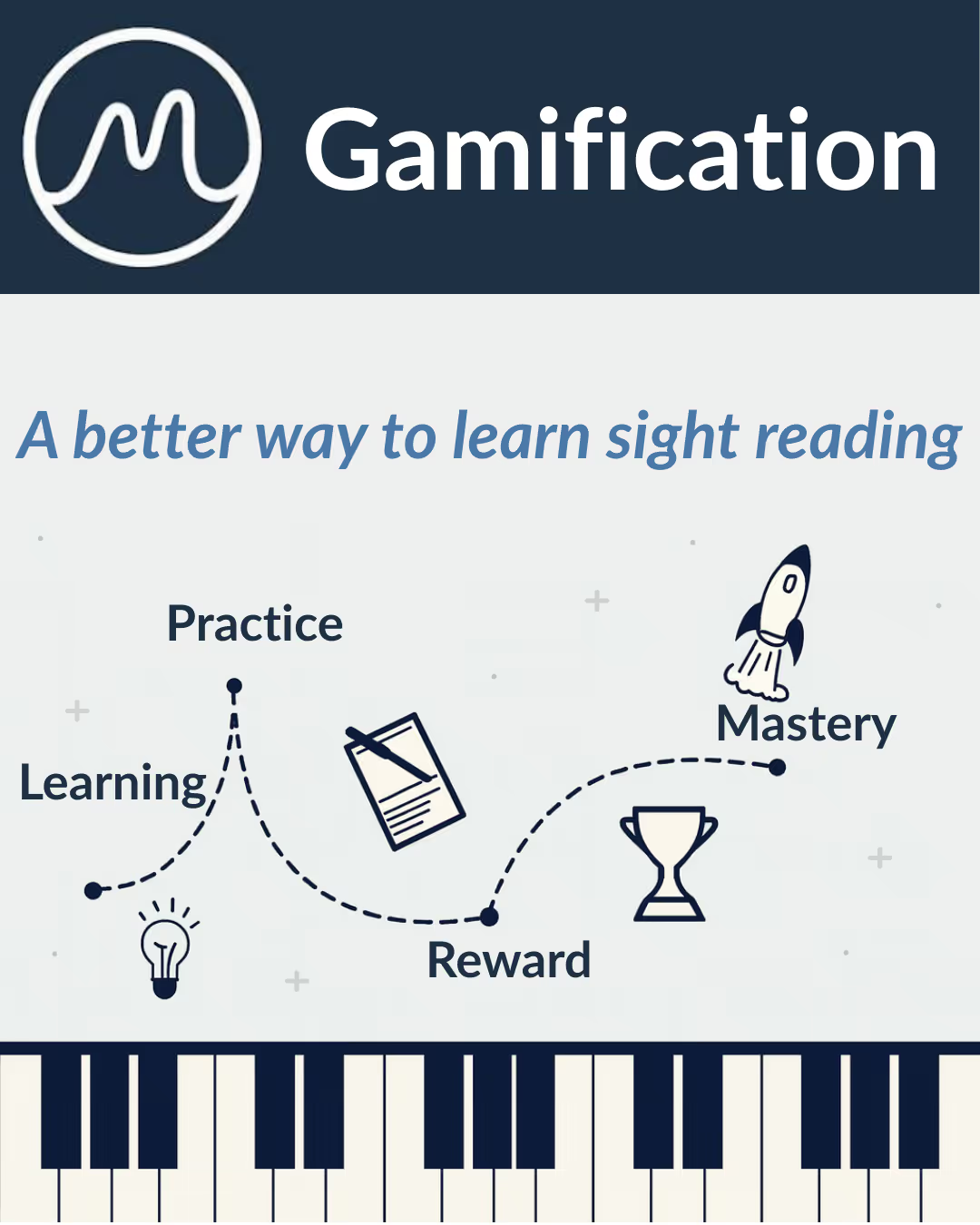
One concept often referenced in discussions of gamified learning is flow state, a term introduced by psychologist Mihaly Csikszentmihalyi. Flow describes a mental state in which individuals are fully absorbed in an activity because the level of challenge closely matches their skill level. In educational contexts, this balance helps learners remain focused without becoming bored or overwhelmed.
In music education, flow is more likely to occur when learners encounter new but manageable material, receive clear feedback, and can measure progress. These conditions align closely with findings from learning science that emphasize optimal challenge and deliberate practice as drivers of skill acquisition.
Music educator Dr. John Koch has described this approach as transformative, noting that sustained flow is difficult for many learners to achieve through unstructured practice alone. His observation reflects a broader consensus in pedagogy: learning environments that actively manage challenge and feedback tend to support deeper engagement.

Gamified piano platforms apply these research-backed ideas by:
By emphasizing sight reading and pattern recognition across many short exercises, learners practice skills in multiple contexts. This supports better transfer when encountering unfamiliar music, a key goal of musicianship.
Importantly, this approach does not eliminate the role of teachers. Instead, it allows technical skill development to occur more efficiently between lessons, freeing instructional time for musical expression, interpretation, and creativity.

Motivation remains one of the strongest predictors of long-term learning success. Studies on gamified learning environments show that learners are more likely to maintain consistent practice when tasks provide immediate feedback and visible progress.
While individual results vary, platforms that incorporate these principles often report higher practice frequency and longer engagement compared with unstructured self-practice. This aligns with broader findings that enjoyment and perceived progress significantly influence persistence in skill-based learning.
Gamified learning is not limited to children. Adults, in particular, benefit from structured feedback and flexible practice schedules. Whether a learner is starting from scratch or returning to piano after years away, gamified approaches can support consistent practice while reinforcing core skills such as sight-reading and rhythm.
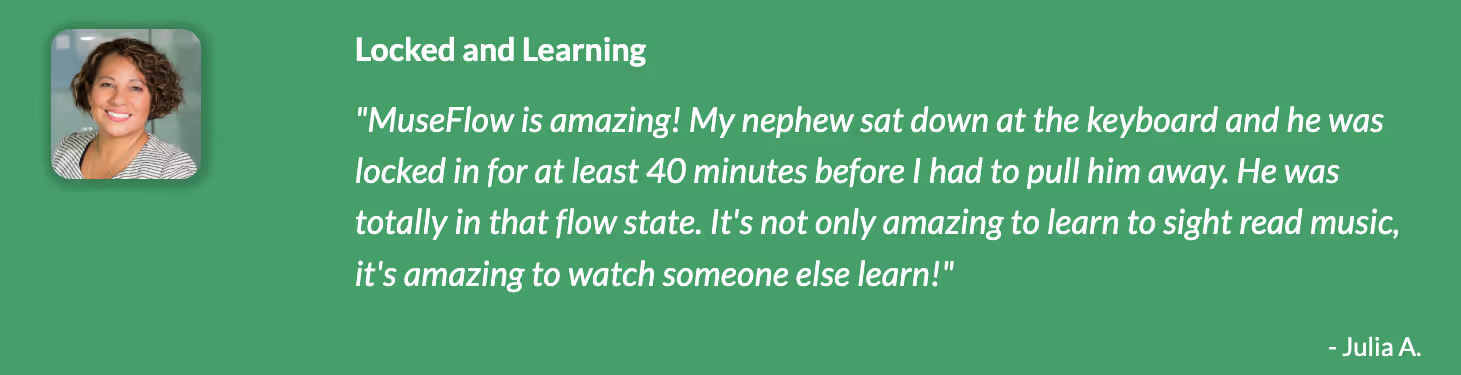
Gamified piano learning works not because it turns music into a game, but because it applies well-established learning principles: engagement, feedback, variation, and optimal challenge. When thoughtfully designed, it complements traditional instruction and helps learners build transferable skills more efficiently.
As music education continues to evolve, approaches that combine pedagogical rigor with learner-centered design may offer a more sustainable path for long-term musical growth.
Beginning piano can feel overwhelming. New learners encounter a wide range of advice: start with scales, focus on hand position, memorize favourite songs, or follow tutorial videos. Each approach reflects a valid teaching tradition, but they differ in how well they support long-term progress.
Rather than asking which method produces the fastest short-term results, a more useful question is which foundational skill best supports continued learning and independence over time. Research in music cognition and pedagogy suggests that early music reading skills—particularly sight reading—play a central role in sustainable piano development.

Sight reading refers to the ability to interpret written music and translate it into coordinated movement in real time. In many beginner methods, it is treated as an advanced skill introduced only after learners can already play several pieces.
Research published in the Journal of Eye Movement Research has shown that experienced sight readers require fewer eye fixations, process larger musical groupings, and allocate less cognitive effort to decoding individual notes. These efficiencies allow attention to shift toward timing, articulation, and expression rather than basic note recognition.
This suggests that sight reading is not merely a downstream skill—it actively shapes how musical information is processed from the beginning.
Additional research in music psychology links early reading proficiency with broader cognitive advantages in musical performance. Musicians with stronger sight reading ability demonstrate improved pattern recognition, more efficient working memory use for musical material, and better coordination between visual, auditory, and motor systems. These findings align with established theories of skill acquisition, where early exposure to structured symbolic input supports more flexible learning later on. This idea is consistent with models such as the floor–ceiling framework of skill development, which explains how early learning constraints can either limit or expand long-term progress depending on how foundational skills are introduced.
Importantly, these benefits do not require advanced repertoire. Even simple rhythmic patterns and limited pitch sets can train the perceptual and motor systems in ways that transfer across pieces.
Many popular beginner approaches emphasize rapid song acquisition, often through imitation or repetition. While this can be motivating initially, it frequently leads to what educators describe as a transfer gap: learners can reproduce familiar pieces but struggle to approach unfamiliar music independently.
Common consequences include:
This mirrors findings in literacy education, where memorization without decoding skills limits long-term reading ability. Piano learning follows a similar pattern.
A sight reading-first approach does not exclude technique, repertoire, or enjoyment. Instead, it prioritizes a small set of transferable skills early on:
These elements form a foundation that supports faster learning later, even if early progress feels more measured.
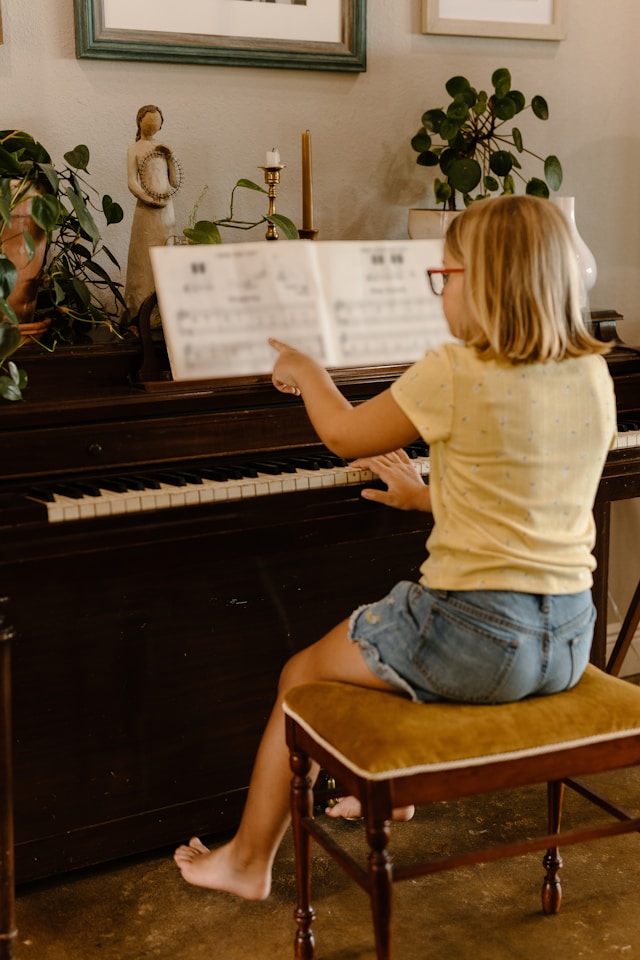
Technology can support early reading development when it reinforces sound pedagogy rather than bypassing it. Learning tools that provide immediate feedback, structured progression, and short, focused reading tasks align well with principles from motor learning and educational psychology.
MuseFlow, for example, is designed around progressive sight reading challenges, real-time timing feedback, and controlled difficulty adjustments. Rather than positioning sight reading as an advanced add-on, it integrates reading practice into every stage of learning. Used as a supplement—especially for independent learners—this approach can help reinforce consistent practice habits without replacing the role of a teacher.
What distinguishes tools built this way is not novelty, but alignment with how complex skills are acquired incrementally.
Evidence from music education research suggests that learners who develop reading skills early:
Scales, technique, and musical expression remain essential, but they are more effective when built on reading literacy.
For beginners deciding where to start, a sight reading-first approach offers a practical, research-aligned foundation—one that supports independence rather than short-term performance alone.

Keep up to date on our progress as we continue to add new features!