Self-Improvement
AI
Adult Learning
How to Stay Motivated While Learning Piano: Tips from MuseFlow Experts
July 17, 2024

Learning to play the piano can be incredibly rewarding, but it also comes with a fair share of challenges. When learning any instrument it’s not always easy to stay motivated, especially when progress seems slow or when life gets busy... thankfully, MuseFlow is here to help you stay motivated while learning piano and make learning a lot more enjoyable. Read below to see how to stay engaged, have fun, and stay highly motivated.
MuseFlow is more than just a piano learning app – it’s your personal partner in staying highly-motivated and achieving your musical goals. Here are a few ways the AI piano teacher excels in keeping learners engaged in the most fun way possible:
The software uses advanced AI technology. It tailors your learning experience to your unique needs & progress. The app adapts to your skill level and learning pace, making sure that you are always working on material that is both challenging yet achievable... This personalized approach helps prevent frustration and boredom, two motivation killers. You will stay inspired to continue practicing.
Fast feedback is crucial for motivation. MuseFlow provides real-time feedback on your playing, allowing you to correct mistakes instantly! This is the best way to see fast progress. The app also strategically tracks your performance over time. This gives you detailed personal insights into your improvements. All users say they prefer this over a real person teaching them. Seeing tangible progress can be incredibly motivating!
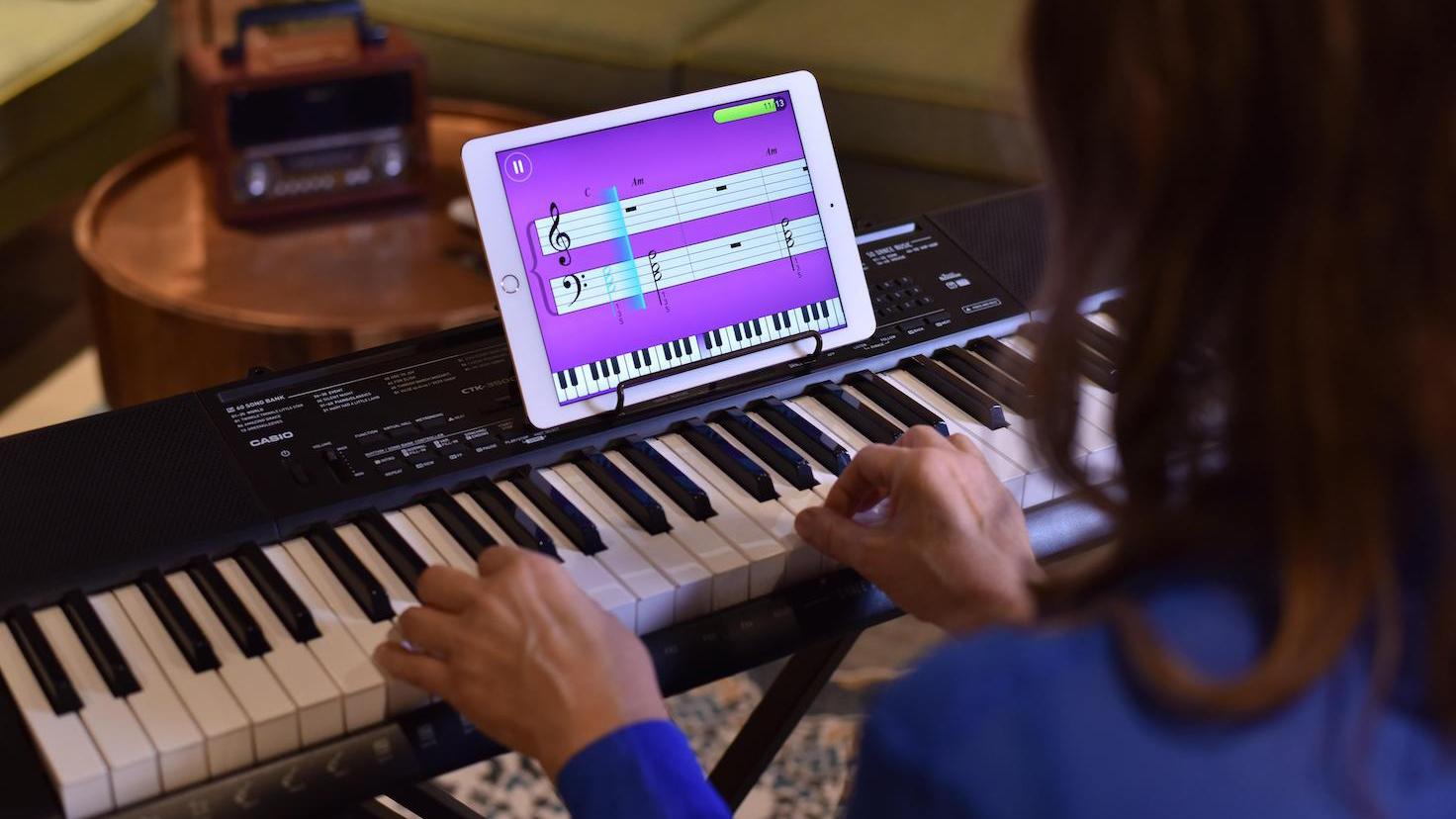
The piano teaching app turns learning into a game. This means you will see glowing progress bars, level complete screens, and fun interactive tutorials. This gamification makes practicing so much more fun than before, and it also helps you stay committed to your learning routine! The great sense of accomplishment from seeing that level complete screen after beating each level boosts your confidence and will encourage you to keep going...

One of the technologies most LOVED features is its incredible ability to help you enter a state of “flow.” This state is the best state to learn. This is a mental state where you are fully immersed and focused on your practice. The experience becomes more enjoyable and productive. If you think back on your best learning experiences, they were very likely in a flow state. MuseFlow (the name already says it) is adaptive, and has a guided learning paths and real-time feedback that keeps your brain engaged, facilitating a state of flow, which helps you retain new information and develop skills a lot quicker.

It’s obvious but important. Setting clear, achievable goals is essential for staying motivated. Break down your larger goals into smaller and also manageable tasks. For example, aim to learn a specific song within a month, or master a particular technique over a couple of weeks. When achieving these smaller goals you get a better sense of accomplishment – this keeps you motivated to tackle bigger challenges. It will be easier to feel the progress you’re making!.
You've heard it many times “consistency is key” especially when learning an instrument.. Get into a regular practice schedule that fits into your daily routine. Really even 15-30 minutes of focused practice each day will lead to very strong improvements over time. You can use free tools like Google Calendar to set reminders and block out dedicated practice time. If you miss a day, don’t be too hard on yourself. An amazing book to create habits is Atomic Habits: An Easy & Proven Way to Build Good Habits & Break Bad Ones by James Clear.
Listening to a wide variety of different music can inspire & motivate you to practice. Check out new genres, artists, and pieces that excite you. Those will make you eager to play. Also make sure to attend live performances or watch videos of talented pianists to see what’s possible with dedication and practice… for inspiration, also check out the list of must-watch piano performances from Classic FM.
Connecting with other piano learners can provide support and encouragement, and also motivation. You can join online forums, social media groups and accounts, or local music clubs to share your progress, ask for advice, and celebrate achievements together! Everyone loves a sense of community. It can be incredibly motivating and help you stay committed to your learning journey.
Reddit’s r/piano is a great community for connecting with fellow piano enthusiasts.
Rewarding yourself for reaching milestones can really really boost motivation. Treat yourself to something special when you achieve a goal, whether it’s a new sheet music book, a relaxing break, or a favorite snack (or whatever motivates you). Continuous positive reinforcement can make the learning process more enjoyable, and encourage you to keep progressing. This is much better than always punishing yourself, thus, associating a bad feeling to learning to play piano.

Staying motivated while learning piano is challenging for most. As mentioned above, with the right tools and strategies, it’s entirely possible. MuseFlow provides an amazing solution with its personalized learning paths, real-time feedback, gamified experience, and ability to facilitate flow state. These features make learning piano enjoyable and engaging, helping you stay committed to your musical journey. It’s the best music education technology out there in 2024.
In addition to using MuseFlow, remembering to set clear goals, maintaining a consistent practice schedule, finding inspiration in music, joining a community, rewarding yourself, and embracing challenges can all contribute to sustained motivation. We hope this helps you stay motivated and happy!
Start your musical journey with MuseFlow today and discover the joy of learning piano with an amazing and friendly partner that keeps you motivated every step of the way.

MIDI stands for Musical Instrument Digital Interface. It's a standard communication protocol that allows electronic musical instruments, computers, and other devices to communicate and control each other. MIDI doesn't transmit audio signals like a microphone or speaker; instead, it sends information about musical notes: their pitch, duration, volume (velocity), and other relevant parameters.
A MIDI keyboard is a type of electronic musical keyboard that is designed to interface with computers, synthesizers, and other MIDI-capable devices. Instead of making sounds on its own, when you press its keys, it sends information (called MIDI data) to other devices.
Think of it like a remote control for music – pressing keys on the MIDI keyboard sends signals to make music happen on other devices!
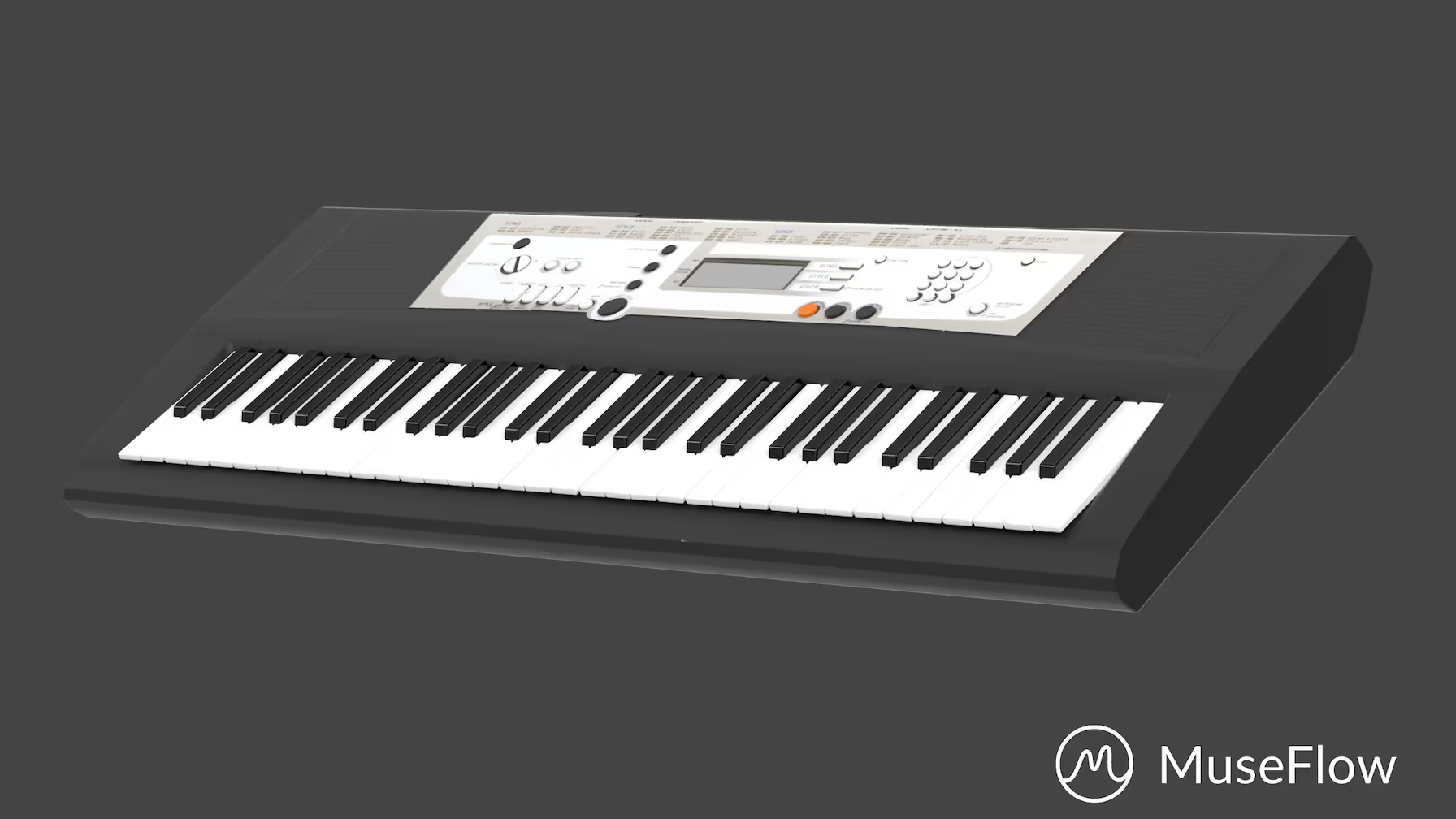
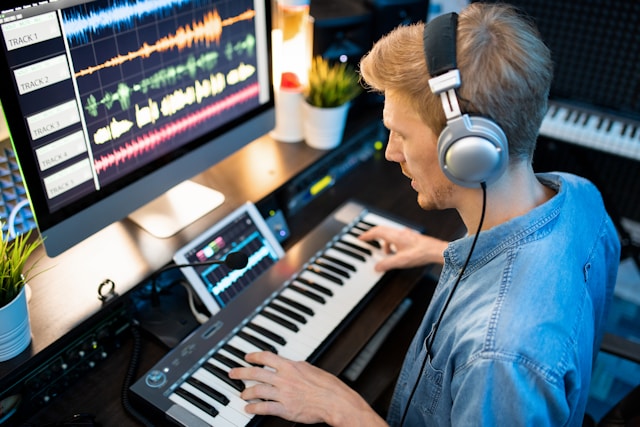
Using a MIDI keyboard instead of a normal acoustic piano offers several advantages, particularly in the context of modern music production, composition, and live performances. Here are some common reasons:
While traditional acoustic pianos have their unique charm and are irreplaceable in certain contexts, MIDI keyboards cater to the demands of contemporary music production, technology integration, and the diverse creative needs of musicians. The choice between a MIDI keyboard and an acoustic piano depends on the specific goals and preferences of the musician.
The terms "MIDI keyboard," "electronic keyboard," and "digital piano" are often used interchangeably. They all refer to very similar products, but with slightly different characteristics. Let's clarify the distinctions:
The term “electronic keyboard” is the broadest category, which includes both digital pianos and MIDI keyboards. It simply describes any keyboard that does not produce its sound naturally like an acoustic piano does, but rather by digital means (either through built-in speakers or by sending MIDI data to another device, which in turn produces sound).
Electronic keyboards often come with different built-in sounds, such as piano, organ, strings, and more, but they don’t have to. They may or may not have MIDI capabilities.
What''s a Midi Keyboard? A MIDI keyboard is a type of electronic keyboard designed specifically for sending MIDI data to other devices. It does not produce sound on its own. They generate MIDI data when keys are pressed, and this data is sent to external MIDI-compatible devices (usually a computer or tablet) to produce sound.
A digital piano is a type of electronic keyboard that aims to replicate the sound and feel of an acoustic piano. It is designed to closely mimic the acoustic piano experience, and as such they often look and feel like “standalone” instruments that don’t require any additional equipment. They usually have built-in speakers to reproduce the sound digitally, and will often be designed to look like an upright piano.
Like electronic keyboards, digital pianos often come with a small selection of built-in sounds, and may or may not have MIDI capabilities.
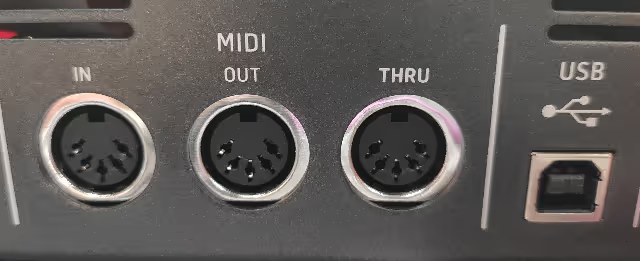
Most electronic keyboards nowadays are built with MIDI capabilities, and thus could be considered “MIDI keyboards.” If a keyboard has a USB port on it, then it is MIDI-compatible. If it’s an older keyboard, it may have the original MIDI five-pin connections instead.
Thanks for reading our article! We at MuseFlow are committed to making music education better and more accessible for everyone. If you’d like to learn more about our mission, click here. And if you’d like to try out our product for free, click below.
MuseFlow is the best way to learn to play a MIDI keyboard. Here’s why:
Got any more questions? Check out the rest of our FAQs or email us at info@museflow.ai, we’re happy to help!
Learning to play the piano will always be a journey filled with excitement and challenges. With advancements in technology, MIDI keyboards have become a popular tool for beginners as well as experienced musicians. You might wonder, can you really learn piano on a MIDI keyboard? Yes you absolutely can! With the right software like MuseFlow, you can effectively learn piano using a MIDI keyboard. We've listed 5 reasons why MuseFlow is the best choice for this musical adventure!
Try MuseFlow right now for FREE
The California based startup's development is spearheaded by founders who have extensive backgrounds in both music and technology. This unique combination of expertise gives the app a deep understanding of what it takes to learn piano effectively. You have the best of both worlds working on the AI powered app.
The founders include professional musicians and educators who have spent years on their craft and they all understand the intricacies of music education. Their unique insights have shaped MuseFlow into an intuitive and user-friendly app. It addresses the specific needs of piano learners. This aforementioned strong foundation in music theory and practice, combined with engineering skills, makes it the best app for learning piano on a MIDI keyboard.
The piano app provides a smart learning path that adapts to your progress. MuseFlow’s adaptive learning paths is built in a way that each lesson builds on your existing skills, introducing new concepts at the right time.
The software has machine learning capabilities that take your learning, challenges, and successes into account. It adjusts the difficulty of exercises and pieces accordingly. This means you are neither bored with material that’s too easy nor overwhelmed by too difficult tasks. The adaptive technology makes sure that there is always a steady and manageable progression. This makes it easier to stay motivated and see consistent improvement! This adaptive learning is something we couldn't have imagined only a few years ago, especially when it comes to learning music instruments.
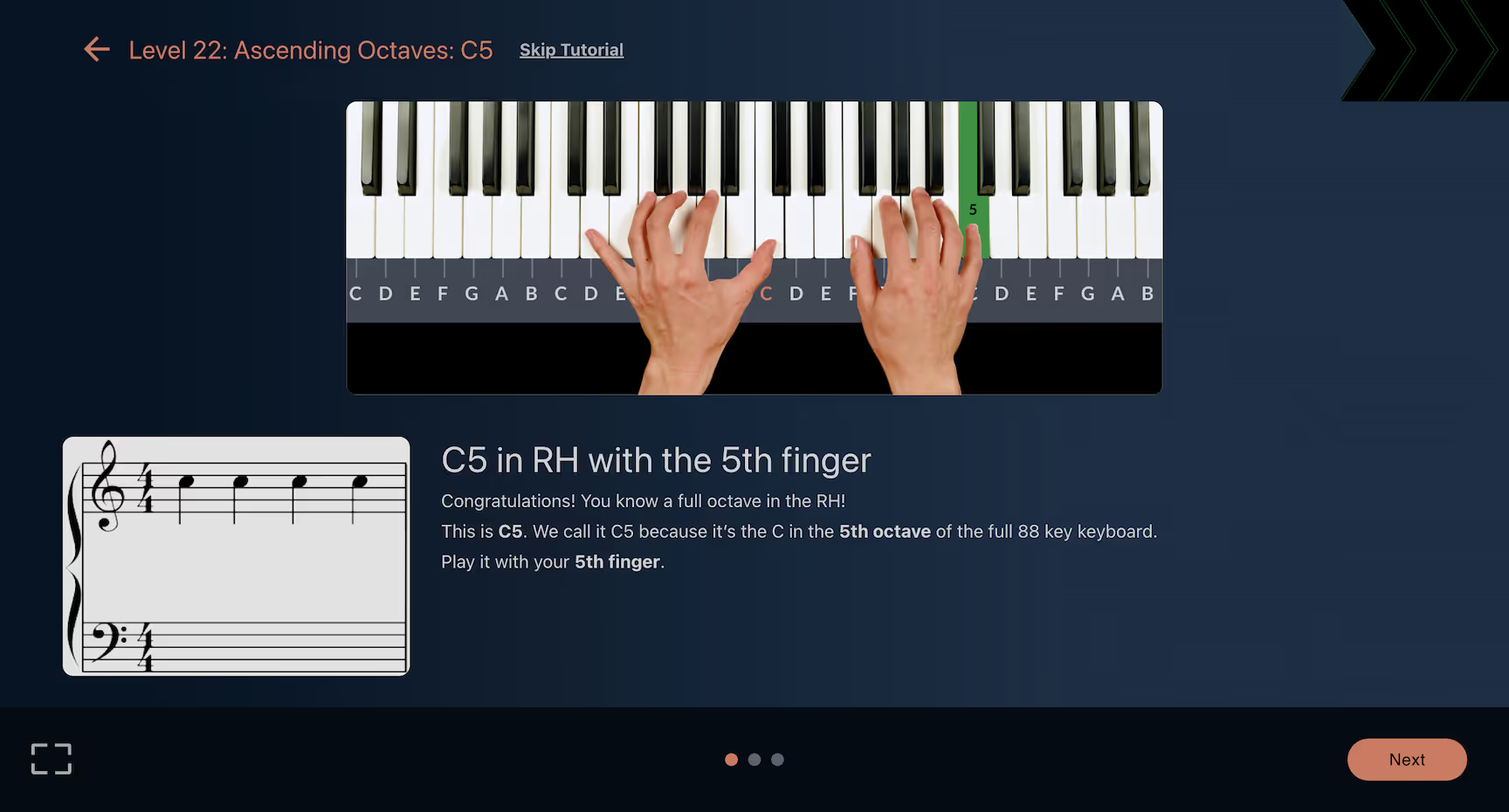
Learning piano on a MIDI keyboard with MuseFlow comes with many benefits. The rich interactive features make the process engaging & fun. The app includes interactive tutorials, practice exercises, and even games that help reinforce musical concepts in a FUN way.
These features are also designed to make learning more dynamic and less monotonous, to help you stay inspired. Nobody likes boring piano lessons. The software allows you to master each part before moving on. This interactive and gamified approach keeps you engaged and eager to practice more, which is important for sustained learning.
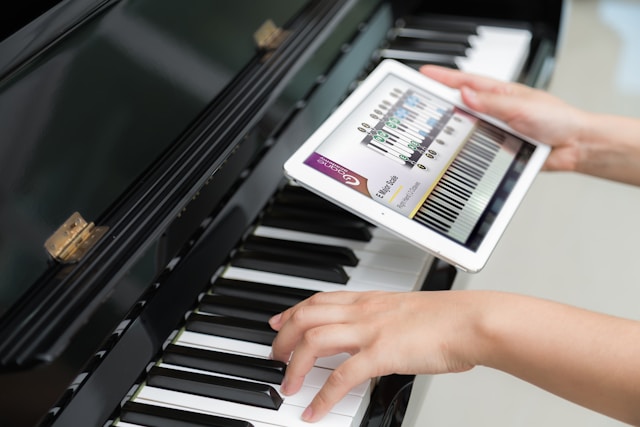
The music learning app offers an extensive library of music and practice tools. These cater to all different kind of skill levels and musical tastes. Whether you’re interested in classical, jazz, pop, or any other genre, the AI piano teacher has a wide range of pieces to choose from. So you will definitely find something that you like, even if your music taste is different from the mainstream.
The app’s practice tools are designed to help you develop the most important aspects of your piano playing. From sight reading to technique. These tools are customizable, and allow you to focus on specific areas where you need improvement. The variety and depth of resources in the music library ensure that you always have something new and exciting to learn. The goal of this is to keep your practice sessions fresh, fun and always motivating!
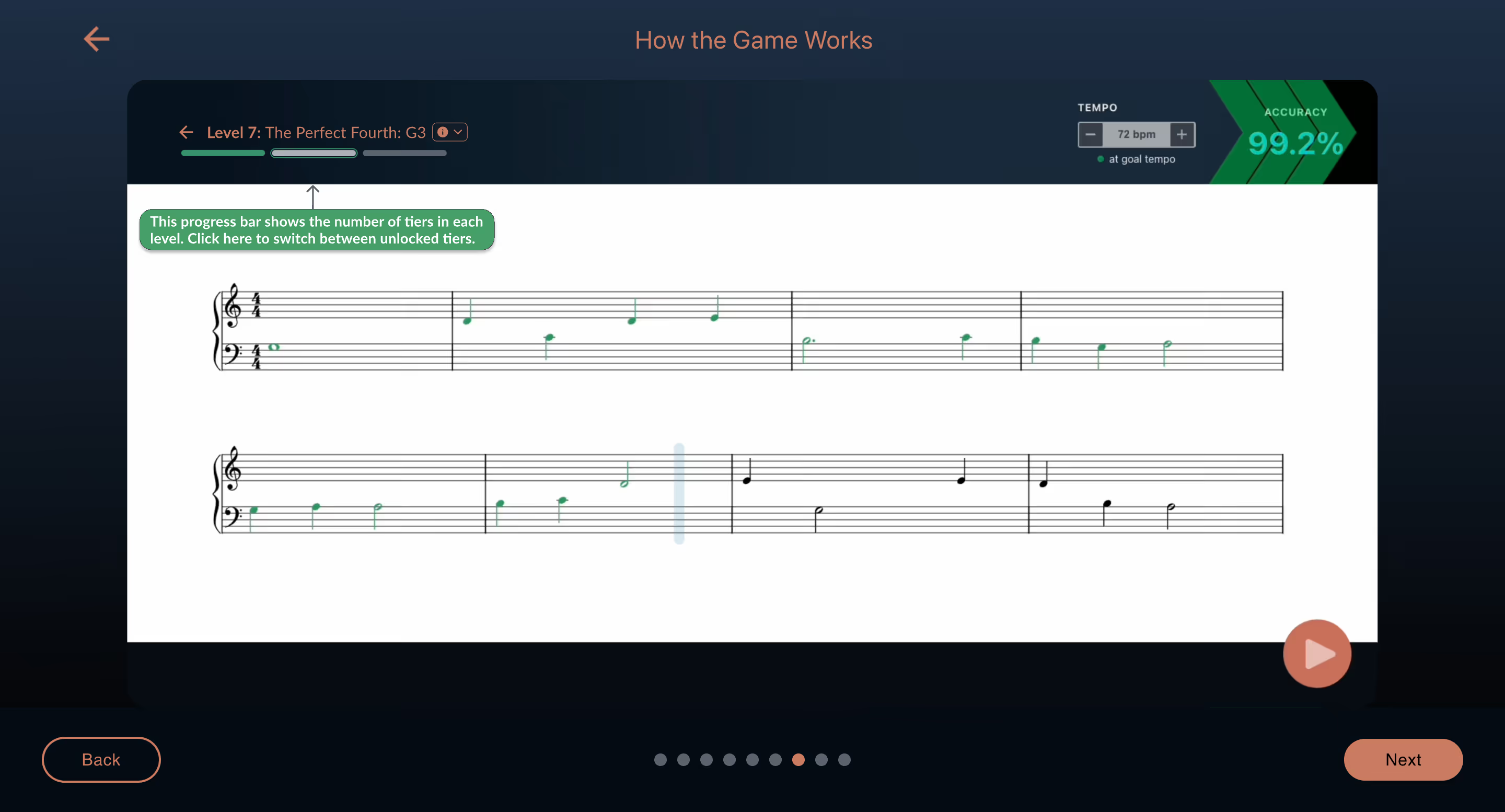
When learning a new instrument and even when perfecting an instrument, you really need real-time feedback and performance tracking. This new learning app works so that when you play your MIDI keyboard, it provides instant feedback on your performance! It really highlights areas where you hit the right notes and timing, as well as areas that need some improvement. All this feedback is done in the nicest most motivating way, so that you want to keep improving.
This immediate feedback loop is invaluable for self-learners. This is because it helps you to correct mistakes in real-time. It then reinforces proper techniques & habits. Additionally, the software tracks your performance over time. This provides detailed reports on your progress. This tracking also helps you see how far you’ve come and identify specific areas to focus on. With these features, you are positively forced to get better fast!
Learning piano on a MIDI keyboard is not only possible but also super effective with the right modern software. MuseFlow is currently the best piano learning software for MIDI keyboards due to its founders' expertise, adaptive learning paths, rich interactive features, extensive music library, and real-time feedback capabilities!
Whether you are a beginner starting your musical journey or an experienced player looking to refine and improve your skills, the AI software provides the resources, support, and motivation you need to succeed.

The short answer is an undeniable yes, the lifelong learning of music can absolutely increase your longevity. In fact, lifelong learning in and of itself is linked to a number of health benefits, including better brain health and memory. Many studies also suggest music can boost your health by reducing stress and lifting your mood, as anyone who’s ever danced to their favorite song in the kitchen can attest.
In this post, we’ll take a brief look at how incorporating music into your lifelong learning journey can help you live a longer, better life and how to get started.

While your brain is not a muscle, it is an intricate network of neurons that, similar to a muscle, need to be constantly challenged in order to grow and stay strong. In the brain’s case, this means forming connections with other brain cells.
These connections keep the brain cells healthy by increasing brain plasticity, which is your brain’s ability to adapt and rewire itself. Better brain plasticity has even been linked to higher resistance against the symptoms of Alzheimers and dementia, further reinforcing the age old saying, when it come to maintaining a healthy brain, use it or lose it!
Learning to play a musical instrument is a highly challenging activity akin to a full body workout. The harmonizing (pun intended) of your senses—vision, hearing, touch, and fine motor skills—creates lasting changes in your brain. In fact, music has been shown to be instrumental (yes, another pun) in forging increased connections between your left and right brain hemispheres.
The health benefits of lifelong learning manifest not only in an increased lifespan but in an increased health span, which is the measure of how many years during a person’s life they are considered to be in generally good health. Aging comes for us all, but by incorporating the lifelong project that is learning to play a musical instrument, you can both increase your years and your enjoyment of them.

Speaking of enjoyment, it probably wouldn’t shock you to hear that music can have a big affect on your overall mood. Whether it’s the boost you get from your favorite song coming on the radio or the catharsis of scream-singing along to the saddest song you’ve ever heard, music plays a big part in increasing feelings of happiness and reducing stress.
This isn’t just limited to listening to music though. Playing an instrument can actually affect the natural healing processes in your body and your brain. Some studies even suggest that music reduces pain perception, in part because it interacts with the pathways used to process pain.
So, music not only increases dopamine and endorphins, but quite literally blocks mental and physical pain from affecting you with the same level of intensity.
The benefits of reducing cortisol, the stress hormone, in your body cannot be understated. Increased levels of cortisol, especially when chronic, is responsible for higher blood pressure, worse sleep, inflammation, and a slew of other physical ailments that can decrease your lifespan when not dealt with properly.
Additionally, through the lifelong pursuit of learning to play an instrument, you have the power to shape your own brain development, and better regulate your emotions and behavior helping you build better habits in all aspects of your life.

One of the most profound ways learning music can have a lifelong impact is by contributing to a strong sense of purpose in your life, something Dr. Paige Baker-Braxton, a clinical psychologist, says can have a huge impact on your longevity.
Admittedly, learning to play an instrument can, at times, feel frustrating, especially as so many methods of teaching it rely heavily on repetition of the same song over and over until muscle memory prevails. This method unfortunately tends to increase the “ceiling” of songs one knows without increasing the “floor” of one’s skills.
However, music also offers you the chance to gain small wins. These small but mighty steps of progress contribute greatly to feelings of accomplishment, boosting your self-confidence and leading to greater overall satisfaction about your life.
At MuseFlow, we embrace the challenges that come with learning music while taking a unique approach to teaching. Instead of relying on repetition, our AI-driven piano learning app uses personalization to break down new skills into bite-size chunks that challenge you without being so frustrating that you want to throw in the towel.
So if you’re looking to increase brain plasticity, boost your mood, feel fueled by purpose, and actually live longer, why not give MuseFlow a try?
Sign up for your 7-day free trial and start your lifelong music-learning today!


Keep up to date on our progress as we continue to add new features!