The MuseFlow Blog
Discover:
Adult Learning
Perfectionism is often viewed as a virtue in music performance. Precision, discipline, and attention to detail are essential skills for any musician. However, when the pursuit of flawlessness becomes rigid, it can interfere with learning rather than support it. In piano practice especially, excessive perfectionism is frequently linked to fear of mistakes, avoidance of challenge, and stalled progress—particularly among adult learners.
Educational psychology and skill‑acquisition research increasingly suggest that long‑term improvement depends less on error‑free execution and more on consistent practice, feedback, and gradual progression, according to research on structured practice and feedback. From this perspective, progress—not perfection—emerges as a more reliable foundation for sustainable musical growth.

The Perfectionism Trap in Music Learning
Perfectionism in music often stems from deeper concerns such as fear of failure, fear of judgment, or a desire to maintain control. While these impulses may initially motivate effort, they can quickly turn practice into a source of anxiety rather than development.
Common patterns associated with perfectionistic practice include:
- Rigid standards, where anything short of ideal performance feels unacceptable
- Fear-driven repetition, which discourages experimentation and exploration
- Overgeneralization, where a single mistake is interpreted as lack of ability
When these patterns dominate, learners may practice less often, avoid challenging material, or abandon progress altogether. Over time, perfectionism becomes a barrier rather than a catalyst for improvement.
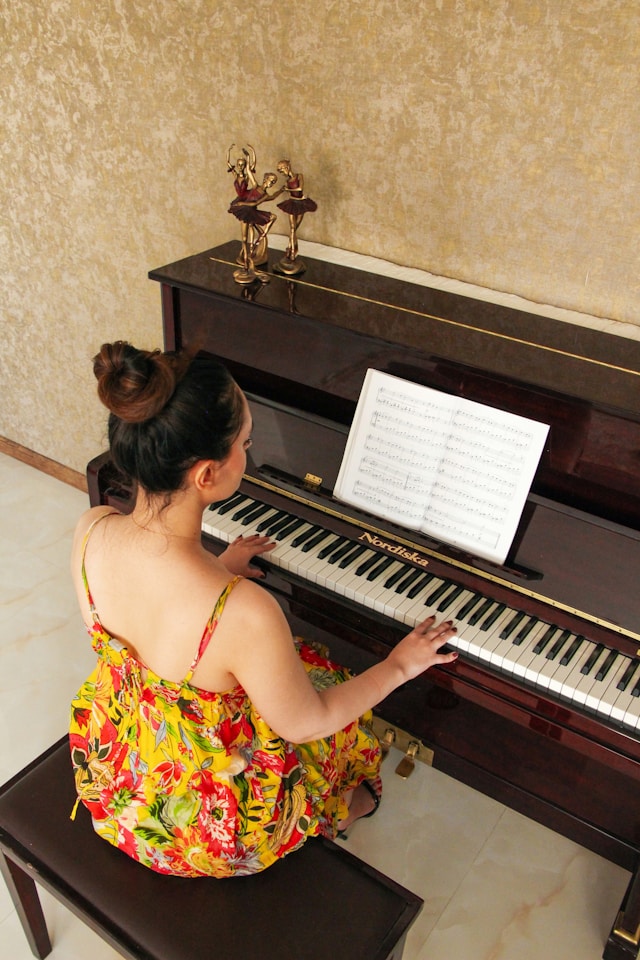
Why Progress-Oriented Practice Works Better
Progress-focused learning environments help counter perfectionism by redefining success. Instead of expecting mastery at every step, learners work toward clear, attainable benchmarks that allow movement forward even while skills are still developing.
This approach aligns closely with adult learning principles, which emphasize autonomy, visible progress, and manageable challenges. Adults are more likely to persist when they can see improvement and adjust their pace based on personal capacity rather than external pressure.

Designing Practice Around “Good Enough” Progress
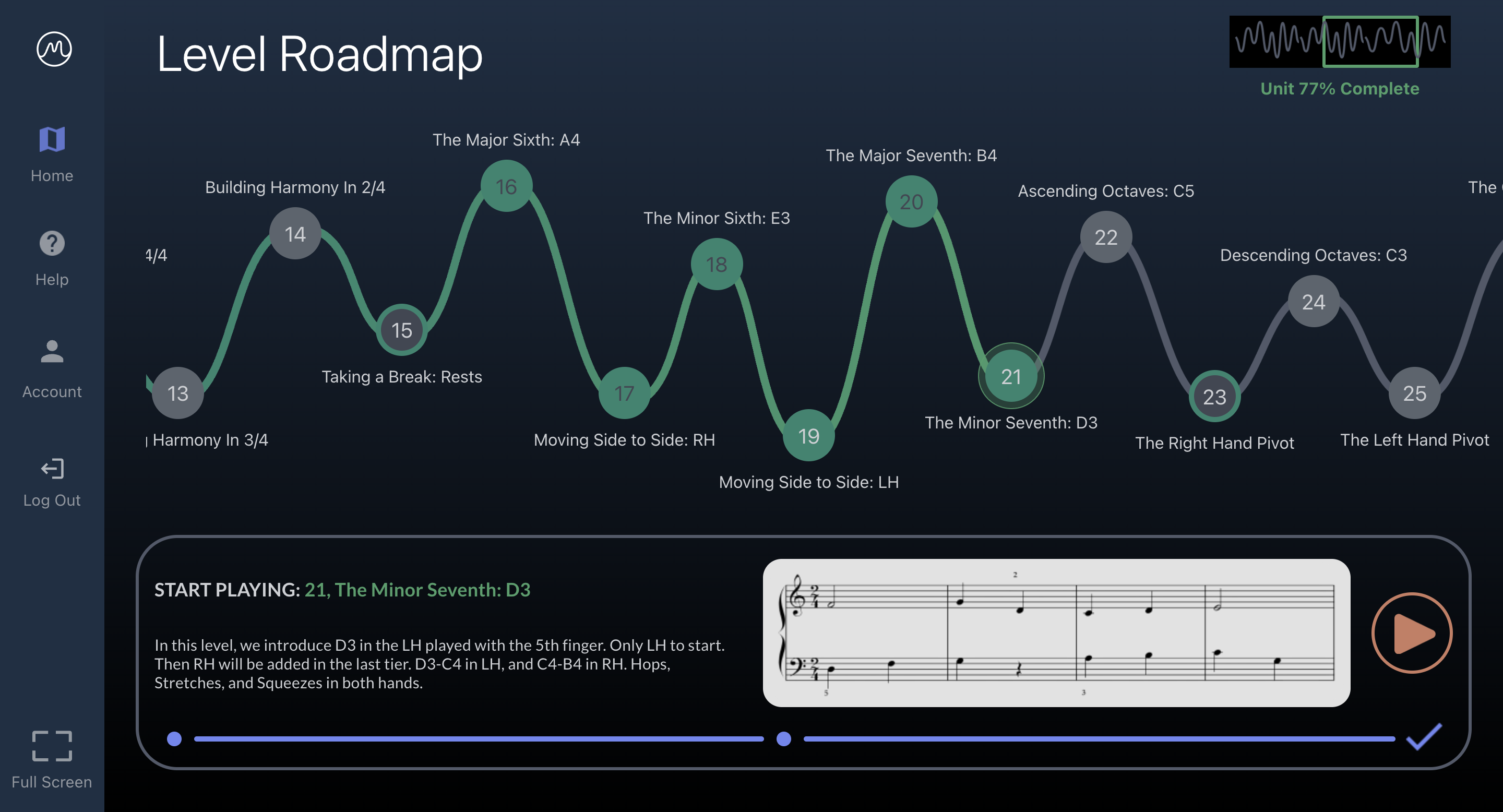
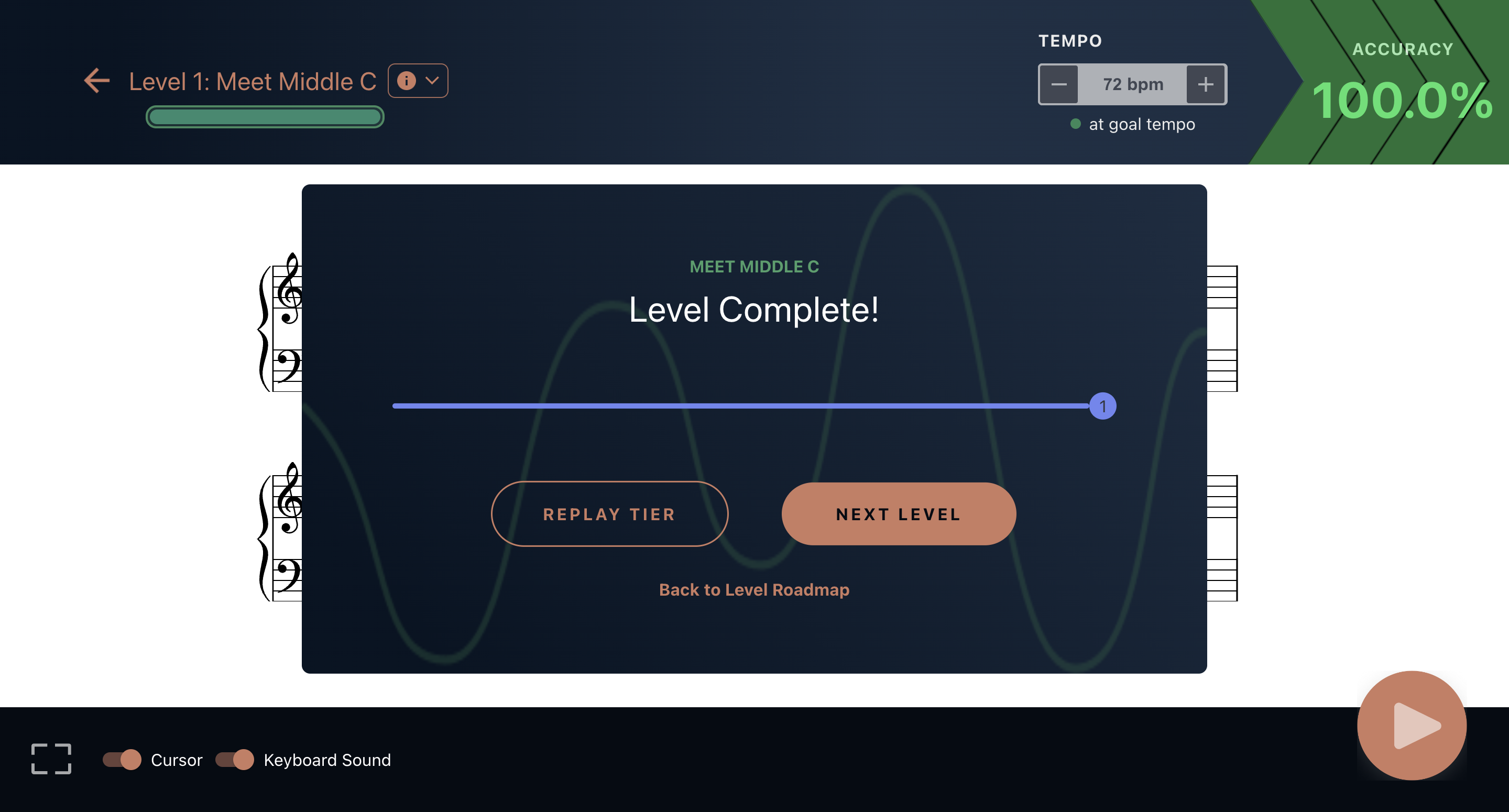
Some modern piano learning platforms, including MuseFlow, structure practice around defined accuracy thresholds rather than flawless repetition. For example, learners may advance after achieving consistent, high-quality performance across short musical phrases instead of repeating material until perfection is achieved.
This type of structure is designed to interrupt all-or-nothing thinking. By establishing a clear and realistic definition of “good enough,” learners are encouraged to move forward without feeling stuck. The result is steady momentum and reduced performance pressure.
Reframing Mistakes as Useful Feedback
A critical factor in overcoming perfectionism is how mistakes are framed during practice. When errors are treated as neutral information—signals for adjustment rather than evidence of failure—learners are more likely to remain engaged and curious.
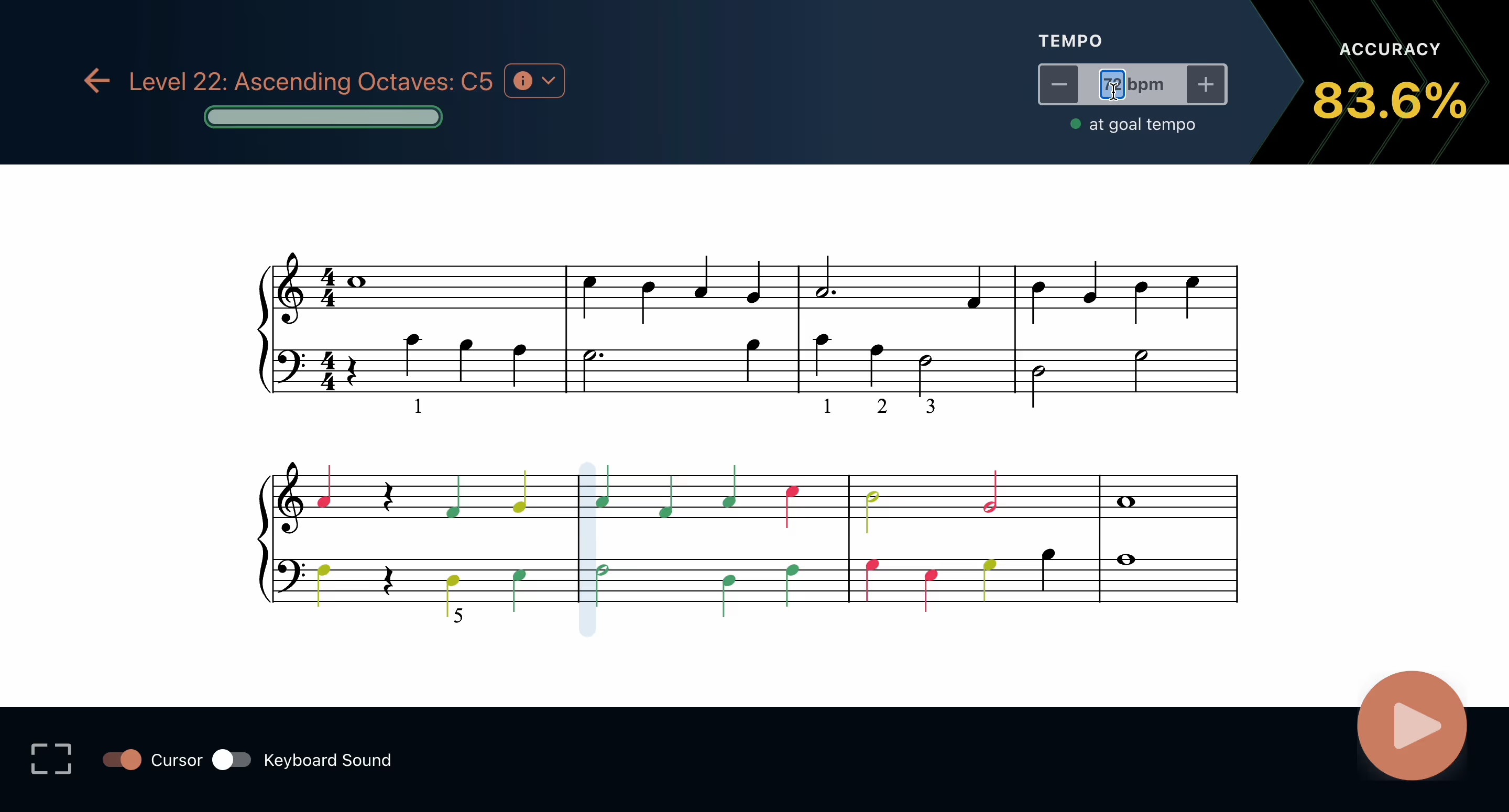
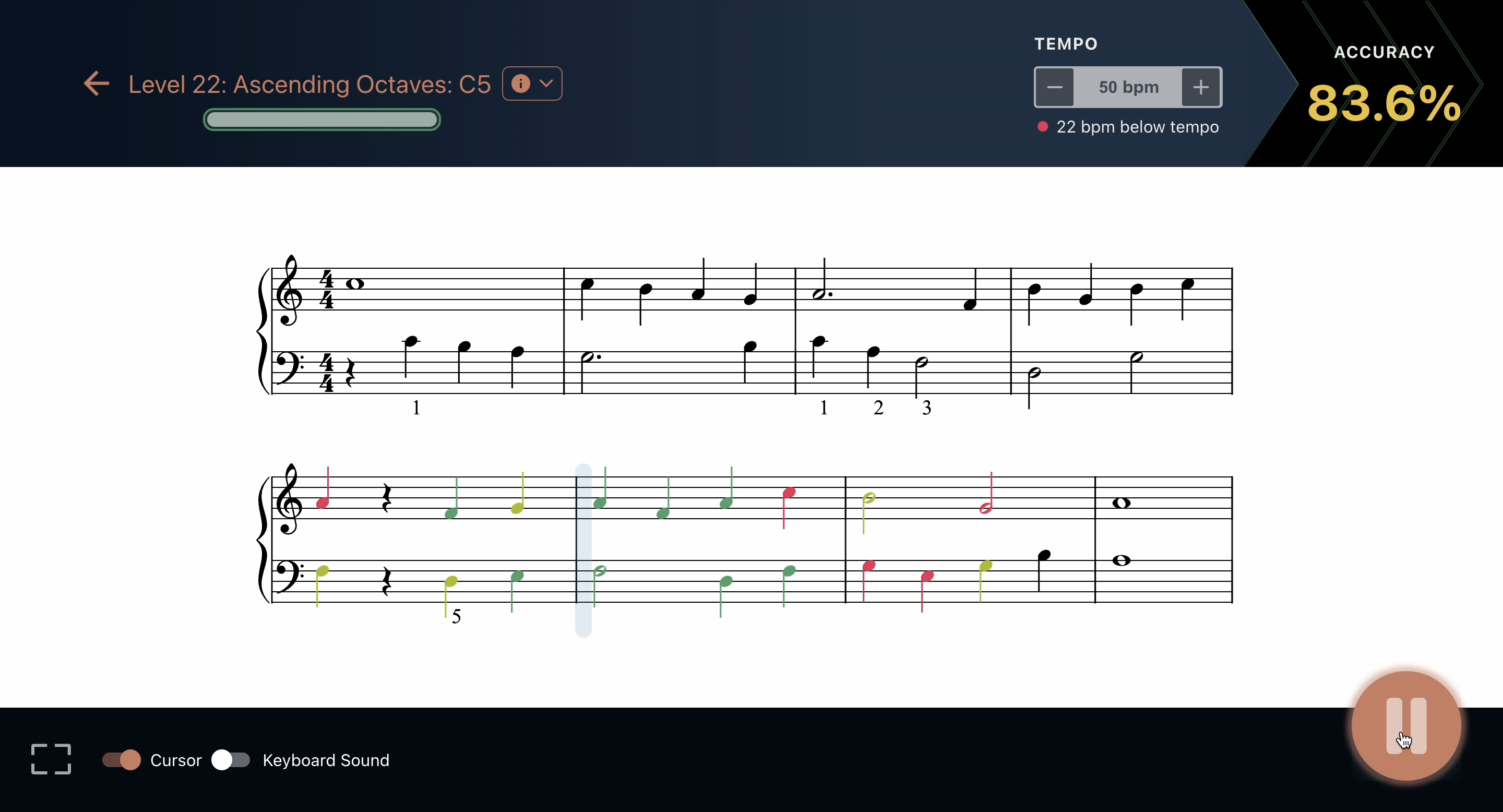
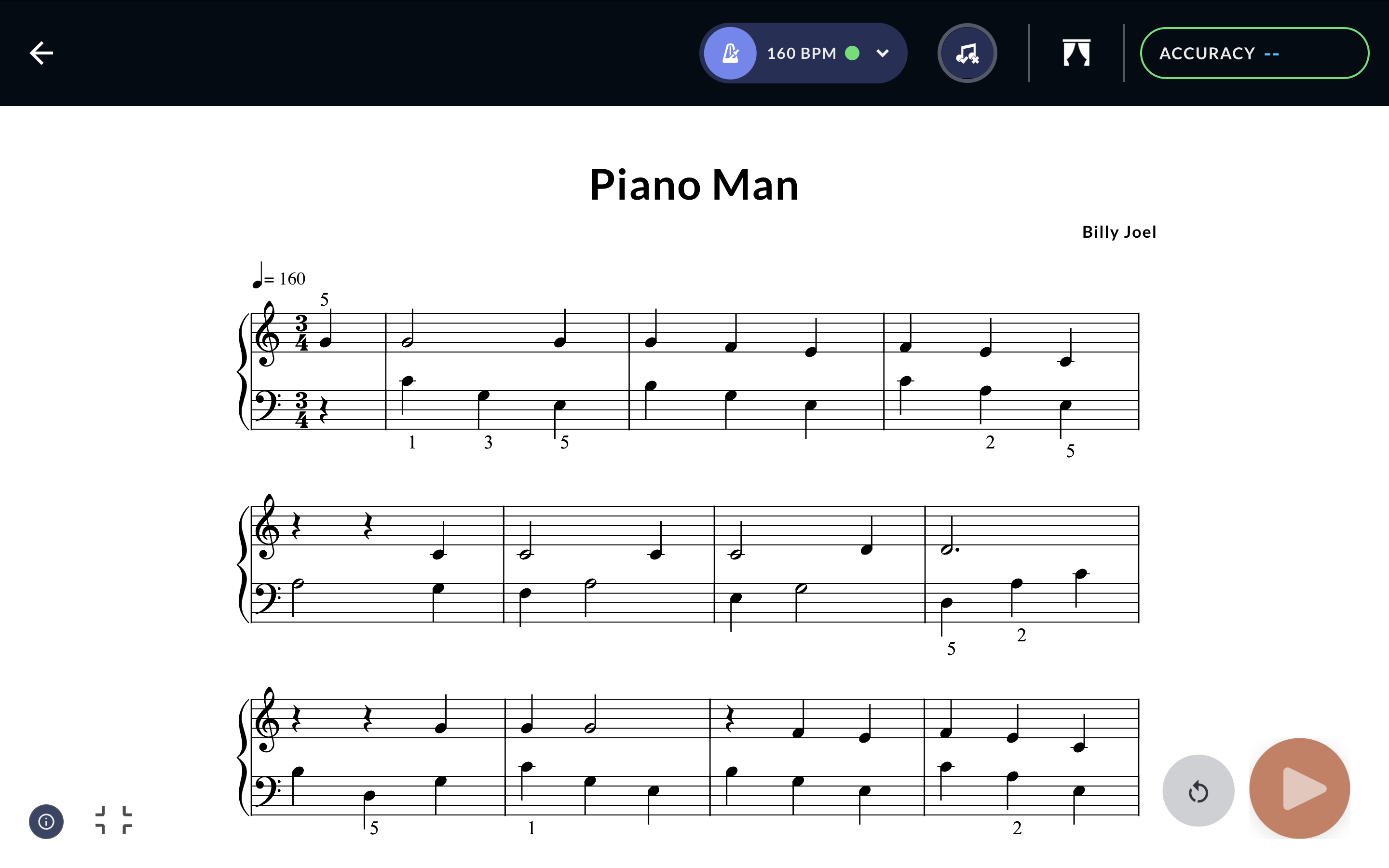
Visual or timing-based feedback systems can help support this shift by showing where improvement is needed without interrupting flow. Instead of stopping practice after each mistake, learners receive guidance that allows continuous playing and reflection, helping them maintain learning flow. This approach helps normalize errors as part of the learning process.
Balancing Challenge and Focus
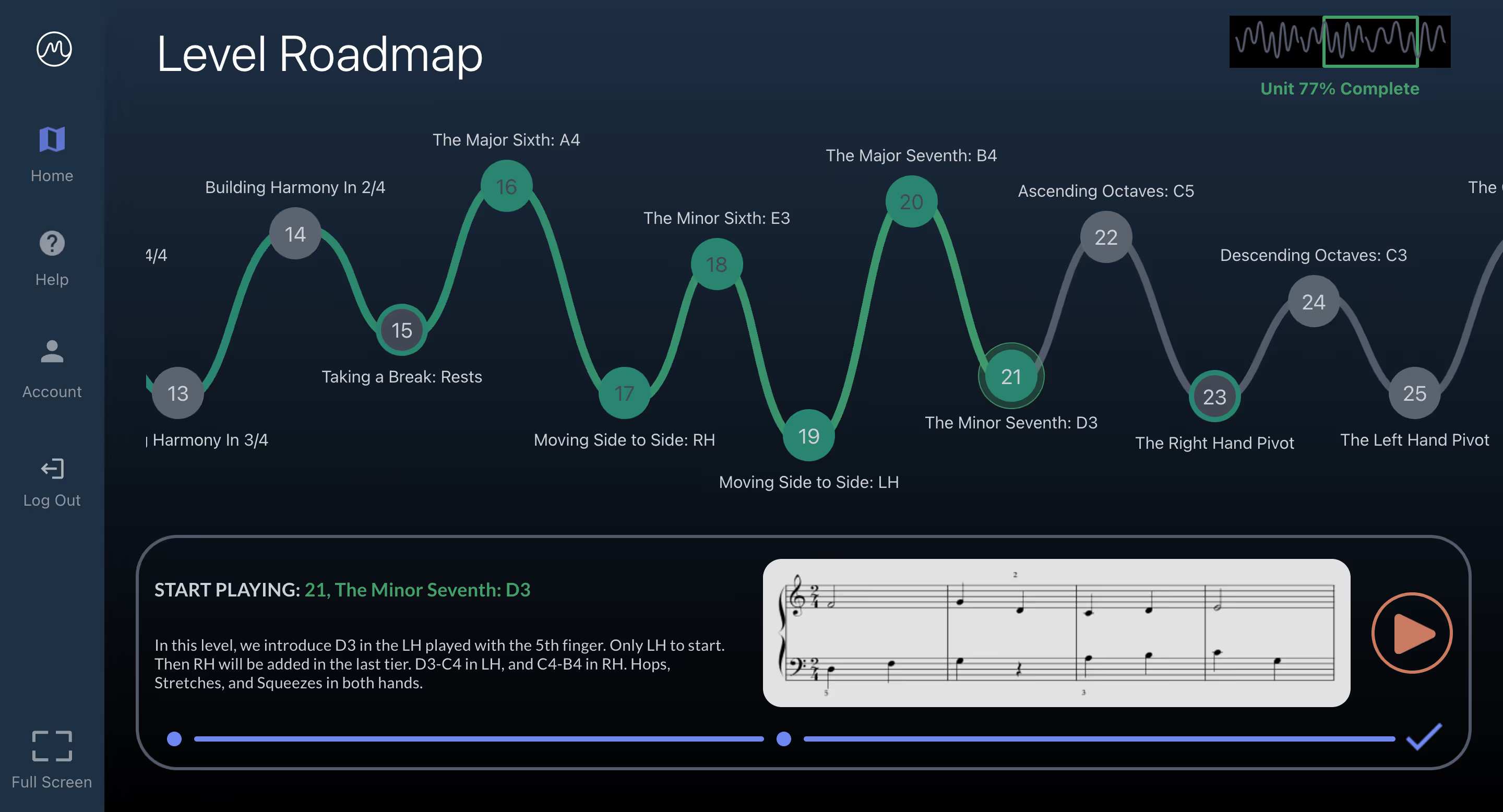
Perfectionism is often accompanied by cognitive overload: tasks feel either too difficult or emotionally demanding. Practice designs that allow learners to adjust difficulty, tempo, or complexity help maintain a balance between challenge and skill level.
When difficulty is scaled appropriately, learners are more likely to experience focused engagement rather than anxiety. This balance supports deeper concentration and makes practice sessions feel productive instead of exhausting.
Redefining Success in Music Practice
For many musicians, especially adults returning to piano later in life, success feels distant when measured solely by flawless performance. Progress-oriented practice reframes success as consistency, effort, and reflection.
Over time, this mindset supports resilience. Learners become better equipped to handle mistakes, adapt to challenges, and continue practicing even when improvement feels gradual. These skills extend beyond music and contribute to healthier learning habits overall.
Beyond the Piano
Although these ideas are often discussed in the context of music education, they apply broadly to skill development in other areas. Learning systems that prioritize progress over perfection help individuals build sustainable habits, maintain motivation, and reduce fear-based avoidance.
By normalizing imperfection and emphasizing steady improvement, learners are more likely to stay engaged and continue growing—both at the piano and beyond it.

How Much Does MuseFlow Cost?
Learning sight reading has come a long way in the past year. If you’re still using older methods, you’re missing out—not only on the enjoyment of learning with cutting-edge techniques, but also on your earning potential as a musician. Here’s a way to understand it.

The Ancient Way of Learning Sight Reading for Piano
You buy a series of sight reading books. You’re stuck following static exercises, with no way to know if you’re truly improving or if you’re even practicing correctly. Once you finish the book, you need another—and then another. The time commitment is high, much of it wasted on inefficient exercises, with no real-time feedback to tell you whether you’re playing the notes correctly.
The result? Frustration. Progress feels slow, and the vast majority of learners quit before reaching proficiency.

The Old Way to Learn to Sight Read Piano Music
This is just an evolution of the Ancient Way—it’s more of the same. Along with sight reading books, you have access to websites with downloadable pages or apps featuring more static music. But ultimately, it’s still just a library of music.
Sure, online tools and mobile apps provide more material, but the burden is on you to figure out:
- Which pieces fit your skill level.
- Whether you’re playing them correctly.
- How to improve.
Even if you’re willing to pay for an app, you still need to sift through an overwhelming amount of material in a song library and curate a plan yourself. That mental overhead doesn’t go toward practicing sight reading—it’s spent assembling your tools.
And let’s not forget: You can only sight read a piece once. After the first play-through, your brain starts to memorize the music, and it’s no longer sight reading.

MuseFlow
Thankfully, cutting-edge technology makes the Ancient Way and Old Way obsolete. With MuseFlow, you no longer need to waste time curating materials or wondering if you’re improving.
MuseFlow is radically different.
- It doesn’t just give you more; it gives you exactly what you need to progress.
- Measures of music are created on-the-fly, tailored to your current skill level.
- Real-time feedback ensures you know whether you’re playing correctly and guides you toward mastery.
The unique value proposition of MuseFlow is that it offers infinite, dynamically generated music, precisely targeted to help you improve. MuseFlow is your personalized coach, tracking your progress and adapting dynamically to your needs.
With MuseFlow, progress is:
- Efficient: Tailored exercises keep you moving forward.
- Engaging: Real-time feedback and Flow makes learning enjoyable.
- Measurable: You see improvement every session.
MuseFlow is completely different. MuseFlow just doesn’t give you more, but gives you the precise sequence of notes you need to make progress. Measures of music are being created on-the-fly according to your skill level. There’s no system that even comes close.
The unique value proposition of MuseFlow is not that you have "more" but that you have "infinite" AND that infinite amount of music is presented in real-time, in the context of mastering the skill.
MuseFlow is your personalized coach, delivering tailored exercises, tracking your progress, and adapting dynamically to your skill level. With real-time feedback, you know exactly how to improve, and every session brings you closer to mastery.
MuseFlow is radically efficient compared to other learning methods–You’re in the Flow! Progress is fast, engaging, and measurable.

Does MuseFlow Really Cost More?
Imagine three intermediate pianists in the same city—Sally, Sam, and Sarah—all competing for the same high-paying piano gigs. They share the same goal: to reach advanced sight reading proficiency and start earning from weddings, events, and restaurants.
Their chosen learning methods, however, set them on very different paths.
- Sally chose MuseFlow: Reaches advanced proficiency in just 1 year.
- Sam used the Old Way: Takes 2 years, delayed by inefficient trial-and-error methods.
- Sarah relied on the Ancient Way: Also requires 2 years, hindered by static resources and lack of feedback.
Sally’s faster progress gave her a critical advantage. By Year 1, she was already booking gigs, gaining experience, and building demand. Meanwhile, Sam and Sarah were still learning.

Sally’s faster proficiency gave her a head start. Starting Year 1, she was already booking gigs, gaining experience, and building demand. Sam and Sarah, meanwhile, were still learning, assuming they had even continued in their strategies (more on that later).
As a result, Sally consistently earned more across the three years, with increasing rates and more gigs over time. The cumulative effect of Sally’s early start is undeniable. By Year 3, she has out-earned both Sam and Sarah by a wide margin.
Why MuseFlow’s Return on Investment Pays off for Pianists
- Faster Proficiency: Sally reaches advanced proficiency in just one year, while Sam and Sarah lag behind. This early advantage means she books gigs sooner and accumulates more experience.
- Higher Demand and Rates: By Year 3, Sally has more gigs per month and can charge higher rates due to her growing reputation and expertise.
Sally’s choice to use MuseFlow didn’t just save her time—it accelerated her earning potential, giving her a distinct edge in the competitive gig market. With MuseFlow, she didn’t waste hours on inefficient methods or outdated tools. Instead, she focused on building her skills quickly and effectively, positioning herself for long-term success.
For example, if Sally plays at several gigs throughout the year, she will have earned $6,000 by the time Sam and Sarah are just getting started. She is more than a break-even point on her first gig where she gets to showcase her new-found sight reading proficiency. Sally can reinvest in her skills, gain more experience, and build her reputation faster. By the time Sam and Sarah reach proficiency, Sally is already well-established. MuseFlow enables learners to break even on their investment significantly faster. Look how the three of them compare for that first year.

MuseFlow and Other Sight Reading Tools: Cost and Effectiveness Comparison
But Sally’s competitive advantage doesn’t stop there.
Sally, Sam, and Sarah aren’t even close to equal footing when it comes to their ability or enjoyment of learning. Why? The likelihood for Sam or Sarah to actually complete all the coursework in the Ancient Way or the Old Way is highly unlikely.
Because of how MuseFlow harnesses our human desire to learn and be in Flow state, Sally is highly likely to actually achieve mastery. Her likelihood for success actually skyrockets.
Sam and Sarah have to select, purchase, and then curate their own path forward to learning by choosing from a myriad of exercise books and websites. Simply search for “sight reading books” and you’ll discover what variety is out there for all sorts of instruments, age levels, and interests.

Once Sam and Sarah have the books, apps, videos, or Internet resources, then they need to learn the particular system for each and then slog through them.
They will be the musician and judge simultaneously to determine if they are ready to proceed to the next exercise or book. They have zero feedback to know if they’re playing the exercises correctly.
In all likelihood, despite Sam and Sarah’s good intentions, most of their sight reading exercise books and online resources will go untouched. They will simply join the statistics of so many who do not increase their sight reading proficiency.
On the other hand, Sally opens her laptop with her digital keyboard, and the EXACT music she needs to learn sight reading is given to her. Down to the musical measure, it’s precise for her skillset. Even more than that, she has a built-in coach telling her how she’s doing. She can’t proceed until she’s mastered it.

This type of learning is incredibly motivating for Sarah. She’s in the flow. As a result, not only is Sarah learning more efficiently, but she’s far more likely to reach her goal compared to others using traditional methods.
Is MuseFlow Worth It? Comparing Costs and Results
Here is a comparison of sight reading resources available on the market. The bar chart represents the financial investment to purchase the resources. The line represents the likelihood to actually use the resources to learn to sight read.

Note that while MuseFlow requires more of an investment, the likelihood of actually fully using MuseFlow approaches 100%. The other methods may require less of a financial investment, but that also means there’s less of a likelihood to actually use them to learn how to sight read.
With the goal of increasing proficiency in sight reading, MuseFlow gives Sarah everything she needs to succeed:
- Precision: Exercises tailored to her skill level, ensuring she masters each technique before moving on.
- Efficiency: Instead of wasting time on irrelevant or repetitive drills, Sarah focuses on playing and improving.
- Interactivity: Real-time feedback keeps her motivated, engaged, and always moving forward.
- Positive Feedback Cycle: Progress in learning builds upon itself to create further improvements and outcomes.
MuseFlow doesn’t just give Sarah more of what she may–or may not–need to progress in her learning. MuseFlow delivers exactly the right amount of content, in the right context, so she masters every skill before progressing. Here’s where all this comes together.
Is MuseFlow Worth Expense to Learn Sight Reading for Piano?
While MuseFlow might look “more expensive,” the advanced Flow state learning technique gives Sarah a much higher likelihood of success than the alternatives. Put another way, she is getting more value for her dollar. Why? Because Inexpensive-but-Incomplete is actually more costly than Expensive-and-Complete.
A common way to express this is an Efficiency Ratio. This calculation measures how much value you receive for every dollar you spend (Likelihood ÷ Cost).

What good does it do Sally if she saves a few dollars by purchasing a variety of exercise books, music library apps and other resources, yet never uses them? Sally is committed to improving her skillset, enriching her musicianship, and increasing her income. Wouldn’t she want the best resources and strategy to achieve that goal?
What Piano Players Get with MuseFlow
To explain this differently, let’s fast forward a few months with Sam, Sarah, and Sally.
After frustration of plodding haphazardly through exercises, Sarah has become weary. She’s starting to tell herself things like: “Learning to sight read is too hard…. Maybe I’ll try later.” Her dreams of being paid to play piano at weddings and events is starting to fade. She’s got a despondent look on her face.
Sam is facing a similar discouraging story. He’s spent an inordinate amount of time and effort to research and purchase various exercise books and music library apps. He’s probably spent more time cobbling together a system than he has actually learning how to sight read. It’s been over a week since he’s touched his piano, and he’s starting to rationalize: “Eh, I play good enough…”
If Sam and Sarah were to actually continue, they will have experienced “hidden costs” in inefficiency—time spent curating resources or stalled progress due to lack of motivation. This translates to wasted energy and opportunity costs for earning income. Also, they will not have enjoyed the sight reading learning process nearly as much as Sally.
Sally chose MuseFlow and wears a concentrated smile each time she plays. She is in Flow state within minutes. No guesswork or inefficiencies as to where to begin or where to focus her attention. She will play exercises precisely tailored to her skill level. As she plays, she will experience real-time feedback that keeps her in the Flow–motivated, engaged, and always progressing. That ever-increasing momentum builds a positive feedback cycle where each measure she plays builds to improve her outcomes.
Ready to be like Sally and unlock your full potential? Start with MuseFlow and begin your sight reading journey. Start learning, enjoying, and earning faster than you ever thought possible.

The Power of Just-In-Time Learning and Flow State in Music Education
In the fast-paced world of modern education, there are two transformative principles reshaping how we learn: just-in-time learning and flow state. These concepts challenge traditional teaching methods, offering learners a more intuitive, engaging, and effective way to build skills. Nowhere is this shift more impactful than in music education, where these principles are helping students connect deeply with their craft, and revolutionizing a pedagogy steeped in tradition and structure.

What Is Just-In-Time Learning?
Just-in-time learning turns traditional education on its head. Instead of overwhelming students with theory upfront, it prioritizes hands-on experience, letting learners absorb theoretical knowledge as it becomes relevant. Imagine learning to ride a bike by hopping on and pedaling, rather than first reading a manual. This approach creates a direct link between knowledge and kinesthetic understanding.
Music education is a where this method shines. Whether mastering a new rhythm, note, or doing a sight reading exercise, students often benefit more from actively engaging with the music first, than from lengthy theoretical instruction. If it was the other way around, we wouldn’t have anything to ground us when we learned the theory! It’d just be a mish-mash of concepts we didn’t know how to apply. As Lucy Green notes in How Popular Musicians Learn, many successful musicians develop their skills through practical, real-world learning experiences. By tackling challenges as they arise, learners retain information better, and can apply it more effectively.
The Role of Flow State in Learning
The flow state, a concept introduced by positive psychologist Mihály Csíkszentmihályi, is a mental goldilocks zone where challenge and skill meet perfectly. In this state, learners are completely immersed in their task, losing track of time while being deeply rooted in the present. Flow transforms learning into a rewarding and deeply enjoyable experience.
For musicians, achieving flow is transformative. Imagine a practice session where every note feels effortless yet engaging… a space where learning feels less like work and more like play. Research suggests that learners in flow not only learn skills faster but also sustain intrinsic motivation longe.

Why These Principles Matter in Music Education
Just-in-time learning and flow state address common hurdles in traditional music education. Many students feel overwhelmed by complex theory before they've even had the chance to see its practical value! Others lose motivation when faced with monotonous drills that fail to connect them with the joy of making music.
By focusing on active engagement and creating an environment where learners can stay in a state of flow, educators can foster a love for music that goes beyond technical mastery. These approaches encourage curiosity, resilience, and a deeper connection to the art and craft of music-making.

How MuseFlow Applies These Principles
At MuseFlow, we’ve built a music education platform that embodies the best of just-in-time learning and flow state principles. Here’s how we’ve turned these ideas into a transformative learning experience:
- Adaptive Learning: MuseFlow’s sight reading engine adjusts to the learner’s skill level, ensuring they are consistently challenged without being overwhelmed. This keeps users engaged and in flow state.
- Immediate Feedback: Students receive real-time feedback on their playing, helping them correct mistakes and learn on the fly… perfectly aligned with just-in-time learning.
- Gamified Learning: Our goal-oriented, level by level structure allows students to build skills incrementally, maintaining the balance between challenge and achievement.
- Dynamic Content: By generating fresh, adaptive music, MuseFlow ensures that learners always have new material to explore, keeping practice sessions exciting and immersive.
Through these features, MuseFlow not only teaches music, but also transforms how students experience learning it. By prioritizing engagement and practical learning, we help students of all ages and skill levels discover the joy and fulfillment of making music.

A Revolution in Music Education
Whether you’re a beginner learning your first note or an advanced player sharpening your sight reading skills, just-in-time learning and flow state offer a path to deeper, more rewarding learning. Platforms like MuseFlow are at the forefront of this revolution, making music education more intuitive, enjoyable, and effective than ever before.

Resources
- Csíkszentmihályi, M. (1990). Flow: The psychology of optimal experience. Harper & Row.
- Duke, R. A. (2022). Intelligent music teaching: Essays on the core principles of effective instruction. Learning and Behavior Resources.
- Green, L. (2017). How popular musicians learn: A way ahead for music education. Routledge.
- Voss, B. (2022). Design principles for music technology education support: Just-in-time learning in the recording studio using mobile technologies. ResearchGate.
Giving the Gift of Sight Reading: Make MuseFlow Your Holiday Gift this Season
This holiday season, give a gift that goes beyond the ordinary; a gift that opens up the world of learning piano music. MuseFlow isn’t just any music learning app; it’s a gateway to mastering the skill of sight reading - the act of reading music at first sight - making music performance more accessible, meaningful, and enjoyable. Here’s why MuseFlow is the perfect gift for those looking to excel in piano performance, find personal fulfillment, and spread joy through music.

1. For Performers Who Want a Competitive Edge
For those who perform, music isn’t just a passion… it’s a way to connect, impress, and earn some extra cash. Imagine walking into any gig, ready and able to play any popular songs on the spot. People throw you request after request, you pull them up on your iPad with Ultimate Guitar or MuseScore, and you just go! MuseFlow gives performers the confidence to do just that, offering a seamless, personalized curriculum that strengthens sight reading skills, enabling users to read and adapt to playing never before seen music quickly.
MuseFlow’s real-time feedback, and adaptive sight reading levels are designed to boost not only proficiency but also versatility. This isn’t about memorizing a few songs; it’s about mastering the skills that let performers meet any song request with ease, broadening their repertoire quickly and enjoyably. Think about how much more you could earn in gigs with even a 20% improvement in sight reading! MuseFlow is the tool that lets you take that leap with ease.

2. The Gift of Lifelong Music Mastery
For those juggling family, work, and personal time, music often serves as a cherished retreat. MuseFlow’s unique, adaptable approach brings the joy of learning piano into even the busiest lifestyle. With the flexibility to practice anywhere, at any time, for any duration, and a curriculum that meets users where they are, MuseFlow empowers them to progress steadily and enjoyably, making every practice session a moment of personal enrichment.
Imagine being able to sight read and enjoy playing any piece of sheet music that comes your way, whether it’s for a family gathering, a community event, or a peaceful evening at home. MuseFlow is more than a tool… it’s an opportunity to deepen musical skills, and to share that passion with loved ones, whether through playing together or inspiring the next generation to love music.

3. The Perfect Holiday Gift for Music Lovers
MuseFlow is the ideal gift for anyone who has a love for music, whether they’re performers looking to build their skillset, or enthusiasts seeking personal fulfillment. It’s a thoughtful way to show someone that you believe in their potential, that you’re investing in their joy, and that music can be part of their life in a meaningful way.
With flexible subscription plans and bundles, MuseFlow is easy to give and even easier to love. This season, give the gift that resonates long after the holidays… a gift that brings music to life, one note at a time.

Essential Sight Reading Tips for Beginners: Starting: A Practical Starting Guide
Sight reading is one of the most important foundational skills for pianists, and adult learners just starting out may benefit from a broader overview of the best ways to learn piano as an adult. It allows musicians to approach unfamiliar sheet music and play with continuity rather than relying solely on memorization. Strong sight reading skills open the door to broader repertoire, faster learning, and greater musical independence.
For beginners, however, sight reading can feel intimidating, leading many to ask about the most beginner-friendly piano learning apps that can support structured progression. Notes, rhythm, coordination, and timing all compete for attention at once. The good news is that progress does not depend on talent or speed, but on how practice is structured. With the right approach, beginners can develop sight reading skills steadily and with less frustration.
The following principles outline how to start sight reading effectively, regardless of whether you are learning independently, with a teacher, or using a digital learning platform.

1. Understand Why Sight Reading Matters Early
Sight reading is not just a performance skill—it is a learning accelerator. Beginners who develop reading fluency early spend less time decoding notes later and more time shaping musical expression. Instead of struggling through every new piece, they recognize patterns, intervals, and rhythmic structures more quickly.
Developing sight reading early also reduces dependence on repetition and memorization. This makes long-term progress more sustainable and allows learners to explore new music with confidence rather than hesitation.
2. Start Slowly and Prioritize Accuracy
One of the most common beginner mistakes is playing too fast too soon; newcomers may benefit from reading a broader guide on how to start learning piano from scratch before focusing exclusively on sight reading. Sight reading improves when the brain has time to process notation accurately. Slowing down allows learners to connect written notes to physical movement without panic or guesswork.
A practical rule is to choose a tempo where mistakes are manageable and intentional correction is possible. Accuracy builds recognition; speed follows naturally. Even short, slow sessions—10 to 15 minutes—are more effective than rushed practice.

3. Break Music into Small Sections
Large pieces can overwhelm beginners. Breaking music into short phrases helps reduce cognitive load and allows focused attention on specific challenges.
Chunking music this way reinforces pattern recognition and prevents frustration. Over time, familiar techniques require less effort, and learners naturally need less segmentation when reading simpler material.
Many modern learning systems structure exercises this way, but the principle applies equally to traditional sheet music: isolate, understand, then connect.
4. Treat Mistakes as Feedback, Not Failure
Mistakes are an inevitable part of sight reading. What matters is how they are handled. Beginners progress faster when errors are treated as information rather than interruptions.
Continuing to play while noting where timing or pitch slips occurred helps maintain flow and prevents anxiety-driven stopping—a concept further explored in discussions about just-in-time learning and flow state in music education. Adjusting tempo or simplifying material after repeated errors is more effective than restarting from the beginning each time. This approach builds resilience and keeps practice productive rather than discouraging.

5. Develop Rhythm Separately—and Deliberately
Rhythm is often more challenging than pitch. Beginners benefit from practicing rhythm intentionally, even away from the keyboard.
Using a metronome at slow tempos helps internalize steady pulse. Counting aloud, tapping rhythms, or clapping patterns before playing reinforces timing awareness. When sight reading, maintaining rhythm—even with occasional wrong notes—is often more musically valuable than stopping to fix pitch.
Some learning tools include built-in metronomes, but the key principle is consistency and control, not complexity.
6. Choose Difficulty That Encourages Progress
Sight reading improves most effectively when material is neither too easy nor too difficult. Overly simple exercises limit growth, while overly complex pieces increase frustration.
Beginners should feel challenged but capable. If accuracy consistently drops below a comfortable range, difficulty should be reduced. If material feels effortless, progression should increase slightly. This balance supports focused attention and sustained motivation.
Adaptive learning systems can assist with this, but self-assessment works just as well when learners remain attentive and honest.

7. Acknowledge Small Improvements
Progress in sight reading often happens gradually. Recognizing small gains—cleaner rhythms, fewer hesitations, better coordination—reinforces motivation.
Many learners experience “aha” moments where concepts suddenly click. Noticing these moments helps build confidence and encourages consistency. Progress is cumulative, and celebrating small wins prevents discouragement during slower phases.
8. Maintain Engagement Without Pressure
Sustained improvement depends on regular practice. Sight reading should feel challenging but not exhausting. Short, focused sessions are more effective than long, unfocused ones.
Engagement increases when learners approach practice with curiosity rather than judgment, a balance explored further in discussions about empowering beginners through sight reading and flow state. Viewing sight reading as exploration—not evaluation—helps maintain focus and enjoyment, even when material becomes more complex.
Bringing It All Together
Sight reading is a skill built through structure, patience, and consistency—not shortcuts—and music practice can also support creativity and mental well-being as part of a broader learning journey.. Beginners who slow down, focus on accuracy, practice rhythm deliberately, and choose appropriate difficulty develop fluency more reliably than those who rush toward complexity.
Digital platforms such as MuseFlow can support this process by offering structured progression, real-time feedback, and adaptable pacing. However, the underlying principles remain universal and can be applied with or without technology.
By emphasizing progress over perfection and treating mistakes as part of learning, beginners can build sight reading skills that support long-term musical growth and confidence.

Unlocking Creativity: The Link Between Music and Mental Health
Let’s talk about the last time you felt anxious, overwhelmed, or sad. Maybe you were grieving the end of a relationship or the loss of a pet. Maybe you were struggling with the change of seasons or shifting family dynamics. These experiences are tough, and it can be hard to cope.
Now let’s think about the tools you used to manage those emotions. Did music play even a small role in helping you feel better?
If it didn’t, it probably could have—because both listening to and playing music can offer comfort when talking alone can’t. Music soothes us when we’re stressed and instills hope when we’re depressed, restless, or simply interested in self-improvement. Piano learning apps could be a solid place to start.
We’ll talk about one of the best piano learning apps shortly. First, let’s discuss the link between music and mental health.

The Music-Mental Wellness Connection
The secret is out, and music can 100% help us regulate our emotions. Before we talk about what that looks like, consider Merriam-Webster’s definition of music:
a: vocal, instrumental, or mechanical sounds having rhythm, melody, or harmony
b: the science or art of ordering tones or sounds in succession, in combination, and in temporal relationships to produce a composition having unity and continuity
The verdict is in, and by definition, music is both an art and a science. It also promotes unity and has a soothing effect on the body. This is because music reaches deep into the endocrine system, which produces the hormones that impact how we feel. So when we play or listen to music, the body triggers the release of dopamine—the feel-good hormone responsible for pleasure and reward.
“I don’t think I’ve ever been this good at reading music. It never made sense to me before.” – Arjuna C., MuseFlow (a piano learning app) student
At the same time, music lowers cortisol, the stress hormone, making us feel calmer and more at ease. It can even improve our immune health by increasing levels of an important antibody, salivary immunoglobulin A, which offers protection from illness. And another study found that playing or listening to music at 60 beats per minute can induce a state of relaxation by driving alpha wave activity. (Alpha waves are associated with wakeful relaxation, which helps the brain unwind and fuels mental clarity.)
It’s no wonder that in therapeutic settings, experts use music to help clients process their emotions. Techniques like guided listening and music improvisation allow people to access their feelings and memories in ways that might be difficult to articulate verbally. From where we’re standing, it makes total sense that 71% of surveyed adults cited music as the greatest influence on their mood. After all, creativity makes us feel good.

How Creativity Blooms Through Playing Music
Listening to music is powerful—but playing music can have an even greater impact. Learning to play an instrument like the piano is a solid way to get your creative juices flowing. You see, learning new things that are right outside your skill level challenge the brain to think in new ways: finding patterns, making connections, and ultimately achieving a flow state. This helps us break free from linear thinking and fully embrace creative problem-solving.
“Let’s go!! Kept myself in the flow state by first dropping the tempo so it wouldn’t be too frustrating, then got comfortable, then before it became too easy to the point of boring I reattempted it at goal tempo and I passed. What a rush of dopamine from completing the level that initially I couldn’t do!!” – Kyle L., MuseFlow student
From a neuroscience standpoint, learning an instrument like the piano activates several areas of the brain all at once. AI piano teaching apps like MuseFlow, for instance, engage the prefrontal cortex—responsible for planning and decision-making—along with the motor cortex and auditory system. This helps improve emotional regulation and unlocks creativity.
Fortunately, platforms like MuseFlow are making it easier than ever to learn the piano and unlock your full creative potential. Regardless of your skill level, piano training apps will give you space to clear your mind and grow creatively.

Music and Well-Being—Where Does Technology Come In?
Thanks to technology, engaging with music has never been more accessible—or more innovative. Piano practice apps like MuseFlow, recognized as one of the best piano apps of 2024, are transforming how we learn and experience music. These tools let people explore their creativity in ways that traditional methods might not.
For instance, piano lesson apps can guide students step-by-step through learning an instrument, complete with personalized feedback and positive encouragement. This real-time interaction builds confidence and creativity. Then, when. you’ve mastered a skill within this game-like environment, you can apply those skills to songs that get unlocked after you pass each level. not to mention, this approach also supports each user’s mental wellness.
“Any success I achieve is its own reward. Just having moved to the next higher level, I feel good and surprised that it went so quickly. That’s a plus!” – Dennis L., MuseFlow student
And technologies like interactive piano lesson apps break down barriers to access too. With MuseFlow’s intuitive design and seamless user experience, anyone can start learning the piano from the comfort of their home—completely at their own pace. Together, music and technology are making creativity and well-being more accessible than ever.
So why not take the first step toward a healthier, more creative life? Start your seven-day free trial today and learn the piano through personalized sight reading with MuseFlow. You’ll also tap into the creative and therapeutic benefits of music.

Musician’s Glossary: 100+ Music Terms
Welcome to MuseFlow's glossary of 100+ essential music terms, designed to expand your musical vocabulary, from beginners to seasoned pros.
No matter your preferred genre (whether it's classical masterpieces or modern pop hits), understanding the language of music past and present deepens your understanding of and connection to your favorite songs and the artists who create them.
Explore these music terms and more on the MuseFlow blog. Be sure to bookmark and revisit this page whenever you encounter unfamiliar terminology. We may have it here! And if we don’t, please shoot us a message and we’ll gladly add it.
And now…. let us present to you MuseFlow’s Musician’s Glossary of 100+ Musical Terms. Have fun! Let’s flow.
12-Bar Blues
The 12-bar blues is a chord progression that is most commonly found in blues music. This progression typically uses three chords based on the first (I), fourth (IV), and fifth (V) notes of the scale in which you’re playing.

A Cappella
A cappella (translates to “in the manner of the chapel”) is a style of music where a group of vocalists are singing with no accompanying instruments. Can also be spelled “acapella” or “a capella”.

Accelerando
Accelerando (translates to “to accelerate”) is a musical marking/term that indicates a gradual increase in tempo/speed until the next tempo marking is present.

Acoustic
Referring to music or instruments that produce sound without electronic amplification. Used often in folk music or orchestral music. Examples would be acoustic guitar, mandolin, grand piano, violin, clarinet, and upright bass.

Adagio
Adagio (translates to “at ease”) is a tempo marking that indicates that the music should be played slowly and with a leisurely pace. Usually between 66 and 76 beats per minute (BPM).
Allegro
Allegro (translates to "cheerful" or "joyful") is a tempo marking indicating a fast and lively pace. Usually between 120 to 168 beats per minute (BPM).
Andante
Andante (translates to "to go" or "to walk") is a tempo marking that indicates a moderate tempo or pace. Usually between 76 to 108 beats per minute (BPM).
Arpeggio
Arpeggio (translates to "to play on a harp") refers to playing a series of notes of a given chord in succession, as opposed to at the same time. This creates a flowing effect that sounds similar to how a harpist would play the notes of a chord in succession.

Articulation
Articulation is a large set of musical markings that indicate how individual notes or phrases should be played or sung. Articulation markings can change the attack, duration, and/or release of a note.

Ballad
A ballad, originating in medieval times referring to their poetry, is a type of song that tells a story… often characterized by a slow tempo and lyrical content. This type of song pops up in many different genres from pop, rock, to jazz and folk.
Bar
A bar (or measure) is one of the fundamental building blocks of how music is written and perceived. It’s a segment of time defined by a given number of beats (what we bob our heads to when listening to music), which is determined by the time signature of the piece. This segment repeats, and gives the piece structure.

Baritone
‘Baritone’ can refer to the pitch/range of an instrument that is generally medium-low. When referring to a male voice, this type of voice lies between the bass and tenor ranges, typically covering notes from A2 to A4. However, a baritone saxophone, which lies between the alto sax and bass sax, has the range of E♭1 to F♯4. Every instrument’s range is different, but a baritone version of that instrument will have a range that is “in the middle” of the other versions.
Baroque
Baroque refers to a style of European classical music that was composed between approximately 1600 and 1750. It’s notable for its interweaving of multiple independent melody lines along with a continuous bass line to provide harmonic support. The dramatic and ornate qualities of Baroque music make it a rich and enduring part of the classical repertoire.

Barre
Barre is a technique used in playing stringed instruments, such as guitar, where the player uses one finger to press down multiple strings at the same time. This technique allows the musician to play chords that might otherwise be impossible to finger individually. Additionally, using the index finger as a "bar" across the fretboard allows the player to change the pitch of all the strings and form chords in different positions.

Bass
Bass refers to the lowest range of pitches in music, both in voices and instruments. For example, the term can be used to refer to a bass singer (the lowest voice type), a bass guitar, or a double bass. The bass provides the foundation for the harmonic structure of a piece, often anchoring the music and giving it depth.
Breakdown
Breakdown refers to a section of a song where the texture is reduced to create contrast. This momentary reduction in intensity builds anticipation before a return to the full arrangement which often leads to a powerful climax. Stripping away many of the musical layers and leaving, for example, just the rhythm section can also provide an opportunity for musicians to improvise in a jam session or to showcase individual instruments.
Bridge
Bridge refers to a section of a song that provides contrast to the rest of the composition and typically leads into the final chorus or a key change. Also known as the "middle eight" in some genres, it serves as a departure from the repetitive verse-chorus structure of a song by introducing new melodies, harmonies, or lyrics that add depth and variation.
Cadence
Cadence refers to a sequence of chords that concludes a phrase, section, or piece of music. They serve as punctuation within a composition in order to shape the flow of a piece and guide the listener through its various sections. There are several types of cadences, including authentic (V-I), half (I-V), and plagal (IV-I), each creating different levels of finality or continuation.
Canon
Canon refers to a compositional technique in which a melody is introduced by one voice or instrument and then imitated by others, often in a staggered manner. The weaving together of multiple independent voices or instruments creates harmony and complexity.
Capo
Capo refers to a device that is used on stringed instruments, such as the guitar, to raise the pitch of the strings by clamping it down across the fretboard at a desired fret. The capo allows the musician to easily change the key of a piece without altering the fingering of the chords which is particularly useful for accommodating different vocal ranges or creating a brighter tone.

Chord
Chord refers to a combination of three or more notes played simultaneously. They are a fundamental aspect of songwriting and composition and the building blocks of harmony, providing the harmonic context for melodies and contributing to the overall mood of a piece. They can be major, minor, diminished, augmented, or extended, each with its own characteristic sound.
Chorus
Chorus refers to a repeated section of a song, often featuring the main theme or hook, that contrasts with the verses.
Description: The chorus is typically the most memorable part of a song, designed to be catchy and easy to sing along with. It often contains the song's central message or emotional core, making it a focal point for the listener. In popular music, the chorus usually follows each verse and is characterized by a fuller arrangement, stronger dynamics, and repeated lyrics. The contrast between the verse and chorus adds variety and structure to the song, keeping the listener engaged.
Circle of Fifths
Circle of Fifths is a visual representation of the relationship between the twelve tones of the chromatic scale, their corresponding key signatures, and their relative major and minor keys. The diagram helps musicians visualize the connections between different keys and scales, making it easier to compose, transpose, and improvise music.

Clef
Clef refers to a symbol placed at the beginning of a staff in sheet music to indicate the pitch of the notes written on the staff. The most common clefs are the treble clef (G clef), bass clef (F clef), and alto clef (C clef). The treble clef is typically used for higher-pitched instruments and voices, while the bass clef is used for lower-pitched ones.

Coda
Coda (translates to “tail”) refers to a concluding section of a piece of music that brings the composition to a formal and satisfying close. A coda, often indicated by a special symbol, guides performers to skip to this section after repeating certain parts of the composition.

Consonance
Consonance, the opposite of dissonance, refers to a combination of notes that sound harmonious, stable, and pleasant to the ear. Consonant intervals and chords are used to create a sense of resolution. Examples include the intervals of a perfect fifth, major third, or octave.
Counterpoint
Counterpoint is a compositional technique that involves the simultaneous combination of two or more independent melodies, creating harmony and complexity. A cornerstone of Western classical music, in counterpoint, each melody, or voice, is rhythmically and harmonically independent but works together to create a cohesive whole.
Crescendo
Crescendo is a musical term indicating a gradual increase in volume or intensity. One of the most powerful tools for building emotion and drama in a piece of music, it can be used to heighten the tension leading up to a climactic moment or to create a sense of growing excitement. Crescendos are often marked with a hairpin symbol (<) or the word "crescendo."

Da Capo
Da capo (translates to "from the head") instructs the performer to return to the beginning of the piece or a section and repeat it. It is often abbreviated to "D.C." in sheet music and is typically followed by "al fine" or "al coda," indicating where the performer should end or jump to a different section after the repeat.

Diatonic
Diatonic (translates to “of the scale”) refers to a set of notes that are within the scale of the piece you’re playing. For example, if you’re playing in C major and were playing diatonically, you’d only play notes in the C major scale.
Dissonance
Dissonance, opposite of consonance, refers to a combination of notes that create tension, instability, or a sense of unresolved conflict in music. Dissonant intervals and chords are those that sound harsh or clash with one another, often evoking feelings of unease or suspense. Common dissonant intervals include the minor second and tritone.
Dolce
Dolce (translates to "sweetly") is used as an expression to guide the performer to play in a gentle, soft, and tender manner. This often involves playing with a light touch, subtle dynamics, and a warm tone. The dolce marking is commonly found in romantic or lyrical passages where the composer wants to convey a sense of sweetness, innocence, or calm.
Drone
Drone refers to a sustained or repeated note or chord that serves as a harmonic or tonal foundation in a piece of music. The continuous sound of the drone creates a sense of stability and grounding, allowing the melody to float above it. The drone’s unchanging pitch contrasts with the more dynamic elements of the music, providing a point of reference for the listener.
Duet
Duet refers to a musical composition for two performers, often featuring voices or instruments in harmony or counterpoint. They are a popular form of musical collaboration, allowing two musicians to interact closely. Each performer’s part is typically designed to complement the other, creating a balanced and cohesive whole.
Dynamics
Dynamics in music refer to the variations in loudness or intensity of a sound or passage and are essential for conveying emotion and drama. Common dynamic markings include "piano" (soft), "forte" (loud), "mezzo" (moderate), "crescendo" (gradually getting louder), and "diminuendo" (gradually getting softer). In addition to the written markings, musicians can use dynamic changes as a way to personally interpret a piece when performing.

Elegy
Elegy refers to a musical composition or poem that is reflective and mournful, often composed in memory of someone who has died. Elegies are characterized by their solemn, contemplative tone and slow tempo. While traditionally associated with mourning, elegies can also celebrate the life and legacy of the person they commemorate.
Encore
Encore (translates to “again”) refers to an additional performance given by musicians at the end of a concert, typically in response to audience applause and demand. Usually not listed on the concert program, encores are performed as a gesture of appreciation for the audience's enthusiasm.
Ensemble
Ensemble refers to a group of musicians who perform together, ranging from small groups like duos and quartets to large orchestras or choirs. The term can refer to both the group of musicians and the collective sound they produce. In an ensemble, each member's contribution blends into a cohesive whole, usually led by a conductor.
Etude
Etude (translates to “study”) refers to a musical composition designed to improve a specific technical skill on a particular instrument. Each etude focuses on a particular technical challenge, such as finger dexterity, articulation, or dynamic control, helping musicians develop precision, endurance, and expressiveness. They can be performed or used as a training tool.
Falsetto
Falsetto is a vocal technique that allows singers, particularly men, to reach notes higher than their normal vocal range. The falsetto voice sounds distinct from the natural singing voice (a.k.a. chest voice), with a breathy and less resonant quality. It is commonly used to create emotional effects, convey vulnerability, or add variety to the vocal performance.
Fermata
Fermata (also called a “bird’s eye”) refers to a musical symbol placed over a note or rest that indicates that a note, chord, or rest should be held longer than its usual duration for expressive effect. In a performance, a fermata can create a dramatic pause or emphasize a particular moment, adding to the emotional impact of the piece.

Fill
Fill refers to a short musical passage played to bridge gaps or transitions between sections of a song, often used in drumming or other rhythm instruments. They can add variation and momentum to a piece by breaking up repetitive patterns before leading into a new section.
Flat
Flat refers to a musical symbol (♭) that indicates a note should be lowered by a half step. They are used in both notation and music theory to alter the pitch of notes, making them sound slightly lower. For example, B flat (B♭) is a half step lower than B.

Forte
Forte is an Italian musical term meaning "loud" or "strong," used to indicate that a passage should be played with greater volume and intensity. It is often abbreviated as "f" in sheet music and adds power and emphasis, making the music more assertive and commanding.

Groove
Groove refers to the sense of rhythmic feel or swing in music, particularly in styles like funk, jazz, and pop, where the interaction between instruments creates a compelling, danceable rhythm. It’s most often driven by the rhythm section in a piece of music.
Harmony
Harmony is the simultaneous combination of different musical notes or chords, creating a cohesive sound that supports the melody. By layering different pitches, harmony adds depth and richness to a piece and creates chords and progressions that enhance the emotional and structural elements of a composition.
Hook
Hook refers to a catchy, memorable musical phrase or riff that stands out and is designed to catch the listener’s ear, often serving as the central theme of a song. It can be a vocal line, a guitar riff, a keyboard melody, or even a rhythmic pattern. Successful hooks are often simple, repetitive, easy to sing along with, and key to making a song resonate with a wide audience.
Improvisation
Improvisation is the spontaneous creation of music during a performance, without pre-composed material or notation. A hallmark of genres like jazz, blues, and rock, improvisation allows musicians to depart from written music to explore new ideas in real-time. It can range from a soloist's extended riff over a chord progression to a full-band jam session.
Interval
Interval refers to the distance between two musical notes, measured in steps or half steps on the scale, and play a key role in determining the tonal quality of a piece. Intervals can be harmonic (played simultaneously) or melodic (played in succession) and are categorized by size, such as seconds, thirds, fourths, fifths, and so on.
Intro
Intro refers to the opening section of a piece of music, designed to set the mood and introduce key themes or motifs. It can be as simple as a few chords or as complex as a fully orchestrated passage.
Key
Key refers to a group of pitches, or scale, that forms the basis of a music composition. It dictates which notes and chords will be predominant, providing a framework for the melody and harmony. The key signature, indicated at the beginning of a piece of music, shows which notes are to be played as sharps or flats throughout the piece.
Key Signature
Key signature, shown by a set of sharp or flat symbols placed at the beginning of a staff, indicates which notes will be altered throughout the piece without needing to mark each one individually. They also help in identifying modulations, or changes in key, within a piece.

Largo
Largo (translates to "slowly" and "broadly") is used to indicate a very slow tempo, typically slower than adagio and andante. When a piece is marked largo, it is meant to be played with a sense of majesty and expansiveness, often evoking solemn or reflective emotions.
Legato
Legato (translates to "tied together") is used to describe a smooth, connected style of playing or singing, where each note flows into the next, creating a continuous, uninterrupted line. It can be applied to both instrumental and vocal performances, requiring control over articulation, breath, and phrasing. It’s the opposite of staccato, where notes are played short and detached.

Lyrics
Lyrics are the words of a song, often crafted to convey a specific message, story, or emotion, and set to music. The relationship between lyrics and music can vary—sometimes the music is composed first, with lyrics added later, or vice versa.
Major
Major scale refers to a diatonic scale characterized by a specific pattern of whole and half steps, typically associated with a bright, happy, and uplifting sound. It consists of seven notes with the pattern of whole steps and half steps as follows: W-W-H-W-W-W-H. Major scales are used to build major chords, harmonies, and melodies, and to form the basis for many key signatures.
Melody
Melody refers to a sequence of musical notes that are perceived as a single, coherent entity, often serving as the main theme or tune in a piece of music. It’s the part of a song or composition that people usually remember most and consists of a series of pitches played in a specific rhythmic pattern, creating a recognizable and expressive musical line.
Metronome
A metronome is a device used by musicians to keep a steady tempo during practice or performance through regular ticks or beeps at a set speed. It can be set to various tempos, measured in beats per minute (BPM), allowing musicians to practice at different speeds.

Minor
Minor scale refers to a diatonic scale that has a specific pattern of whole and half steps, typically associated with a sad, melancholic, or somber sound. It consists of seven notes with the pattern of whole steps and half steps as follows: W-H-W-W-H-W-W. Minor scales are used to build minor chords and harmonies, which are often perceived as more introspective.
Minuet
A minuet is a slow, graceful dance in triple meter, typically composed in 3/4 time. The minuet has a light, elegant feel and is often structured in binary or ternary form. In a suite or symphony, the minuet usually serves as the third movement, providing a contrast to faster or slower movements.
Modulation
Modulation (often referred to as a “key change”) is the process of changing from one key to another within a piece of music to create contrast, tension, or a sense of progression. It can occur suddenly or gradually, with the new key providing a fresh tonal center and altering the mood or direction of the music.
Motif
Motif refers to a short, recurring musical idea, theme, or pattern that is developed and transformed throughout a composition. They serve as the foundation for larger structures like themes, variations, and entire movements. A motif can be as simple as a rhythmic figure, a melodic fragment, or a harmonic progression.
Nocturne
Nocturne refers to a musical composition inspired by or evocative of the night. Popularized by composers like Frédéric Chopin, these compositions often have a lyrical melody supported by a gentle accompaniment, creating a sense of intimacy and introspection.
Octave
An octave is the interval between one musical pitch and another with either half or double its frequency. For example, in the C major scale, the note C repeats every eighth note, one octave higher or lower. An octave represents the natural repeating pattern of pitches in a scale. Notes an octave apart are perceived as the same except for being a different pitch.
Opera
Opera is a theatrical art form that combines singing, instrumental music, acting, and sometimes dance, to tell a dramatic story, typically performed in an opera house. It’s usually structured in acts, with arias (solo songs), recitatives (sung dialogue), choruses, and orchestral interludes. Similar to a traditional musical, the music is central to the opera’s storytelling.
Outro
Outro refers to the concluding section of a piece of music meant to provide a sense of resolution to the composition. It serves as the final impression of a song and can be as simple as a fading repeat of the chorus or a more elaborate section that echoes or contrasts with the rest of the music.
Overture
An overture is an instrumental piece played at the beginning of an opera, ballet, concert, etc. It sets the tone for the performance by introducing the musical motifs, moods, and characters that will be developed in the following acts.
Pentatonic
Pentatonic scale is a musical scale with five notes per octave, as opposed to the seven notes found in a major or minor scale. Its five notes are usually derived from the major scale by leaving the fourth and seventh degrees out. The simplicity and versatility of the pentatonic scale make it particularly useful for improvisation and melody writing.
Percussion
Percussion is a family of musical instruments that produce sound by being struck, shaken, or scraped. Percussion instruments include drums, cymbals, tambourines, and marimbas and are used to provide rhythm, texture, and dynamic variation.
Pitch
Pitch, measured in Hertz (Hz), is the perceived frequency of a sound (i.e. how high or low it is). Notes on a musical scale correspond to specific pitches, and the relationship between pitches defines the structure of scales and chords.
Polyrhythm
Polyrhythm is the simultaneous combination of contrasting rhythms, usually with different time signatures, in a single musical composition. The technique is used to create complex and layered rhythmic textures. A common polyrhythm is the combination of 3 against 2, where one part plays three notes in the same time that another part plays two.
Prelude
A prelude is a short musical composition or introductory piece that comes before a larger work or serves as a standalone piece. Historically, preludes were used to introduce a more substantial work, but in modern usage, they can stand alone as independent compositions to showcase the performer’s skill or set the mood for the main piece.
Quartet
Quartet refers to a musical ensemble consisting of four performers or a composition written for four instruments to create intricate and harmonious interplay between parts.
Reprise
A reprise is a repetition or return of a previously heard musical theme. Reprises often occur to provide cohesion or thematic unity in a piece, allowing listeners to recognize and connect with earlier musical ideas, perhaps with new context or from a new perspective.
Reverb
Reverb, short for reverberation, is an effect that simulates the reflections of sound within an environment. In music production and performance, reverb is used to enhance the ambiance and atmosphere of a recording or live sound. It can mimic the acoustic characteristics of different environments, from small rooms to large concert halls.
Rhythm
Rhythm is the pattern of sounds and silences in music, organized into beats and measures, that dictates the movement and pace of a piece.
Riff
A riff is a repeated, catchy musical phrase or pattern, typically played by a lead instrument, like a guitar or piano. They tend to be used to create memorable and recognizable hooks and can also serve as a recurring motif throughout a song.
Root
The root is the fundamental note upon which a chord is built. In harmony, the root note determines the chord’s structure and relationship to other chords. For example, in a C major chord, C is the root note, and the chord is built from the notes C, E, and G.
Scale
A scale is a sequence of notes arranged in ascending or descending order and spanning an octave. Common types of scales include major, minor, and pentatonic scales. Each scale has a specific pattern of intervals (distances between notes).
Sharp
A sharp is a musical symbol (#) that raises the pitch of a note by a half step. For example, a C# (C sharp) is one semitone higher than C.
Sheet Music
Sheet music is a visual representation of a musical work by showing the notes, rhythms, etc. the performer need to play.
Solfège
Solfège is a method of sight singing and ear training that uses syllables (do, re, mi, fa, sol, la, ti) to represent the notes of a musical scale. This system helps musicians develop their ability to read and sing music accurately by associating specific syllables with each degree of the scale.
Solo
A solo is a musical performance by a single musician. In a solo performance, the musician is typically the primary focus, often performing a specific piece or a section of a larger work with minimal or no accompaniment.
Sonata
A sonata is a multi-movement musical form or a composition for one or two instruments, typically including three or four movements with distinct characters. It’s structure is typically exposition, development, and restatement, providing a framework for thematic development and contrast.
Soprano
Soprano refers to the highest vocal range in classical music, typically sung by women or boys with unchanged voices. Sopranos often carry the melody in choral and operatic works due to their bright and resonant sound. The soprano range extends from about middle C to high C or higher.
Staff
The staff is the five horizontal lines and four spaces used in musical notation on which notes are placed with each line and space corresponding to a specific note. The staff may be accompanied by clefs (such as treble or bass) to define the pitch range and key signatures to indicate the key of the piece.
Symphony
A symphony is a large-scale musical composition for orchestra, typically consisting of four movements with contrasting tempos and characters. They are a cornerstone of orchestral repertoire with each movement typically following a traditional structure.
Tablature
Tablature is a form of musical notation used primarily for string instruments, indicating where to place fingers on the strings rather than specific pitches. It provides a visual guide for which frets to press on which strings.
Tempo
Tempo is the speed at which a piece of music is performed, typically measured in beats per minute (BPM). It’s used to set the pace for the music with markings, such as “Allegro” (fast) or “Adagio” (slow), guiding performers in interpreting the music at the intended speed.
Tenor
Tenor refers to a vocal range between the baritone and alto, typically the highest male voice in choral and operatic music and is known for its bright, powerful sound and ability to reach higher pitches. Tenors range extends from approximately C3 to B4.
Tenuto
Tenuto is a mark (a horizontal line above or below the note) that directs performs to give the note more weight or emphasis, holding it for its full value or slightly longer.
Timbre
Timbre (also known as tone color) is the unique texture of a musical sound that distinguishes it from other sounds of the same pitch and volume. It allows listeners to differentiate between, for example, voices and instruments or an acoustic guitar and an electric guitar, even when they play the same note.
Time Signature
Time signature is a musical notation, indicated at the beginning of a piece of music, that specifies the number of beats per measure and the note value that receives one beat, such as 4/4 or 3/4. The top number shows how many beats are in each measure, while the bottom number indicates which note value (e.g., quarter note, eighth note) gets the beat.
Tone
Tone refers to the quality and character of a musical sound, including pitch, timbre, and dynamics. Tone is manipulated to convey emotion and create atmosphere and is influenced by factors such as technique, instrument, and environment.
Transcription
Transcription is the process of converting music from one format or medium into another, such as from audio recordings to written notation. It involves listening to a piece and accurately notating it, allowing musicians to play music that may not otherwise be available in written form.
Tremolo
Tremolo is a musical technique that involves the rapid repetition of a single note or rapid alternating between two notes to create a shimmering or wavering effect. It can be achieved through rapid bowing on string instruments, rapid striking on percussion, or using electronic effects.
Tritone
Tritone refers to an interval spanning three whole tones, or six semitones, between two notes. It’s known for its dissonant sound and is sometimes referred to as an augmented fourth or diminished fifth.
Tune
A tune is a melody or a sequence of musical notes that is recognizable and often used as the main theme of a composition or song. By being easy to recall, it often serves as the core element of a song or instrumental work.
Tuning
Tuning refers to the process of adjusting the pitch of an instrument or voice to achieve the correct or desired pitch. Proper tuning allows instruments to sound harmonious and in tune with one another. Tuning can be done using electronic tuners, tuning forks, or by ear.
Verse
A verse is a section of a song or composition, typically with lyrics, that follows a repeating pattern and alternates with the chorus. They generally provide narrative or thematic content and have different lyrics each time they are repeated, contrasting with the chorus, which typically remains the same.
Vibrato
Vibrato is a musical technique involving a slight, rapid variation in pitch. It’s achieved by oscillating the pitch of a note slightly up and down, creating a subtle trembling effect.
Virtuoso
A virtuoso is a highly skilled and accomplished musician who demonstrates exceptional technical ability and artistry in their performance. They are recognized for their extraordinary talent, performing complex and demanding works with ease generally as a result of years of dedicated study.


Try MuseFlow for Free!
Keep up to date on our progress as we continue to add new features!