AI
Engineering
Self-Improvement
What is the Best Piano Learning Software for MIDI? A Guide to Evaluating Your Options
July 10, 2024

Digital music education has expanded rapidly, and MIDI keyboards have become a common entry point for adult piano learners. With so many learning platforms available, choosing the right software can significantly shape early progress, motivation, and long-term consistency. Rather than focusing on any single “best” option, it’s more useful to understand what features actually matter when learning piano with a MIDI keyboard.
Most modern piano learning platforms share similar goals but implement key features—such as feedback, pacing, and content structure—quite differently. The sections below outline the core criteria that experienced educators and adult learners typically look for. One platform, MuseFlow, is referenced as a practical example of how these ideas can be applied in real software.
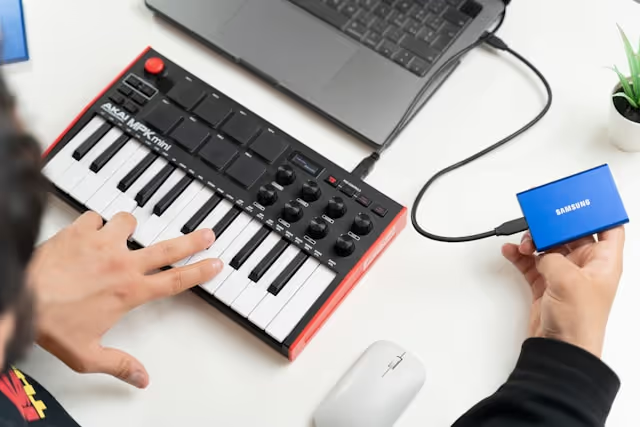
Effective piano learning software should respond to how a learner actually plays, not just follow a fixed syllabus. Adaptive systems adjust difficulty based on accuracy, timing, and consistency, helping learners stay challenged without becoming overwhelmed.
Educational research on skill acquisition shows that appropriately scaled challenges and clear goals improve retention and motivation, and this principle is supported by studies on adult learning dynamics and instructional design. In practice, this means exercises should become easier or harder depending on recent performance, rather than advancing on a preset schedule.
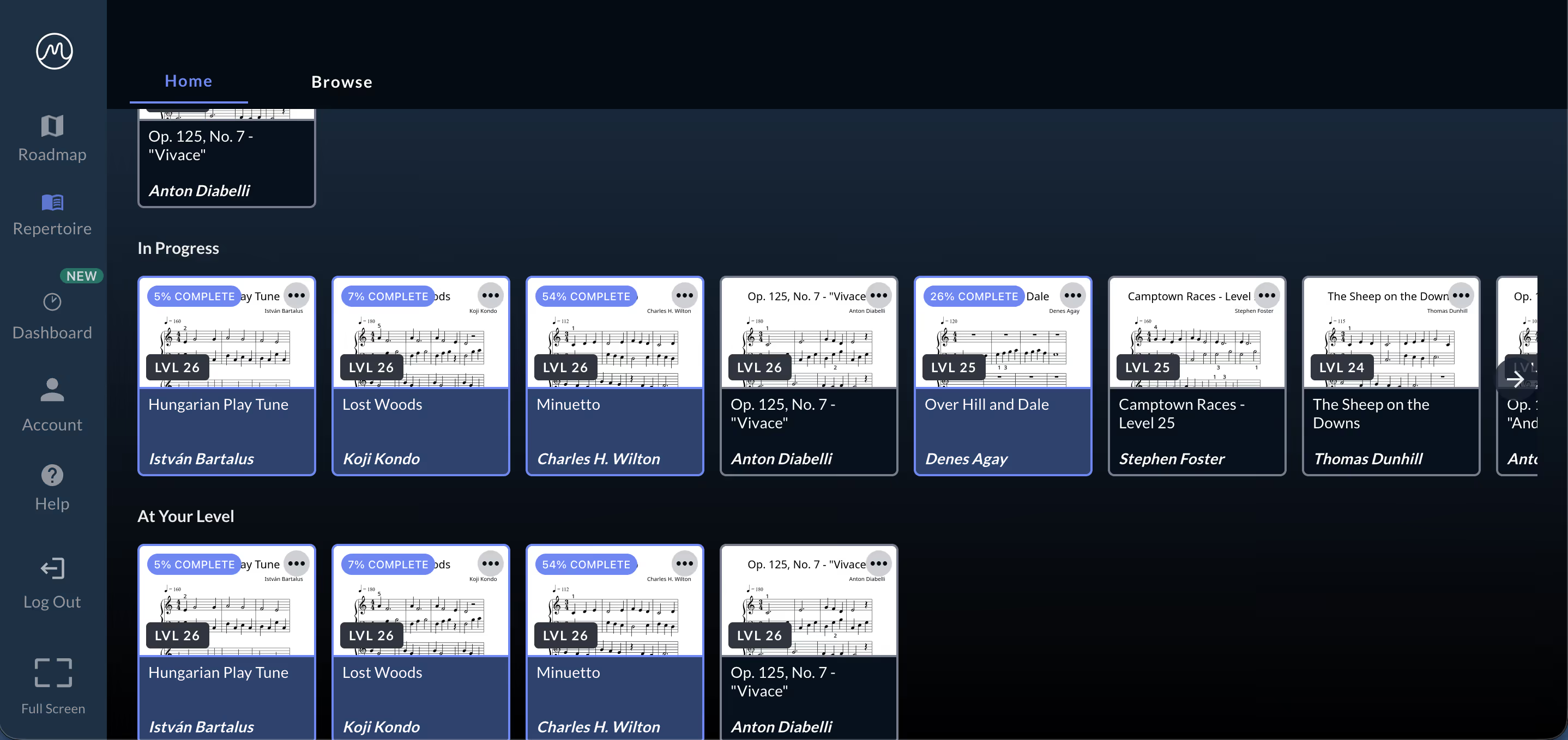
Some platforms, including MuseFlow, apply performance tracking to adjust lesson difficulty dynamically, which can help learners stay within an effective learning range instead of repeating material that is either too easy or too demanding.
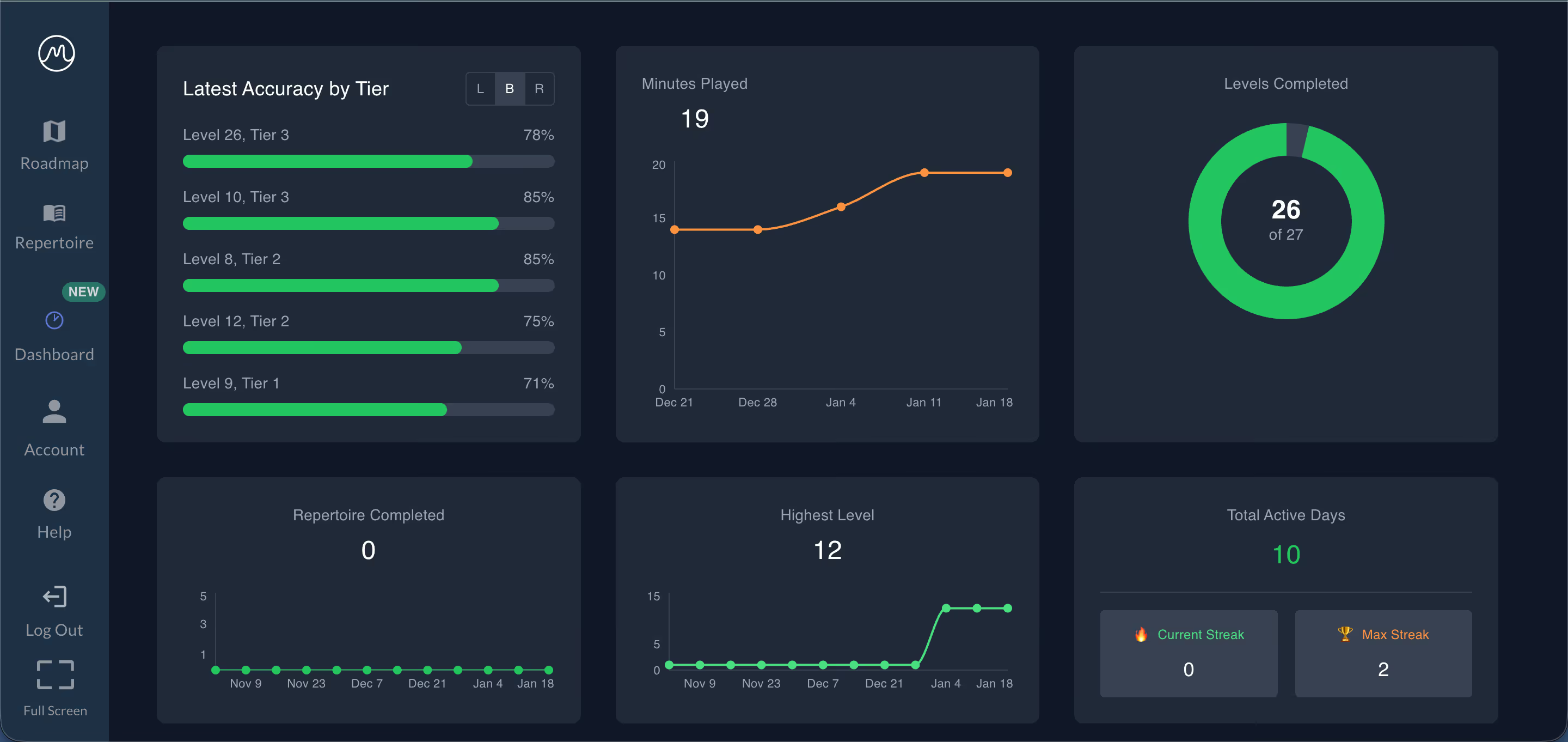
Immediate feedback is one of the most valuable features a MIDI-based learning system can offer. When software detects pitch, timing, and rhythmic accuracy in real time, learners can correct mistakes as they happen rather than reinforcing errors over multiple sessions.
This type of feedback is particularly helpful for beginners, who often struggle to self-diagnose issues while playing. Clear visual or auditory indicators allow learners to understand what went wrong and where, without interrupting practice flow.
Platforms like MuseFlow visualize note accuracy and timing during exercises, illustrating how real-time feedback can function as a continuous guidance mechanism during independent practice sessions.
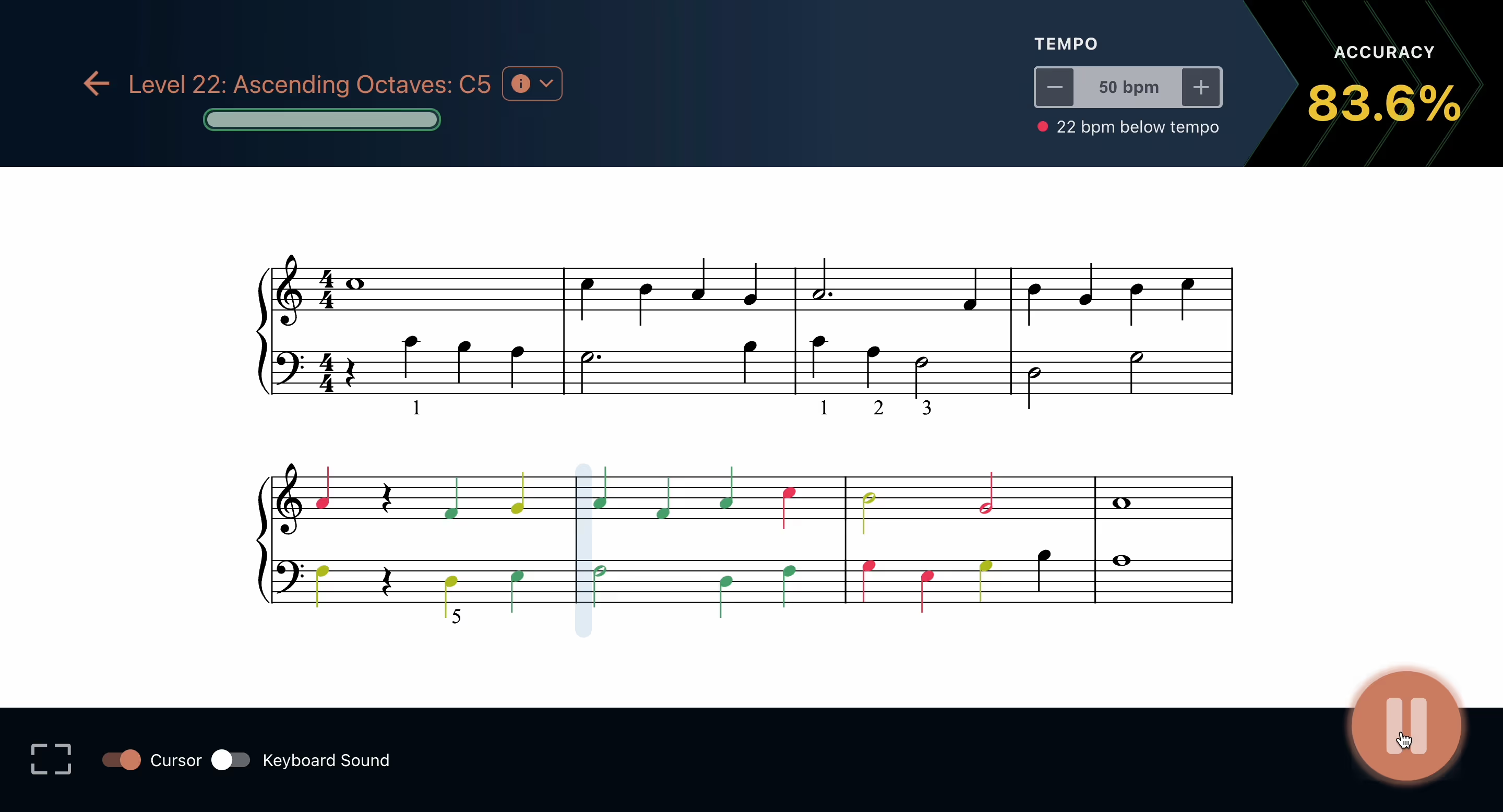
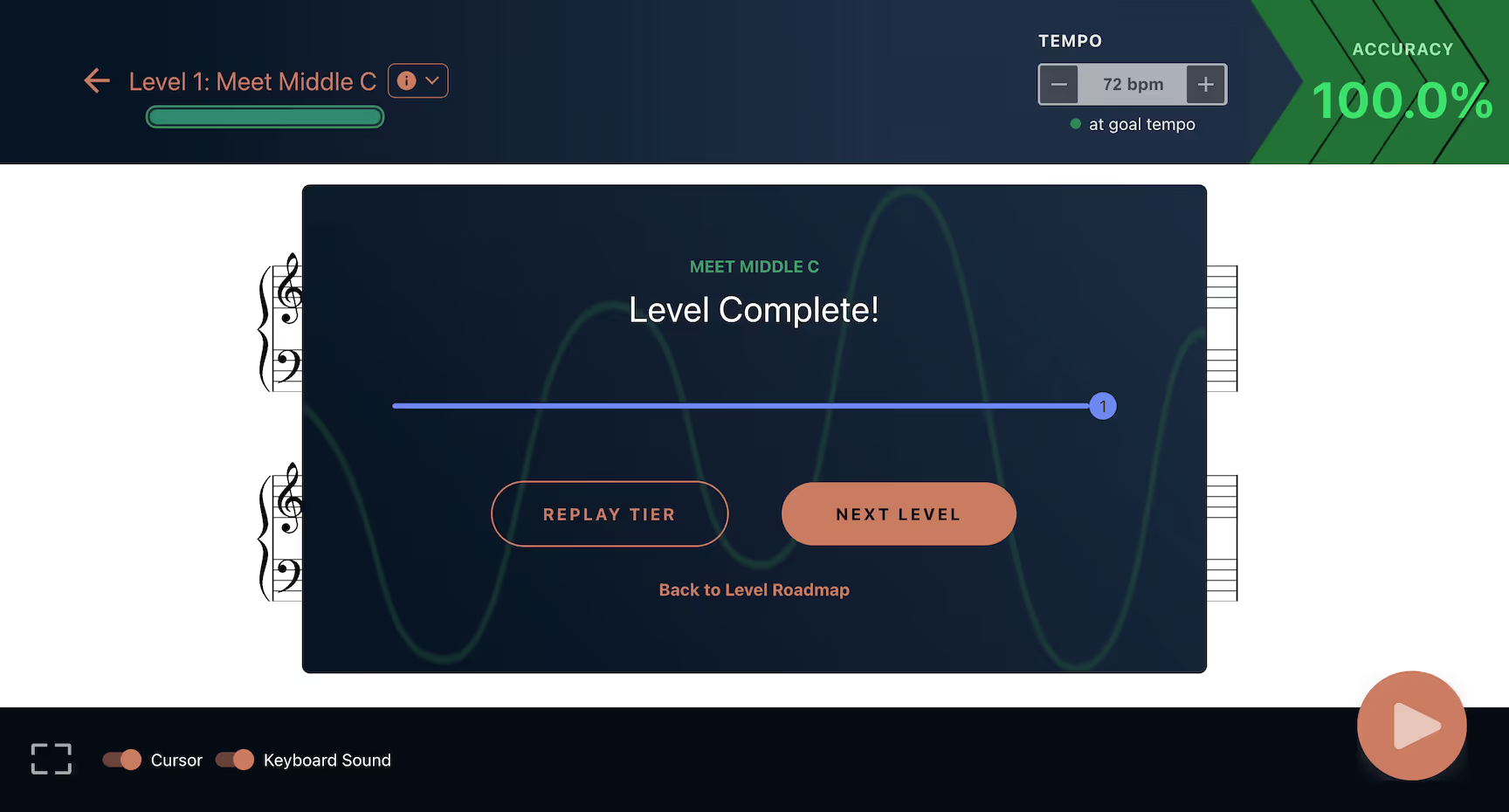
Sustained practice depends on engagement, but engagement doesn’t require excessive gamification. Effective learning tools use simple progress indicators—such as completion tracking or gradual difficulty increases—to maintain motivation without turning practice into a distraction.
Adult learners, in particular, tend to respond better to clear progress signals than to novelty alone. Structured challenges and visible improvement can reinforce consistency while keeping attention focused on musical fundamentals.
Some modern piano learning platforms incorporate light gamified elements—such as progress markers or skill milestones—to encourage regular practice while keeping the emphasis on musical development and who knows, maybe you'll discover a fun piano learning method in the process!
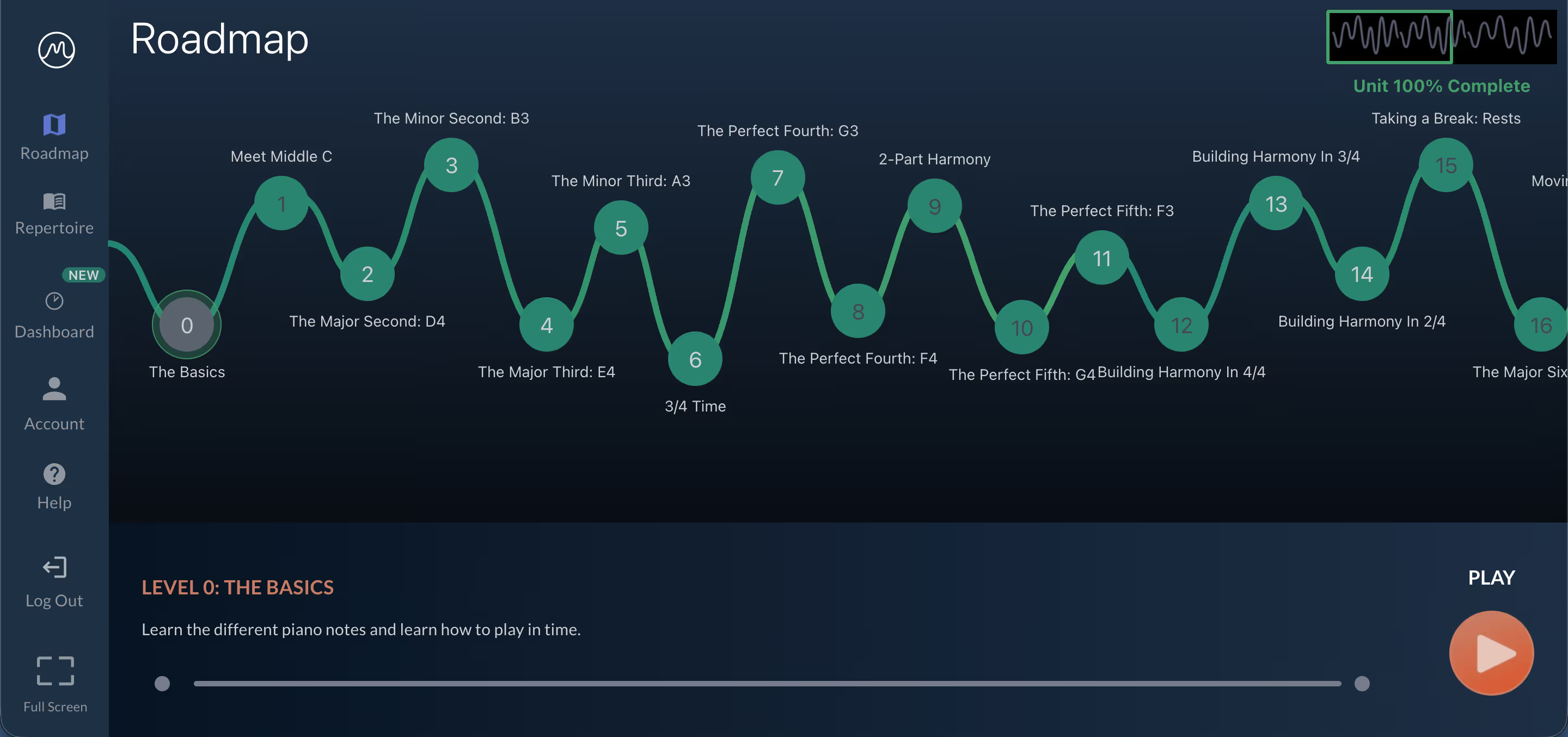
A strong learning platform should balance structure with choice. Learners benefit from a curated progression of exercises, but also from access to repertoire that feels musically rewarding.
Exposure to varied musical styles helps reinforce reading skills, rhythm, and coordination, while structured exercises isolate specific techniques. The most effective systems integrate both, allowing learners to apply technical skills directly to musical pieces.
MuseFlow, for example, combines targeted skill exercises with a rotating repertoire library, illustrating how variety and structure can coexist without overwhelming the learner.
One of the main reasons adults abandon new instruments is inconsistent practice. Software that supports short, flexible sessions lowers the barrier to daily engagement.
Consistency matters more than session length, and platforms that allow learners to resume exactly where they left off help reduce friction. This approach aligns with adult learning research showing that visible progress and self-paced control increase persistence over time.
Self-directed MIDI learning tools, including MuseFlow, demonstrate how flexible session design can support regular practice without rigid scheduling demands.
.png)
Evaluating piano learning software through these criteria—adaptive pacing, real-time feedback, focused engagement, structured variety, and flexible practice—provides a clearer framework than searching for a single “best” option.
Different platforms emphasize these elements in different ways, and the right choice depends on learning style, goals, and available practice time. Used here as an illustrative example, MuseFlow shows how these principles can be implemented in a MIDI-based learning environment, but the framework itself applies broadly across modern piano learning tools.
Understanding why these features matter allows learners to make more informed decisions—and ultimately build a practice routine that is sustainable, effective, and musically rewarding.

The short answer is an undeniable yes, the lifelong learning of music can absolutely increase your longevity. In fact, lifelong learning in and of itself is linked to a number of health benefits, including better brain health and memory. Many studies also suggest music can boost your health by reducing stress and lifting your mood, as anyone who’s ever danced to their favorite song in the kitchen can attest.
In this post, we’ll take a brief look at how incorporating music into your lifelong learning journey can help you live a longer, better life and how to get started.


While your brain is not a muscle, it is an intricate network of neurons that, similar to a muscle, need to be constantly challenged in order to grow and stay strong. In the brain’s case, this means forming connections with other brain cells.
These connections keep the brain cells healthy by increasing brain plasticity, which is your brain’s ability to adapt and rewire itself. Better brain plasticity has even been linked to higher resistance against the symptoms of Alzheimers and dementia, further reinforcing the age old saying, when it come to maintaining a healthy brain, use it or lose it!
Learning to play a musical instrument is a highly challenging activity akin to a full body workout. The harmonizing (pun intended) of your senses—vision, hearing, touch, and fine motor skills—creates lasting changes in your brain. In fact, music has been shown to be instrumental (yes, another pun) in forging increased connections between your left and right brain hemispheres.
The health benefits of lifelong learning manifest not only in an increased lifespan but in an increased health span, which is the measure of how many years during a person’s life they are considered to be in generally good health. Aging comes for us all, but by incorporating the lifelong project that is learning to play a musical instrument, you can both increase your years and your enjoyment of them.

Speaking of enjoyment, it probably wouldn’t shock you to hear that music can have a big affect on your overall mood. Whether it’s the boost you get from your favorite song coming on the radio or the catharsis of scream-singing along to the saddest song you’ve ever heard, music plays a big part in increasing feelings of happiness and reducing stress.
This isn’t just limited to listening to music though. Playing an instrument can actually affect the natural healing processes in your body and your brain. Some studies even suggest that music reduces pain perception, in part because it interacts with the pathways used to process pain.
So, music not only increases dopamine and endorphins, but quite literally blocks mental and physical pain from affecting you with the same level of intensity.
The benefits of reducing cortisol, the stress hormone, in your body cannot be understated. Increased levels of cortisol, especially when chronic, is responsible for higher blood pressure, worse sleep, inflammation, and a slew of other physical ailments that can decrease your lifespan when not dealt with properly.
Additionally, through the lifelong pursuit of learning to play an instrument, you have the power to shape your own brain development, and better regulate your emotions and behavior helping you build better habits in all aspects of your life.

One of the most profound ways learning music can have a lifelong impact is by contributing to a strong sense of purpose in your life, something Dr. Paige Baker-Braxton, a clinical psychologist, says can have a huge impact on your longevity.
Admittedly, learning to play an instrument can, at times, feel frustrating, especially as so many methods of teaching it rely heavily on repetition of the same song over and over until muscle memory prevails. This method unfortunately tends to increase the “ceiling” of songs one knows without increasing the “floor” of one’s skills.
However, music also offers you the chance to gain small wins. These small but mighty steps of progress contribute greatly to feelings of accomplishment, boosting your self-confidence and leading to greater overall satisfaction about your life.
At MuseFlow, we embrace the challenges that come with learning music while taking a unique approach to teaching. Instead of relying on repetition, our AI-driven piano learning app uses personalization to break down new skills into bite-size chunks that challenge you without being so frustrating that you want to throw in the towel.
So if you’re looking to increase brain plasticity, boost your mood, feel fueled by purpose, and actually live longer, why not give MuseFlow a try?
Sign up for your 7-day free trial and start your lifelong music-learning today!

Keep up to date on our progress as we continue to add new features!