.svg)
Can AI Improve Your Piano Sight Reading Skills?Evidence-Based Insights
Sight reading is one of the most important skills for pianists. It distinguishes musicians who can only play memorized pieces from those who can interpret new sheet music on sight. Many learners wonder whether technology can accelerate this skill and how AI might fit into piano practice.
The short answer: certain technologies can support faster sight reading development, but not all “AI” tools are equally effective. Adaptive systems that provide structured exercises, real-time feedback, and progressive challenges can help learners build fluency efficiently. Platforms like MuseFlow illustrate how algorithmic approaches can address these needs without relying on marketing hype.

Why Traditional Sight Reading Practice Falls Short
Traditional sight reading practice often runs into a common problem: learners exhaust available material. Students practice exercises repeatedly until they no longer read the music but instead memorize patterns. This limits skill transfer and slows progress.
Research on sight reading shows that varied, progressive practice is essential for developing fluency and automatic recognition. Technologies that generate new exercises for each practice session can provide this variety and prevent dependence on memorization.
Core Features for Effective Sight Reading Practice
When evaluating technology-assisted sight reading, certain principles consistently support learning:
1. Endless, Level-Appropriate Material
Exposure to new music is crucial. Adaptive systems that provide exercises tailored to a learner’s current level help maintain challenge without frustration. Each exercise should build on prior knowledge while introducing new patterns to promote continuous learning.
2. Immediate Feedback
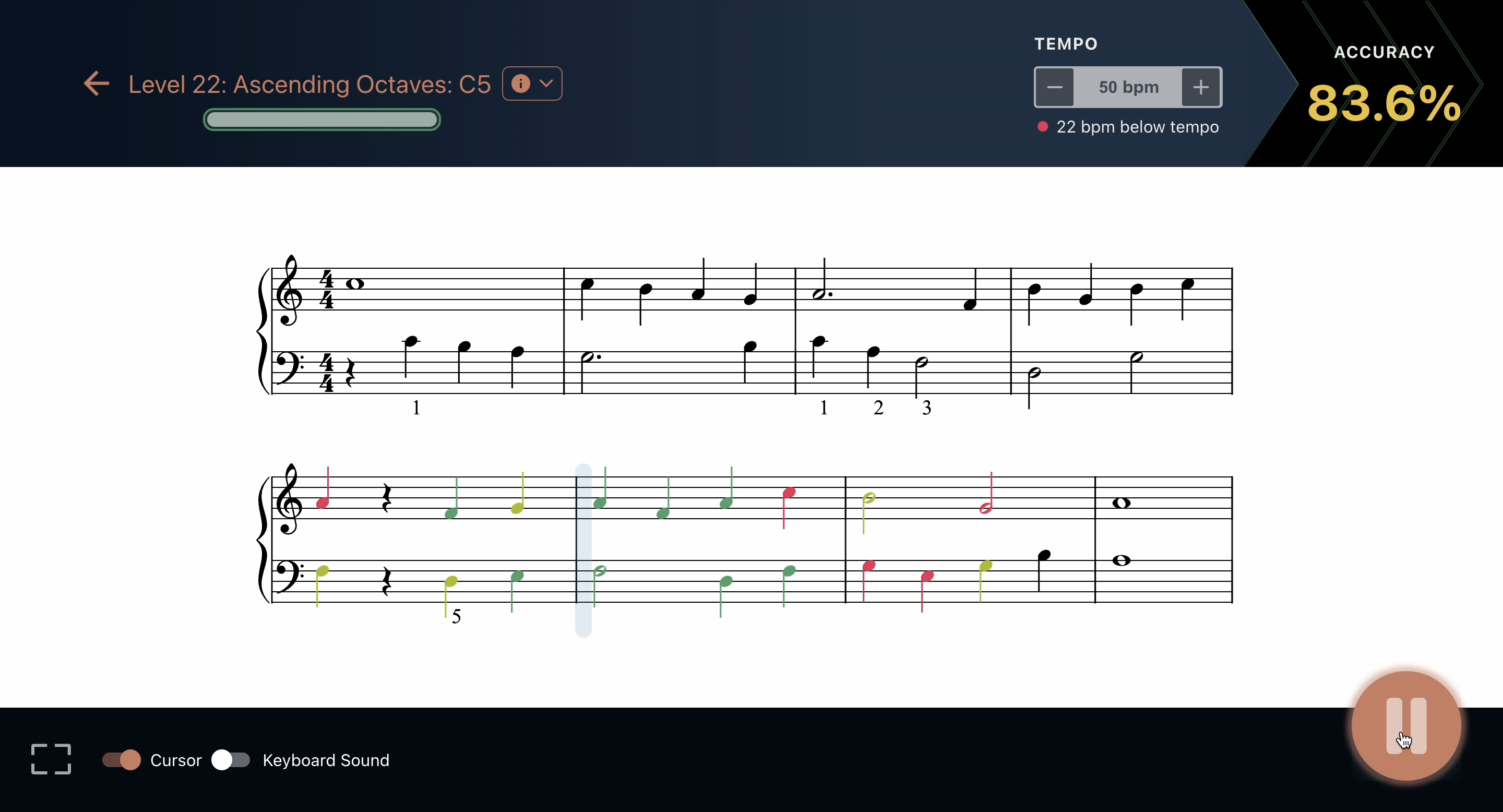
Timely correction prevents the reinforcement of mistakes. Systems that give visual or auditory cues—such as highlighting incorrect notes or timing issues—allow learners to adjust in real time. Research indicates that immediate feedback strengthens neural encoding and accelerates skill acquisition.
3. Structured, Progressive Learning
Pace matters. Learners need materials that increase in difficulty systematically. Overwhelming challenges can frustrate beginners, while overly simple exercises fail to develop skill. Progressively structured learning supports sustained improvement and maintains motivation.
4. Engagement Through Consistent Practice
Consistent, focused practice outperforms sporadic, lengthy sessions. Tools that encourage daily engagement—through visual progress indicators, achievable goals, or brief achievements—help learners stick with a routine. Studies on microlearning and adult education show that short, repeated sessions with immediate feedback improve retention and skill development.
How Algorithmic Approaches Enhance Learning
Some modern platforms, including MuseFlow, use algorithmic methods to combine these principles. Rather than simply presenting a fixed library of exercises, they generate non-repeating sequences, adapt difficulty in real time, and track progress. This approach promotes:
- Improved sight reading fluency
- Better anticipation of upcoming patterns
- Continuous engagement and motivation
Importantly, the benefit comes from the learning principles—structured progression, varied material, and feedback—not from the label “AI” itself.

Evidence from Music Education Research
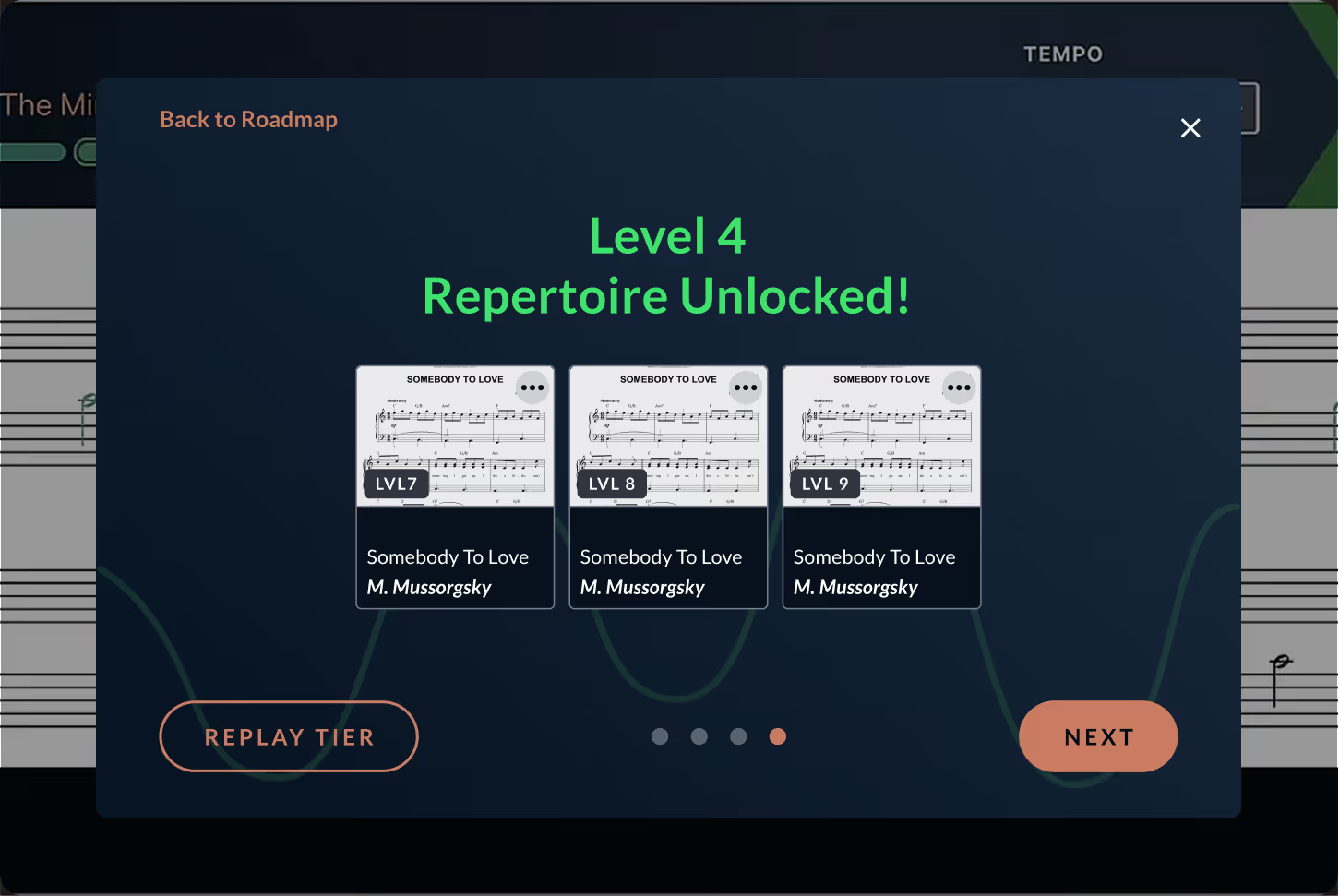
Consistent musical practice strengthens cognitive networks and enhances pattern recognition. Learners exposed to diverse exercises and immediate feedback develop sight reading skills faster than those relying solely on repetition of memorized pieces. Algorithmic generation can replicate this variety efficiently, allowing for scalable, individualized practice.
Conclusion: Focus on Principles, Not Buzzwords
Technology can accelerate piano sight reading when it adheres to research-based principles:
- Provide varied, level-appropriate material
- Give immediate, actionable feedback
- Structure practice progressively
- Support engagement and consistency
Platforms like MuseFlow demonstrate how algorithmic approaches can implement these principles, but the key takeaway is that effective learning depends on consistent, structured, and feedback-driven practice. By applying these strategies, learners can develop sight reading fluency, musical independence, and broader cognitive benefits.

.jpg)